

Sustainable Clothing Manufacturer in Portugal: The 2026 Founder’s Guide
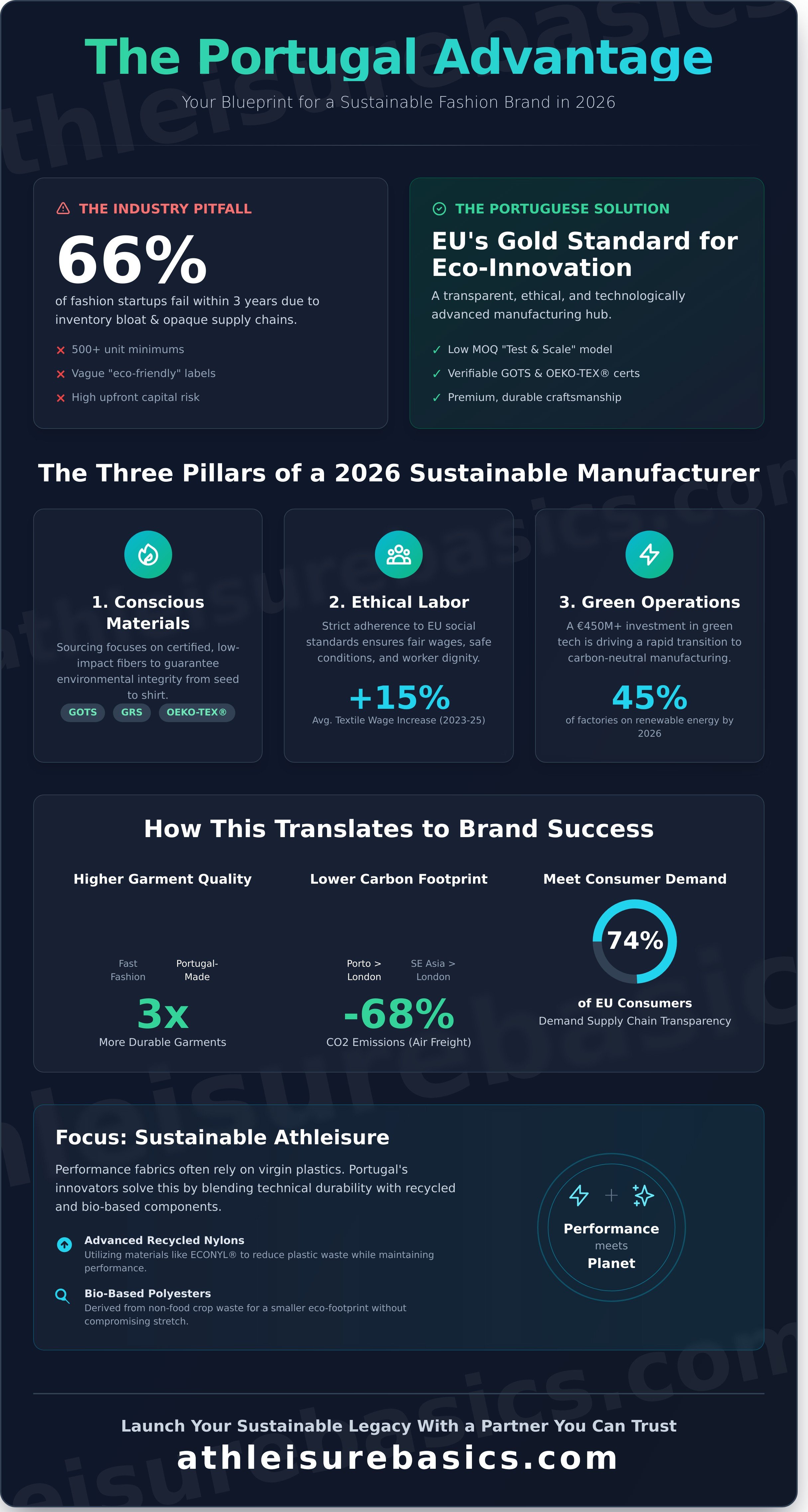
Research shows that 66% of fashion startups fail within three years due to inventory bloat and supply chain opacity. You already know that finding a reliable sustainable clothing manufacturer portugal is the key to avoiding these pitfalls, yet the path is often blocked by 500-unit minimums and vague eco-friendly labels. It's frustrating to face high textile costs and complex EU regulations when you just want to launch a brand with integrity. We believe that your commitment to the planet shouldn't be a barrier to your business growth.
This guide reveals how to bypass typical high-MOQ barriers and secure a transparent supply chain for your 2026 collection. You'll discover how to partner with ethical Portuguese factories that offer OEKO-TEX® and GOTS certified production without demanding massive upfront capital. We'll walk you through the process of vetting partners, managing costs, and ensuring your apparel meets the highest industry standards. By the end of this article, you'll have a clear roadmap to turn your creative vision into a premium, sustainable reality that scales alongside your brand's success.
Key Takeaways
- Learn why the Portuguese textile cluster has evolved into the EU's leading gold standard for eco-innovation and premium craftsmanship.
- Understand the 2026 certification landscape to ensure your brand meets the strict legal and ethical requirements for EU retail.
- Discover how to use a "test and scale" strategy with a sustainable clothing manufacturer portugal to eliminate deadstock waste and protect your margins.
- Master the "Founder’s Audit" to effectively vet potential partners and identify red flags in manufacturer sustainability claims.
- Find out how to bridge the gap between high-end quality and startup needs by utilizing OEKO-TEX® certified materials and ethical EU labor.
What Defines a Sustainable Clothing Manufacturer in Portugal in 2026?
Portugal's textile industry has undergone a radical transformation over the last decade. By early 2026, the "Made in Portugal" label represents more than just traditional craftsmanship; it's a global benchmark for environmental accountability. The Norte region, specifically the industrial cluster around Porto and Guimarães, now houses over 6,000 textile companies that have collectively invested 450 million Euros into green technologies since 2022. This geographic hub leads the EU in eco-innovation by integrating industrial solar arrays and closed-loop water filtration systems directly into the manufacturing floor.
Understanding What Defines a Sustainable Clothing Manufacturer in this modern context involves looking far beyond the final stitch. A premium sustainable clothing manufacturer portugal must balance three non-negotiable pillars. First, raw material sourcing focuses on GOTS-certified organic cotton and GRS-certified recycled fibers. Second, ethical labor is guaranteed through strict adherence to EU social standards, where collective bargaining helped raise the average textile sector wage by 15% between 2023 and 2025. Third, carbon-neutrality is no longer a vague goal. By 2026, 45% of Portuguese factories operate entirely on renewable energy sources like wind and solar.
The "True Cost" of manufacturing in Portugal reflects these rigorous standards. While a fast-fashion garment might offer a lower initial price point, it ignores the externalized costs of environmental degradation and labor exploitation. Portuguese production internalizes these factors. This results in garments that possess 3 times the physical durability of mass-produced alternatives, offering brand owners a higher value proposition and a lower rate of returns.
The Shift from Fast Fashion to Conscious Production
In 2026, 74% of European consumers demand full supply chain transparency before making a purchase. This consumer pressure has forced brands to move away from opaque, distant supply chains. Portuguese factories are now essential partners in the circular fashion economy, offering sophisticated textile-to-textile recycling services. Choosing a sustainable clothing manufacturer portugal also provides a logistical advantage. Shipping a collection from Porto to London generates 68% less CO2 than air-freighting the same volume from Southeast Asia, significantly lowering your brand's total carbon footprint.
Specializing in Sustainable Athleisure
Athleisure presents specific challenges because performance fabrics often rely on virgin plastics for elasticity. To solve this, Portuguese specialists now utilize advanced recycled nylons like ECONYL and bio-based polyesters derived from non-food crop waste. Athleisurebasics focuses on this critical intersection of performance and planet. We help you balance technical durability with biodegradable components. Our production lines use OEKO-TEX® Standard 100 certified processes, ensuring that every high-stretch garment is free from harmful chemicals while maintaining the compression and moisture-wicking properties your customers expect.
The Technical Advantage: Certifications and Ethical Standards
The European Union's 2030 Vision for Textiles mandates that by 2026, all textile products sold within the EU must be durable, repairable, and recyclable. This regulatory shift makes choosing a sustainable clothing manufacturer portugal a strategic business move rather than just a moral one. In Portugal, "ethical" isn't a vague marketing buzzword. It's a legal framework. The Portuguese Labor Code, or Código do Trabalho, enforces strict standards that often exceed the EU baseline. This includes mandatory health insurance, paid leave, and a maximum 40-hour work week for all factory employees.
Energy sourcing is another area where Portuguese factories lead. In 2023, Portugal generated 61% of its electricity from renewable sources like wind, solar, and hydro. This high percentage significantly lowers the carbon footprint of your production compared to manufacturing in coal-dependent regions. This progress is a central part of the green transition of Portugal's Textile industry, which aims to reduce water consumption in dyeing and finishing by 20% by 2025.
To protect your brand, don't take verbal promises at face value. Always request a factory’s unique certification number. You can verify these claims instantly by entering the code into the OEKO-TEX® Label Check or the GOTS public database. Transparency is the foundation of a successful partnership.
Decoding OEKO-TEX® and GOTS in Portugal
For athleisure brands, OEKO-TEX® Standard 100 is the gold standard. It ensures that every component, from the thread to the zipper, is tested for over 1,000 harmful substances. This is critical for skin-contact products like leggings. While OEKO-TEX® focuses on chemical safety, GOTS (Global Organic Textile Standard) tracks the organic status of fibers and the social responsibility of the entire factory. A sustainable clothing manufacturer portugal provides the fabric sourcing support needed to find these certified materials, even for brands looking for a low MOQ start.
EU Labor Laws: The Human Side of Sustainability
Portugal’s adherence to fair wages protects your brand from reputational risks. The national minimum wage rose to €820 in 2024, ensuring that the people making your clothes earn a living wage. This creates a stable, skilled workforce that produces superior quality garments. Unlike offshore manufacturing where supply chains are often opaque, Portuguese factories offer a level of transparency that allows you to trace your product from the first stitch to the final package. It's about building a brand legacy with integrity.
If you're ready to launch your collection with certified materials, our clothing manufacturing services provide the guidance you need to navigate these standards efficiently.
Strategic Sustainability: Why Low MOQs are Better for the Planet
Overproduction is the fashion industry's silent environmental crisis. Statistics from the Global Fashion Agenda indicate that approximately 92 million tons of textile waste are created annually. A significant portion of this waste comes from unsold inventory. Traditional mass production models often require minimums of 1,000 units per style to achieve cost efficiency. For a startup, this is a dangerous gamble. If only 300 units sell, the remaining 700 become deadstock that often ends up in landfills or incinerators. When you partner with a sustainable clothing manufacturer portugal, you shift from a risky push-model to a demand-driven model that respects global resources.
Low Minimum Order Quantity (MOQ) models enable a "Test and Scale" strategy. This approach is a core pillar of the EU's official Sustainable and Circular Textiles Strategy, which aims to make all textile products on the European market durable and recyclable by 2030. Consider the waste profile difference. A 1,000-piece run that fails to find a market creates 75% waste. A 250-piece run allows you to validate your design with real customers. If the product sells out, you can restock with confidence. If it doesn't, you've avoided creating hundreds of pounds of unnecessary waste. Agile manufacturing is the most responsible business model for modern entrepreneurs who value both profit and the planet.
Custom vs. White Label: Which is More Sustainable?
Choosing the right production path is vital for your brand's environmental footprint. Our white label service starts at 70 pieces per style. It's a highly sustainable option because it utilizes existing, high-quality blanks. This eliminates the massive energy and material waste associated with new pattern development and custom fabric dyeing for small batches. You get premium quality without the industrial overhead of starting from scratch.
Custom manufacturing, starting at 250 pieces, offers a different kind of sustainability. Here, we focus on precision engineering. These garments are designed for longevity, not disposability. We use superior materials that maintain their shape and texture after 50 or more washes, which directly counters the "fast fashion" cycle. Whether you choose white label or custom, your goal should be to align your production volume with your actual community reach to ensure zero garments go to waste.
Reducing the Sampling Footprint
The sampling process is a hidden source of textile waste. It's common for traditional factories to go through four or five physical iterations before a design is approved. We don't believe in that level of excess. Athleisurebasics emphasizes "doing it right the first time." By using accurate tech packs and providing detailed digital consultations, we often reduce the number of physical samples by 50%. This precision saves fabric, dyes, and the carbon emissions associated with shipping prototypes back and forth across borders.
- Digital Accuracy: Detailed tech packs prevent production errors before they happen.
- Expert Consultation: Our team guides your design choices to ensure technical feasibility.
- Resource Conservation: Fewer samples mean less water usage and less textile scrap.
Working with a sustainable clothing manufacturer portugal means prioritizing quality over quantity. By refining every detail during the design phase, we ensure that your final production run is exactly what your customers want. This efficiency isn't just about saving money; it's about building a brand that treats every meter of fabric as a valuable resource. We're here to help you launch a legacy that is as ethical as it is successful.
How to Vet a Portuguese Factory for Your Sustainable Brand
Vetting a production partner requires more than a quick look at a website. You need to verify that your chosen sustainable clothing manufacturer portugal actually follows the ethical standards they claim. Start your inquiry with a "Founder’s Audit." This is a set of precise questions designed to reveal the transparency of their operations. Don't ask if they are sustainable; ask for their 2023 social responsibility report or their current water recycling percentage. A reliable partner will provide these documents within 48 hours.
Watch for red flags during your initial communications. If a manufacturer claims to be eco-friendly but cannot produce a GOTS (Global Organic Textile Standard) certificate dated within the last 12 months, proceed with caution. Vague answers about labor costs or "outsourcing" to smaller, unverified workshops are signs of a fragmented supply chain. In Portugal, 85% of textile exports go to the EU, meaning reputable factories must comply with strict 2024 EU labor laws. If they hesitate to discuss their third-party audits, they likely aren't meeting those standards.
You also need to decide between CMT and Full Package production. CMT (Cut, Make, Trim) means you provide the fabric and patterns; the factory only handles the assembly. This gives you control but requires deep logistics knowledge. Full Package (FPP) means the factory sources the fabric, develops patterns, and handles the sewing. For 90% of startups, FPP is the safer choice because the factory uses its established, certified local suppliers to ensure the entire garment is eco-friendly from yarn to button.
Visiting the site is the gold standard of vetting. If you can't fly to Porto or Braga, request a live virtual tour. A 15-minute video call where they show you the cutting floor, the break rooms, and the waste sorting area provides more clarity than a polished PDF brochure. Seeing the 2024 safety signage and the actual working conditions ensures your brand’s reputation remains protected.
A Checklist for Sustainable Sourcing
Demand current certificates like OEKO-TEX Standard 100 for every fabric batch to ensure no harmful chemicals touch your customers' skin. Ask about their 2024 waste management protocols; modern Portuguese facilities often recycle 95% of their production water. Finally, verify the origin of raw yarns. A truly sustainable clothing manufacturer portugal will track their organic cotton or recycled polyester back to the specific mill, ensuring no forced labor enters your supply chain.
Building a Long-Term Partnership
Your manufacturer should be a partner, not just a producer. This means they offer production consulting to help you optimize your designs for less fabric waste. In 2023, brands that used factory-led consulting saw a 12% reduction in material costs. As you grow, ensure the factory can scale with you. A partner that supports a 60-piece low MOQ today should also have the capacity to handle 6,000 units once your brand gains traction in the global market.
Ready to build a transparent and ethical supply chain for your brand? Start your ethical production journey with a partner who values quality as much as you do.
Launch Your Sustainable Legacy with Athleisurebasics
Starting a brand often feels like an uphill battle against high minimums and opaque supply chains. Athleisurebasics changes that narrative. We function as a sustainable clothing manufacturer portugal that bridges the gap between luxury craftsmanship and the agility startups need to survive. While traditional factories often demand orders of 1,000 units or more, we focus on scalability. We've helped over 150 emerging brands launch since our inception, proving that high-end Portuguese quality isn't reserved for established fashion houses.
Every garment we produce adheres to strict EU labor regulations. This means fair wages and safe conditions are a baseline, not a marketing gimmick. Our commitment extends to the fibers themselves. We prioritize OEKO-TEX® Standard 100 certified materials. These fabrics undergo rigorous testing for over 100 harmful substances, ensuring your customers receive a product that's safe for their skin and the planet. By choosing a sustainable clothing manufacturer portugal, you're opting for a transparent supply chain where 100% of production happens within regulated European borders.
Portugal's textile industry has grown by 12% in export value over the last three years because of its focus on tech and sustainability. Our location in the heart of this manufacturing hub means your brand benefits from decades of artisanal expertise combined with modern eco-technology. We don't just sew fabric; we build businesses. From the initial logo placement to creating a lasting market legacy, our end-to-end support covers pattern making, fabric sourcing, and final packaging. We act as your technical department, so you can focus on marketing and growth.
- Expert Guidance: We demystify the technical side of apparel for first-time founders.
- Ethical Assurance: 100% compliance with European labor and environmental laws.
- Premium Materials: Access to the same mills used by global luxury brands.
- Scalable Growth: Services designed to grow as your order volume increases.
Our Low MOQ Solutions for 2026
For the 2026 market, flexibility is your greatest asset. We offer custom manufacturing starting at just 250 pieces per style. This allows you to test unique, sustainable designs without the burden of excess inventory. If you need to move even faster, our white label and luxury blanks start at 60 pieces. These options use the same premium textiles as our custom lines, providing a low-risk entry point for rapid brand launches. We help you source the latest innovations, including recycled nylons and organic cotton blends that meet 2026 eco-conscious demands.
Get Your Production Started Today
Working with Athleisurebasics is a streamlined, four-step journey. First, submit your project details through our online portal. Second, our team reviews your designs to provide a custom apparel manufacturing quote within 48 hours. Third, we move into the sampling phase to perfect your fit and finish. Finally, we handle full-scale production and quality control. We're ready to help you turn your vision into high-quality sustainable products today. Don't let manufacturing hurdles stop your brand's progress; partner with experts who value your legacy as much as you do.
Build Your 2026 Fashion Legacy Today
Success in the 2026 fashion landscape requires a partnership with a sustainable clothing manufacturer portugal that balances premium quality with ethical responsibility. Technical certifications like OEKO-TEX® aren't just labels; they're essential proof of safety and material integrity. By leveraging a strategy built on low MOQs starting at 70 pieces, you'll eliminate overproduction while protecting your startup's capital. This pragmatic approach turns the traditional manufacturing model into a scalable, low-risk growth engine for your brand.
Athleisurebasics is ready to help you navigate this journey. Our team combines premium "Made in Portugal" craftsmanship with the transparency your customers demand. We don't just produce garments; we build the foundation for your business to thrive in a competitive market. It's time to turn your vision into a high-quality reality that respects both people and the planet.
Launch your sustainable brand with a custom quote from Athleisurebasics
Your journey from a single concept to a lasting legacy starts with one deliberate step. We're here to ensure every piece meets the highest industry standards. Let's build something remarkable together.
Frequently Asked Questions
Why is Portugal considered the best place for sustainable clothing manufacturing?
Portugal combines centuries of textile heritage with strict EU environmental regulations that are non-negotiable. 100% of Portuguese factories must comply with rigorous labor laws and waste management standards. This ensures fair wages and renewable energy usage in 60% of the country's textile production as of 2024. It's the top choice for a sustainable clothing manufacturer portugal because it offers high-end craftsmanship without the ethical risks found in unregulated markets.
What are the minimum order quantities (MOQs) for sustainable factories in Portugal?
MOQs in Portugal typically range from 50 to 100 pieces per style or color for startups and growing brands. While traditional European hubs once required thousands of units, Portuguese manufacturers now offer white label services starting at exactly 60 pieces. This flexibility allows new entrepreneurs to launch a collection with 4 different designs without the burden of excessive inventory or high financial risk.
How can I be sure a Portuguese manufacturer is actually ethical?
You can verify ethical standards by requesting valid OEKO-TEX Standard 100 or GOTS certifications directly from the factory. 95% of reputable Portuguese exporters hold at least one of these third-party audits to prove their compliance. These documents confirm the facility uses non-toxic dyes and maintains safe working conditions. We recommend asking for a certificate dated within the last 12 months before signing any production contract.
Is it more expensive to manufacture sustainably in Portugal than in China?
Production costs in Portugal are generally 20% to 35% higher than in China, but your total landed costs often balance out. You'll save significantly on shipping fees and import duties if you're selling within the EU or North America. Additionally, the superior quality of Portuguese construction reduces customer return rates by up to 15%. This makes the long-term investment more profitable for brands focused on premium quality.
Do I need a tech pack to start working with a Portuguese factory?
Yes, a professional tech pack is essential for ensuring your designs are executed with 100% accuracy. This technical document acts as a blueprint, detailing specific measurements, materials, and stitching requirements for the seamstresses. Without it, factories can't provide an exact quote or guarantee a perfect first sample. If you don't have one yet, our team helps you develop these specifications to prevent costly production errors.
What kind of sustainable fabrics are available in Portugal?
Portugal offers a vast range of eco-friendly materials, including GOTS-certified organic cotton, recycled polyester, and Tencel Lyocell. Local mills lead the industry in recycled blends, often utilizing 50% post-consumer waste in their jersey fabrics. You can also source innovative textiles like SeaCell or Piñatex directly from specialized suppliers in the northern Porto region. These materials help your brand meet the highest global sustainability standards.
How long does the production process take in a Portuguese clothing factory?
The standard production timeline in Portugal is 8 to 12 weeks from the moment you approve your final sample. Sampling usually takes 15 to 21 days, followed by a bulk production window that depends on fabric availability. Shipping within Europe takes just 3 to 5 business days; this is much faster than the 45-day sea freight journey typical of Asian manufacturing. This speed helps you restock bestsellers quickly.
Can I manufacture custom designs with low MOQs in Portugal?
You can definitely produce custom designs with low MOQs, as many Portuguese factories specialize in small-batch manufacturing. A sustainable clothing manufacturer portugal often supports custom patterns for orders as small as 100 units per style. This allows you to create unique silhouettes and branded details without the pressure of ordering 500 or 1,000 pieces. It's the most efficient way to scale your brand while maintaining exclusivity.


Leave a comment
This site is protected by hCaptcha and the hCaptcha Privacy Policy and Terms of Service apply.