
What is a Textile? A Complete Guide for Clothing Brands
Choosing the right fabric for your clothing line can feel overwhelming. You’re navigating a sea of industry jargon-fiber, yarn, knit, weave-all while the pressure is on to select a material that perfectly represents your brand's commitment to quality. This complex world, however, boils down to one foundational element: the textile. Getting this choice right is not just a technical detail; it’s a critical business decision that directly impacts customer satisfaction and your brand's reputation.
This guide is designed to empower you. We go beyond a simple definition to give you a complete understanding of the journey from raw fiber to finished fabric. You will learn the key differences between production methods like knitting and weaving and discover how these choices influence a garment's performance, durability, and feel. By the end, you'll be equipped to confidently discuss options with your manufacturer and select premium textiles that bring your creative vision to life, ensuring every product you launch is built for success.
Key Takeaways
- Understand the production hierarchy from raw fiber to finished fabric to make more strategic sourcing decisions for your apparel line.
- Learn the key differences between natural and synthetic fibers to align your material choices with your brand's cost, feel, and sustainability goals.
- Discover how a fabric’s construction-woven vs. knitted-is just as crucial as its fiber content for achieving the right performance and drape.
- Master the criteria for selecting the perfect textile for athleisure, focusing on critical performance factors like moisture management, durability, and stretch.
What is a Textile? Deconstructing the Foundation of Fashion
To launch a successful clothing brand, understanding your materials is non-negotiable. It begins with a fundamental question: what exactly is a textile? In its simplest form, a textile is any flexible material made by interlocking a network of natural or artificial fibers. For a deeper dive into its origins and types, the Wikipedia entry on What is a Textile? provides a comprehensive overview. Understanding this foundation is the first step toward making informed decisions that align with your brand's vision for quality and performance.
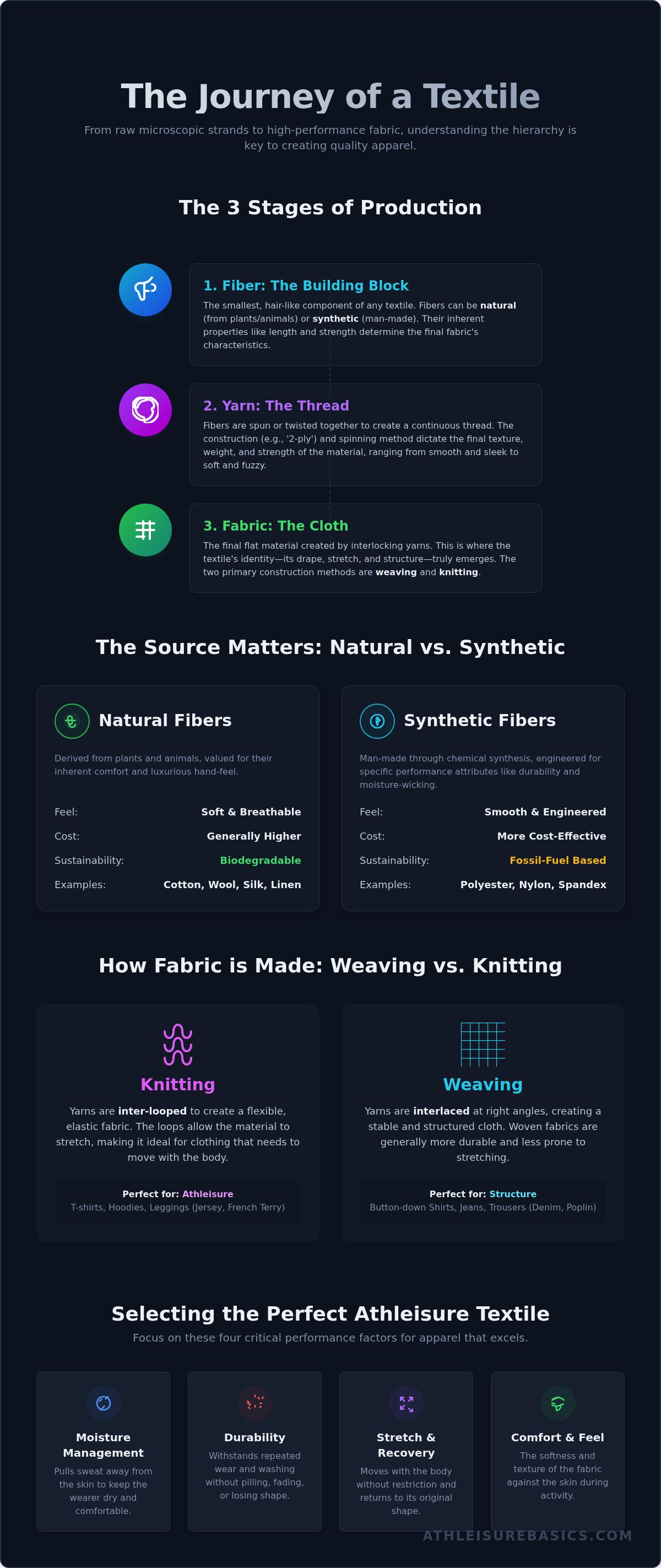
Think of it as a hierarchy where each step builds upon the last:
- Fibers are the letters.
- Yarn is the words.
- Fabric is the sentences that tell your brand's story.
Mastering this progression empowers you to select the perfect materials to create premium garments from the ground up.
Fiber: The Microscopic Building Block
Every piece of fabric begins its life as a fiber-the smallest, hair-like component of the material. Fibers are the primary source of a fabric's inherent qualities and are broadly classified into two categories: natural (like cotton, wool, and linen) and synthetic (like polyester and nylon). Key properties such as length, strength, and fineness are determined at this microscopic level, directly influencing the final garment's durability, softness, and overall feel.
Yarn: From Loose Fibers to a Single Thread
Fibers rarely exist on their own in a finished garment. Instead, they are spun or twisted together to create a continuous thread known as yarn. The construction of the yarn is a critical step that dictates texture and weight. For example, a "2-ply" yarn, made from two strands twisted together, results in a stronger and more substantial thread than a single-ply yarn. The spinning method also impacts the final fabric's surface, from smooth and sleek to soft and fuzzy.
Fabric: The Woven or Knitted Cloth
Fabric is the flat, two-dimensional material created by interlacing or interlocking yarns. This is the stage where the material's identity-its drape, stretch, and structure-truly emerges. The two primary methods of fabric construction are:
- Weaving: Yarns are interlaced at right angles to create a stable, structured cloth like denim or poplin.
- Knitting: Yarns are inter-looped to create a flexible, elastic fabric like jersey or French terry, which is essential for athleisure.
This final construction determines the material's ultimate function and suitability for your specific design.
The Source Matters: A Guide to Natural vs. Synthetic Fibers
Every high-performance garment begins its life as a simple fiber. The origin of this fiber-whether it is grown in a field or engineered in a lab-is the single most important factor determining a fabric's feel, performance, durability, and cost. For brand owners, understanding this fundamental distinction is the first step toward making strategic product decisions. At its core, the choice is between two families: natural and synthetic.
To simplify the decision-making process, here is a clear comparison of their core attributes:
| Attribute | Natural Fibers | Synthetic Fibers |
|---|---|---|
| Origin | Derived from plants (e.g., cotton, linen) or animals (e.g., wool, silk). | Man-made through chemical synthesis, typically from petroleum-based sources. |
| Feel | Often soft, breathable, and absorbent with a classic, premium hand-feel. | Can be engineered to be smooth, slick, or textured. Less breathable unless designed with wicking technology. |
| Cost | Generally higher due to farming, harvesting, and processing costs. | Typically more cost-effective due to scalable and controlled manufacturing processes. |
| Sustainability | Biodegradable and from renewable sources, but can be resource-intensive (water, land). | Not biodegradable and derived from fossil fuels; can release microplastics. Recycled options are improving. |
Natural Fibers: The Gifts of Nature
Natural fibers are valued for their inherent comfort and luxury feel. Plant-based options like cotton offer superior breathability and softness, while linen is renowned for its strength and cooling properties. From animals, wool provides exceptional insulation and moisture-wicking, and silk offers unparalleled smoothness. While these fibers are biodegradable and have a timeless appeal, they can be prone to wrinkling, may have higher costs, and sometimes require more delicate care.
Synthetic Fibers: Engineering and Innovation
Synthetic fibers are the workhorses of the athleisure world, engineered for performance. Polyester is durable, wrinkle-resistant, and holds color well. Nylon offers impressive strength and elasticity, making it ideal for activewear. And elastane (also known as Spandex or Lycra) provides the critical stretch and recovery modern garments demand. While synthetics deliver high performance at a lower cost, they lack the breathability of naturals and present environmental challenges. Making informed textile choices requires navigating these trade-offs, which is why industry leaders like Textile Exchange promote standards for more sustainable material sourcing.
The modern solution is often found in blends. By combining fibers, we can achieve the best of both worlds-a cotton/polyester blend offers the softness of cotton with the durability and wrinkle-resistance of polyester. Adding just a small percentage of elastane to a fabric transforms it, providing the comfort and freedom of movement that defines athleisure. This strategic blending allows brands to precisely engineer a fabric to meet a specific price point, performance goal, and care requirement.
How Fabric is Made: Weaving vs. Knitting Explained
Selecting the right fiber for your athleisure line is only the first step. Equally crucial to a garment's performance, feel, and durability is how those fibers are constructed into a fabric. Understanding the fundamental difference between a woven and a knitted textile is essential for making informed decisions that align with your brand's vision for quality and function. While there are many complex production methods, which you can explore in-depth by asking What is a Textile?, the two primary methods are weaving and knitting.
The simplest way to visualize the difference is with an analogy: weaving is like a grid, while knitting is like a chain of interconnected loops. This core structural difference creates two distinct families of fabrics with unique properties, making each suitable for different applications.
Woven Textiles: Structure and Strength
Woven fabrics are created by interlacing two sets of yarn at right angles to one another: the warp (lengthwise yarns) and the weft (crosswise yarns). This grid-like structure results in a stable, strong, and durable fabric that holds its shape exceptionally well.
- Key Characteristics: Wovens are typically rigid, offer little to no stretch (unless elastane is added), and are known for their crisp hand-feel. They are prone to fraying at the edges when cut.
- Common Examples: Think of the sturdy feel of denim, the sharp structure of twill used for chinos, the crispness of poplin dress shirts, or the rugged utility of canvas.
Knitted Textiles: Flexibility and Comfort
Knitted fabrics, the cornerstone of modern athleisure, are constructed from a single yarn that is looped continuously around itself. This interlooping structure gives the fabric inherent mechanical stretch, even without the use of elastic fibers. This method produces a flexible and comfortable material perfect for movement.
- Key Characteristics: Knits are defined by their stretch, soft drape, and excellent wrinkle resistance. They are breathable and move with the body, providing superior comfort.
- Common Examples: This is the construction behind your favorite jersey T-shirts, cozy French Terry sweatshirts, and the form-fitting rib knits used for cuffs and collars.
Non-Woven Textiles: A Different Approach
It is worth noting a third category: non-wovens. These materials are not made from yarns but from fibers that are bonded together through heat, chemical, or mechanical processes. While not typically used for the main body of a garment, non-wovens like felt or fusible interfacing are essential for providing internal structure, support, and stability in areas like collars, cuffs, and waistbands.
Choosing the Right Textile for Your Athleisure Brand
Understanding fabric theory is one thing; applying it to build a successful athleisure brand is another. The right choice directly impacts your product's performance, comfort, and market positioning. For superior athleisure apparel, every fabric must deliver on four key pillars:
- Comfort and Feel: The fabric must be soft against the skin, non-irritating, and provide a premium tactile experience.
- Stretch and Recovery: Essential for movement, the material needs to stretch without losing its original shape.
- Durability: Garments must withstand repeated wear, washing, and activity without pilling or degrading.
- Moisture Management: The ability to wick sweat away from the body is a non-negotiable performance feature.
Essential Textiles for Hoodies and Sweatshirts
For core products like hoodies and sweatshirts, two fabrics dominate the premium market. French Terry is renowned for its soft, looped interior that effectively absorbs moisture, making it ideal for versatile, all-day wear. In contrast, Fleece features a brushed interior, creating a plush, insulating feel perfect for warmth and comfort. Optimal cotton and polyester blends are often used to achieve the ideal balance of softness, structure, and long-term durability.
The Perfect Textiles for T-Shirts and Tops
When it comes to t-shirts and tops, Jersey Knit is the quintessential choice, prized for its natural softness, stretch, and elegant drape. For a more substantial, high-end feel, Interlock Knit offers a denser, smoother surface that resists curling at the edges, lending a more structured look. Pay close attention to fabric weight, measured in Grams per Square Meter (GSM), as a higher GSM often indicates a more luxurious and durable garment.
Navigating Sourcing and Quality
Beyond the fabric type, verifying its quality and safety is crucial for your brand's reputation. This is where certifications like OEKO-TEX® STANDARD 100 become invaluable. This label guarantees that every component of the textile has been rigorously tested for harmful substances. Navigating suppliers and certifications can be complex, which is why a trusted manufacturing partner is essential to ensure your products meet the highest EU standards. Let us help you source the perfect premium textiles for your brand.
From Cloth to Clothing: The Final Stages of Textile Production
A roll of raw, uncolored fabric-known in the industry as greige goods-is rarely the final product. The true potential of a textile is unlocked during the finishing stages. These critical processes transform a simple cloth into a high-performance, aesthetically pleasing material that defines the quality and functionality of your final garments. This is where a standard fabric becomes a premium one.
Dyeing and Printing: Adding Color and Life
Color is the first thing a customer notices. Yarn-dyed fabrics have color woven directly into them, offering deep, lasting tones, while piece-dyed fabrics are colored after weaving, which is efficient for solid-color collections. For graphics, screen printing is ideal for bold, high-volume designs, whereas digital printing offers unparalleled detail for complex, multi-color artwork, often with lower minimums. A key quality metric is colorfastness, ensuring colors won’t bleed or fade after washing.
Performance Finishes: Enhancing Functionality
For athleisure wear, performance is non-negotiable. Specialized finishes are applied to the fabric to elevate its functional properties, directly adding value and improving the customer experience. Key treatments include:
- Anti-Pilling Finishes: This treatment prevents the formation of small fiber balls (pills) on fabrics like fleece and French terry, keeping garments looking new and premium for longer.
- Moisture-Wicking Treatments: A chemical finish is applied that pulls moisture away from the skin and disperses it across the fabric surface for rapid evaporation, ensuring comfort during activity.
- Pre-Shrinking (Sanforization): This mechanical process stabilizes the fabric to prevent shrinkage. It is essential for delivering a reliable fit that customers can trust wash after wash.
Partnering for Success: From Textile Choice to Final Garment
Choosing the right fabric and finishes is a foundational decision that impacts your brand’s identity, quality perception, and profitability. Navigating these technical options can be complex, but it's a journey you don't have to take alone. A good manufacturer acts as an expert guide, helping you select the perfect combination of materials and treatments to bring your vision to life. Understanding this process empowers you to build a superior product line with confidence. When you're ready to translate your ideas into high-quality apparel, working with a knowledgeable manufacturing partner is the key to success.
Transforming Textile Knowledge into Premium Apparel
Understanding the journey from fiber to fabric is the first step toward building a successful clothing brand. As we've explored, the distinction between natural and synthetic fibers and the choice between woven and knitted constructions are foundational decisions that define your product's quality, performance, and feel. Choosing the right textile is more than a technical decision-it's a statement about your brand's commitment to excellence.
Navigating this complex world doesn't have to be overwhelming. As your trusted partner in Portugal, we provide expert guidance on material sourcing, giving you access to an extensive library of high-quality, OEKO-TEX® certified fabrics. Our low MOQs are specifically designed to empower startups, making it easy to launch your brand without compromising on superior quality or ethical manufacturing.
Ready to transform your vision into premium apparel? Get a Quote from Your Partner in Portugal. We're here to help you build a brand that lasts, one exceptional garment at a time.
Frequently Asked Questions About Athleisure Textiles
What is the difference between a textile and a fabric?
While often used interchangeably, "textile" is a broader term. A textile refers to any material made from fibers, including yarn, thread, and the finished material produced by methods like knitting, weaving, or felting. Fabric is a type of textile-specifically, the finished cloth resulting from these processes that is ready to be cut and sewn into garments. For brand owners, understanding this helps in communicating precise material requirements for production.
Which textile is the most durable for clothing?
Durability depends entirely on the garment's intended use. For high-performance athleisure requiring exceptional abrasion resistance, synthetic textiles like high-grade nylon (e.g., Cordura®) or heavy-weight polyester blends offer superior strength. For everyday casual wear, a tightly woven cotton canvas is highly durable. The key is to match the textile's properties-like tensile strength and pilling resistance-to the functional demands of your design to ensure longevity and customer satisfaction.
What does GSM mean in textiles and why is it important?
GSM stands for "Grams per Square Meter" and is a standard measurement of a fabric's weight and density. It is crucial for determining the feel, thickness, and quality of a garment. For example, a premium, heavy-weight hoodie might use a 350-400 GSM fleece for a substantial, luxury feel, while a lightweight performance t-shirt may be 150-180 GSM. Selecting the right GSM is essential for aligning the final product with your brand’s quality standards and your customers' expectations.
Are natural textiles always more sustainable than synthetic ones?
Not necessarily. Sustainability in textiles is complex and depends on the entire lifecycle. For instance, conventional cotton production can be water-intensive, whereas recycled polyester (rPET) diverts plastic from landfills and uses less energy than virgin polyester. The most responsible approach is to choose certified materials, such as GOTS-certified organic cotton or recycled synthetics that meet OEKO-TEX® standards, ensuring ethical and environmentally conscious production for your brand.
How do I know which textile is right for my clothing design?
Choosing the right textile requires balancing three key factors: function, feel, and brand positioning. Consider the garment's purpose-does it need moisture-wicking for workouts or softness for lounging? Define the desired hand-feel and drape. Finally, ensure the material aligns with your brand's values, whether that's luxury, performance, or sustainability. Partnering with an experienced manufacturer can help you navigate these choices to find the perfect material to bring your vision to life.
What is the most common textile used for t-shirts?
The most common and sought-after textile for premium t-shirts is 100% cotton, especially high-quality variations like ringspun or combed cotton, prized for their superior softness and breathability. For athleisure and performance-oriented shirts, cotton/polyester blends are also extremely popular. These blends offer the comfort of cotton with the added durability, moisture-wicking properties, and wrinkle resistance of polyester, creating a versatile and high-performing garment.



Leave a comment
This site is protected by hCaptcha and the hCaptcha Privacy Policy and Terms of Service apply.