
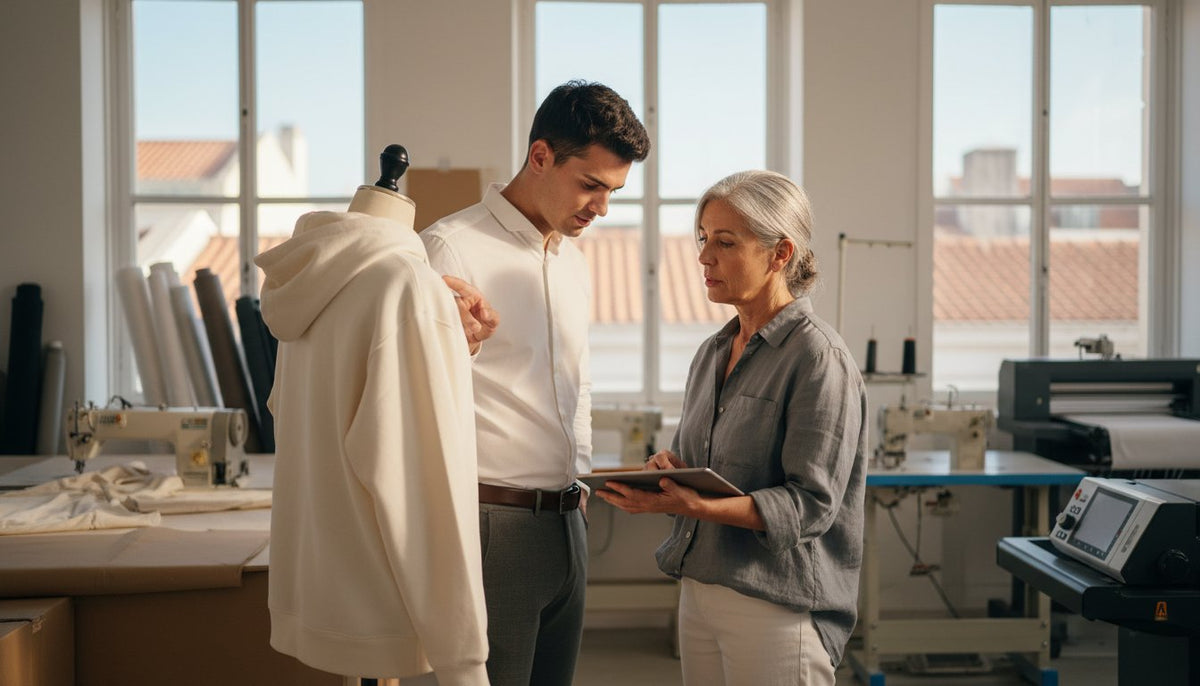
Apparel Sampling: The Ultimate Guide to Perfecting Your Clothing Line in 2026
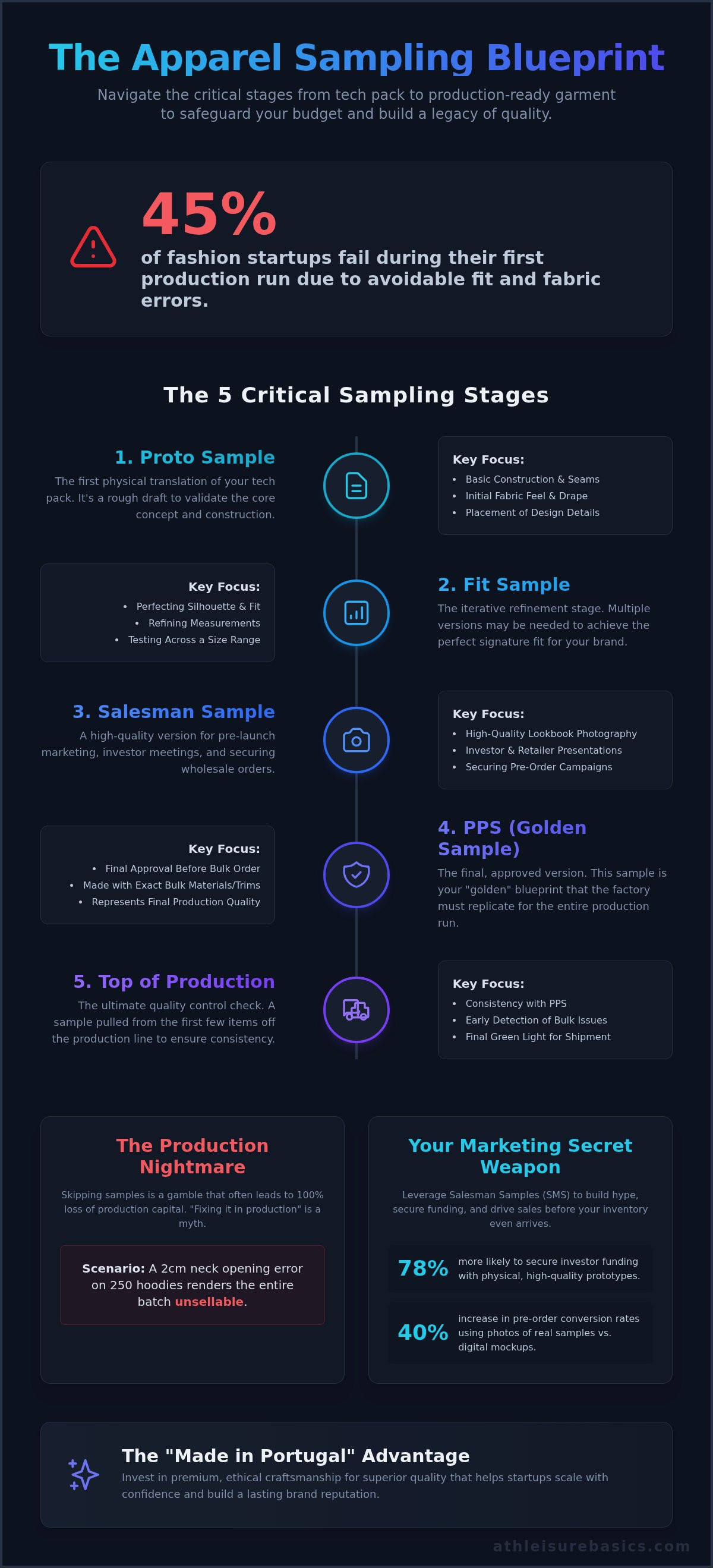
A staggering 45% of fashion startups fail during their first production run because of avoidable fit and fabric errors. You've likely felt the anxiety of sending a tech pack to a factory and wondering if the physical garment will actually match your vision. Mastering apparel sampling is the most critical step to eliminate these production errors, safeguard your budget, and ensure your brand’s quality meets the highest industry standards. It's the difference between a costly mistake and a premium product that builds a lasting legacy.
We understand that terms like PPS or SMS can feel overwhelming, especially when you're focused on the creative side of your business. You deserve a manufacturing partner that treats development as a strategic investment; not just another invoice. This guide provides a clear roadmap from your initial design to a final product that's ready for your marketing photography. We'll show you how to navigate the sampling process to secure the superior quality your customers expect. By the end of this article, you'll have the tools to launch your 2026 collection with complete confidence and efficiency.
Key Takeaways
- Discover how to safeguard your budget and eliminate costly production errors by understanding the essential role of the prototyping phase.
- Navigate the five critical stages of the apparel sampling process to ensure your designs transition seamlessly from a tech pack to a high-quality physical garment.
- Evaluate the strategic benefits of custom versus white label paths to determine which manufacturing model best aligns with your brand's timeline and creative goals.
- Master the "Golden Rule" of production preparation to ensure your material sourcing and technical specifications meet the highest industry standards.
- Learn why a "Made in Portugal" approach offers a premium, ethical advantage that helps startups scale with confidence and superior craftsmanship.
What is Apparel Sampling and Why is it the Foundation of Your Brand?
Apparel sampling is the iterative process of creating physical prototypes to validate every aspect of a garment, from the structural integrity of the seams to the drape of the fabric, before committing to bulk production. It isn't just a preliminary step; it's the technical heart of your business. Within the global clothing industry, this phase acts as the ultimate filter that separates professional brands from amateur ventures. When you invest in a sample, you aren't just buying a single piece of clothing. You're purchasing a technical blueprint that ensures your vision translates into a repeatable, high-quality product.
By 2026, the apparel sampling landscape has shifted toward a blend of digital precision and physical craftsmanship. Modern tech packs now integrate with 3D rendering software to reduce initial material waste by approximately 25%. However, the physical sample remains the final authority. It allows you to test sustainable material sourcing in real-world conditions, ensuring that eco-friendly fabrics maintain their shape after multiple wash cycles. This transition from "buying a sample" to "investing in a blueprint" is a psychological shift that defines a founder's commitment to longevity and premium standards.
Successful founders treat the sampling phase as a risk-mitigation strategy. It's the only stage where you can safely fail, refine, and perfect. Whether you're working with a low MOQ of 60 pieces or scaling to thousands, the sample is your guarantee that the end product will meet the high standards your customers expect. It's about building a legacy of quality, one stitch at a time.
The True Cost of Skipping the Sampling Phase
Skipping the sampling phase often leads to what we call the "Production Nightmare." Imagine a scenario where you order 250 premium hoodies, only to discover upon delivery that the neck opening is 2 centimeters too small for the average wearer. This single fit error renders the entire batch unsellable, potentially leading to a 100% loss of your production capital. For startup brands, this level of financial strain often results in bankruptcy within the first 12 to 24 months of operation.
The myth of "fixing it in production" is a dangerous trap. Production lines are optimized for speed and repetition, not for creative problem-solving. Sampling allows you to establish your brand’s unique signature fit, which is the primary driver of customer retention. When a customer knows your "Medium" fits them perfectly every time, you've secured a long-term brand advocate. This consistency is impossible to achieve without rigorous physical testing.
Sampling as Your Marketing Secret Weapon
Physical samples, specifically Salesman Samples (SMS), are essential tools for your pre-launch strategy. They allow you to generate high-end lookbook photography and social media content months before your bulk inventory arrives in the warehouse. Using these prototypes for "sneak peeks" provides early data on consumer preferences, allowing you to adjust your marketing focus based on real engagement.
- Investor Confidence: Data shows that 78% of early-stage investors are more likely to fund a brand that presents physical, high-quality prototypes rather than just digital sketches.
- Retailer Buy-in: Professional buyers for boutiques and major retailers require physical samples to assess the hand-feel and construction quality before signing purchase orders.
- Pre-order Campaigns: Authentic photography of physical samples can increase pre-order conversion rates by up to 40% compared to using digital mockups alone.
By leveraging your samples for marketing, you turn a manufacturing necessity into a powerful growth engine. These prototypes prove to the world that your brand is capable of delivering "Made in Portugal" quality, establishing trust before the first sale is even made.
The 5 Critical Stages of the Apparel Sampling Process
Success in the fashion industry depends on more than just a great sketch. It requires a rigorous validation process to ensure every stitch meets your brand's standards. The apparel sampling journey is a multi-stage filter designed to catch errors before they become expensive mistakes in bulk production. This progression is a core component of the apparel design and prototyping process, transforming a 2D tech pack into a retail-ready garment.
- 1. The Proto Sample: This is your tech pack's first physical manifestation. It's often made using "available" fabric rather than your final choice to save time. This stage is where you'll make 80% of your structural adjustments.
- 2. The Fit Sample: Once the design is set, we focus on the body. We test the silhouette on live models or 3D avatars to refine the drape and movement. This stage also validates your grading, ensuring the proportions remain consistent from size XS to XXL.
- 3. Salesman Sample (SMS): These are your marketing workhorses. An SMS is a high-quality version used for lookbook photography and wholesale meetings. They must represent the final quality perfectly to secure buyer commitments.
- 4. Pre-Production Sample (PPS): Think of the PPS as the "gold standard." It's the final version created using the actual production line, fabrics, and trims. Once you sign off on the PPS, the factory begins bulk manufacturing.
- 5. Shipping Sample: Before the goods leave the factory, a final sample is pulled from the finished stock. This ensures the packaging, folding, and final quality match the approved PPS.
Skipping even one of these steps increases the risk of receiving a shipment that doesn't align with your vision. If you're looking to simplify this journey, our low MOQ manufacturing services provide a structured path from your first proto to the final shipping container.
Decoding the Technical Sample Alphabet
Industry jargon can be confusing for new founders. A 'Red Seal' sample acts as the technical green light for fit and construction. Once you move to the 'Gold Seal,' you're approving the final version for production. You'll also need a 'Size Set' to verify that a size Large fits as perfectly as the Small. A 'Counter Sample' is the factory's way of proving they can replicate your vision using their specific machinery. You must keep a Master Sample in your own office as a legal and quality benchmark for every order; it's your only protection if a dispute arises regarding bulk quality.
Timeline Expectations: From Tech Pack to Final PPS
Manufacturing in Portugal offers speed, but premium quality requires a realistic schedule. A typical Portuguese factory requires 14 to 21 days to produce a first proto sample. Delays usually happen because of fabric sourcing. Custom OEKO-TEX® certified knits often have a 30-day lead time. Hardware like custom zippers or branded toggles can add another 14 days to the schedule. In 2026, the average sampling turnaround time for premium athleisure ranges between 8 and 12 weeks from initial tech pack submission to final PPS approval. Efficient apparel sampling requires planning for these lead times to avoid missing your seasonal launch dates.
Custom vs. White Label Sampling: Choosing Your Path
Choosing between custom manufacturing and white label production is the most significant decision you'll make for your brand's infrastructure. This choice dictates your initial capital outlay, your speed to market, and the depth of your apparel sampling process. While custom work offers a blank canvas for innovation, white labeling provides a stable foundation for rapid growth. Your current stage of business and your available budget should be the primary guides for this decision.
Sampling for Custom Manufacturing (250+ Pieces)
Custom manufacturing is for brands that need to control every fiber of their identity. This process begins with sourcing specific OEKO-TEX® certified fabrics that meet your performance standards. Whether it's a specific GSM for a heavy-weight hoodie or a unique recycled nylon blend, custom sampling ensures your product is unique. This path requires a comprehensive Tech Pack development to avoid costly misunderstandings with the factory.
Expect at least 2 to 3 rounds of revisions during custom apparel sampling. Each round allows you to refine the drape, the stitch density, and the hardware placement. Success in this phase requires discipline. You've got to decide when a sample is "production-ready" to avoid the trap of infinite prototyping. For orders exceeding 250 pieces, this intensive development ensures your bulk production matches your vision without surprises.
The White Label Advantage for Startups
For founders looking to launch quickly with lower risk, white labeling is the ultimate solution. This method leverages premium "Luxury Blanks" that have already been perfected through years of fit testing and consumer feedback. By using pre-existing silhouettes, you bypass the 4 to 6 months typically spent on fit sampling and pattern adjustments. This efficiency is a core part of optimizing apparel supply chains for smaller, more agile brands.
In the white label model, your sampling efforts shift toward branding and customization. You'll focus on testing high-density embroidery, screen printing, or custom woven neck labels on proven garments. This approach is the fastest route to a "logo-to-legacy" launch by early 2026. With MOQs starting at 60 pieces per style, white labeling allows you to test the market with a professional product in a fraction of the time.
Ultimately, your strategy should align with your capital. If you've got the 10,000 to 15,000 Euro required for a full custom collection, the custom path builds a unique moat around your brand. If you're starting with 3,000 to 5,000 Euro, white labeling offers a premium, Made-in-Portugal quality that establishes your reputation for excellence. Both paths lead to success; the best choice is the one that keeps your business cash-flow positive as you scale.
How to Prepare for a Flawless Sampling Run: A Founder’s Checklist
Your apparel sampling phase is a mirror. It reflects the precision of your initial instructions. The "Golden Rule" of manufacturing is simple: your physical output is only as good as your technical input. If you start with a vague sketch or a low-resolution photo, you'll end up with a prototype that misses the mark. Successful founders treat the first sample as a test of their documentation, not just a test of the factory's skill. Precision at this stage prevents costly delays during mass production.
Essential Documentation: Tech Packs and BOMs
A professional tech pack is your contract with the manufacturer. It must include a comprehensive Bill of Materials (BOM), detailed measurement charts for every size, and specific stitch requirements like flatlock or overlock seams. Many first-time founders make the mistake of using subjective language. Saying "make it feel soft" leads to 100% subjective results. Instead, specify a target weight like 280 GSM or a specific fiber blend like 95% GOTS cotton and 5% elastane. This is where Athleisurebasics consulting services provide the most value. We help you translate your vision into technical specs that a pattern maker can actually follow. This precision reduces the number of sample rounds from five down to just two, saving you roughly $1,500 in development costs.
Fabric and Trim Sourcing Support
You must select your athleisure fabrics before the first stitch is ever sewn. Sourcing in Portugal offers a distinct advantage because you gain access to premium Portuguese cotton and GRS-certified recycled synthetics. During the proto phase, we focus on technical testing. We check for a 5% shrinkage rate or colorfastness issues before moving to the next stage. Don't overlook the details. Custom hardware like branded zippers, heavy-duty drawstrings, and engraved aglets should be sourced early to ensure they match your brand aesthetic. Using off-the-shelf trims for a luxury brand is a common error that 40% of startups regret after their first launch. High-quality hardware elevates a basic garment into a premium product.
Budgeting for samples requires a shift in mindset. Expect to pay a sample surcharge, which is typically 2x to 3x the projected mass production cost. If a hoodie costs $25 to produce at scale, your sample might cost $75. This covers the time it takes to set up machines and create a unique pattern for a single unit. It's an investment in your brand's future. Paying for three accurate samples is always cheaper than fixing 500 defective garments later.
Effective apparel sampling requires a feedback loop rooted in data. When you receive your prototype, use a measuring tape to verify every point of measure. Don't just say "the fit is wrong." Document that "the chest width is 2cm too narrow compared to the spec sheet." This allows your production partner to make mathematical adjustments rather than guesses. Clear, actionable feedback is the final piece of the puzzle that ensures your production run is flawless.
Start your sampling journey with a trusted partnerWhy Premium Sampling in Portugal is the Smartest Investment for 2026
Portugal represents the gold standard for European textile manufacturing. As we approach 2026, brands are shifting away from high-risk, distant supply chains in favor of near-shoring. This strategy reduces lead times by up to 40% compared to traditional manufacturing hubs in Asia. Choosing Portugal for your apparel sampling means you're investing in a region where 98% of textile companies are family-owned and deeply committed to specialized craftsmanship. You aren't just buying a prototype; you're securing a spot in a supply chain that values precision and speed.
The proximity to major European fashion capitals is a logistical masterstroke. Shipping from Porto to London or Paris takes 3 to 5 days by road, while sea freight from the Far East can exceed 35 days. This 30-day advantage allows your brand to react to market trends in real-time. It's the difference between being first to market or arriving after the trend has faded. When you invest in Portuguese sampling, you're buying the ability to be agile.
Ethical Production and OEKO-TEX® Standards
Modern consumers demand transparency. By 2026, upcoming EU digital product passport regulations will likely require brands to prove their ethical claims with hard data. Manufacturing in Portugal ensures your samples meet OEKO-TEX® Standard 100, certifying that every thread, button, and zipper is free from harmful substances. This level of compliance protects your brand from 100% of the PR risks associated with unregulated labor markets. You'll know exactly who is sewing your garments. This premium craftsmanship translates to a 25% higher retail price point because customers are willing to pay for integrity and durability.
Athleisurebasics bridges the gap between your startup vision and professional execution. Many factories ignore emerging brands, but we've built a system that supports your growth from day one. We treat the apparel sampling phase as a technical audit of your brand's potential. Our experts analyze your tech packs to ensure every seam and fabric choice is optimized for performance and longevity. We don't just follow instructions; we provide the technical feedback necessary to turn a good idea into a market-leading product.
- Low MOQ Flexibility: Transition from a successful sample to a production run of just 70 pieces per style.
- Reduced Financial Risk: Small batches mean you don't tie up all your capital in unsold inventory.
- Quality Assurance: Every piece in your 70-unit run matches the exact quality of your approved pre-production sample.
- Expert Guidance: We act as your technical consultants, not just a vendor.
Your Journey from Logo to Legacy Starts Here
The transition from a single sample to a full production run is where most brands fail. We guide you through this shift, ensuring the quality of your first 70 pieces matches the excellence of your initial prototype. Our team treats your factory relationship as a long-term asset. We offer the support you need to scale from a small launch to a global legacy. Ready to build something lasting? Get a Custom Apparel Manufacturing Quote and start your sampling process today.
Your factory shouldn't be a black box. In Portugal, the culture of collaboration means your manufacturer serves as a technical partner. If a specific stitch doesn't sit right during the sampling phase, we'll tell you before you commit to a full run. This proactive communication prevents costly errors. By the time 2026 arrives, the brands that thrive will be those with lean, agile, and ethical supply chains. It's time to stop guessing and start building with a partner who understands the stakes.
Build Your 2026 Fashion Legacy Today
Mastering the development cycle is the only way to ensure your brand thrives in a competitive 2026 market. You've seen how apparel sampling serves as the vital bridge between a design concept and a retail-ready product. By following a rigorous five-stage testing process and choosing between bespoke custom patterns or flexible white label options, you'll protect your investment and brand reputation. Most founders struggle with high entry barriers; however, strategic planning turns those obstacles into a competitive edge.
Athleisurebasics removes the typical risks for startups by offering low MOQ production starting at just 60 pieces per color. Our team utilizes OEKO-TEX® certified premium fabrics and provides expert production consulting from our hubs in Portugal. This ensures every garment meets strict EU ethical standards while delivering the luxury feel your customers demand. It's time to stop dreaming about your collection and start holding it in your hands.
Start your premium sampling journey with Athleisurebasics today
Your vision deserves the highest industry standards, and we're excited to help you build a brand that lasts.
Frequently Asked Questions
How much does apparel sampling typically cost for a startup?
Apparel sampling for a startup usually costs between $150 and $500 per style depending on the design complexity. This price covers professional pattern making, material sourcing, and specialized labor for a single garment. While these costs are higher than bulk unit prices, they're a vital investment to ensure your vision translates perfectly. Many premium manufacturers in Portugal will credit these fees back to you if your production order exceeds 200 units.
How many rounds of sampling are standard for a new custom design?
You should expect 2 or 3 rounds of sampling for a new custom design to achieve retail-ready quality. The first round is the proto sample used to verify the basic fit and silhouette. The second round is the pre-production sample which uses the final fabric and trims. If your first iteration achieves a 95% accuracy rate, you might only need one revision before starting your main manufacturing run of 500 pieces.
Can I use my samples for my website's product photography?
You can use your samples for website photography if they're salesman samples or final pre-production samples. Early prototypes often use substitute fabrics or "available" colors, so they won't represent the final product with 100% accuracy. Using a high-quality final sample from an OEKO-TEX certified facility ensures your marketing materials look premium. This strategy saves you approximately $2,000 in additional product development costs before your full inventory arrives at the warehouse.
What is the difference between a prototype and a salesman sample?
A prototype focuses on perfecting the fit and design, whereas a salesman sample is a retail-ready version used for marketing and securing orders. Prototypes often use "available" fabrics to save costs during the initial 4 week development phase. In contrast, a salesman sample uses the exact 280 GSM cotton or technical fabric intended for your final collection. This distinction in apparel sampling helps you manage your budget while ensuring your brand's quality remains consistent.
Do I need to provide my own fabrics for the sampling phase?
You don't need to provide your own fabrics when working with a full-service partner like Athleisurebasics. We source premium materials from a network of 50 local Portuguese suppliers to match your specific tech pack requirements. If you require a highly specific 100% organic cotton blend, we can facilitate that through our established supply chain. This saves you 20 hours of sourcing time and ensures every material meets strict EU quality standards.
What happens if I'm not happy with the first sample I receive?
If the first sample doesn't meet your expectations, you'll submit a detailed feedback report for a second iteration. Manufacturers typically allow for 15% adjustments in measurements or construction details between rounds of apparel sampling. We review the garment against your original tech pack to identify where the 5mm deviation or stitching issue occurred. Clear communication at this stage is why sampling is the most critical phase for maintaining your brand's 5-star reputation.
How long does the entire sampling process take from start to finish?
The entire apparel sampling process generally takes 4 to 8 weeks from the initial tech pack submission to the final approved version. Pattern making takes about 7 days, while sourcing specific trims adds another 14 days to the timeline. Shipping samples from Portugal to your office usually takes 3 business days via DHL. Planning for a 60-day window ensures you have enough time to test the garment's durability and fit before launching your collection.
Is it possible to skip sampling if I am doing white label manufacturing?
You can skip the custom sampling phase if you're using white label manufacturing because the patterns and fits are already proven. Since these styles have already passed 100% of quality control checks in previous production runs, the risk is significantly lower for first-time founders. However, ordering a single "buy-in" sample is still a smart move to verify the hand-feel of the fabric. This approach allows you to launch a 60-piece collection in half the time.

Leave a comment
This site is protected by hCaptcha and the hCaptcha Privacy Policy and Terms of Service apply.