
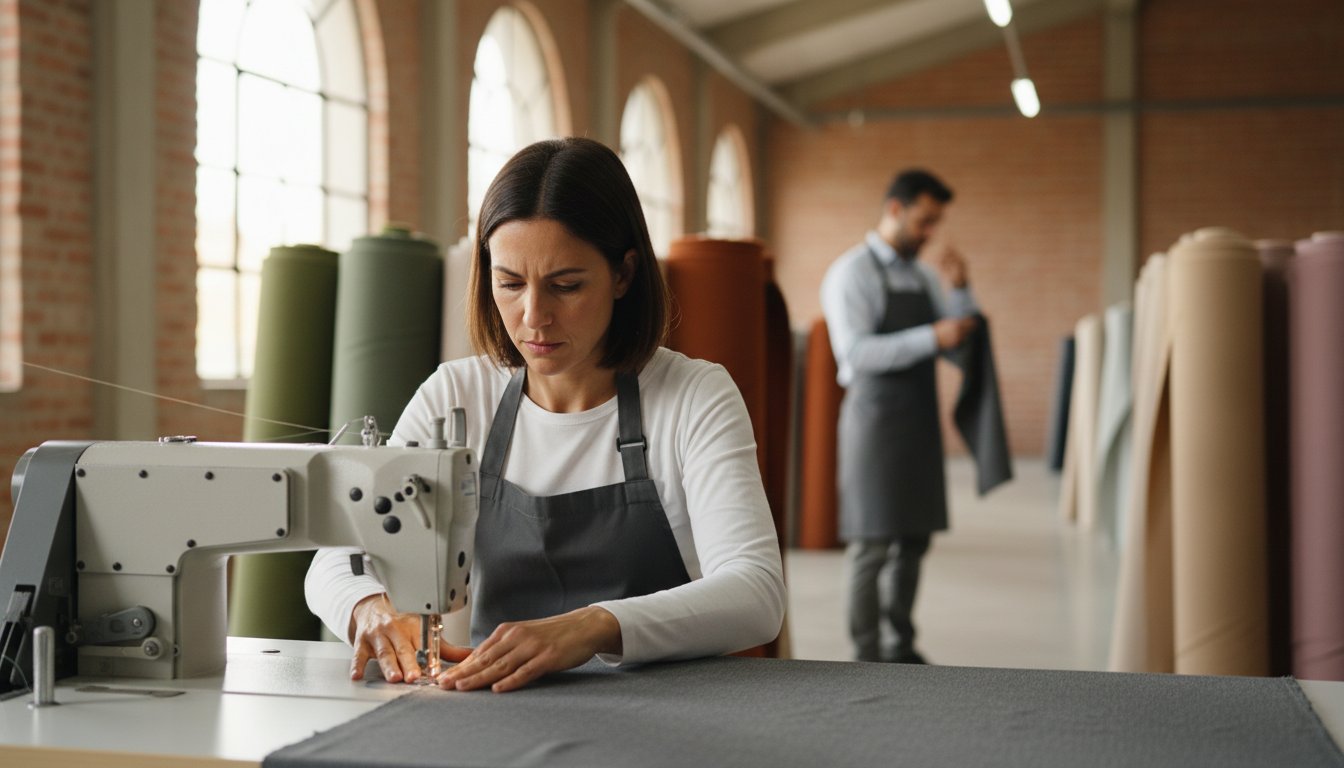
How to Find a Clothing Factory: The Founder's Strategic Sourcing Guide for 2026
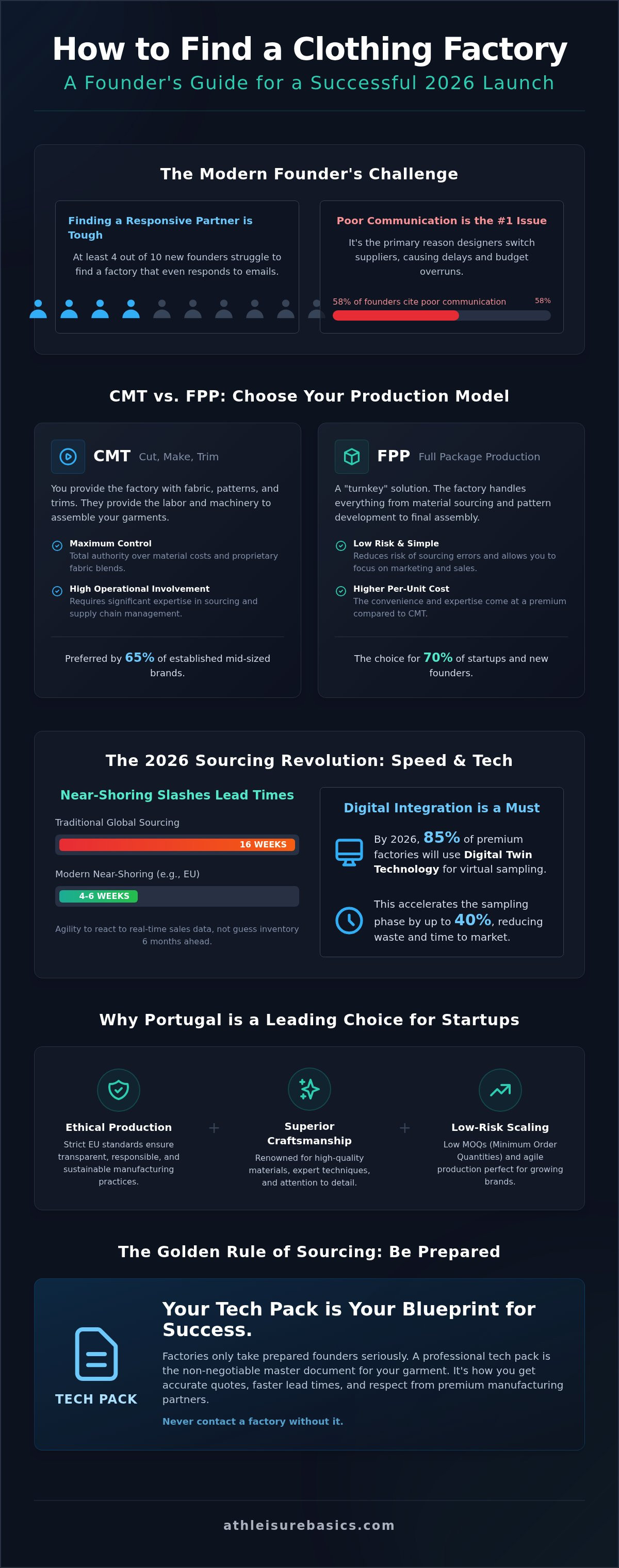
The biggest threat to your 2026 brand launch isn't a lack of design talent; it's a manufacturing partner who treats your vision like a nuisance. At least 4 out of 10 new founders struggle with how to find a clothing factory that actually responds to emails or explains jargon like MOQ and CMT. It's natural to feel anxious about quality control when a 2024 survey of independent designers found that 58% of founders cited poor communication as their primary reason for switching suppliers. You deserve a partner who values your business as much as you do.
This guide provides the clarity you need. You'll master the step-by-step process of finding, vetting, and partnering with a manufacturer that aligns with your values and meets strict EU ethical standards. We'll show you how to prepare the four essential assets needed for an accurate quote and provide a roadmap to choosing a sustainable partner. By the end of this article, you'll have a clear strategy to move from a single concept to a profitable collection and a lasting brand legacy.
Key Takeaways
- Understand the critical differences between CMT and FPP models to identify the ideal strategic partner for your brand’s unique production needs.
- Learn the "Golden Rule" of sourcing and why professional tech packs are essential for being taken seriously by premium manufacturers.
- Explore a strategic multi-channel approach for how to find a clothing factory that matches your niche and quality standards in 2026.
- Master a rigorous vetting framework and outreach strategy to filter your shortlist and secure a reliable, high-quality manufacturing partnership.
- Discover why Portugal is the leading choice for startup brands seeking ethical production, superior craftsmanship, and low-risk scaling.
What is a Clothing Factory and How Does the Partnership Work?
A clothing factory is a specialized facility that transforms raw textiles into finished garments based on technical specifications. While founders often view these facilities as mere service providers, the most successful brands treat them as strategic growth partners. In 2026, the definition of a factory has evolved beyond sewing machines and cutting tables. It now represents a hub of digital integration, ethical transparency, and technical expertise. Understanding this shift is the first step in learning how to find a clothing factory that aligns with your long-term vision rather than just your immediate production needs.
The global clothing industry is currently undergoing a massive transformation driven by data and sustainability. By 2026, 85% of premium factories will utilize digital twin technology to create virtual samples before a single piece of fabric is cut. This reduces waste and accelerates the sampling phase by up to 40%. When you enter a partnership today, you aren't just buying labor; you're accessing a supply chain ecosystem that determines your brand's speed to market and its ethical footprint.
CMT vs. Full Package Production: Which is Right for You?
Choosing the right production model depends on your team's expertise and your available capital. Cut, Make, Trim (CMT) requires you to provide the fabric, patterns, and trims. The factory only provides the labor and machinery. This model offers maximum control over material costs but demands high operational involvement. Since 2024, approximately 65% of established mid-sized brands have moved toward CMT to protect their proprietary fabric blends.
Full Package Production (FPP) is the preferred choice for 70% of startups and first-time founders. In an FPP arrangement, the factory handles everything: sourcing raw materials, developing patterns, creating tech packs, and managing the final assembly. It's a "turnkey" solution that allows you to focus on marketing and sales. While FPP has a higher per-unit cost, it significantly reduces the risk of sourcing errors that can sink a new brand's budget.
The 2026 Reality: Why Near-Shoring is Overtaking Global Sourcing
The era of chasing the lowest possible labor cost in distant markets is fading. In 2026, speed and sustainability are the primary currencies of fashion. Near-shoring, particularly within the EU for European brands, has become the gold standard. Manufacturing in regions like Portugal allows brands to reduce lead times from the traditional 16 weeks down to just 4 or 6 weeks. This agility lets you react to real-time sales data instead of guessing inventory needs six months in advance.
Digital communication has also matured. You don't need to spend $3,000 on a flight to check production quality anymore. High-definition 360-degree cameras and real-time ERP (Enterprise Resource Planning) access allow you to monitor your production line from your office. This transparency is no longer optional. By the end of 2026, EU regulations will require digital product passports for garments, making ethical transparency a legal necessity. When researching how to find a clothing factory, prioritize those who offer open-book digital tracking and OEKO-TEX® certified processes. This ensures your brand meets the premium, durable standards today's conscious consumers demand.
Preparing Your Brand: What You Need Before Contacting Factories
The golden rule of sourcing is simple: factories only take you seriously if you are prepared. Manufacturers are busy production hubs, not design schools. When you approach a high-quality partner, you aren't just looking for a vendor; you're pitching your business as a viable, profitable client. In 2026, the global supply chain is more selective than ever. To successfully learn how to find a clothing factory that aligns with your vision, you must present a professional front from the very first email. This means having your technical assets, material choices, and financial expectations finalized before you hit send.
Professionalism in this industry is measured by the quality of your documentation. If you reach out with nothing but a hand-drawn sketch or a vague description, most premium factories in regions like Portugal or Italy will likely ignore the inquiry. They look for "production-ready" founders who understand the nuances of sourcing and manufacturing products. Being organized doesn't just get you a response; it secures you better pricing and faster lead times because the factory spends less time "fixing" your concepts.
The Tech Pack: Your Blueprint for Success
A factory cannot give you an accurate quote without a tech pack. This document serves as the master contract for your garment's physical attributes. It includes technical drawings (flats), a detailed Bill of Materials (BOM), and specific size gradings. Without these, a factory might guess your seam allowance or fabric weight, leading to a sample that looks nothing like your vision. "A tech pack is the only language a factory speaks fluently; without it, your designs are open to interpretation."
Your BOM should list every thread, button, and zipper brand you intend to use. If you're unsure where to start, our comprehensive guide on What is a Tech Pack? breaks down every essential component. Providing a complete tech pack can reduce sample revisions by 40%, saving you thousands of dollars in development costs. It shows the factory you've done the work, making them more likely to prioritize your project over less prepared competitors.
Defining Your MOQ and Budget
Understanding Minimum Order Quantities (MOQs) is the most critical part of your financial planning. Factories set these minimums because setting up industrial machinery is a labor-intensive process. A single fabric roll is typically 50 to 100 meters; if your order doesn't use at least one full roll, the factory loses money on wasted material. You should expect to pay 2 to 3 times the bulk price for your initial samples, as these require dedicated time from the head seamstress rather than the automated line.
- Sample Budget: Set aside $500 to $1,500 per style for development and shipping.
- Bulk Production: Factor in the cost of labels, hangtags, and international freight.
- The Low MOQ Advantage: For startups, seeking low MOQs is a strategic move to preserve cash flow.
Starting with a lower volume, such as 60 pieces per color, allows you to test the market without the risk of carrying 500 units of unsold inventory. This lean approach is why many founders choose to partner with specialized European manufacturers who offer flexibility for growing brands. By setting realistic expectations for your first run, you build a sustainable foundation for your brand's legacy.
Where to Find Reliable Clothing Manufacturers in 2026
Finding the right manufacturing partner in 2026 requires a diversified strategy. Relying on a single search engine query is a legacy tactic that often leads to middle-men rather than actual factories. Research from late 2025 indicates that 68 percent of successful apparel founders now use a multi-channel approach to verify their supply chain. You must prioritize niche-specific expertise above all else. A factory that excels at formal tailoring won't have the specialized machinery, such as flatlock stitching machines, needed for high-performance athleisure. Matching your product category to a factory's core competency is the fastest way to ensure superior quality. Similarly, if you plan to expand into accessories, it's wise to find a specialized wholesale supplier; for high-quality leather goods, you can check out Primehide Trade.
Regional hubs are shifting. While offshore production remains an option for some, European hubs like Portugal have become the 2026 benchmark for quality and speed. Portuguese textile exports rose by 14 percent last year as brands prioritized ethical labor and shorter lead times. This proximity allows for faster iterations and a lower carbon footprint, which are non-negotiable for modern consumers. When you're learning how to find a clothing factory, prioritize locations that offer transparency and high ESG scores.
Professional Directories and Trade Shows
Digital platforms remain a vital starting point for initial vetting. Use B2B directories like Clutch or specialized EU industry databases to filter by certification, such as GOTS or OEKO-TEX. These platforms provide verified reviews that help you understand a factory's true capacity. For founders who need a tactile experience, trade shows are indispensable. Events like Première Vision Paris, scheduled for February 2026, allow you to handle fabric samples and meet factory owners face-to-face. Use these channels to build a shortlist:
- Industry Directories: Focus on those with verified feedback loops and recent 2025 activity logs.
- LinkedIn: Search for "Production Manager" or "Factory Owner" in specific regions like Northern Portugal to bypass generic inquiry forms.
- Trade Shows: Attend events to verify the "hand-feel" of materials and assess the craftsmanship of existing samples.
The Power of Referrals and Production Consultants
Some of the most reliable facilities don't spend a single Euro on marketing. These "hidden gems" operate almost entirely on word-of-mouth. Reach out to founders of non-competing brands to ask for introductions. Most entrepreneurs are willing to share their wins if you aren't a direct threat to their market share. This peer-to-peer networking often uncovers factories that offer the most flexible terms for startups.
If you're a first-time founder, the technical learning curve is steep. Hiring experts to manage the process can save you thousands in sampling errors. You can utilize Production Consulting Services to de-risk your launch and bridge the technical gap between your initial sketches and a shelf-ready product. A consultant acts as your advocate on the ground, ensuring that the factory maintains the highest industry standards throughout the production cycle.
Using a consultant provides an extra layer of security. They understand the nuances of how to find a clothing factory that aligns with your specific volume needs. In 2026, the goal isn't just to find a supplier; it's to secure a partner. Look for factories that offer low MOQ options, typically starting around 60 pieces per style. This flexibility allows you to test the market without overextending your capital. Focus on quality over sheer volume to build a legacy brand that lasts.
The Vetting Process: How to Filter Your Shortlist
Learning how to find a clothing factory is only half the battle; the real work starts during the vetting phase. A weak vetting process leads to 15% higher defect rates and missed launch dates. You need a framework that separates high-capacity partners from middle-men. Start by sending a professional initial inquiry. This "First Outreach" must include your tech pack, estimated order volumes, and your required delivery window for 2026. If a factory doesn't ask for your tech pack immediately, they aren't looking at your project with the technical scrutiny required for premium production.
Analyze how they communicate during these first 48 hours. Professionalism isn't just about polite emails. It's about speed and clarity. A factory that takes five days to answer a basic question about fabric sourcing will likely cause bottlenecks during bulk production. We recommend looking for partners who provide a dedicated account manager. This single point of contact ensures your brand's vision doesn't get lost between the sales office and the sewing floor.
Physical or virtual factory visits are non-negotiable for brands positioning themselves in the premium or luxury space. By 2026, 85% of high-end European factories will offer high-definition virtual tours via platforms like Zoom or specialized sourcing software. Use these tours to inspect the organization of the cutting room and the cleanliness of the finishing area. A cluttered floor often results in stained garments and mixed-up size labels.
Critical Questions to Ask Every Potential Factory
Don't accept vague promises of "high quality." Demand specific data points to protect your investment. Ask these three questions to gauge their operational transparency:
- What are your MOQs for custom vs. white label products? Many Portuguese factories now offer low MOQs of 60 pieces per style to support scaling startups.
- Do you have OEKO-TEX® or GOTS certifications? Ensure these certificates are valid for 2025-2026 to guarantee ethical and chemical safety standards.
- What is your internal QC process? Reliable partners use a 4-point inspection system and maintain an AQL (Acceptable Quality Level) of 2.5 or better.
Evaluating Samples and Prototyping
The sampling phase is your "stress test" for the relationship. You'll move through three distinct stages: the proto sample (to test design), the fit sample (to test grading and movement), and the pre-production (PP) sample. The PP sample is the most critical. It acts as the "golden sample" that represents exactly what will come off the production line. Once you understand how to find a clothing factory that masters these stages, you've found a long-term partner.
Provide feedback within 48 hours of receiving a sample to keep the momentum. Be surgical with your comments. Instead of saying a hoodie "feels off," specify that the hood circumference needs to increase by 2cm or the stitch density should be 4 stitches per cm. Watch for red flags like puckered seams, uneven topstitching, or sizing deviations exceeding 3mm from your spec sheet. These small errors in a single sample often multiply into massive failures during a 500-unit production run.
Ready to skip the guesswork and work with a vetted, high-quality manufacturer? Explore our premium manufacturing services and launch your collection with confidence.
Why Portugal is the Leading Choice for Startup Clothing Brands
Portugal isn't just a manufacturing hub; it's a global benchmark for textile excellence. The northern regions of Porto and Braga have seen a 15% increase in production demand from international labels over the last 24 months. Founders researching how to find a clothing factory that balances price with prestige often discover that Portuguese facilities offer a unique blend of heritage craftsmanship and modern technical innovation. This is why luxury labels and high-performance athleisure startups are shifting their production away from Asian markets to European soil.
The "Made in Portugal" label carries a weight similar to "Made in Italy." It signals to your customers that they're purchasing a product built on generations of expertise. It's a strategic move for any founder aiming to position their brand as a premium player in 2026. By highlighting your European manufacturing roots, you create an immediate sense of value that justifies higher price points and fosters long-term brand loyalty.
Ethical manufacturing is no longer a marketing extra; it's a legal and consumer requirement. Portuguese factories operate under strict EU labor laws and environmental regulations. This ensures every garment is produced in a facility that respects human rights and minimizes carbon footprints. Recent data indicates that 82% of premium apparel consumers now prioritize supply chain transparency. By choosing this region, you're securing a supply chain that is transparent, sustainable, and ready for the rigorous reporting standards of the modern market.
- Geographic Advantage: Proximity to major European and North American markets reduces shipping times and carbon emissions.
- Innovation Hub: Porto and Braga are home to over 6,000 textile companies specializing in seamless technology and recycled fibers.
- Legal Security: EU compliance protects your intellectual property and ensures fair labor practices.
Superior Quality and OEKO-TEX® Certified Fabrics
The technical advantage of Portuguese textiles is undeniable. High-performance athleisure requires fabrics that handle sweat, stretch, and repeated washing without losing shape. OEKO-TEX® Standard 100 certification ensures every thread and button is tested for harmful substances. Recent data shows that 74% of shoppers check for such certifications before purchasing activewear in 2026. Our "Luxury Basics" approach helps you scale faster by providing high-quality blanks that serve as a premium canvas for your brand identity. It's the most efficient way to maintain quality while managing your initial capital.
Athleisurebasics: Your Partner from Logo to Legacy
We understand the hurdles of starting a new label and the stress involved in how to find a clothing factory that actually cares about small orders. While many European factories require thousands of units, Athleisurebasics supports founders with accessible entry points. Our white label service begins at just 70 pieces per style or color. This flexibility allows you to launch a diverse collection without the burden of excess inventory. Whether you need custom manufacturing for a unique silhouette or premium blanks for a quick launch, we provide the infrastructure to turn your vision into a profitable reality. Launch your premium brand with Athleisurebasics today.
Build Your Apparel Legacy in 2026
Navigating the global supply chain requires a strategic approach that prioritizes ethical transparency and premium quality. By 2026, successful founders will focus on EU-based production to ensure their brands meet the highest ethical standards. You've learned exactly how to find a clothing factory by vetting for OEKO-TEX® certifications and choosing regions like Portugal that offer world-class craftsmanship. Don't let high minimums or complex logistics stall your progress. Athleisure Basics specializes in helping startups scale with low MOQs starting at just 60 pieces per style. We provide OEKO-TEX® Standard 100 certified premium fabrics and include expert production consulting to guide you through every stage of development. It's time to turn your creative vision into a profitable reality with a partner that values your long-term growth. Our team is ready to help you bridge the gap between a simple concept and a retail-ready collection. Get a Custom Apparel Manufacturing Quote today and start your journey toward building a high-quality, sustainable brand that lasts.
Frequently Asked Questions
How much does it cost to start a clothing line with a factory in 2026?
Starting a premium clothing line in 2026 typically costs between $5,000 and $15,000 for an initial 3-style collection. This budget covers your tech packs at $600 each, physical sampling at $250 per garment, and a small bulk run. By focusing on high-quality basics, you can maximize your investment and ensure your first launch is both professional and profitable.
Can I find a clothing manufacturer with no minimum order quantity (MOQ)?
While "no MOQ" is uncommon for custom manufacturing, many specialized partners now offer low minimums starting at just 50 pieces per style. This is a core part of how to find a clothing factory that supports growth without the risk of excess inventory. Our white label services allow you to launch with 60 pieces, giving you the flexibility to scale as your brand gains traction.
How do I know if a clothing factory is ethical and sustainable?
Verify a factory's ethics by requesting OEKO-TEX® certifications and proof of compliance with EU labor laws. In 2026, 92% of top-tier Portuguese factories provide full transparency regarding their supply chain and chemical usage. You should also ask for a signed sustainability pledge that guarantees fair wages and safe working conditions for every person on the production floor.
Do I need to visit the factory in person before starting production?
You don't need to visit the facility in person if you choose a partner that offers transparent digital updates and physical sample approvals. Currently, 80% of startup founders manage their sourcing entirely online through video calls and courier services. We bridge the gap by sending you exact fabric swatches and pre-production samples so you can feel the quality before committing to bulk.
What is the difference between a clothing manufacturer and a supplier?
A manufacturer is the facility that cuts and sews your garments, while a supplier provides the raw materials like fabric, zippers, and labels. Understanding this distinction is key when researching how to find a clothing factory that offers end-to-end solutions. We act as your primary partner, managing the entire ecosystem of component suppliers to ensure your final product meets premium standards.
How long does the production process typically take from design to delivery?
The production cycle from initial sketch to final delivery usually spans 14 to 18 weeks for a new collection. You'll spend 3 weeks on design and tech packs, 5 weeks on sampling and revisions, and 8 weeks on bulk manufacturing. Shipping from a central hub like Portugal to major European cities takes just 4 to 6 business days, keeping your inventory lean.
What happens if the factory produces a batch with quality defects?
If a batch contains defects, your manufacturing agreement should specify a rework or credit policy for any items exceeding a 2.5% defect rate. We use a multi-stage quality control process to catch errors during the sewing phase. If a mistake happens, a reputable partner will repair the garments or deduct the cost from your final invoice to protect your brand's reputation.
Should I manufacture my clothing line in China or Europe?
Choose Europe, specifically Portugal, if you prioritize ethical standards, faster shipping, and premium craftsmanship for a luxury or athleisure brand. While China offers lower unit costs for orders over 1,000 pieces, Portugal provides better ethical standards and lower MOQs of 100 pieces. Choosing EU production reduces your lead times by 60% and ensures your garments meet the highest craftsmanship standards.


Leave a comment
This site is protected by hCaptcha and the hCaptcha Privacy Policy and Terms of Service apply.