
Athleisure Market Trends 2026: The Definitive Guide for Brands
The global athleisure market is expanding rapidly, yet for many brands, it feels more saturated and complex than ever. How do you cut through the noise and develop products that will actually sell? With market research often feeling confusing and not actionable, it’s difficult to build a product strategy with confidence. To succeed, you need a clear, reliable understanding of the athleisure market trends that are truly shaping the future.
This definitive guide is your strategic roadmap. We provide an inside look at the top trends in product design, innovative fabrics, and sustainability that will define the market through 2026. You'll gain actionable ideas for in-demand products and learn how to translate these insights into a profitable collection. Our goal is to empower you to move forward confidently, equipped to turn your brand’s vision into the high-quality, trend-setting apparel that modern consumers crave.
Key Takeaways
- Discover the specific product categories-beyond standard leggings-that are currently driving sales and how to add them to your collection.
- Understand how premium, innovative fabrics are the key to differentiating your brand and commanding a higher price point in a competitive market.
- Learn why ethical production and supply chain transparency are no longer optional, but essential strategies for building customer trust and brand loyalty.
- Get a clear roadmap to capitalize on the most profitable athleisure market trends, turning consumer insights into a successful brand launch or collection update.
The State of the Athleisure Market: More Than a Trend, It's a Lifestyle
Once dismissed as a fleeting trend, athleisure has firmly established itself as a dominant and permanent fixture in the global apparel industry. For any entrepreneur looking to launch or scale a brand, understanding the core dynamics of this market is essential. What began as a niche fashion movement has solidified into a powerful cultural force, with the fusion of athletic wear and daily life becoming the new standard. This evolution into the athleisure lifestyle is backed by powerful consumer shifts and impressive economic data, creating immense opportunities for brands that can identify and serve specific niches.
To succeed, you must first grasp the foundational athleisure market trends that continue to shape consumer demand. The market is not just growing; it's maturing and segmenting, rewarding brands that offer specialized, high-quality products.
Market Growth by the Numbers
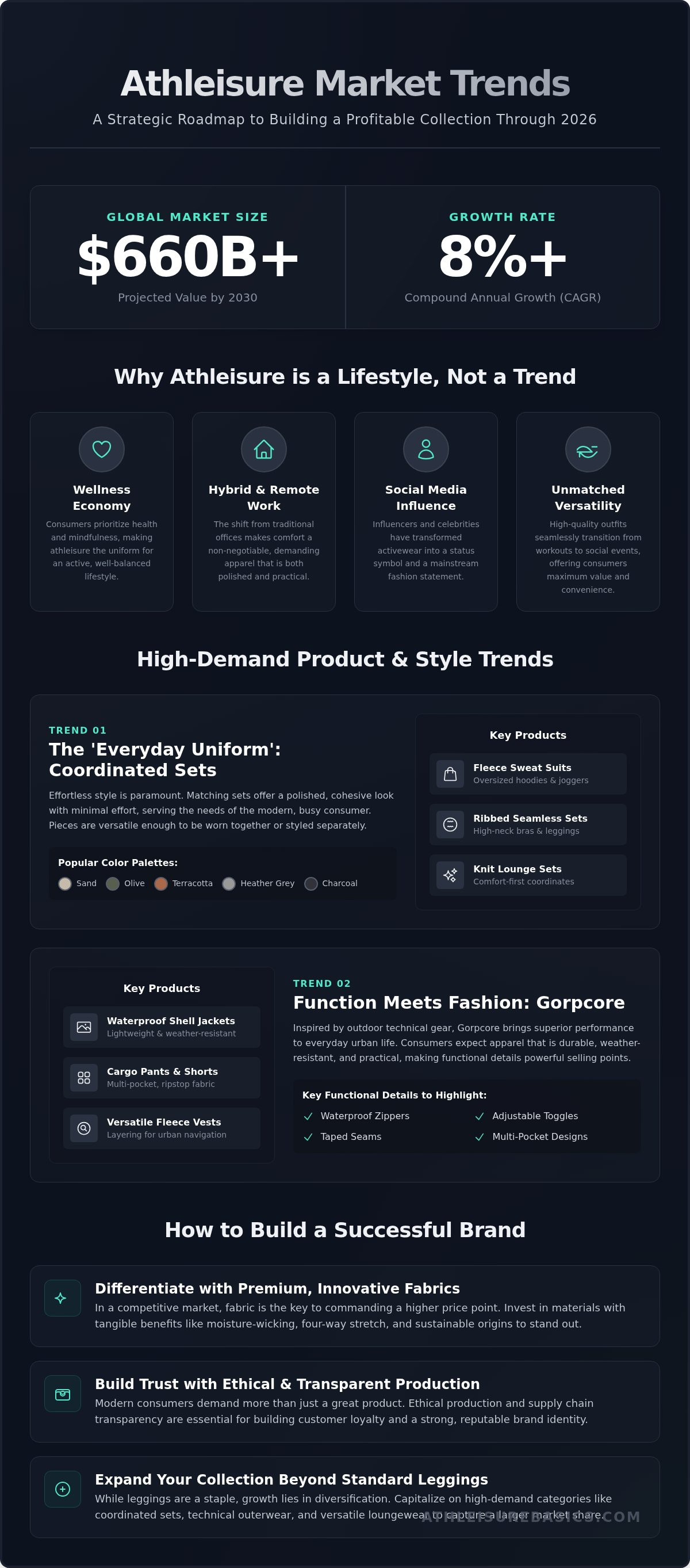
The financial data underscores athleisure's incredible momentum. The global market is projected to surpass USD 660 billion by 2030, expanding at a compound annual growth rate (CAGR) of over 8%. In simple terms, this indicates consistent, strong year-over-year growth. Key economic engines like North America, Europe, and the rapidly expanding Asia-Pacific region continue to drive this demand, creating a stable and profitable landscape for new and established brands alike.
Key Drivers of Athleisure's Popularity
This sustained growth is not accidental. It's fueled by deep-seated changes in how we live, work, and prioritize well-being. Four primary drivers ensure athleisure’s continued relevance:
- The Rise of the Wellness Economy: Consumers increasingly prioritize health, fitness, and mindfulness. Athleisure is the unofficial uniform for this lifestyle, representing a commitment to active living.
- Hybrid and Remote Work Models: The shift away from traditional office attire has made comfort a non-negotiable priority. Consumers demand clothing that offers professional polish without sacrificing the comfort needed for a home office.
- Social Media and Influencer Culture: Celebrities and fitness influencers have normalized wearing premium activewear in everyday settings, turning gym clothes into a status symbol and a fashion statement.
- Unmatched Versatility: The ultimate value proposition of athleisure is its multi-functionality. A single, high-quality outfit can seamlessly transition from a workout to a coffee meeting to running errands, offering consumers convenience and value.
Product & Style Trends: What Customers Are Buying Right Now
To build a profitable brand, it's crucial to move beyond generic categories and understand the specific product-level movements shaping the industry. As the global athleisure market size continues its impressive growth, consumer demand is focused on products that offer a blend of hyper-functionality, aesthetic cohesion, and inclusivity. For brand owners, capitalizing on these high-demand styles is key to capturing market share and building a loyal following. Here are the core product trends to focus on for your next collection.
The 'Everyday Uniform': Coordinated Matching Sets
The matching set has evolved from a simple tracksuit into a sophisticated "everyday uniform." Its appeal is rooted in effortless style; it provides a polished, cohesive look with minimal effort, making it a go-to for today's busy consumer. This trend offers immense versatility, as pieces can be worn together or styled separately.
- Key Products: Premium fleece sweat suits (matching oversized hoodies and joggers), ribbed seamless sets (high-neck sports bras and high-waisted leggings), and knit lounge sets.
- Visual Cues: Focus on elevated color palettes. Muted earth tones (sand, olive, terracotta), timeless neutrals (heather grey, charcoal), and bold monochrome statements are performing exceptionally well.
Function Meets Fashion: The Rise of Gorpcore & Technical Apparel
Gorpcore-a style inspired by outdoor and technical gear-has firmly entered the mainstream. Consumers now expect their daily wear to deliver superior performance. This trend is less about climbing mountains and more about navigating the urban environment with apparel that is durable, weather-resistant, and practical. Offering products with tangible technical benefits is a powerful differentiator.
- Key Products: Lightweight waterproof shell jackets, multi-pocket cargo pants or shorts made from ripstop fabric, and versatile fleece vests.
- Visual Cues: Emphasize functional details like waterproof zippers, adjustable toggles, taped seams, and multi-pocket designs. These are not just features; they are selling points.
Beyond Boundaries: Gender-Fluid and Unisex Styles
One of the most significant athleisure market trends is the powerful shift towards inclusive, gender-fluid designs. Brands that embrace this movement are connecting with a modern consumer base that values inclusivity and rejects traditional fashion binaries. This approach focuses on silhouette and fit rather than gendered categorization, broadening your potential audience significantly.
- Key Products: Heavyweight cotton boxy-fit t-shirts, oversized drop-shoulder hoodies, and relaxed, straight-leg joggers or track pants.
- Visual Cues: Silhouettes are key-think relaxed, comfortable, and non-restrictive. Neutral and earthy colorways enhance the universal appeal of these foundational pieces.
Material Innovation: Why the Fabric Makes the Brand
In the highly competitive athleisure space, a great design is only the starting point. The true differentiator for a premium brand is the fabric. Your material choice is a direct reflection of your brand's commitment to quality, influencing everything from performance and comfort to perceived value. Investing in superior textiles is how you justify a premium price point, build a loyal customer base, and align with the most important athleisure market trends.
Performance-Enhancing Textiles
For a product to earn its "athleisure" title, it must deliver on performance. Advanced textiles provide tangible benefits that discerning customers expect and are willing to pay for. These fabrics are engineered to support an active lifestyle, making them a cornerstone of any serious athleisure collection. Key technologies include:
- Moisture-Wicking: Actively pulls sweat away from the skin to keep the wearer dry and comfortable.
- Four-Way Stretch: Offers complete freedom of movement and excellent shape retention, wash after wash.
- Compression: Provides muscle support during activity and can aid in post-workout recovery.
- Advanced Treatments: Features like anti-odor and UV-protective technologies add significant functional value.
Beyond technical specs, the fabric's weight and hand-feel-how it drapes and feels against the skin-are critical for conveying luxury and superior craftsmanship.
The Surge in Sustainable & Recycled Fabrics
Today’s consumers are more informed and value-driven than ever. As highlighted by ongoing athleisure market growth trends, sustainability has shifted from a niche preference to a core purchasing driver. Integrating eco-conscious materials like recycled polyester, organic cotton, and TENCEL™ is a powerful way to connect with your target audience. Certifications like OEKO-TEX® provide a trusted, third-party guarantee that your products are tested and free from harmful substances, reinforcing your brand’s commitment to both quality and ethical production.
Comfort is King: The Focus on Softness and Texture
Never underestimate the "leisure" aspect of athleisure. The demand for exceptional, all-day comfort has driven innovation in ultra-soft and uniquely textured fabrics. Materials such as premium brushed fleece and heavyweight French terry provide a cozy, luxurious feel that elevates everyday essentials. Moreover, advanced techniques like seamless construction are gaining popularity for eliminating chafing and creating a smooth, second-skin fit. For brands aiming for the pinnacle of quality, materials like Portuguese cotton are celebrated for their unmatched softness and durability, setting a clear benchmark for a top-tier product.
The Business of Athleisure: Sustainability & Ethical Production
In today's competitive landscape, ethical production is no longer a niche preference but a powerful market demand. One of the most significant athleisure market trends is the consumer's shift towards conscious consumption. For new and growing brands, building a foundation on sustainability and transparency is not just the right thing to do-it's a critical business strategy that builds trust, justifies a premium price point, and fosters long-term customer loyalty.
Consumer Demand for Transparency
Modern consumers want to know the story behind their clothes. Data consistently shows a growing preference for brands that offer a transparent supply chain, detailing where, how, and by whom their products are made. This movement is a direct response to the negative impacts of fast fashion, pushing discerning buyers toward brands that guarantee quality, durability, and ethical integrity. Answering these questions builds immediate credibility for your brand.
Choosing a manufacturing partner is therefore one of the most important decisions you will make. While mass production in regions like Asia may offer lower initial costs, it is often associated with the very practices consumers are rejecting. In contrast, positioning your brand with a "Made in Europe" label immediately communicates a commitment to higher standards.
The 'Made in Portugal' Advantage
For premium athleisure, Portugal has emerged as a global leader in ethical and high-quality apparel manufacturing. The benefits of producing in this region provide a distinct competitive edge:
- Guaranteed Ethical Standards: All factories operate under strict EU labor laws, ensuring fair wages, safe working conditions, and a complete prohibition of child labor.
- Superior Craftsmanship: Portugal has a rich textile heritage, renowned for its superior quality fabrics, meticulous attention to detail, and top-notch finishing.
- Logistical Efficiency: Enjoy faster shipping times to key markets in Europe and North America, easier communication across similar time zones, and greater overall supply chain control.
These factors combine to make manufacturing in Portugal a powerful strategic choice for building a profitable and respected brand. Aligning your production with consumer values is a key driver in current athleisure market trends, turning your supply chain into a compelling marketing story and a cornerstone of your brand legacy.
How Your Brand Can Capitalize on These Trends
Understanding the latest athleisure market trends is one thing; acting on them is another. For startups and emerging brands, the fear of high investment and financial risk can be paralyzing. However, a strategic approach with the right manufacturing partner turns these insights into profitable products without a massive upfront commitment. By leveraging flexible production methods, you can test, launch, and scale with confidence. Here’s how to get started.
Test the Market with Low MOQ
Low Minimum Order Quantities (MOQs) are your greatest asset for minimizing risk and staying nimble in a fast-moving market. Instead of over-investing in unproven inventory, a low MOQ strategy allows you to:
- Validate new designs: Launch a new style without committing to thousands of units.
- Test colorways: Experiment with seasonal or trending colors to see what resonates with your audience.
- Serve niche markets: Create limited-edition drops that build hype and sell out quickly.
This approach keeps your brand agile, enabling you to respond to customer feedback and invest only in what truly sells.
Launch Faster with White Label & Premium Blanks
For brands seeking the fastest and most cost-effective entry point, white labeling is the ideal solution. You can select from a curated collection of premium, pre-developed styles-like a high-quality hoodie and jogger set-and customize them with your unique branding, tags, and packaging. This approach drastically reduces development time, allowing you to launch a proven product and capture a trend like the demand for matching sets while it's at its peak. It's the smart way to build brand presence efficiently.
Create Your Signature Piece with Custom Manufacturing
When you're ready to create a product that is entirely your own, it's time to move from blanks to full custom manufacturing. This is essential for capitalizing on complex athleisure market trends like 'Gorpcore,' which demands specific technical features such as custom-placed zip pockets, unique paneling, or water-resistant fabrics. A dedicated manufacturing partner works with you to bring your exact design to life, from the fabric composition to the final stitch, ensuring your signature piece is produced to the highest industry standards.
Ready to bring your vision to life? Get a custom quote today.
Turn Athleisure Insights into Action
The future of athleisure is clear: it has evolved from a passing fad into a permanent lifestyle. The most successful brands will be those that embrace versatility in design, prioritize innovative, sustainable materials, and commit to transparent, ethical production. Understanding these core athleisure market trends is the critical first step, but the real challenge is transforming that knowledge into tangible, premium products that resonate with today's conscious consumer.
This is where a strategic manufacturing partner makes all the difference. We specialize in helping startups and established brands launch and scale with confidence. As your expert partner in high-quality athleisure fabrics and premium, ethical manufacturing in Portugal, we offer the flexibility you need with our industry-leading low MOQs. We make it easy to bring your vision to life without compromising on quality or principles.
Your legacy brand starts now. Turn These Trends into Reality. Get Your Quote Today.
Frequently Asked Questions About the Athleisure Market
Is the athleisure market still growing in 2026?
Yes, the market is projected to continue its strong growth trajectory into 2026 and beyond. Key athleisure market trends driving this expansion include the permanent shift towards hybrid work models, a heightened global focus on wellness, and consumer demand for versatile, high-quality apparel. This sustained growth presents a significant opportunity for new brands to enter and find their niche by offering premium, well-designed products that cater to these modern lifestyle demands.
What is the most profitable athleisure product to sell?
While profitability varies, products with high perceived value and strong margins are consistently top performers. Consider premium matching sets (hoodies and joggers) or high-performance leggings made from superior technical fabrics. These items allow for premium pricing, and when produced with top-notch craftsmanship, they build brand loyalty and encourage repeat purchases. Focusing on a core, high-quality product is often more profitable for a new brand than offering a wide, lower-quality range.
How can a small brand compete with giants like Nike or Lululemon?
Small brands compete effectively by focusing on a specific niche rather than the mass market. Differentiate your brand through superior quality, ethical production standards like those found in Portugal, and a compelling brand story. Build a dedicated community around your brand’s unique values. Giants compete on scale, but startups win on authenticity, quality, and a deep connection with their target customer. This specialized approach turns your small size into a competitive advantage.
What are the key differences between manufacturing in Portugal vs. Asia?
The primary differences lie in quality, ethics, and flexibility. Manufacturing in Portugal offers superior craftsmanship, adherence to strict EU labor laws, and access to premium European fabrics. It is ideal for startups due to low MOQs (Minimum Order Quantities) and faster communication. In contrast, manufacturing in Asia typically offers lower per-unit costs but requires much higher MOQs, involves longer lead times, and can present challenges in quality control and ensuring ethical production standards.
How much does it cost to start an athleisure brand?
The initial investment to launch an athleisure brand can range from $5,000 to $15,000+. Key costs include product development (samples and tech packs), initial inventory, and branding (website and photography). Partnering with a manufacturer offering a low MOQ is the most effective strategy to manage startup costs. This allows you to test your concept with a smaller, more manageable inventory investment, reducing financial risk as you launch and begin to scale your brand.
What are the most important sustainable fabrics for athleisure?
Key sustainable fabrics are essential for meeting modern consumer expectations. Focus on materials like GOTS-certified organic cotton, which avoids harmful pesticides, and recycled polyester (rPET), made from post-consumer plastic bottles. Innovative, bio-based textiles such as TENCEL™ Lyocell, known for its soft feel and closed-loop production process, also represent a premium, eco-conscious choice. Offering OEKO-TEX® certified fabrics ensures they are free from harmful substances, adding another layer of trust.


Leave a comment
This site is protected by hCaptcha and the hCaptcha Privacy Policy and Terms of Service apply.