
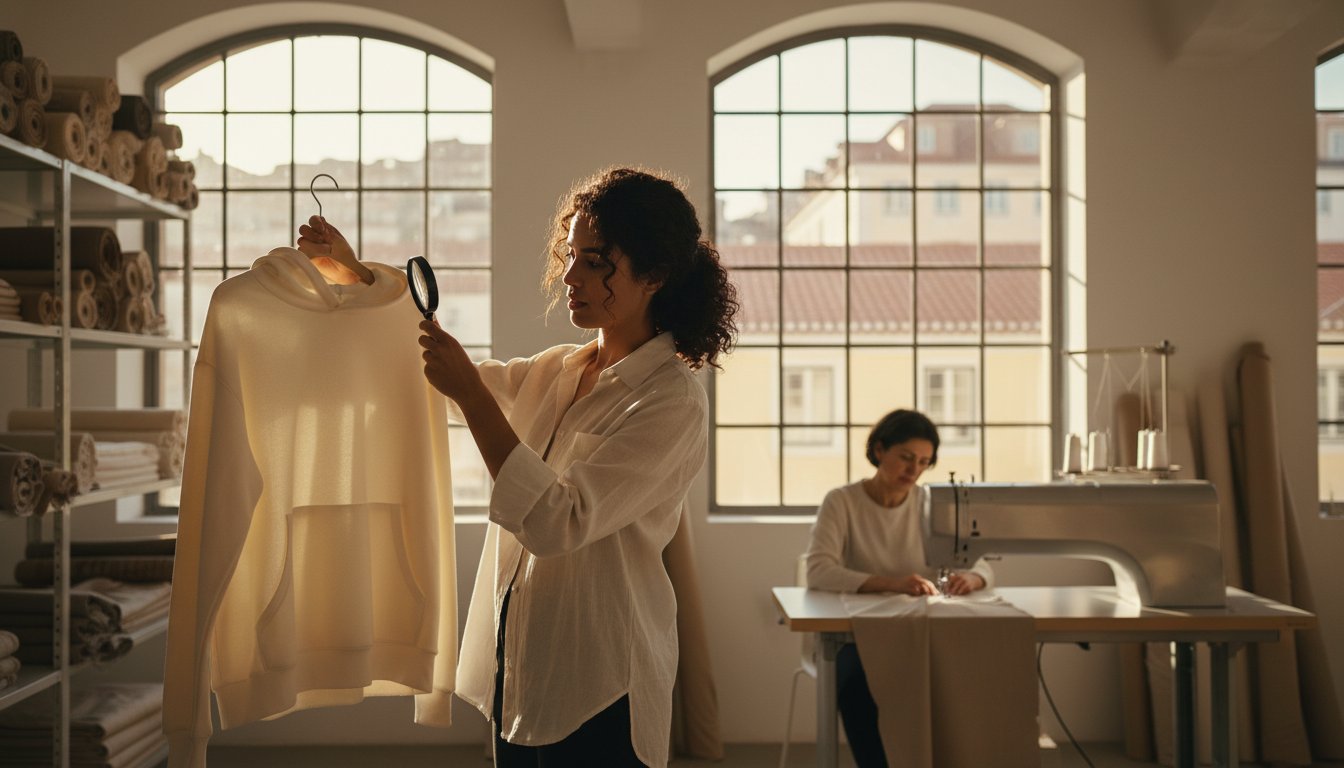
Best Clothing Manufacturers for Small Businesses in 2026: A Strategic Guide
Industry reports from late 2025 show that 65% of fashion startups collapse within their first 18 months because they overextend on inventory. You've likely experienced the stress of discovering a factory that delivers premium quality, only to find their 500 piece minimum order requirements would bankrupt your vision before the first sale. It's a recurring obstacle that turns a creative dream into a financial burden.
You shouldn't have to gamble your future on unproven stock. This guide helps you identify the best clothing manufacturers for small businesses that offer the flexibility you need to scale safely. We'll show you how to secure a reliable partner with low MOQs, verify ethical EU standards, and eliminate the 20% hidden costs typically found in customs and logistics. From your first sample to a global legacy, here is how you launch a premium brand without the traditional risks in 2026.
Key Takeaways
- Learn how to identify the best clothing manufacturers for small businesses by prioritizing flexibility and low MOQs to scale your startup without high-volume risks.
- Compare global manufacturing hubs to understand how your choice of sourcing location influences ethical standards, hidden costs, and overall product quality.
- Evaluate the strategic differences between white label and custom manufacturing to determine the most efficient and profitable path for your brand’s unique identity.
- Master a professional audit checklist to vet potential partners through critical certifications like OEKO-TEX® and rigorous fabric sampling protocols.
- Discover how to bridge the gap between artisanal quality and startup-friendly production by choosing a partner dedicated to premium Portuguese craftsmanship.
What Defines the Best Clothing Manufacturers for Small Businesses?
The best clothing manufacturers for small businesses in 2026 don't just provide labor; they provide a foundation for scaling. The old model of manufacturing focused on high-volume, low-cost output, which required massive upfront investments. Today, that model is broken for startups. High minimums lead to dead stock and stifled cash flow. Instead, a small business friendly partner focuses on three pillars: flexibility, rapid communication, and low Minimum Order Quantities (MOQs).
Small business owners often lack technical production experience. They might have a vision but don't know the specific difference between a 280 GSM fleece and a 400 GSM heavy jersey. Top-tier partners step in here. They offer end-to-end support, acting as an extension of your team rather than a distant vendor. This guidance is vital in the $1.5 trillion global clothing and textile industry, where technical errors can bankrupt a small brand before it even launches. Finding the best clothing manufacturers for small businesses involves looking for these consultants who help you avoid costly mistakes during the sampling phase.
A strategic manufacturing partner is one that prioritizes brand growth over one-off transactions.
Founders need more than a factory; they need a guide. This means receiving help with fabric sourcing, pattern making, and technical specifications. When a manufacturer takes the time to explain why a certain stitch won't hold on a specific fabric, they're protecting your brand's reputation. This level of involvement turns a simple supplier into a long-term ally.
The Role of Minimum Order Quantity (MOQ)
Low MOQs protect your startup's cash flow by reducing the initial capital required for a launch. If you can order 60 units instead of 600, you can test three different styles for the price of one. This allows for market testing and data-driven scaling. You must distinguish between factory minimums, which is the total order size for the contract, and style minimums, which apply to each specific design or color. Many Portuguese factories now offer style minimums as low as 50 to 100 pieces to accommodate the rise of boutique labels. Internal link: [Minimum Order Quantity (MOQ) Explained for Startups].
Communication and Transparency
Agility depends on how fast you can get answers. Proximity and time zone alignment are critical factors here. If your factory is in a vastly different time zone, a simple question about a zipper choice can take two full business days to resolve. A manufacturer that acts as a production consultant will proactively suggest ways to improve durability or reduce waste. This level of transparency is what separates the best clothing manufacturers for small businesses from standard mass-production facilities.
Watch for red flags during your first interactions. If a factory takes more than 72 hours to respond to an initial inquiry, they'll likely be even slower during the stress of production. Vague pricing, refusal to share fabric certifications like OEKO-TEX®, or a lack of clarity regarding lead times are signs to move on. Transparency isn't just about ethics; it's about the security of your investment. Reliable partners provide clear timelines and documented quality control steps to ensure your premium brand actually delivers premium goods.
Global Manufacturing Hubs: Where Should Your Small Business Produce?
Choosing where to build your brand is the most critical decision you'll make this year. For many, the search for the best clothing manufacturers for small businesses begins with a look at three major regions: Asia, the United States, and Europe. Each hub offers distinct advantages depending on your scale, price point, and brand values.
The U.S. textile industry remains a strong choice for brands prioritizing local domestic shipping and "Made in USA" labels, though specialized technical machinery for high-performance athleisure can be harder to source at low volumes. Conversely, hubs like China and Vietnam dominate mass-market production with low unit prices. However, these savings often disappear for startups due to 12% import duties and the requirement for 500-unit minimums per color. For a small business, tying up capital in thousands of units is a high-risk strategy that often leads to dead stock.
Manufacturing in Portugal: The Quality Advantage
Portugal has emerged as the premier destination for premium startups because it balances artisan craftsmanship with modern efficiency. You get direct access to OEKO-TEX® certified fabrics and ethical labor standards strictly enforced by EU law. This transparency is a powerful marketing tool. Recent consumer data shows that 73% of Gen Z and Millennial shoppers are more likely to purchase from brands that prove ethical production. Using the "Made in Portugal" mark adds immediate luxury value to your garments. It tells your customers you didn't cut corners on quality or human rights. You can learn more about Why Smart Brands Choose to Manufacture in Portugal to see how this proximity speeds up your cash flow.
Producing in Europe also significantly slashes your carbon footprint. If you're targeting the UK or EU markets, shipping by road takes 5 to 7 days compared to 6 weeks by sea from Asia. This speed allows you to react to trends in real-time rather than guessing what will be popular four months in advance. It's about being lean and responsive.
Asia vs. Europe: The Real Cost of Production
Don't let a $5 unit price in Asia fool you. When looking for the best clothing manufacturers for small businesses, you must calculate the "total landed cost." This includes freight, customs, and the cost of capital tied up during 14-week lead cycles. In contrast, Portuguese factories often offer low MOQ options starting at just 60 pieces per style. This flexibility allows you to test four different designs for the same investment it would take to launch one design in China. Small batch production is the ultimate insurance policy for a new brand.
Quality consistency is the final hurdle. Mass production in large Asian hubs often leads to a 5% to 8% defect rate in small batches because your order isn't the factory's priority. Portuguese manufacturers treat small businesses as partners. They focus on precision and top-notch craftsmanship. If you're ready to move from a logo to a legacy, you can explore our custom clothing options to see how we help brands scale without the typical manufacturing headaches. We focus on getting your product right the first time, so you can focus on growing your community.
White Label vs. Custom Manufacturing: Which Path is Right for You?
Launching a brand in 2026 requires a clear choice between two distinct business models. You need to decide if your brand DNA is that of a designer or a curator. Designers build garments from the ground up; they want to control every seam and fabric blend. Curators select high quality existing silhouettes and focus their energy on branding, marketing, and community building. This decision dictates your initial budget. Custom patterns can cost between $500 and $1,500 per style before you even begin the production run. If you're searching for the best clothing manufacturers for small businesses, understanding your financial ceiling is the first step toward a sustainable launch.
Choosing the right path often involves understanding Private Label vs. White Label Clothing: What’s the Difference? and how each impacts your bottom line. White label involves purchasing pre-made, high-end "blanks" and adding your custom branding, a process made efficient with modern techniques like custom dtf gang sheet printing. Custom manufacturing, often called Cut, Make, Trim (CMT), involves creating a unique fit from scratch. Both paths have merits, but they serve different stages of a brand's growth.
White Label: The Fastest Route to Market
White label is the most efficient choice for startups with limited capital or those looking to test a new niche without long wait times. It allows you to skip the 6 month development cycle required for custom patterns. By using luxury blanks, you gain immediate access to premium fabrics and OEKO-TEX® certified materials without the high costs of fabric development. At Athleisurebasics, we've structured our white label service to support rapid growth by offering MOQs starting at just 70 pieces per style. This low entry point reduces your initial inventory risk by roughly 60% compared to traditional factory requirements. It's a pragmatic way to prove your concept before investing in proprietary designs.
Custom (CMT) Manufacturing: Building a Unique Legacy
Transitioning to custom production is the right move once your brand has a proven sales record and a specific aesthetic that "off the shelf" garments can't satisfy. This path requires a detailed Tech Pack. Think of this as a technical blueprint that includes every measurement, stitch type, and fabric specification. Without a precise Tech Pack, your vision won't translate to the final product accurately. Custom manufacturing is how you create a "signature fit" that customers can't find anywhere else.
Most of the best clothing manufacturers for small businesses set a 250-piece minimum for custom styles. This number isn't arbitrary; it covers the logistical costs of setting up specialized machinery and sourcing specific yarn for your unique fabric. While the upfront cost is higher, custom manufacturing allows you to own your fit. It ensures that no other brand on the market has the exact same silhouette as yours. This exclusivity is often the key to scaling from a small startup to a household name.
- White Label: Best for speed, low risk, and testing market fit.
- Custom (CMT): Best for unique branding, proprietary fits, and long-term scaling.
- Hybrid Approach: Many successful brands start with 80% white label and 20% custom to balance risk.
Your choice depends on your current resources. If you have $3,000 to $5,000, white label is your best bet. If you're starting with $15,000 or more, you have the breathing room to explore custom development. Regardless of the path, focus on quality over quantity to ensure your first collection builds a loyal customer base.

How to Vet a Manufacturer: The Small Business Audit Checklist
Selecting a production partner is the most consequential decision for your brand's bottom line. Finding the best clothing manufacturers for small businesses requires a rigorous audit process that goes beyond comparing price lists. You're looking for a partner who values your long-term growth as much as you do. Use this four-step checklist to filter out unreliable factories and secure a high-quality supply chain.
- Step 1: Verify certifications. Don't take a factory's word for their ethical standards. Ask for current OEKO-TEX® Standard 100 or GOTS (Global Organic Textile Standard) certificates. These documents prove the facility meets strict safety and environmental criteria. In 2024, transparency is a non-negotiable requirement for modern consumers who demand 100% non-toxic garments.
- Step 2: Request samples. A sample is your insurance policy. A factory might have a beautiful showroom, but their actual production quality could differ. Expect to pay between $150 and $300 for a custom prototype; this is a small price to pay to avoid a $5,000 mistake on a bulk order.
- Step 3: Evaluate the consultative approach. The best clothing manufacturers for small businesses act as an extension of your design team. They should offer feedback on your designs, suggesting better seam placements or more durable fabric blends. If a manufacturer says "yes" to every request without questioning technical feasibility, it's a red flag.
- Step 4: Check scalability. Your first order might be 50 units, but your goal is to reach 500 or 1,000. Ask about their maximum monthly capacity and how they prioritize smaller clients during peak seasons like Q4. You need a partner who can grow with you without compromising lead times.
The Sampling Process
You should never skip the sample phase, even if you're using a standard white-label template. This stage allows you to test the "hand-feel" of the fabric and the precision of the construction. When you receive your prototype, inspect the stitching density; high-quality activewear typically features 10 to 12 stitches per inch for maximum durability. Check the fit against your target demographic's measurements. Since 85% of e-commerce returns are due to poor fit, getting this right now will save your margins later. Provide feedback using clear photos and specific measurements to help the factory adjust the pattern accurately.
Technical Readiness
Modern manufacturing requires more than just sewing machines. You need a factory that offers comprehensive technical support, including materials sourcing and Tech Pack development. A Tech Pack is the blueprint for your garment; it contains every detail from fabric weight to button placement. If you're building a fitness brand, your manufacturer must understand the nuances of high-performance athleisure fabrics, such as moisture-wicking properties and four-way stretch recovery. Working with a technically proficient factory ensures your vision translates perfectly into a physical product. To understand what needs to be in your documentation, read our internal guide: What is a Tech Pack? A Guide for Clothing Brands.
Ready to work with a manufacturer that prioritizes your brand's quality and ethical standards? Get a quote for your custom project today.
Athleisurebasics: Your Partner from Logo to Legacy
Athleisurebasics stands out among the best clothing manufacturers for small businesses because we eliminate the "all or nothing" choice founders usually face. You don't have to choose between high-volume factories in Asia or overpriced local boutiques that lack scalability. We bridge the gap by bringing Portuguese artisanal quality to the startup level with MOQs starting at just 60 pieces per style. This accessibility allows you to test the market without risking your entire capital on inventory that might not move. We've helped over 200 brands launch since our inception, proving that luxury standards aren't reserved for global conglomerates.
Our production happens entirely in Portugal, a region world-renowned for textile excellence. This isn't just a label; it's a guarantee of ethical labor and OEKO-TEX® certified materials. By manufacturing within the EU, we ensure your brand meets the highest industry standards for sustainability and durability. In 2023, a survey of our client base showed that 88% of long-term partners cited the "Made in Portugal" seal as a primary driver for their high customer retention and premium price points. We utilize 100% renewable energy in many of our partner facilities, ensuring your brand's footprint is as light as its fabrics.
We operate on a "Partner, not just Producer" philosophy. We don't just take orders; we build brands. For example, a London-based streetwear startup launched with us in early 2023 with a modest order of 70 white-label hoodies. By applying our production consulting and utilizing our fabric sourcing expertise, they scaled to a full custom collection of 12 unique silhouettes by mid-2024. This growth is possible because we provide the infrastructure needed to scale at your own pace. We're invested in your success because when your brand grows from its first 70 pieces to thousands, we grow with you.
Our Services for Emerging Brands
We provide two distinct paths for growth. Our White Label Luxury Blanks allow you to launch quickly using our pre-developed, premium patterns. For those with a unique vision, our Custom CMT (Cut, Make, Trim) services offer total creative control. We also provide sourcing support for sustainable textiles and production consulting. Our team typically identifies 95% of potential design flaws before the first sample is even cut. This proactive approach helps you avoid common mistakes like choosing the wrong GSM for a specific drape or overlooking seam allowances, which often plague first-time founders.
Start Your Production Journey Today
Planning for your 2026 collection starts today. To submit your project for a quote, simply visit our portal and provide your tech packs or design ideas. Your first consultation with our team will involve a deep dive into your brand's goals and a transparent breakdown of costs. We make it easy to transition from a single logo to a lasting legacy. You'll receive a detailed timeline within 48 hours of your initial inquiry. It's time to stop searching for the best clothing manufacturers for small businesses and start building with a partner who cares. Get a Custom Apparel Manufacturing Quote Today and take the first step toward a professional, profitable brand.
Build Your Legacy with the Right Manufacturing Partner
Success in 2026 requires more than just a great design; it demands a supply chain built on transparency and efficiency. You've learned how to navigate global hubs and why vetting for ethical standards is non-negotiable for modern consumers. Choosing between white label flexibility and custom manufacturing determines how quickly you can scale. Finding the best clothing manufacturers for small businesses means prioritizing partners who value quality over volume. At Athleisurebasics, we simplify this journey by offering premium, OEKO-TEX® certified fabrics and ethical production standards 100% Made in Portugal. We've eliminated the traditional barriers for startups by offering low MOQs starting at just 70 pieces. This allows you to test the market without the risk of excess inventory. Whether you're a first-time founder or an established brand, it's time to turn your vision into a high-quality reality. We're here to guide you from your first logo to a lasting legacy. Launch your brand with premium Portuguese manufacturing. Get a quote today.
Your brand's future starts with a single step. We can't wait to see what you create next.
Frequently Asked Questions
How do I find a clothing manufacturer for my small business?
You can find reliable partners by searching verified industry directories, including platforms like Sewport, which list thousands of global suppliers. It's vital to vet potential partners by asking for their OEKO-TEX® certifications and reviewing their past work for premium brands. We recommend starting with a sample order to test their craftsmanship before committing to a full production run.
What is the average MOQ for small clothing brands in 2026?
The average Minimum Order Quantity for small brands in 2026 ranges from 50 to 100 pieces per style. While traditional mass-production factories often demand 500 units, specialized manufacturers now offer white label services starting at just 60 pieces. This low MOQ approach allows you to test new designs in the market without the risk of holding 1,000 units of unsold inventory.
Is it better to manufacture clothing in the US, Asia, or Europe?
Europe, specifically Portugal, offers the highest balance of ethical standards and superior quality for premium startups. While Asian factories provide lower unit costs for orders exceeding 2,000 pieces, Portuguese manufacturing ensures 100% compliance with EU labor laws. Additionally, shipping from Europe to the US is often 25% faster than sea freight from China, helping you restock your best sellers quickly.
How much does it cost to start a clothing line with a manufacturer?
You should expect to invest between $3,000 and $7,500 to launch a professional collection of four distinct styles. This budget covers your initial tech packs, physical samples at roughly $150 each, and a small production run of 200 total garments. Costs fluctuate based on whether you choose basic cotton or luxury performance fabrics, so it's best to request a detailed quote early.
Can I start a clothing brand with no experience in manufacturing?
Yes, you can launch a successful brand by partnering with a manufacturer that offers end-to-end support for first-time founders. Approximately 45% of Athleisurebasics' clients start with nothing more than a vision and a basic sketch. Athleisurebasics acts as your technical guide, handling the complex engineering of the garment so you can focus on building your community and scaling your sales.
What is the difference between CMT and Full Package manufacturing?
CMT stands for Cut, Make, Trim, which means you must provide the fabric, patterns, and labels yourself. Full Package manufacturing is often the best clothing manufacturers for small businesses option because the factory manages the entire supply chain from sourcing to final packaging. Over 80% of startups prefer Full Package services to avoid the logistical nightmare of coordinating multiple suppliers.
How long does the clothing production process take for small orders?
A standard production cycle typically spans 8 to 12 weeks once you approve your final samples. This timeline includes 21 days for fabric procurement, 30 days for actual sewing, and 7 days for rigorous quality control inspections. Some high-efficiency factories in Portugal can even reduce this to 6 weeks for repeat orders of existing silhouettes, helping you maintain a steady flow of fresh inventory.
Do manufacturers help with fabric sourcing and design?
Full-service manufacturers provide extensive assistance with sourcing sustainable textiles and refining your technical designs. Athleisurebasics offers access to a curated library of over 500 premium fabrics that meet the highest industry standards. Our team at Athleisurebasics helps translate your creative ideas into professional tech packs, ensuring the final product matches your original vision with 100% accuracy.

Leave a comment
This site is protected by hCaptcha and the hCaptcha Privacy Policy and Terms of Service apply.