
Clothing Brand Launch 2026: The Ultimate Startup Guide
In 2026, the most successful fashion entrepreneurs aren't those with the largest initial budgets, but those who master a lean, quality-first clothing brand launch strategy. You've likely felt the anxiety of staring at a sketch while worrying about high minimum order quantities (MOQs). You might feel lost in the technical jargon of Tech Packs and CMT production. It's natural to feel overwhelmed by the search for ethical, reliable manufacturing partners who truly value a startup's long-term growth.
This guide provides the exact roadmap you need to launch a premium clothing line this year. We strip away the complexity of fabric sourcing and technical design. We'll walk through everything from navigating new 2026 safety regulations, such as the CPSC mandatory eFiling, to finding a production partner in regions like Portugal that support your vision without the risk of overstock. You'll learn how to bridge the gap between a creative concept and a market-ready product while maintaining industry-leading standards of craftsmanship. You'll gain the clarity to build a resilient, ethical brand that scales.
Key Takeaways
- Identify a profitable niche and define a unique value proposition that goes beyond aesthetics to resonate with 2026 consumer demands.
- Implement a professional clothing brand launch strategy by developing detailed tech packs that serve as a precise blueprint for your production.
- Compare the advantages of custom CMT production for total creative control against white label luxury blanks for a faster, low-risk market entry.
- Source OEKO-TEX® certified fabrics and ethical manufacturing partners in regions like Portugal to ensure high standards of quality and transparency.
- Manage your startup capital effectively by understanding how minimum order quantities (MOQs) and sampling costs impact your total cash flow.
Building a Resilient Fashion Brand Foundation
A successful clothing brand launch strategy begins long before the first sample is sewn. It requires a resilient foundation built on market data rather than purely aesthetic intuition. In 2026, the apparel market rewards brands that solve specific functional problems while maintaining high ethical standards. You must move beyond the idea of just creating attractive garments and instead build a business model that can withstand shifting regulations and evolving consumer expectations.
Defining your unique value proposition (UVP) is the most critical step in this phase. Your UVP shouldn't just focus on a logo or a seasonal color palette. Instead, look at how your brand addresses specific gaps in the current market. This might involve superior fabric technology, a more inclusive fit, or a transparent supply chain. Understanding the fashion design process from both a creative and a commercial perspective allows you to identify where your brand can truly innovate. Conduct thorough competitor research to see where premium labels are failing to meet customer needs, specifically in terms of garment durability and material integrity.
Finding Your Niche in the 2026 Apparel Market
High-performance athleisure continues to dominate the industry in 2026, but the focus has shifted toward lifestyle-performance wear. Consumers want garments that transition seamlessly from a professional environment to a physical activity. You can validate your design concepts early by solving a specific problem. For example, focus on moisture-wicking properties for office-appropriate shirting or high-compression fabrics that don't lose elasticity after multiple washes. Use market research to identify these pain points before you invest in production. Sustainable fashion isn't just a trend anymore; it's a baseline requirement for growth. Brands that prioritize material integrity and circularity will find it much easier to build a loyal customer base in a crowded market; for a look at how curated retail is adapting to these trends, check out Silvana & Osmany CanXport Fashion Finds.
Legal and Structural Setup for Scale
Positioning your brand for international trade requires a solid legal structure from day one. Choosing between an LLC or an LTD depends on your primary market and long-term scaling goals. You must also prioritize trademarking your brand name early to protect your intellectual property. As of July 8, 2026, new U.S. CPSC mandatory eFiling requirements mean that apparel importers must electronically submit product safety certificates at the time of entry. Having your legal documentation in order prevents costly delays and ensures your shipments aren't held at the border. Set up international business banking accounts specifically designed for factory payments to manage currency fluctuations effectively. This structural readiness ensures you can scale your operations without hitting administrative bottlenecks as your order volumes increase.
The Technical Design Phase: From Vision to Tech Pack
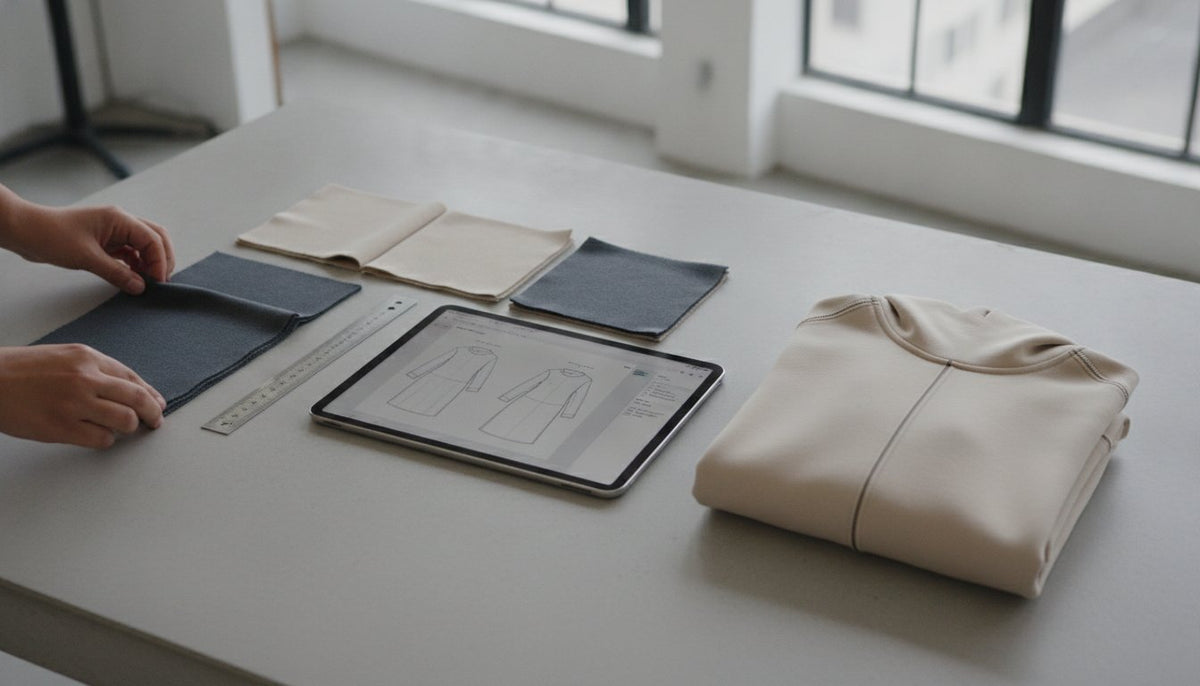
Moving from conceptualization to execution is where many startups struggle. A comprehensive clothing brand launch strategy depends on your ability to communicate your vision to a factory with mathematical precision. You can't rely on mood boards or simple sketches alone. To achieve a premium result, you need a technical document that eliminates guesswork and sets clear standards for craftsmanship.
Translating creative sketches into production-ready technical files requires a deep understanding of garment anatomy. This phase is about more than just aesthetics; it's about the physics of how a fabric drapes and how a seam holds under tension. By defining every measurement and component before production begins, you protect your investment and ensure that the final product matches your original vision.
Creating a Professional Tech Pack
A tech pack is the definitive blueprint for your garment. It acts as a contract between you and your manufacturer, ensuring both parties are aligned on every detail. Without a professional tech pack, you risk receiving samples that don't match your proportions or quality standards. This leads to endless revision rounds and wasted capital.
Your tech pack must include these essential components:
- Bill of Materials (BOM): A detailed list of every component required, from the primary fabric and lining to the specific thread type, zippers, and brand labels.
- Grade Rules: Precise specifications for how the garment dimensions change across your entire size range, ensuring a consistent fit for every customer.
- Construction Details: Explicit instructions on seam types, stitch counts per inch, and specialized finishing methods.
Investing in professional the garment production process documentation prevents the costly errors that often lead to entire batches being scrapped. If you aren't a technical designer, our tech pack development services can help bridge the gap between your sketch and a factory-ready file.
Material Sourcing and Fabric Selection
Ethical sourcing is equally vital for a modern brand. Using OEKO-TEX® certified fabrics ensures your products are free from harmful substances and produced under environmentally friendly conditions. This certification is a powerful trust signal for consumers who demand transparency. Finally, don't overlook pattern making and grading. These processes transform a 2D technical drawing into a 3D garment. Expert grading ensures that your "premium fit" remains consistent whether a customer wears a size small or an extra-large.
Choosing Your Production Model: Custom CMT vs. White Label
Decisions made during the manufacturing phase determine your brand's agility and profit margins. A balanced clothing brand launch strategy weighs the benefits of total creative control against the speed of market entry. While some entrepreneurs require unique silhouettes to define their brand, others find success by focusing on marketing and community building using established, high-quality garments. It's about matching your production model to your current capital and long-term scaling goals.
In 2026, the choice between Custom CMT and White Label isn't just about design. It's a logistical decision that impacts your inventory risk and cash flow. Choosing the wrong model early on can lead to overstock or, conversely, an inability to restock popular items quickly. Implementing a clothing brand launch strategy that prioritizes flexible production volumes allows you to remain resilient in a competitive market.
Custom CMT Manufacturing for Unique Brands
Cut, Make, Trim (CMT) is the ideal model if you've developed proprietary fits that don't exist in the current market. This model offers full creative control over every stitch, seam, and finish. However, it requires a higher financial commitment and a longer development timeline. Our custom CMT production in Portugal typically starts at an MOQ of 250 pieces per style. This investment ensures your brand has a truly unique product identity.
The CMT process involves a rigorous sampling phase to ensure the technical files we discussed in the previous section translate perfectly into physical garments. You will navigate several stages:
- Proto-samples: The first physical version of your design used to test fit and silhouette.
- Size sets: Samples across your entire size range to verify grading accuracy.
- Salesman samples: Finalized, high-quality pieces used for photography, marketing, and securing pre-orders.
White Label and Luxury Blanks Strategy
For many startups, the "fast-track" to revenue involves a private label portugal strategy. This model allows you to add your custom branding to pre-designed, high-quality Portuguese apparel. Instead of spending months on pattern development and multiple sampling rounds, you select from our luxury blanks that already meet premium industry standards. This is the most efficient way to test market demand with minimal financial risk.
The primary advantage of the white-label model is the accessible entry point. With low MOQs starting at just 70 pieces, you can launch a professional collection without the burden of excessive inventory. Lead times are significantly shorter than bespoke development. This allows you to react to 2026 consumer trends with operational agility. This model is particularly effective for entrepreneurs who want to focus on brand storytelling and customer acquisition rather than technical garment engineering.
Budgeting and Production Logistics in 2026
Your financial roadmap is the most objective part of your clothing brand launch strategy. To ensure long-term viability, you must calculate your true Cost of Goods Sold (COGS) with precision. This figure includes more than just the factory's per-unit price. You must account for sampling fees, bulk production costs, international shipping, and import duties. In 2026, successful direct-to-consumer brands typically target a retail markup of 2.5x to 4x their total production cost to cover marketing and operational overhead.
The manufacturing location you choose creates a significant impact on these numbers. While labor costs in South Asia may appear lower on paper, the hidden costs of long-distance logistics often erode those savings. Choosing clothing manufacturers portugal provides a distinct logistical advantage. Proximity to major Western markets means shorter shipping durations and a reduced carbon footprint, which is an increasingly important metric for 2026 consumers. Faster transit times also mean your capital isn't tied up in ocean freight for months, allowing for better cash flow management.
Managing Your Production Budget
Startups often make the mistake of prioritizing the lowest possible unit cost. However, 'cheap' manufacturing frequently results in high defect rates and inconsistent sizing, which leads to expensive returns and brand damage. It's more cost-effective to pay a premium for reliable quality. Beyond production, you must allocate a portion of your budget for professional product photography and e-commerce infrastructure. A common 2026 benchmark is to set aside 15-25% of projected first-year revenue for marketing. Once your first batch sells, prioritize reinvesting those profits into your second production run rather than expanding your SKU count too quickly.
Navigating International Logistics
Standard production timelines in European factories for 2026 deliveries typically range from 6 to 10 weeks, depending on the complexity of the design and fabric availability. Final quality control (QC) checks are non-negotiable. Ensure your partner performs a 100% inspection before the garments exit the factory floor. This prevents the nightmare scenario of discovering defects only after the goods have cleared customs. If you need help navigating these complexities, contact us for production consulting to secure your supply chain and optimize your margins.
Strategic Partnerships: Scaling with the Right Manufacturer
Scaling a fashion venture is rarely a solo endeavor. A successful clothing brand launch strategy depends on transitioning from a transactional vendor mindset to a collaborative partnership mindset. Your factory isn't just a service provider; it's the guardian of your product quality and brand reputation. When you treat your manufacturer as a partner, you gain access to their technical expertise, which helps you refine designs and optimize production efficiency. This collaborative approach leads to a more resilient supply chain and a higher standard of finished goods.
Production consulting services serve as a critical safeguard for emerging entrepreneurs. These services help you avoid the expensive pitfalls that often stall new businesses, such as selecting incompatible fabrics or submitting incomplete technical files. By leveraging expert guidance early on, you can save thousands in sampling errors and ensure your production runs stay on schedule. The future of apparel is defined by radical transparency, ethical labor standards, and the use of sustainable textiles. Brands that prioritize these values today are the ones that will build lasting commercial presences by 2026.
The Advantage of Manufacturing in Portugal
Portugal has established itself as the heart of premium European apparel production, particularly for high-end lifestyle and performance wear. Choosing made in portugal clothing gives your brand an immediate seal of quality and ethical integrity. Factories here operate under strict EU labor standards, ensuring fair wages and safe working conditions. This regional pride in craftsmanship translates into garments that feel superior to mass-produced alternatives. For a startup, the proximity to major markets and the ability to visit facilities easily creates a level of security that overseas manufacturing often lacks.
How Athleisurebasics Supports New Brands
We provide end-to-end support designed to remove the barriers to entry for ambitious entrepreneurs. Our services range from materials sourcing and tech pack development to full CMT production. We understand that cash flow is the lifeblood of a startup, which is why we offer low MOQs starting at just 70 pieces for our white-label luxury blanks. This accessibility allows you to test the market and scale your operations without the burden of high-interest debt or excessive inventory. We are invested in your long-term success and provide the operational agility you need to grow from a small concept to a recognized premium brand. Launch your premium brand with Athleisurebasics today and experience the difference of a true production partnership.
Final Checklist: Are You Ready to Launch?
Before you send your first factory enquiry, ensure you have checked the following boxes to demonstrate professional readiness:
- Technical Blueprint: Is your tech pack complete with a full Bill of Materials and grade rules?
- Material Verification: Have you confirmed the use of OEKO-TEX® certified fabrics and understood their GSM?
- Production Model: Have you decided between the creative freedom of CMT or the speed of White Label?
- Financial Planning: Does your budget account for sampling, duties, shipping, and a 15-25% marketing allocation?
- Logistical Readiness: Are you prepared for the 6 to 10 week production timelines typical of European manufacturing?
Launching Your Collection with Confidence in 2026
Building a fashion brand in 2026 requires a balance of creative vision and operational discipline. You've learned that a successful clothing brand launch strategy depends on technical precision, from developing detailed tech packs to choosing the right production model for your current capital. Whether you opt for the total creative control of CMT or the speed of white label luxury blanks, your success rests on the quality of your materials and the reliability of your manufacturing partner. Portugal remains the premier destination for ethical, high-standard production that resonates with modern consumers.
By prioritizing OEKO-TEX® certified premium fabrics and accessible low MOQs starting at just 70 pieces, you can mitigate financial risk while maintaining a premium market position. Expert production consulting bridges the gap for new entrepreneurs, ensuring that technical complexities never stand in the way of your business growth. The journey from a single sketch to a market-ready collection is demanding, but it's entirely achievable with a partner invested in your success. Take the first step toward your commercial debut today. Start your premium clothing brand with Athleisurebasics and transform your vision into a lasting reality.
Frequently Asked Questions
How much does it realistically cost to start a clothing brand in 2026?
Starting a brand in 2026 requires a tiered budget based on your specific goals. A lean startup can launch for $2,000 to $5,000, while a standard brand launch typically falls in the $5,000 to $15,000 range. These figures cover essential sampling, initial production runs, and basic marketing. Your clothing brand launch strategy should prioritize quality over quantity to ensure your initial capital isn't wasted on high-defect batches.
What is the minimum order quantity (MOQ) for a startup brand?
Ideal MOQs for new brands typically range from 70 to 250 pieces depending on the production model. Many startups find that an MOQ of 70 for white label luxury blanks is the perfect entry point to test market demand without excessive risk. Larger custom projects often require a 250-piece minimum. Selecting a partner with flexible volumes allows you to scale without the burden of carrying heavy inventory.
Do I need to be a fashion designer to start my own clothing line?
Formal design skills aren't a prerequisite for starting a successful clothing line. Many entrepreneurs use technical design agencies or production consulting services to translate their creative ideas into factory-ready files. Professional tech pack development handles the complex engineering of the garment. This allows you to focus on brand direction and market positioning while industry experts manage the technical and industrial details of production.
How long does the garment production process take from start to finish?
Expect the production cycle to take between 6 and 10 weeks when manufacturing in Europe. This timeline includes fabric sourcing, sampling rounds, and the final bulk production run. Factors like fabric availability and design complexity can influence the duration. Planning your collection at least four to six months before your desired launch date ensures you have a sufficient buffer for shipping and final quality control checks.
What is the difference between white label and custom CMT manufacturing?
White label uses existing, high-quality designs with your custom branding, while CMT involves manufacturing your proprietary designs from scratch. White label is the fastest way to launch with lower financial risk. Custom CMT (Cut, Make, Trim) gives you full creative control over unique fits and silhouettes. Choose white label for operational speed, or CMT if your brand identity relies on a specific, non-standard garment construction.
Why should I choose a manufacturer in Portugal over one in Asia?
Portugal provides a strategic advantage through ethical labor standards and premium material quality. Proximity to Western markets reduces shipping times and your brand's carbon footprint significantly. Factories in Portugal operate under strict EU labor laws and frequently use OEKO-TEX® certified fabrics. This provides a level of transparency and craftsmanship that is difficult to replicate in mass-market hubs, making it the ideal choice for premium brands.
What documents do I need to provide to a clothing factory for a quote?
A completed tech pack is the primary document required for an accurate production quote. This document must include a detailed Bill of Materials (BOM), construction instructions, and grade rules for sizing. Providing these technical specifications upfront allows the factory to calculate precise costs for labor and raw materials. Incomplete documentation often leads to inaccurate pricing and costly delays during the sampling and development phases.
How do I ensure my clothing brand is ethically and sustainably produced?
Ensuring ethical production requires partnering with factories that maintain transparent certifications and high labor standards. Look for manufacturers that use OEKO-TEX® certified materials and operate in regions with high regulatory oversight, such as the European Union. A transparent clothing brand launch strategy includes verifying factory labor practices and prioritizing sustainable textiles like organic cotton to meet the growing expectations of modern, conscious consumers.


Leave a comment
This site is protected by hCaptcha and the hCaptcha Privacy Policy and Terms of Service apply.