
How to Find an Athleisure Manufacturer: A Strategic 2026 Guide for New Brands
Your choice of factory will define your brand's reputation long before your first customer hits the checkout button. In a market projected to reach over $844 billion by 2034, learning how to find an athleisure manufacturer that combines technical mastery with ethical transparency is the most vital step in your entrepreneurial journey. You likely worry about the risks of overseas sourcing or feel overwhelmed by industry jargon like CMT versus FPP. It's frustrating when high minimum order quantities block your path to market entry, making your vision feel out of reach.
We understand these pressures and believe that premium production should be accessible to emerging brands. This guide provides the exact steps to source, vet, and partner with a manufacturing ally that mirrors your standards for excellence. You'll gain a clear understanding of production timelines and a strategy to secure garments that perfectly match your design vision. We'll explore the strategic advantages of European hubs like Portugal and explain how to navigate 2026 regulatory requirements, such as the Digital Product Passport, with total confidence. By the end of this article, you'll have a roadmap to move from concept to a finished, high-quality collection.
Key Takeaways
- Define your specific production needs by choosing between white label for speed or custom manufacturing for a unique brand identity.
- Identify the most reliable sourcing channels for how to find an athleisure manufacturer in 2026, balancing digital convenience with physical quality checks.
- Evaluate potential partners based on technical machinery and ethical certifications to ensure your garments meet premium performance standards.
- Streamline your production timeline by mastering the tech pack process and understanding the different stages of sampling.
- Leverage the strategic advantages of Portuguese manufacturing to secure high-quality craftsmanship with lower minimum order requirements.
Defining Your Athleisure Manufacturing Requirements
Learning how to find an athleisure manufacturer starts with a rigorous internal audit of your brand's goals. Before you begin the search for a partner, you must establish a clear technical foundation. Understanding what athleisure is from a commercial perspective helps you identify where your brand fits in a crowded market. Are you designing for high-intensity interval training, or is your focus on the "studio-to-street" aesthetic? High-impact sports bras require advanced compression fabrics and specific machinery that a factory focused on lounge pants might not possess. Identifying these nuances early prevents costly pivots later in the production cycle.
Custom vs. White Label: Which is Right for You?
Choosing between custom manufacturing and white label services is a pivotal business decision. Custom production, often called bespoke or CMT (Cut, Make, Trim), gives you total control over every seam and silhouette. It's the best path for brands with unique, proprietary designs, though it typically requires higher minimum order quantities (MOQs). Alternatively, white label manufacturing allows you to select pre-tested, high-quality styles and add your branding. This is an efficient way to launch quickly with lower risk. For a deeper look at these models, you can read our guide on private label vs white label clothing to see which aligns with your growth goals.
The Role of Technical Fabric in Athleisure
Performance apparel demands more than just a good fit; it requires engineered textiles. General clothing manufacturers often struggle with athleisure because they lack experience with four-way stretch fabrics and moisture-wicking treatments. Your manufacturer must understand how heat and friction affect synthetic fibers during the sewing process. We recommend using OEKO-TEX® certified materials as a baseline standard. This certification ensures your garments are free from harmful chemicals, which is a significant quality marker for modern, health-conscious consumers.
Finally, evaluate your internal technical readiness. Do you have professional tech packs ready, or do you need consulting support to bridge the gap? A tech pack is a blueprint that dictates everything from fabric weight to stitch density. If you lack this, prioritize a manufacturer that offers consulting services to help you develop these documents. Knowing your realistic budget for initial samples and your first production run will also narrow your search. When you're learning how to find an athleisure manufacturer, being prepared with these details makes you a more attractive partner to premium factories in hubs like Portugal. Clear requirements lead to clear results.
Top Channels for Sourcing Athleisure Suppliers in 2026
Identifying the right production partner requires a multi-channel approach that balances digital speed with physical verification. If you're wondering how to find an athleisure manufacturer that delivers consistent quality, you should start with industry trade shows. Events like ISPO Munich or Premiere Vision Paris remain essential because they allow you to inspect fabric recovery and seam strength in person. While the U.S. textile and apparel industry provides excellent domestic options, many premium brands look toward European hubs for technical heritage and ethical compliance.
Online B2B marketplaces like Alibaba and Europages offer a massive directory of potential partners, but they require careful navigation. You should prioritize suppliers with verified badges and third-party audit reports. Beyond these platforms, referral networks and fashion consultants are invaluable. Industry experts who have spent decades in the field can often introduce you to family-run factories in Portugal that don't advertise on major digital platforms. These "hidden" gems often provide the highest level of craftsmanship and personalized service for emerging brands.
Evaluating Manufacturing Hubs: Asia vs. Europe
When comparing clothing manufacturing portugal vs china, the decision often centers on lead times and brand perception. European production significantly reduces your carbon footprint, which is a critical factor under the 2026 EU Green Claims Directive. While Asian factories offer massive scale, Portuguese manufacturers specialize in technical performance wear with accessible MOQs. Portugal's textile industry employs over 130,000 skilled workers, making it a powerhouse for high-end athleisure that requires specialized machinery like flatlock stitching. If you want to build a brand based on quality and ethics, partnering with a Portuguese manufacturing partner can provide a significant competitive advantage.
Using Directories and Digital Platforms
Digital directories are powerful tools if you know how to use their filters effectively. When researching how to find an athleisure manufacturer, always filter for "Ethical Certified" and "Low MOQ" to match your brand's entry requirements. Look for factories that explicitly list OEKO-TEX® or GOTS certifications on their profiles. A major red flag in an online factory profile is a portfolio that looks too generic or lacks specific examples of performance wear. In 2026, transparency is mandatory; factories should be ready to provide data for the Digital Product Passport (DPP) immediately. Verified supplier badges and recent transaction histories are the best indicators of a factory's current reliability and operational health.
Essential Vetting Criteria: Beyond the Price Tag
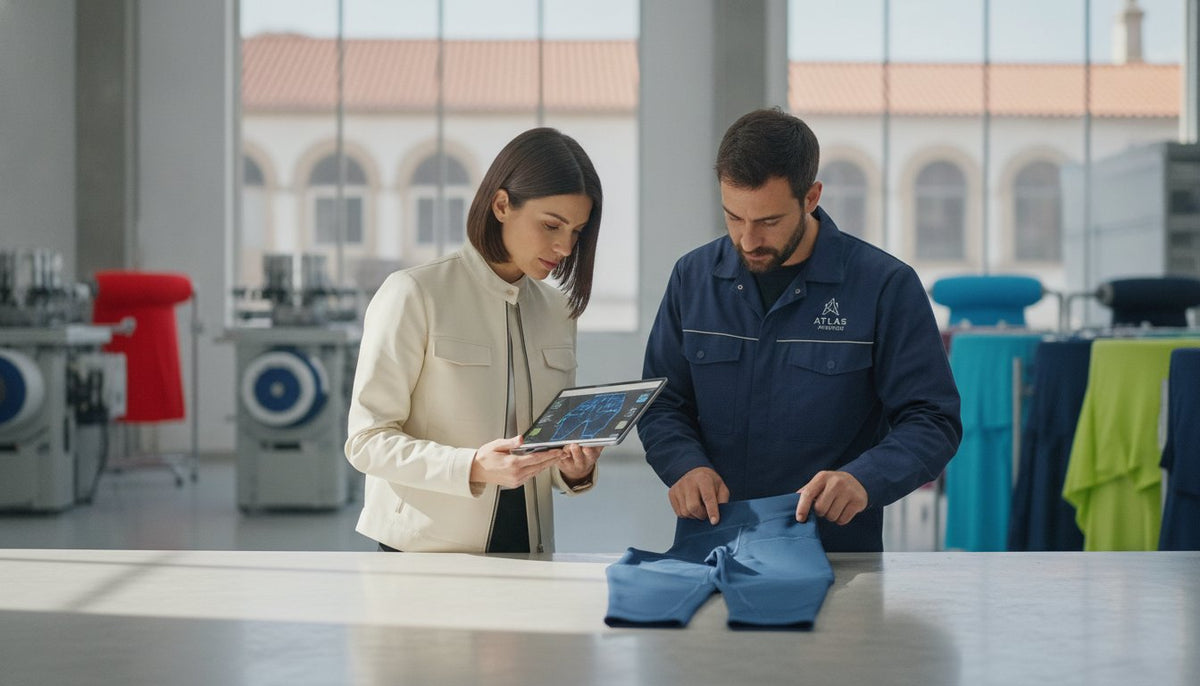
Learning how to find an athleisure manufacturer involves looking far beyond the initial quote. To build a premium brand, you must audit a factory's technical machinery to ensure they can produce high-performance garments. Athleisure requires specific equipment; ask potential partners if they utilize flatlock stitching for chafe-free seams and heat-sealing technology for waterproof finishes. A factory that primarily produces basic cotton t-shirts will likely lack the precision tools needed for high-compression leggings or moisture-wicking tops. Technical mastery is non-negotiable for customer retention.
Communication and scalability are the next pillars of a successful partnership. You need a manufacturer that is responsive and proficient in your language to avoid costly misunderstandings during the sampling phase. Beyond the first order, assess whether the factory can grow with you. A partner that handles your initial 100-piece run should also have the infrastructure to manage 10,000 pieces as your brand scales. Reviewing client testimonials and case studies from other emerging brands will give you insight into how the manufacturer handles these growth transitions.
For those looking to enter the specialized market of athletic teamwear, you can learn more about sUperstar to see how a focus on custom-designed kits for sports like GAA and rugby requires a high level of collaborative precision.
The "Real" Cost of Low MOQ
While ultra-low minimum order quantities (MOQs) of five or ten pieces may seem attractive, they often lead to inconsistent quality and high per-unit costs. These micro-batches are usually handled by sample rooms rather than production lines, which can result in variations between orders. For a brand focused on longevity, a "Professional Startup" MOQ of 70 to 250 pieces offers the best balance of risk management and production quality. This volume allows the factory to calibrate their machines properly, ensuring every garment in your collection meets the same high standard. You can learn more about strategic order volumes in our guide to clothing manufacturing moq and its impact on brand growth.
Ethical and Quality Certifications
In 2026, transparency is a requirement for market entry. You must verify that your partner holds recognized ethical certifications like OEKO-TEX® or GOTS. OEKO-TEX is a guarantee that the textiles used in your garments have been tested for harmful substances and are safe for human health. Partnering with EU-based factories provides built-in compliance with strict labor laws and environmental standards, which simplifies your reporting requirements for the new Digital Product Passport (DPP). When you understand how to find an athleisure manufacturer with these credentials, you're not just buying a product; you're securing your brand's ethical integrity.
Navigating the Sampling and Tech Pack Process
Success in performance apparel depends entirely on the precision of your documentation. When you are researching how to find an athleisure manufacturer, you must evaluate their ability to interpret a professional tech pack. This document serves as the master blueprint for your garment, containing every detail from the Bill of Materials (BOM) to specific stitch densities. Without a complete tech pack, factories are forced to guess your requirements, which often leads to the high failure rates reported by new brands. A technical blueprint ensures that your vision is translated accurately into a physical product.
The sampling process typically involves three distinct stages. First, you will receive a "Proto Sample" to test the basic design and fit. In Portugal, these proto samples typically cost between €50 and €200 depending on the complexity of the garment. Once the design is finalized, "Size Sets" are produced to ensure grading is consistent across all measurements. Finally, the "Pre-Production Sample" (PPS) represents the exact quality you expect for the bulk order. Understanding lead times is crucial; the journey from your initial inquiry to final delivery can take several months depending on fabric availability and sampling rounds. The approved pre-production sample is a legal benchmark for the final production run.
Preparing Your Design for Production
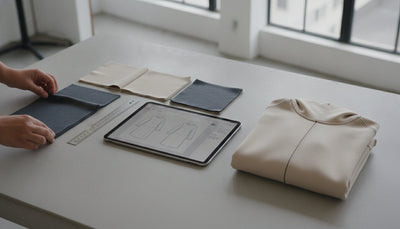
A professional tech pack must include technical sketches, grading tables, and specific stitch details like flatlock or overlock requirements. If you lack design experience, our clothing production consulting services can bridge the gap by helping you develop these essential documents. For a detailed breakdown of how these pieces fit into the larger manufacturing cycle, review the garment production process. Clear documentation reduces lead times and minimizes the risk of material waste during your initial production run.
The Sampling Feedback Loop
When you receive your first sample, you must conduct rigorous performance testing. Check the fabric recovery after a stretch test and inspect the seam strength under tension. Fit can be subjective, but technical performance is measurable. Provide your factory with clear, numbered feedback points accompanied by photos or video demonstrations of any issues. You should never skip the sampling phase to save time; it is the only way to identify potential defects before you commit to a full production run. If you are ready to start your sampling journey with a partner who values precision, contact Athleisurebasics today to discuss your tech pack development and material sourcing.
Why a Strategic Partnership in Portugal is Your Best Move
Choosing a manufacturing location is a decision that impacts your brand's ethical standing and product quality for years. Portugal has established itself as the premier hub for technical apparel, generating over €8 billion in annual textile revenue. This region offers a unique combination of historical craftsmanship and modern innovation that is difficult to replicate in other global markets. When you are determining how to find an athleisure manufacturer, the "Made in Portugal" seal serves as an immediate indicator of high ethical standards and superior material integrity. EU regulations ensure that your production remains compliant with the latest environmental laws, which is essential for long term brand security.
The Athleisurebasics Advantage
We've designed our service model to remove the traditional barriers that block new entrepreneurs from entering the market. Our flexible production volumes allow you to test the market without the burden of massive financial risk. We offer specific entry points tailored to your brand's current stage:
- White-Label Luxury Blanks: Launch quickly with a 70-piece MOQ using our pre-tested, high-quality styles.
- Custom Manufacturing: Develop unique, proprietary designs with a 250-piece MOQ.
- Certified Materials: Every garment utilizes premium, OEKO-TEX® certified fabrics sourced directly within Portugal.
This tiered approach is a core part of our identity. We provide the technical infrastructure of a large scale factory with the personalized attention of a boutique consultancy. Our team handles everything from material sourcing support to tech pack development, ensuring your transition from a concept to a commercial presence is seamless.
Scaling Your Brand Long-Term
The journey of a founder is often defined by "production stress," but a reliable partner should mitigate that pressure. As your brand grows from its first 100 pieces toward 10,000, your manufacturing partner must have the operational agility to scale with you. We provide the expert guidance needed to prepare for your first production run, helping you navigate the complexities of lead times and quality control. If you're ready to move beyond the search phase and begin building a lasting brand, partner with Athleisurebasics for your next collection and experience the benefits of Portuguese textile heritage firsthand.
Launch Your Athleisure Brand with Confidence
Finding the right partner is about more than just checking prices; it's about securing a strategic ally who understands technical performance and ethical standards. You've learned that defining your niche and mastering the tech pack process are the foundations of a successful collection. By prioritizing hubs like Portugal, you ensure your brand meets the rigorous 2026 EU standards while maintaining the high-end quality your customers expect. Learning how to find an athleisure manufacturer that aligns with your vision is the final hurdle before your brand goes live.
We're here to bridge the gap between your concept and a finished product. With a low 70-piece MOQ for white label services and expert production consulting for startups, we make premium production accessible to emerging founders. You'll also benefit from our commitment to using only OEKO-TEX® certified premium fabrics across all collections. Start your premium athleisure production with Athleisurebasics today and take the first step toward a lasting commercial presence. Your vision deserves a partner that values quality and craftsmanship as much as you do.
Frequently Asked Questions
How much does it cost to start an athleisure line?
Total startup costs depend on your design complexity and production volume. Primary expenses include tech pack development, sampling rounds, and your initial production run. In Portugal, proto samples typically cost between €50 and €200 per style. You should also budget for material sourcing and shipping costs to ensure your brand has a clear path from concept to finished product.
What is the typical MOQ for athleisure manufacturers?
Industry standards for minimum order quantities often range from 300 to 500 pieces per style. However, manufacturers focused on emerging brands offer more accessible entry points. We provide a 70-piece MOQ for white-label luxury blanks and a 250-piece MOQ for fully custom designs. These lower thresholds allow startups to enter the market and scale operations without the burden of massive inventory risk.
Do I need a tech pack to start manufacturing?
Yes, a professional tech pack is a mandatory requirement for successful production. This document serves as the technical blueprint for your garment, detailing everything from fabric composition to specific stitch types. Without a tech pack, manufacturers cannot guarantee accuracy, which often leads to costly errors. If you lack design experience, production consulting services can help you bridge the gap and develop these essential documents.
How do I know if a manufacturer is ethical?
You can verify a factory's ethical standing by checking for recognized certifications and regional compliance. Look for OEKO-TEX® Standard 100 to ensure fabric safety and GOTS for organic material standards. Manufacturers based in the EU, particularly in Portugal, must adhere to strict labor laws and environmental regulations. This regional origin acts as a quality seal, ensuring fair labor practices and high ethical standards for your brand.
What is the difference between CMT and FPP manufacturing?
CMT stands for Cut, Make, Trim, where the brand provides the materials and the factory handles only the sewing. FPP, or Full Package Production, is an end-to-end service where the manufacturer manages everything from material sourcing to final construction. For entrepreneurs learning how to find an athleisure manufacturer, FPP is often the most efficient choice because it simplifies the complex industrial process into a single partnership.
Can I manufacture athleisure in small quantities?
Small-batch manufacturing is entirely possible through white-label services or specialized startup programs. White-label production allows you to launch with as few as 70 pieces per style by using pre-tested designs. For fully custom collections, MOQs typically start at 250 pieces. This flexibility is central to helping new businesses transition from a small idea to a lasting commercial presence without requiring significant upfront capital.
How long does the sampling process usually take?
The sampling phase generally requires four to eight weeks to complete. This timeline includes the creation of the initial proto sample, fit testing, and any necessary revisions before the pre-production sample is approved. Lead times can fluctuate based on the availability of technical fabrics and the complexity of your designs. Planning for this duration ensures you have enough time to perfect every detail before bulk production begins.
Why is Portugal considered a top hub for athleisure?
Portugal is a global leader in performance apparel due to its technical innovation and high ethical standards. The region possesses a deep heritage in textile craftsmanship and utilizes specialized machinery like flatlock stitching required for premium activewear. Furthermore, Portuguese factories are known for their operational agility and lower MOQs, making them the ideal strategic partner for brands that value quality and material integrity over cost-cutting.


Leave a comment
This site is protected by hCaptcha and the hCaptcha Privacy Policy and Terms of Service apply.