

Clothing Manufacturing Budget Template: A Strategic Guide for Apparel Brands in 2026
Did you know that first-time apparel brands often underestimate their production costs by 30 to 50 percent? Most of these financial surprises stem from overlooking pre-production expenses like tech packs and multiple sampling rounds. Utilizing a comprehensive clothing manufacturing budget template is the only way to avoid the hidden fees that typically erode a new brand's capital. It's frustrating to feel confident in a factory's initial per-unit quote, only to watch your margins shrink once shipping, duty fees, and quality issues enter the equation.
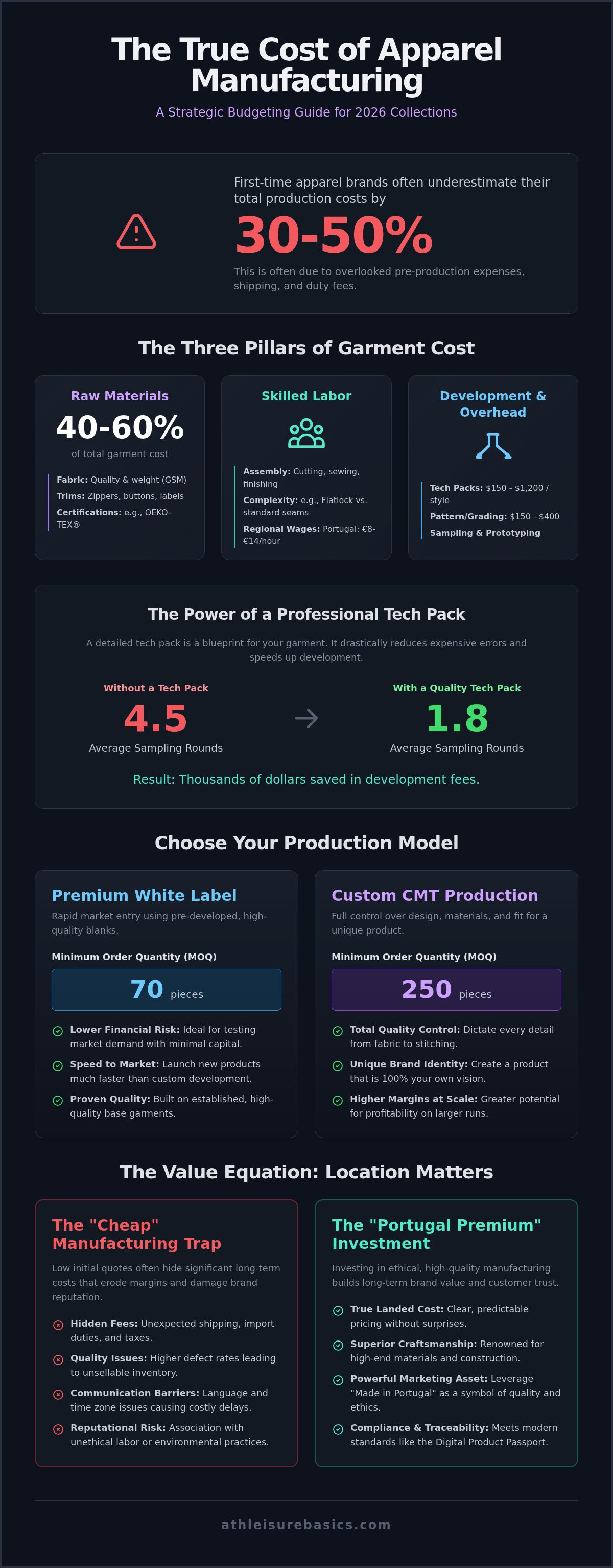
In this guide, we'll help you master the complexities of garment pricing and balance high-end craftsmanship with sustainable profitability. We're moving beyond simple spreadsheets to provide a strategic framework for your 2026 collections. To see the creative direction the industry is taking for the upcoming season, you can read more about the evolution of New York Fashion Week Fall 2026 from Runway Magazine. You'll learn how to calculate the true landed cost of your items, understand the long-term ROI of choosing ethical partners in regions like Portugal, and discover how manageable MOQs can mitigate your startup risk. Our goal is to turn your production process from a logistical hurdle into a reliable foundation for growth.
Key Takeaways
- Identify the core components of garment pricing to ensure your budget covers the entire journey from concept to shelf-ready product.
- Utilize a strategic clothing manufacturing budget template to calculate your true landed cost and avoid the common "cheap trap" of hidden import fees.
- Evaluate the cost-benefit ratio between custom CMT production and the rapid market entry offered by premium white label blanks.
- Leverage the "Portugal Premium" to transform ethical manufacturing and high-end craftsmanship into a powerful marketing asset for your brand.
- Reduce financial exposure by partnering with manufacturers that offer low minimum order quantities, allowing for safer inventory scaling.
The Core Components of Clothing Production Cost
Successful brand owners don't look at production cost as a single factory invoice. Instead, it's the cumulative investment required to transform a sketch into a shelf-ready product. Your clothing manufacturing budget template must account for the "Big Three" pillars: raw materials, skilled labor, and operational overheads. While labor costs fluctuate based on the manufacturing region, raw materials typically represent 40% to 60% of the total cost of a garment. The global clothing industry is vast, but quality control remains the universal differentiator between high-end apparel and disposable fast fashion. New brands often stumble by underestimating development costs, particularly prototyping, as it's common to focus on the bulk price while ignoring the hundreds of dollars spent on perfecting a single fit. The Full CMT (Cut, Make, Trim) manufacturing model serves as the industry standard for brands that want to maintain total quality control over their supply chain and material integrity.
Design and Development: The Tech Pack Investment
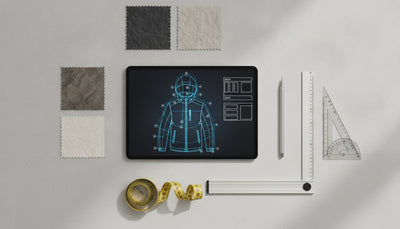
Investing in a professional document that details how to create a tech pack for clothing is non-negotiable for cost accuracy. A high-quality tech pack acts as a blueprint, and industry data suggests it can reduce the average number of sampling rounds from 4.5 down to 1.8. This efficiency saves thousands in development fees. Technical designers may charge between $150 and $1,200 per style depending on complexity, while pattern making and grading in premium hubs like Portugal often range from $150 to $400. Without these detailed specifications, you risk expensive manufacturing errors during bulk production that can't be easily reversed.
Raw Materials: Fabric and Trim Sourcing
Fabric choices dictate your margins and your brand's perceived value. OEKO-TEX® certified materials ensure safety and ethical standards, though they often command a higher price than standard textiles. Fabric weight, measured in GSM (grams per square meter), directly influences the per-unit cost; for instance, a heavy 500 GSM French Terry hoodie requires significantly more raw fiber than a basic 180 GSM jersey tee. Don't overlook the role of "trims" in your clothing manufacturing budget template. High-quality components like YKK zippers, custom branded buttons, and woven labels elevate a basic garment to premium status. These finishing touches might only cost a few dollars per unit, but they allow for the higher retail markups necessary for long-term profitability.
Key Variables Influencing Your Per-Unit Pricing
Calculating a per-unit price is a dynamic process that goes far beyond a single factory quote. Your clothing manufacturing budget template must account for how costs shift as your brand scales. Volume is the most significant driver of price; as you increase order quantities, the fixed costs of machine setup, pattern grading, and fabric cutting are distributed across more items. This creates economies of scale that can lower your cost per garment by 15% to 25% when moving from small batches to larger runs. However, you must also factor in the "hidden" costs of ethical production. In 2026, maintaining high labor standards and environmental compliance is a baseline requirement. For example, skilled labor in Portugal typically costs between €8 and €14 per hour, and new regulations like the Digital Product Passport add approximately $0.05 to $0.15 per garment for traceability. While these factors increase the initial price, they protect your brand from the reputational risks and legal penalties associated with low-cost, unregulated manufacturing.
The Power of Minimum Order Quantities (MOQ)
The clothing manufacturing moq is often the most critical lever in a startup's financial strategy. High minimums at mass-market factories can trap your capital in thousands of unsold units, creating a massive inventory risk. Athleisurebasics addresses this by offering accessible entry points, including white label production starting at just 70 pieces and custom runs at 250 pieces. This low-MOQ model allows you to test market demand and manage cash flow without the burden of excessive stock. While the per-unit cost of a smaller run is naturally higher than a mass-market order, the reduction in total capital exposure provides a much safer path to growth for emerging labels.
Construction Complexity and Labour
Garment complexity plays a vital role in determining your final production fees. A basic cotton tee requires far less assembly time than technical athleisure pieces featuring compression zones or moisture-wicking properties. Specialized techniques, such as flatlock stitching, require specific machinery and more minutes on the sewing floor compared to standard seams. Understanding labor productivity in apparel manufacturing is essential when budgeting for these high-performance features. Choosing skilled European labor ensures that these complex silhouettes are executed with precision. This expertise results in significantly lower defect rates and higher garment longevity, providing a better long-term ROI than cheaper, less experienced alternatives. If you're ready to see how these variables impact your specific designs, the consultants at Athleisurebasics can help you refine your production strategy.
Custom vs. White Label: Choosing Your Cost Model
Deciding between custom manufacturing and white label production is one of the most consequential choices you'll make when filling out your clothing manufacturing budget template. This decision dictates your initial capital requirements, your speed to market, and your long-term brand identity. While custom designs offer total creative freedom, white label options provide a streamlined path for testing market demand. Your choice should align with your current funding and your ability to manage inventory risk. Athleisurebasics supports both models, allowing you to start lean and scale into fully proprietary designs as your brand matures.
Custom Manufacturing: Investing in Originality
Custom manufacturing is the gold standard for brands that want to own their silhouettes and technical specifications. This model requires a minimum order quantity (MOQ) of 250 pieces per style and color. Because you're building a garment from the ground up, you'll face higher upfront costs for unique fabric dyes, bespoke hardware, and dedicated pattern development. However, the long-term brand value of owning proprietary designs is significant. It prevents competitors from easily replicating your fit and feel. It's a strategic investment in brand equity that pays dividends as you scale and establish a unique presence in the market.
White Label: High-Quality Blanks for Rapid Launch
If you're focused on a rapid launch with minimal financial exposure, white label clothing is the ideal solution. This model allows you to select from pre-designed, high-quality styles and customize them with your branding. With an MOQ of just 70 pieces per style, you can launch a multi-item collection for a fraction of the cost of custom production. Understanding how fashion and apparel companies price their products is vital here; white label allows you to maintain healthy retail margins by drastically reducing your pre-production overhead.
Budgeting for white label is straightforward. You'll focus your funds on customization techniques like high-density screen printing, intricate embroidery, and custom relabeling. Utilizing luxury blank hoodies and tees allows you to position your brand in the premium segment immediately. You get the benefit of Portuguese craftsmanship and OEKO-TEX® certified fabrics without the long lead times of the custom development cycle. This lean approach lets you reinvest your savings into marketing and customer acquisition during those critical first months of operation. Your clothing manufacturing budget template will reflect a much lower risk profile, making it easier to pivot based on early customer feedback.
The Hidden Costs of Cheap Manufacturing vs. The Portugal Premium
Lower per-unit quotes from distant manufacturing hubs often lead startups into the "Cheap Trap." While a factory in East Asia might offer a tempting price, your clothing manufacturing budget template must account for the total landed cost. This includes import duties, which reach 12% in the UK and up to 17% in the US, alongside the high cost of air freight for urgent restocks. When you factor in these expenses, the price gap between mass-market hubs and European production often vanishes. Choosing the Made in Portugal quality mark isn't just about paying for labor; it's a strategic investment in a marketing asset that resonates with conscious consumers.
Ethical compliance is another area where "cheap" becomes expensive. New regulations like the EU Ecodesign for Sustainable Products Regulation (ESPR) make sustainability mandatory. Utilizing OEKO-TEX® certified fabrics reduces your regulatory risk and protects your brand from reputational damage. These certifications provide a sense of security that low-cost manufacturers simply can't match.
Quality Control and Return Rates
A 10% return rate due to manufacturing defects can devastate a small brand's margins. If you're managing first clothing production runs, minor inconsistencies in sizing or stitching lead to lost revenue and customer distrust. European factories operate under strict standards that ensure consistency across every unit. Working with a partner that offers production consulting helps you identify potential design flaws before they reach the sewing floor. This proactive approach saves you from the hidden costs of poor craftsmanship and keeps your customers loyal.
Logistics and Speed-to-Market
Logistics play a massive role in your yearly profitability. Nearshoring your production to Portugal allows for significantly shorter lead times to major EU and US markets. Instead of waiting six weeks for a sea freight shipment, you can receive goods in days. This operational agility is crucial for inventory turnover. It prevents you from being overstocked on slow movers or losing sales on bestsellers. A robust clothing manufacturing budget template helps you visualize how these proximity benefits translate into better cash flow and a lower carbon footprint. If you're ready to build a resilient supply chain, contact Athleisurebasics to discuss our ethical production models.
Budgeting for Success: Partnering with Athleisurebasics
Creating a realistic framework for 2026 requires moving away from guesswork and toward data-driven planning. Your clothing manufacturing budget template should be a living document that reflects current logistics, material costs, and labor rates. Athleisurebasics simplifies the cost of goods sold clothing brand calculation by providing transparent, all-in pricing structures from the start. This clarity eliminates the anxiety of unexpected invoices and allows you to project your retail margins with precision before the first stitch is even sewn. When you understand your landed costs upfront, you can make informed decisions about marketing spend and inventory scaling.
Viewing your manufacturer as a long-term ally rather than a one-time vendor is the most effective way to reduce overhead. Transactional relationships often lead to miscommunications and wasted materials, both of which are expensive. By contrast, a collaborative partnership ensures that every design choice is optimized for both aesthetic impact and production efficiency. We focus on building these lasting connections, helping emerging entrepreneurs transition from their first sample to a fully established commercial presence.
Production Consulting as a Cost-Saving Tool
Expert guidance is often the difference between a profitable collection and a financial loss. Our clothing manufacturing budget template includes room for consulting because early decisions in material sourcing can significantly lower your Bill of Materials (BOM). We provide full tech pack development and materials sourcing support to ensure your specifications are factory-ready. This expertise prevents the costly "sampling loop" where designs are revised multiple times due to technical errors. Additionally, efficient pattern grading plays a vital role in reducing fabric waste, which directly improves your bottom line and supports your sustainability goals.
Launching Your Line with Confidence
Portugal-based production offers a unique combination of ethical standards, low MOQs, and high-end craftsmanship that empowers startups to compete in the premium segment. We provide the infrastructure you need to scale safely, whether you're utilizing the rapid launch benefits of white label or the creative freedom of custom silhouettes. By choosing a partner that values material integrity and regional manufacturing pride, you're building a brand that's resilient against market fluctuations. Take the first step toward a profitable 2026 by requesting a custom apparel manufacturing quote today. Our team is ready to help you turn your creative vision into a tangible, successful reality.
Build Your 2026 Collection with Financial Precision
Mastering your production finances is the first step toward building a lasting presence in the competitive apparel market. You now have the tools to identify hidden logistical costs and understand how construction complexity impacts your bottom line. By utilizing a comprehensive clothing manufacturing budget template, you can navigate the transition from initial concept to a shelf-ready product with total confidence. Choosing a partner that prioritizes quality ensures that your brand avoids the expensive trap of high return rates and ethical non-compliance.
Our team at Athleisurebasics is dedicated to helping you scale safely. We offer premium Portugal manufacturing with low MOQs starting at 70 pieces for white label orders, alongside the assurance of OEKO-TEX® certified materials. This strategic approach allows you to launch high-end collections while maintaining healthy margins. It's time to move beyond guesswork and start building a resilient, profitable supply chain. Get a transparent manufacturing quote for your brand today and take the next step in your entrepreneurial journey. We're ready to help you succeed.
Frequently Asked Questions
How much does it cost to start a clothing line in 2026?
Starting costs vary significantly based on your production hub and the complexity of your designs. A small collection of three to five styles with 100 units per style can range from $8,000 to $35,000. These figures include pre-production development, raw materials, and initial bulk manufacturing fees.
What is a realistic MOQ for a startup clothing brand?
A realistic Minimum Order Quantity (MOQ) for a new brand is typically between 50 and 100 pieces per style. While mass-market factories in Asia often require 300 to 500 units, nearshore partners in regions like Portugal offer more accessible entry points. This lower threshold is vital for managing inventory risk and testing market demand without overextending your capital.
Are samples included in the total production cost?
No, samples are almost always billed as a separate pre-production expense. You should budget for at least two to three rounds of sampling per style to perfect the fit and technical details. Each sample iteration can cost several times the final per-unit production price due to the individual attention required from the factory's development team.
How do shipping and duties affect the final per-unit price?
Shipping and import duties can increase your total landed cost by 15% to 40% depending on your manufacturing location. It's essential to include these figures in your clothing manufacturing budget template to ensure your retail price covers all operational expenses. Overlooking these "hidden" costs is a common reason why new brands struggle with profitability in their first year.
Is it cheaper to manufacture in Portugal than in China?
While per-unit labor costs are often lower in China, Portugal frequently offers a lower total landed cost for small-to-mid-sized brands. The combination of shorter shipping distances, lower import duties within the Eurozone, and smaller MOQs reduces the total capital required. Additionally, the higher quality standards in Portugal lead to lower defect rates, which saves money on returns and replacements.
What is the difference between CMT and FPP (Full Package Production) costs?
CMT stands for Cut, Make, and Trim, where you pay the factory only for the labor of assembling the garments while you source the fabrics and trims yourself. Full Package Production (FPP) is a more comprehensive service where the factory handles everything from material sourcing to final packaging. FPP has a higher per-unit cost but significantly reduces your operational complexity and logistics management.
How can I lower my clothing production costs without sacrificing quality?
You can lower costs by practicing "value engineering," which involves using the same fabric across multiple styles to benefit from bulk material discounts. Investing in a professional clothing manufacturing budget template and detailed tech packs also reduces expenses by minimizing the number of sampling rounds needed. Strategic planning during the design phase prevents costly errors that typically occur during bulk production.
What fees are involved in creating a professional tech pack?
Fees for professional tech packs typically range from $150 to $1,200 per style depending on the complexity of the garment. This cost covers the technical illustrations, graded size charts, and detailed construction notes required by the factory. While it represents an upfront investment, a high-quality tech pack is essential for getting accurate manufacturing quotes and ensuring production consistency.

Leave a comment
This site is protected by hCaptcha and the hCaptcha Privacy Policy and Terms of Service apply.