
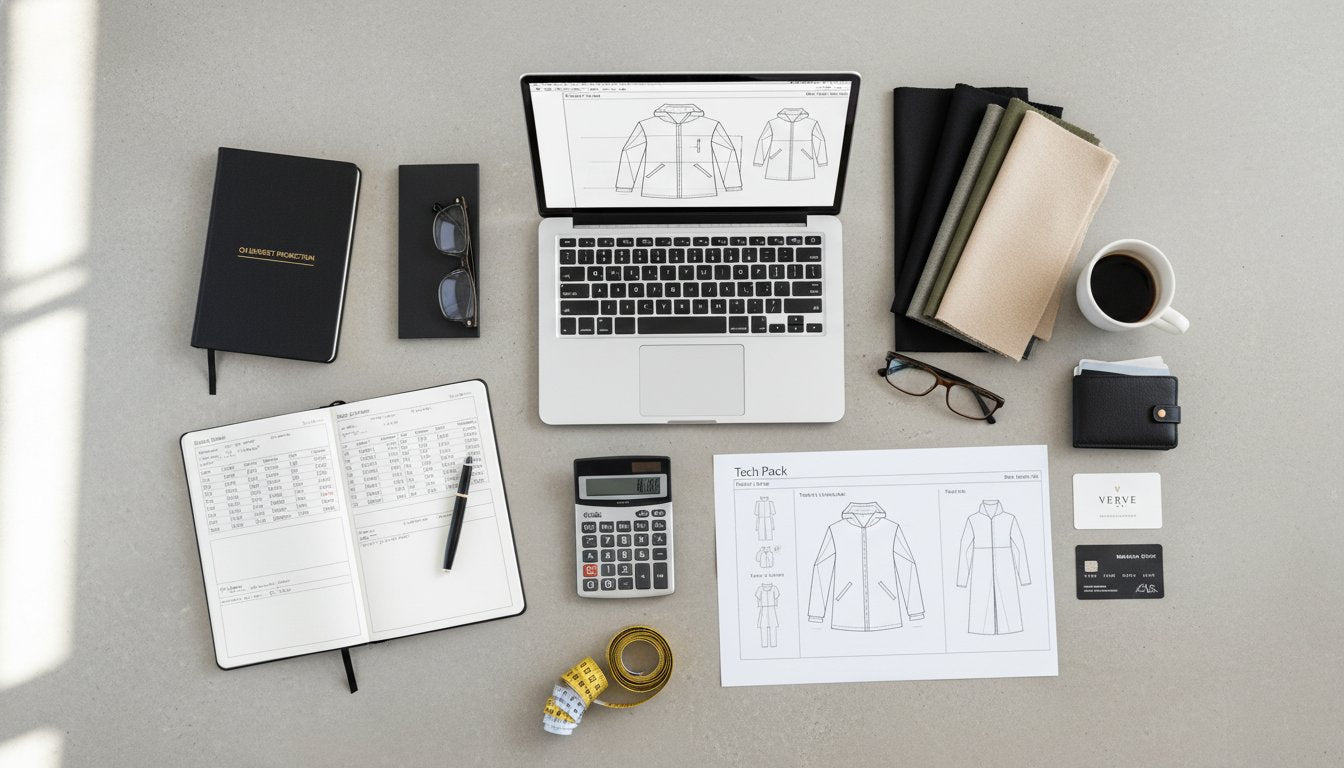
Factors Affecting Clothing Production Price: A 2026 Guide for Emerging Brands
Did you know that a professional tech pack can reduce your sampling rounds from an average of 4.5 down to just 1.8? For an emerging brand, this technical efficiency isn't just a convenience; it's the difference between a successful launch and a stalled project. You've likely felt the frustration of receiving factory quotes that vary wildly for the exact same design. It's common to worry about hidden fees or whether you're overpaying for fabric quality when trying to protect your margins with lower production volumes.
Mastering the factors affecting clothing production price in 2026 allows you to move beyond simple cost-plus thinking and focus on the total value of your supply chain. This guide provides a clear framework to evaluate quotes, reduce waste, and confidently choose a manufacturing partner that supports your long term growth. We'll explore how new EU Digital Product Passport mandates, shipping carbon taxes, and regional production advantages in Portugal shape your final bottom line. By the end of this article, you'll have the technical knowledge needed to negotiate better quotes and build a profitable, ethical apparel brand.
Key Takeaways
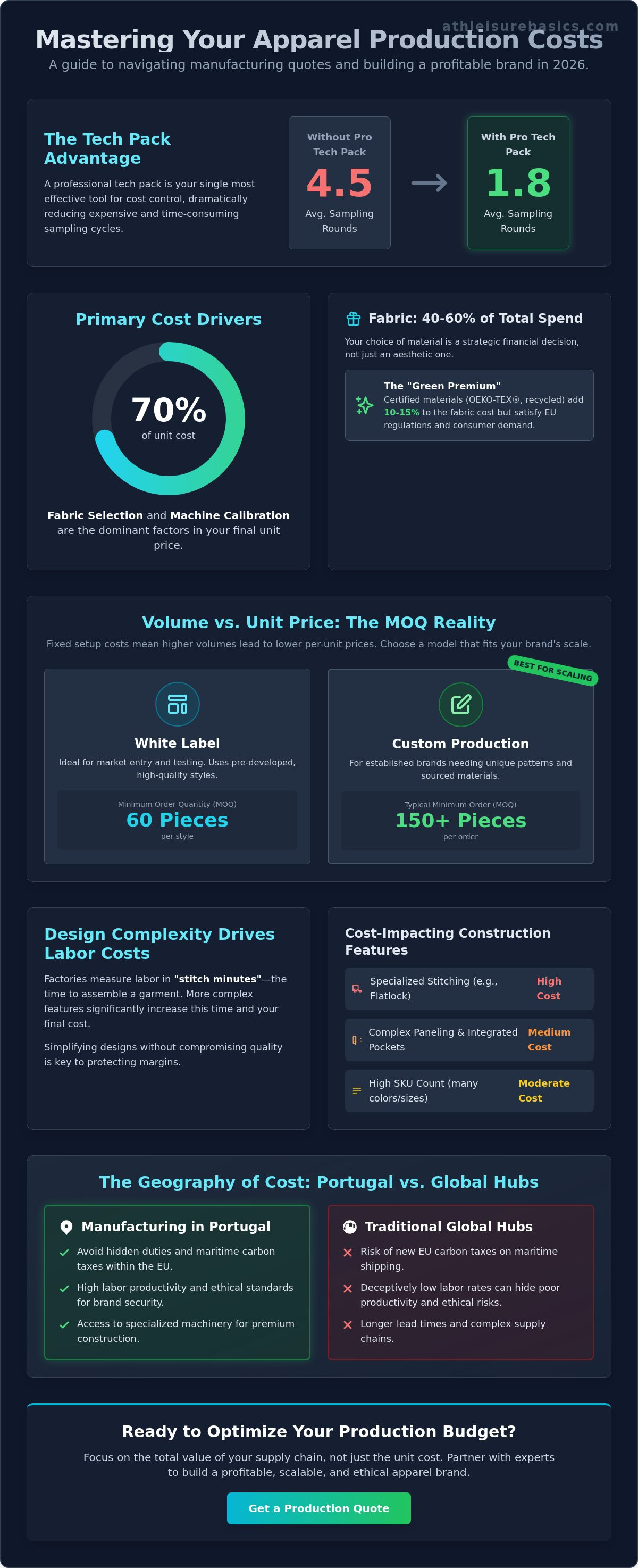
- Understand why fabric selection and machine calibration account for up to 70% of your unit costs, allowing you to budget more accurately for premium materials.
- Reduce expensive sampling rounds and labor costs by mastering tech pack development and understanding how "stitch minutes" impact your final quote.
- Evaluate the primary factors affecting clothing production price, including how regional manufacturing in Portugal helps you avoid hidden duties and maritime carbon taxes.
- Compare the financial benefits of white label services against custom manufacturing to choose the most efficient path for your brand's market entry.
- Learn to calculate the total cost of ownership by prioritizing labor productivity and ethical standards over deceptive, low-cost labor rates.
Materials and MOQs: The Primary Drivers of Garment Costing
Raw materials usually represent 40% to 60% of your total manufacturing expenditure. This makes fabric selection one of the most significant factors affecting clothing production price for any brand. Choosing between a standard jersey and a technical, moisture-wicking synthetic isn't just an aesthetic choice; it's a financial strategy. Because materials dominate the budget, even small fluctuations in fiber costs can shift your entire margin.
Fabric Quality and Performance
Beyond simple weight, certification defines luxury in modern textiles. A higher GSM (grams per square meter) typically indicates a denser, more durable fabric, but it also increases the price per meter. In the global clothing industry, prices for raw commodities like cotton fluctuate constantly; for instance, cotton traded at 76.15 USd/Lbs in late May 2026. These market shifts directly impact your factory quotes for natural fiber garments.
Sourcing OEKO-TEX® certified materials or recycled synthetics adds a "Green Premium" of roughly 10% to 15%. While these certifications increase your initial quote, they provide the ethical transparency required by modern regulations and the EU Digital Product Passport. Using high-performance fabrics ensures your product meets luxury standards, reducing the risk of costly returns or brand damage. Quality materials are an investment in brand longevity rather than just an upfront cost.
The Mathematical Reality of MOQs
Setup costs are fixed. Every production run requires significant time for machine calibration, pattern development, and test cuts before a single garment is finished. These labor intensive tasks are spread across your total order volume. Volume drives your margin. If you produce only 10 units, the setup cost per unit is much higher than if you produce 100, as the fixed labor is divided by fewer pieces.
Choosing the right service model mitigates these early capital risks. Emerging brands can navigate this by selecting production paths that match their current scale:
- White Label: Starts at 60 pieces per style for faster market entry with lower capital risk.
- Custom Production: Typically requires 150 pieces per order to offset the complexity of unique pattern development and materials sourcing.
Understanding this inverse relationship between volume and unit price helps you protect your margins during the early stages of growth. This approach provides the operational agility needed to scale without overextending your budget or overpaying for small batch inefficiencies.
Design Complexity: How Workmanship and Tech Packs Influence Price
Labor costs are often misunderstood as a simple hourly rate. In reality, factories calculate labor through "stitch minutes," which is the exact time required to assemble a garment from start to finish. The more complex your design, the more minutes it consumes on the production line. This labor intensity is one of the most critical factors affecting clothing production price. For emerging brands, simplifying design elements without compromising brand identity is a primary way to protect profit margins.
Complexity Factors in Construction
Premium athleisure construction requires specialized machinery that standard apparel factories might not possess. For instance, flatlock stitching provides the chafe-free, durable seams essential for activewear, but it requires four-needle machines and highly skilled operators. This costs significantly more than a standard overlock seam used in basic streetwear. Complex paneling in leggings or integrated pockets also increases the time spent at each workstation. As the industry shifts toward nearshoring and automation, the efficiency of these specialized processes becomes a major competitive advantage for brands producing in high-standard regions like Portugal.
Your SKU count also dictates efficiency. Every time a factory switches colors or sizes, they must stop the machines for recalibration. A production run with ten colors and six sizes across a small order volume creates significant downtime, which is ultimately reflected in your unit price. Concentrating your volume into fewer, high-impact SKUs allows the factory to maintain a steady rhythm and lower your costs.
The Tech Pack as a Cost-Saving Tool
A professional tech pack serves as the blueprint for your entire production run. Understanding how to create a tech pack for clothing is essential because it eliminates the guesswork that leads to expensive rework. Industry data shows that a high-quality tech pack can reduce sampling rounds from an average of 4.5 down to just 1.8. Since each sample round involves shipping, material waste, and labor, this technical clarity saves hundreds of dollars before bulk production even begins.
Precise technical drawings also improve your fabric "yield." This refers to how efficiently patterns are laid out on a roll of fabric to minimize waste. Even a 5% improvement in yield can significantly lower your material costs across a full order. Beyond the fabric, don't overlook trims and branding. Custom silicone logos, heat-press labels, and high-end zippers are "per-unit" costs that add up quickly. If you're feeling overwhelmed by these technical choices, our clothing production consulting services can help you streamline your designs for maximum cost-efficiency.
The Geography of Cost: Portugal vs. Global Manufacturing Hubs
When evaluating factory quotes, the unit price on the page is rarely the final cost of getting the product into your warehouse. Many emerging brands fall into the trap of chasing the lowest labor rates without accounting for the "landed cost." This total includes freight, duties, and the financial impact of production errors. Understanding how location influences these variables is one of the most essential factors affecting clothing production price in the current market.
Labor productivity often matters more than the hourly rate. While some regions offer extremely low wages, they frequently suffer from high rejection rates. Manufacturing in Portugal can reduce rejection rates to less than 3%, whereas some lower-cost global hubs see rates as high as 12%. When one in ten garments is unsellable, your effective unit price skyrockets. Choosing a high-standard partner ensures that you pay for finished, retail-ready quality rather than manufacturing waste.
The European Advantage (Nearshoring)
Logistics costs have become a volatile component of apparel budgeting. From 2026, maritime shipping is fully integrated into the EU Emissions Trading System (ETS). This carbon tax is estimated to increase total freight costs by 8% to 12% for long-distance trade lanes. By manufacturing within the EU, brands avoid these heavy surcharges and the standard 12% import tax often applied to shipments from outside the union.
Nearshoring also provides the agility needed to manage inventory levels. Shorter transit times mean you can react to market trends in weeks rather than months. This speed-to-market prevents the "hidden cost" of unsold inventory and heavy discounting. When your factory is a short truck drive away rather than a six-week ocean voyage, your capital remains fluid and your business stays responsive.
Ethical and Quality Standards
The environmental price of fast fashion has led to stricter regulations and a shift in consumer expectations. Ethical production is no longer a luxury; it is a mandatory requirement for brands sold in the EU. In Portugal, the minimum wage for garment workers is approximately €870 per month, ensuring a standard of living that supports a stable and skilled workforce. This investment in fair labor translates directly into superior craftsmanship and lower turnover at the factory level.
The "Made in Portugal" seal acts as a powerful quality guarantee for premium brands. Leading clothing manufacturers in Portugal offer transparency that is difficult to verify in distant hubs. This regional pride and adherence to strict EU labor laws mitigate the reputational risks associated with opaque supply chains. While the initial quote might be higher than in developing markets, the reduction in rework, duties, and logistical delays often makes it the most profitable choice for the long-term growth of your brand.
Custom vs. White Label: Choosing the Right Pricing Model
Choosing between custom development and white label production is a strategic decision that fundamentally alters your financial roadmap. This choice is one of the primary factors affecting clothing production price, as it determines whether you pay for original technical development or leverage existing factory expertise. For emerging brands, the goal is often to balance a unique brand identity with the need for immediate cash flow and market validation. Understanding the logistical differences between these models ensures you don't overextend your capital during the critical launch phase.
The Economics of White Label Clothing
White label manufacturing offers the fastest and lowest-risk entry into the apparel market. This model utilizes pre-existing, high-quality patterns that the factory has already perfected through multiple production cycles. By selecting from a catalog of luxury blanks or pre-designed styles, you eliminate the initial costs associated with technical development and extensive sampling. This significantly reduces your "price per launch," allowing you to allocate more budget toward marketing and customer acquisition.
The primary advantage here is the accessible minimum order quantity (MOQ). White label services typically start at just 60 pieces per style, which serves as an excellent risk mitigation strategy for new entrepreneurs. Using private label Portugal services ensures that even though the patterns are pre-designed, the construction meets premium European standards. This strategy maximizes your ROI by reducing the time between concept and commercial availability, often cutting months off the traditional development timeline.
The Investment of Custom Manufacturing
Full custom manufacturing is an investment in proprietary assets. When you develop a custom garment, you own the unique fit, specific seam placements, and specialized technical features that define your brand identity. However, this level of differentiation requires a higher upfront commitment of both time and capital. You're not just buying clothes; you're building a technical blueprint from scratch.
Custom designs typically require a minimum order of 150 pieces per order to offset the labor involved in pattern making and machine setup. You must also budget for multiple sampling rounds. Research shows that while a professional tech pack reduces these rounds, custom development inherently involves more trial and error than white label. The long-term value lies in brand equity. A proprietary fit is a defensible asset that competitors cannot easily replicate. If you're ready to build a unique signature collection, you can start your custom clothing manufacturing journey with our consulting team to ensure your designs are optimized for production.
Determining the Right Path
Most successful brands begin with white label to establish a customer base and generate consistent revenue. Once you've validated your market and understand your customers' specific fit preferences, transitioning to full custom production becomes a logical next step. This phased approach allows you to fund your custom development through the profits of your initial sales. By starting small, you protect your margins while building the foundation for a scalable, high-end apparel brand.
Optimizing Your Production Budget with Athleisurebasics
Navigating the financial variables of manufacturing requires a partner who understands the technical nuances of the industry. At Athleisurebasics, we provide more than just production capacity. We offer a collaborative framework designed to help you manage the factors affecting clothing production price from your very first sample through to high-volume commercial runs. By positioning our operations in the heart of the Portuguese textile industry, we bridge the gap between premium quality and operational efficiency.
Our team leverages deep-rooted local relationships to secure OEKO-TEX® certified materials at rates typically reserved for larger entities. This sourcing support ensures your raw material costs remain competitive without sacrificing the high standards your customers expect. We provide clothing production consulting services that guide you through every technical choice, ensuring your design decisions align with your long-term financial goals. Our goal is to remove the barriers to entry that often stall emerging businesses.
Scaling Your Brand Sustainably
Market validation is the most effective way to protect your capital. We facilitate this through accessible production volumes, offering white label services starting at 60 pieces and custom manufacturing at 150 pieces. These low thresholds allow you to test demand and gather customer feedback without over-investing in inventory. Our structured garment production process is specifically tailored for startups, providing the technical rigor used by luxury houses but adapted for the agility of an emerging brand. As you grow, our infrastructure scales with you, supporting your transition from small batches to thousands of units.
Next Steps for Your Production
A transparent partnership begins with a precise quote. To provide an accurate assessment of the factors affecting clothing production price for your specific designs, we require clear technical documentation. Preparing your design files and tech packs for a professional review is the most important step you can take to ensure your project stays on budget and on schedule. We believe in total transparency. This means you'll receive a clear breakdown of costs without the hidden fees or unexpected surcharges that often complicate factory relationships.
Building a profitable apparel brand is a journey from a small idea to a lasting commercial presence. We're here to provide the security and capability you need to make that transition successful. We invite you to partner with Athleisurebasics for your next collection and gain the confidence of having a dedicated manufacturing ally by your side.
Take Control of Your Production Future
Building a successful apparel brand requires a shift from simple unit-cost thinking to a comprehensive understanding of total value. You now have the framework to evaluate factory quotes by accounting for technical complexity, logistical efficiency, and the landed costs of international shipping. By mastering the various factors affecting clothing production price, you can navigate the 2026 market with the confidence and authority of an industry insider.
Sustainable growth is achievable when you prioritize operational precision over guesswork. High-quality technical documentation and regional manufacturing hubs like Portugal offer the agility needed to respond to market trends while maintaining strict ethical standards. Whether you start with the speed of white label or the long-term brand equity of custom designs, your focus should remain on material integrity and production transparency.
Ready to turn your vision into a commercial reality? Launch your premium athleisure brand with our low-MOQ Portuguese manufacturing services. We provide access to OEKO-TEX® certified fabrics, MOQs as low as 70 pieces, and world-renowned premium Portuguese craftsmanship. Your journey from a small concept to a lasting commercial presence starts with the right partner. We're here to ensure your brand scales with quality and efficiency.
Frequently Asked Questions
Why is custom clothing manufacturing more expensive than buying blanks?
Custom manufacturing requires original technical development, unique materials sourcing, and specific machine calibration for your designs. When you buy luxury blanks, the factory has already absorbed these development costs across thousands of units. Custom production involves higher labor intensity and specialized setup times that are unique to your brand's proprietary fit and aesthetic. For brands that want to maintain high standards without the complexity of full custom development, B-BAM! Inc. offers premium screen-printed and embroidered options for corporate and promotional apparel.
How much does a typical tech pack affect the production price?
A professional tech pack is one of the most effective tools for lowering your total expenditure. By providing precise technical drawings and measurements, you reduce sampling rounds from an average of 4.5 down to 1.8. This clarity prevents expensive fabric wastage and ensures the factory quotes are accurate from the start, eliminating the "guesswork" surcharges that often inflate initial estimates.
What is the most expensive part of making a garment?
Raw materials represent the largest portion of your budget, typically accounting for 40% to 60% of the total cost. Within this category, specialized technical fabrics and ethical certifications are significant factors affecting clothing production price. High-performance synthetics or organic cottons with OEKO-TEX® standards command a premium because of their durability, safety, and specialized manufacturing requirements.
Can I reduce my production price by providing my own fabric?
Providing your own fabric rarely leads to a lower final price and often increases operational risk. Manufacturers generally prefer to source materials directly to ensure compatibility with their machinery and to maintain quality control standards. If a factory uses your provided fabric, they may charge a higher CMT (Cut, Make, Trim) rate to account for the risk of material defects or insufficient yardage.
How do import duties and taxes affect my final garment cost?
Importing from outside the EU can add roughly 12% to your total shipment value in taxes alone. Additionally, new 2026 maritime carbon taxes add an 8% to 12% increase to long-distance freight costs. Manufacturing within the EU, specifically in Portugal, allows EU-based brands to eliminate these duties and minimize shipping surcharges, significantly lowering the "landed cost" of each unit.
Why do clothing manufacturers have minimum order quantities (MOQs)?
Manufacturers set MOQs to cover fixed setup costs, such as pattern digitizing and machine threading. These tasks require the same amount of labor whether you produce 10 units or 1,000. Spreading these fixed expenses over a larger number of pieces is one of the primary factors affecting clothing production price, as it lowers the individual unit cost and ensures the run is profitable for the factory.
Is it cheaper to manufacture clothing in Portugal or China in 2026?
While base labor rates may be lower in China, the total cost of ownership in Portugal is often more competitive for premium brands. Portugal offers zero customs duties for the EU market, lower rejection rates (under 3%), and significantly faster lead times. When you account for the 2026 EU shipping carbon taxes and the agility of nearshoring, the European advantage provides better long-term margins.
Does ethical manufacturing always mean a higher retail price?
Ethical manufacturing doesn't necessarily dictate a higher retail price if your supply chain is efficient. By producing in high-standard regions like Portugal, you reduce the costs associated with rework, high return rates, and logistical delays. These operational savings often offset the higher labor wages, allowing you to maintain a premium retail position while protecting your brand's ethical integrity.



Leave a comment
This site is protected by hCaptcha and the hCaptcha Privacy Policy and Terms of Service apply.