
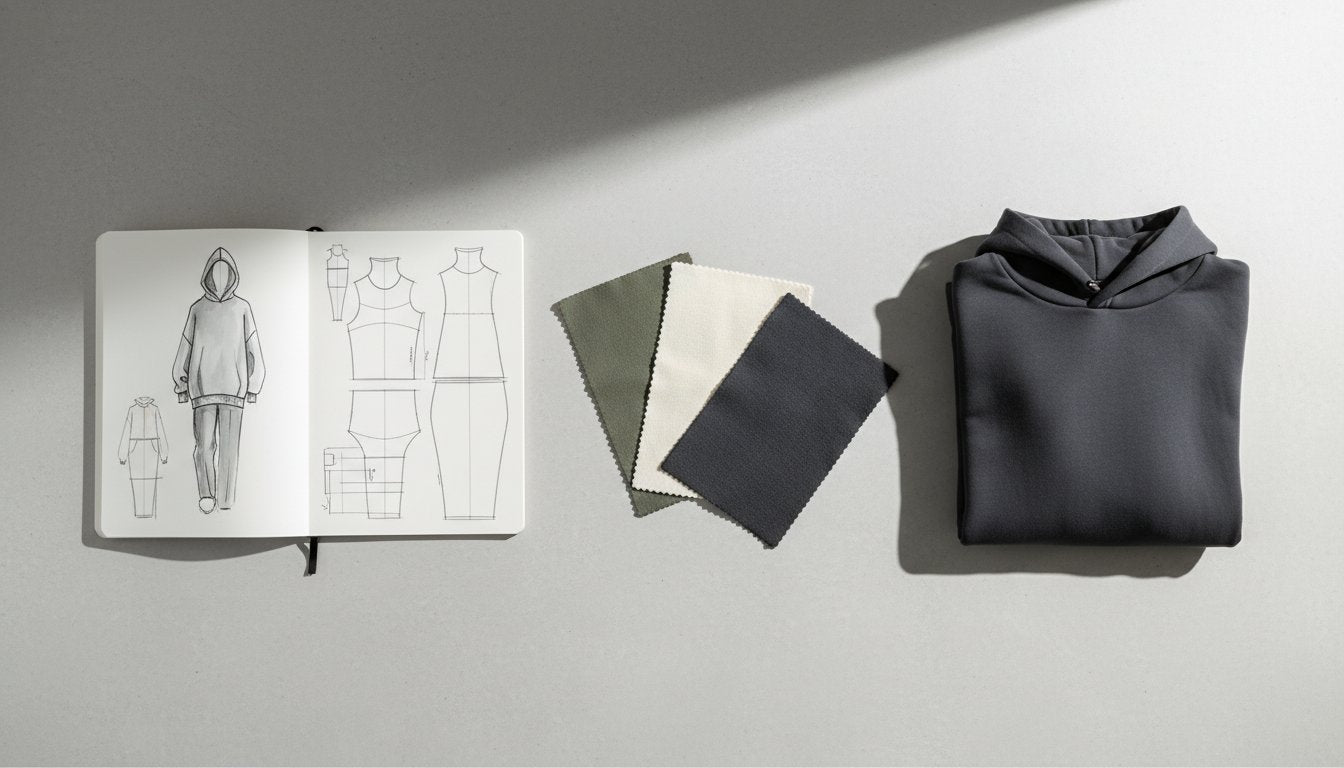
The Garment Production Process: A Step-by-Step Guide for Clothing Brands
You have a powerful vision for your clothing brand-the designs are sketched, the concept is clear. But between that initial spark and holding a finished, high-quality garment in your hands lies a journey that can feel overwhelming. This journey, the garment production process, is often shrouded in confusing industry jargon like ‘tech packs’ and ‘MOQs.’ For new founders, the fear of making a costly mistake with a first production run or struggling to find a reliable manufacturing partner can be paralyzing, preventing great ideas from ever becoming a reality.
But it doesn’t have to be this way. As your trusted partner, we believe launching your brand should be an empowering and efficient experience. In this comprehensive guide, we demystify every stage of manufacturing, from the initial sketch to the final, market-ready product. Consider this your clear roadmap to navigating production with confidence, allowing you to communicate effectively with manufacturers, plan your timeline and budget accurately, and turn your vision into premium apparel.
Key Takeaways
- Breaking down manufacturing into three core stages-Pre-Production, Production, and Post-Production-provides a clear roadmap for launching your brand with confidence.
- A detailed Pre-Production phase is your best defense against costly mistakes, ensuring your design vision is translated into a flawless technical blueprint before manufacturing begins.
- Understanding the entire garment production process allows you to maintain superior quality control and consistency from the first sample to the final, market-ready product.
- Choosing the right manufacturing partner is a critical business decision that directly impacts your product quality, ethical standards, and overall brand reputation.
The Big Picture: Three Core Phases of Garment Production
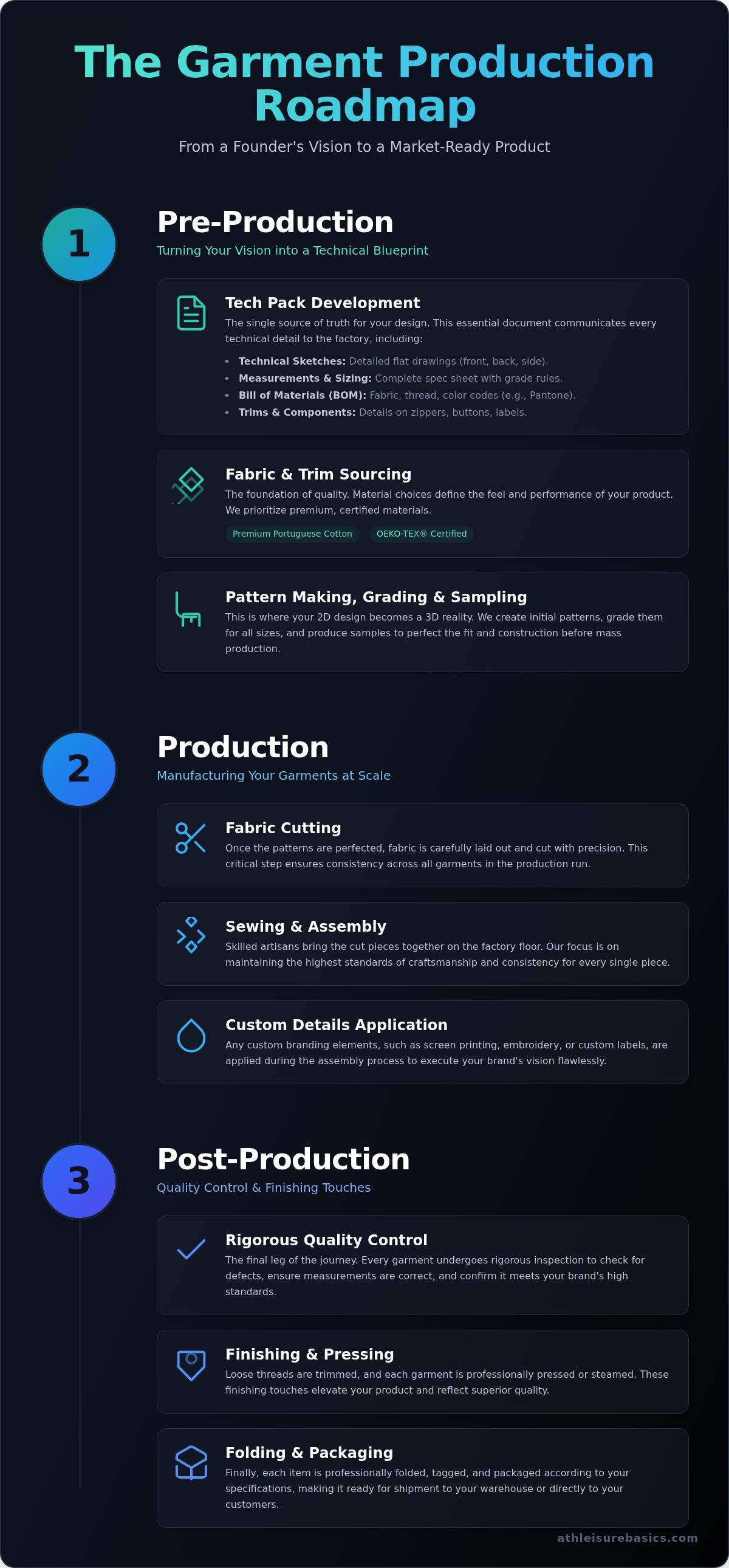
Transforming a design concept into a tangible, market-ready product is a structured journey. For new founders, navigating the complexities of the global garment industry can feel daunting, but the entire garment production process can be broken down into three core phases. Understanding these stages is the key to effective planning, accurate budgeting, and successfully launching a premium clothing line. It provides a clear roadmap from your initial sketch to your final customer delivery, ensuring there are no surprises along the way.
Garment Production Flowchart
[Phase 1: Pre-Production] → [Phase 2: Production] → [Phase 3: Post-Production]
Phase 1: Pre-Production (The Blueprint)
This is the foundational stage where your creative vision is meticulously translated into a technical blueprint. It covers every critical detail before a single stitch is made, from finalizing your designs and creating tech packs to sourcing premium fabrics and developing samples. Getting this phase right is non-negotiable, as it sets the standard for product accuracy, quality, and cost-effectiveness for the entire production run. Think of it as the architecture of your apparel.
Phase 2: Production (The Assembly)
Once the blueprint is approved, we move to the factory floor. The Production phase is where your garments are physically brought to life at scale. This involves precise fabric cutting, expert sewing by skilled artisans, and the application of any custom details like embroidery or printing. Our focus here is on efficiency, consistency, and maintaining the highest standards of craftsmanship across every single piece, ensuring your brand's vision is executed flawlessly.
Phase 3: Post-Production (The Finishing Touches)
The final leg of the garment production process ensures every item is perfect before it reaches your customers. This stage involves rigorous quality control checks, trimming loose threads, pressing, and professional folding and packaging. Post-production is all about the finishing touches that elevate your product and guarantee that each garment reflects your brand's commitment to superior quality and an exceptional customer experience.
Phase 1: Pre-Production - Turning Your Vision into a Technical Blueprint
The pre-production phase is the most critical stage in the entire garment production process. Think of it as creating a detailed architectural blueprint before construction begins. Diligent planning here, in close collaboration with your manufacturing partner, prevents costly errors, defines your final production costs, and establishes a realistic timeline for launching your brand. Getting this right is the foundation for a seamless and profitable production run.
Tech Pack Development: Your Garment's Instruction Manual
A comprehensive tech pack is the single source of truth for your design. This essential document communicates every technical detail to the factory, ensuring your vision is executed with precision. A trusted manufacturing partner can help you refine it, but it should always include:
- Technical Sketches: Detailed flat drawings of your garment (front, back, and side views).
- Measurements & Sizing: A complete spec sheet with all garment measurements and grade rules for each size.
- Materials & Bill of Materials (BOM): Specifics on fabric composition, weight, thread, and color codes (e.g., Pantone).
- Trims & Components: Details on every item, from custom zippers and buttons to branded labels and drawstrings.
A complete tech pack is non-negotiable for receiving accurate quotes and ensuring consistency across every unit.
Fabric & Trim Sourcing: The Foundation of Quality
The feel and performance of your final product depend entirely on your material choices. For premium athleisure, we often recommend superior quality fabrics like Portuguese cotton, known for its softness and durability. It's crucial to select materials that not only fit your brand's aesthetic but also meet safety standards, which is why we prioritize sourcing OEKO-TEX® certified fabrics. Sourcing extends to every component, and leveraging your manufacturer's established network of trusted suppliers simplifies this step, giving you access to high-quality materials efficiently.
Pattern Making, Grading & Sampling: Perfecting the Fit
This is where your 2D design becomes a 3D reality. Pattern making involves creating the individual paper or digital pieces that will be cut from fabric and sewn together. The initial steps of the Garment Production Process translate your tech pack's sketches into these precise templates. Once the base pattern is perfected, grading scales it across your entire size range (S, M, L, XL). Finally, the sampling process allows you to test and approve the garment. This typically involves several stages-from a first proto sample to a final pre-production sample-and is absolutely essential for confirming the fit, feel, and overall quality before committing to a full production run.
Phase 2: Production - Manufacturing Your Garments at Scale
With your final sample approved, we move from concept to reality. This phase is where your vision is replicated hundreds or thousands of times with precision and care. It is the engine of the entire garment production process, demanding meticulous planning and execution to transform raw materials into premium finished products. Modern ethical manufacturing, like ours in Portugal, blends advanced technology with top-notch craftsmanship to ensure consistency and quality as you scale.
Fabric Preparation and Cutting
Before a single stitch is made, your chosen fabric undergoes critical preparation. It is first meticulously inspected for any flaws, color inconsistencies, or defects to ensure it meets the highest industry standards. The fabric is then allowed to "relax" on spreading tables, a crucial step to prevent shrinkage after production. Our experts then create a digital "marker"-an optimized layout of all pattern pieces-to maximize fabric usage and minimize waste. Cutting is then performed using either:
- Manual Cutting: For smaller or highly detailed orders, skilled cutters use handheld electric knives for precise control.
- Automated Cutting: For larger production runs, computer-guided machinery offers unparalleled speed and accuracy, ensuring every piece is identical.
CMT (Cut, Make, Trim): The Sewing Process
CMT is the core assembly stage where cut fabric pieces are expertly sewn into finished garments. To ensure ultimate efficiency and quality control, our production lines are highly organized. Each skilled operator specializes in a specific task-attaching a sleeve, sewing a hem, or setting a collar-using specialized machinery like overlockers for durable seams or flat-seamers for comfortable athletic wear. This focused approach, combining human skill with advanced technology, is essential for achieving a truly premium finish on every single item.
Customization and Branding
This is the final manufacturing step where your product officially becomes part of your brand. We apply your logos and graphics using a range of superior techniques, from vibrant, long-lasting screen printing to intricate, textured embroidery. Woven brand labels, care instructions, and size tags are precisely sewn in, solidifying your brand's identity and professional appeal. Whether through heat transfers or custom garment dyeing, this stage turns a well-made garment into a unique representation of your brand's vision and legacy.
Phase 3: Post-Production - Quality Control and Finishing
Once sewing is complete, the journey isn't over. This final phase of the garment production process transforms a collection of stitched pieces into premium, retail-ready products. It is here that meticulous attention to detail safeguards your investment and protects your brand's reputation. Every single garment is inspected, finished, and prepared to meet the highest industry standards, ensuring your customers receive the quality they expect.
Finishing, Pressing, and Trimming
This stage adds the final polish that elevates a garment from well-made to exceptional. Depending on your design, this may include post-sewing treatments like specialized washing for a softer feel or garment dyeing for a unique, uniform color. Our skilled teams then meticulously trim any loose threads for a clean, professional appearance. Finally, each item is carefully pressed or steamed to remove wrinkles, creating a flawless presentation before hang tags and price tickets are attached.
Rigorous Quality Control (QC)
Quality control is not just a final step; it's an integrated part of production. In-line QC happens during sewing, but final QC is the ultimate checkpoint. We operate on AQL (Acceptable Quality Limit) standards-a system that defines the maximum number of acceptable defects in a batch. This ensures consistent quality across your entire order. For premium brands, these protocols are even stricter, with inspectors checking for:
- Accurate Measurements: Verifying dimensions against your approved tech pack.
- Stitching Integrity: Inspecting for skipped stitches, weak seams, and overall neatness.
- Fabric Defects: Scanning for any stains, holes, or color inconsistencies.
- Accessory Function: Testing zippers, buttons, and drawstrings to ensure they work perfectly.
Folding, Packing, and Shipping
The last step in a successful garment production process is preparing your products for transit. Each garment is carefully folded, placed in a protective poly-bag, and then packed into cartons organized by size, color, and style. This systematic approach prevents damage and simplifies inventory management upon arrival. Once packed, your order is ready for shipment from our facility directly to you, bringing your vision to life and ready for your customers.
Working with a manufacturing partner who masters this final stage is crucial for your brand's success. Discover how our commitment to quality can help you build a lasting legacy.
How to Choose a Partner for a Smooth Production Process
Navigating the final stages of the garment production cycle depends almost entirely on one critical decision: your manufacturing partner. This choice extends far beyond the price per unit; it defines your brand’s quality, ethical standing, and speed to market. For startups especially, selecting a manufacturer is not about finding a supplier-it's about securing a trusted partner invested in your vision and long-term success.
Location Matters: The 'Made in Portugal' Advantage
Where your garments are made is a powerful statement about your brand. While some regions focus on mass volume, Portugal has carved out a reputation for superior quality and craftsmanship. Choosing a Portuguese manufacturer offers distinct advantages for Western brands:
- Ethical Production: All factories operate under strict EU labor laws, ensuring fair wages and safe working conditions.
- Premium Quality: A deep-rooted textile history means access to skilled artisans and top-notch materials, perfect for premium and luxury brands.
- Efficient Logistics: Proximity to Europe and North America results in faster lead times, lower shipping costs, and easier communication across similar time zones.
Low MOQ: The Key to Launching and Scaling Smartly
For new and growing brands, high Minimum Order Quantities (MOQs) present a significant barrier, tying up capital and increasing risk. A partner offering low MOQs is essential for a lean and agile launch. This flexibility allows you to test more styles, colors, and sizes without committing to thousands of units. It empowers you to respond to market feedback and manage inventory effectively, ensuring your capital is used for growth, not storage. Learn how our low MOQs can help your brand.
Expertise and Communication: The Partnership Factor
A true manufacturing partner brings more than just machinery to the table-they bring expertise. Look for a producer with a proven track record in your specific niche, such as high-performance athleisure. Clear, transparent, and consistent communication is the backbone of a smooth garment production process, preventing costly mistakes and delays. An ideal partner guides you through every step, offers solutions, and is genuinely committed to helping you build a successful and lasting brand.
Your Vision, Realized: Partnering for Production Success
Navigating the journey from a design concept to a finished product requires a clear understanding of its core stages. From the meticulous planning in pre-production to scaled manufacturing and final quality assurance, each step is vital for success. However, mastering the garment production process is not a challenge you have to face alone. Choosing the right partner is the single most important decision you will make.
At Athleisurebasics, we transform this complex journey into a streamlined, supportive partnership. We specialize in empowering startups and emerging brands with low MOQ flexibility, ensuring you can launch without excessive risk. Our commitment to premium 'Made in Portugal' craftsmanship guarantees your products meet the highest quality and ethical standards. With our expert guidance from concept to delivery, you gain a dedicated partner invested in bringing your unique vision to the market.
Your clothing brand deserves a foundation of quality and expertise. Let us handle the complexities of production so you can focus on building your legacy. Ready to take the next step? Turn your vision into reality. Get a production quote today.
Frequently Asked Questions About the Garment Production Process
How long does the entire garment production process take?
The timeline can vary significantly based on complexity and production method. For a fully custom garment, the process from tech pack to final delivery typically takes 10-14 weeks. This includes stages like fabric sourcing, sampling, and bulk production. Our white-label service, however, offers a much faster route to market, often allowing you to launch your collection in as little as 4-6 weeks. We prioritize an efficient process to help you launch quickly without compromising on quality.
What is the difference between CMT and FPP (Full Production Package) manufacturing?
CMT (Cut, Make, Trim) means you provide the manufacturer with the fabric, patterns, and trims, and they only handle assembly. FPP (Full Production Package) is an end-to-end solution where we, as your production partner, manage everything from fabric sourcing and pattern making to sampling and final production. For most startups and growing brands, FPP is the ideal choice as it streamlines the entire garment production process, allowing you to focus on building your brand.
How much does it cost to produce a garment?
Garment production costs are influenced by several key factors: fabric choice, design complexity, order quantity (MOQ), and any special finishes like embroidery or printing. For example, a simple premium cotton t-shirt will be more cost-effective than a technical jacket with multiple zippers. To provide an accurate and transparent quote tailored to your vision, we recommend submitting your project details. We focus on delivering superior, cost-effective solutions for brands at every stage of their growth.
What is a tech pack and why is it so important?
A tech pack is the master blueprint for your garment. It's a detailed document containing all technical specifications: measurements, materials, trims, color codes, label placement, and construction details. It is absolutely critical because it eliminates guesswork and ensures your vision is executed with precision. A comprehensive tech pack is the foundation for accurate sampling and flawless bulk production, guaranteeing consistency and the superior quality your brand deserves. It's the language we use to turn your idea into reality.
What is a Minimum Order Quantity (MOQ) and what is a typical number?
A Minimum Order Quantity (MOQ) is the smallest number of units a manufacturer will produce per style and color. MOQs can vary dramatically, with many factories requiring 500-1000 units, creating a barrier for startups. As your trusted partner, we specialize in providing ultimate flexibility with low MOQs. Our custom production typically starts at just 100 units per style/color, empowering new brands to launch with less risk and manage inventory efficiently.
Can a manufacturer help me with fabric sourcing?
Absolutely. As an FPP (Full Production Package) manufacturer, fabric sourcing is a core part of our service. We guide you through the process, leveraging our extensive network of trusted Portuguese and European suppliers. We can help you find the perfect premium materials for your vision, including OEKO-TEX® certified fabrics that meet the highest EU quality and ethical standards. This partnership approach ensures your final product is made from superior, responsibly sourced materials.
How do I ensure the quality of my final products?
Ensuring superior quality is a multi-step process built on clear communication and rigorous checks. It starts with a detailed tech pack, followed by a thorough sampling stage where you approve a pre-production sample before bulk manufacturing begins. Throughout production, we implement multiple Quality Control (QC) checkpoints. Our commitment to top-notch craftsmanship, rooted in EU manufacturing standards, guarantees that your final products will meet and exceed your expectations.


Leave a comment
This site is protected by hCaptcha and the hCaptcha Privacy Policy and Terms of Service apply.