
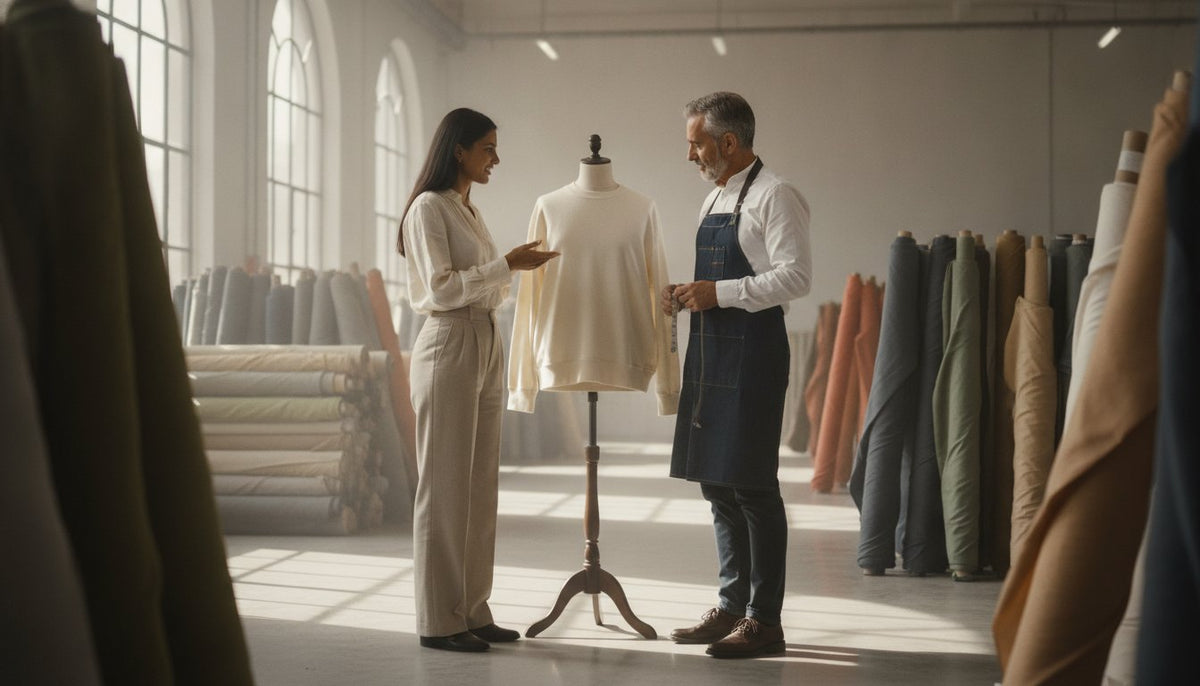
How to Create Your Own Clothing Line: The 2026 Manufacturing Guide
Most fashion startups fail not because of a bad design, but because they treat production as a simple transaction rather than a technical partnership. It's understandable to feel overwhelmed by industry jargon or the risk of poor quality when learning how to manufacture a clothing line for the first time. You've likely spent hours searching for a reliable partner that offers low minimum order quantities (MOQs) without sacrificing the premium standards your brand requires. We recognize that moving from a creative sketch to a physical garment is where most entrepreneurs feel the most pressure.
This guide provides a professional roadmap to navigate these complexities, taking you from your initial concept to premium production in 2026. You'll learn how to master tech pack development and material sourcing while maintaining high ethical standards. We'll show you how to find a manufacturing partner, particularly in quality-focused regions like Portugal, that supports your growth through flexible production volumes and expert consulting. By the end of this article, you'll have a clear, step-by-step plan to launch a collection that stands out in a competitive market and scales with your success.
Key Takeaways
- Define a specific market niche and brand strategy to ensure your collection solves a clear problem for your target audience.
- Master the technical design phase by creating professional tech packs, which serve as essential blueprints for manufacturing accuracy.
- Evaluate the differences between White Label and Custom (CMT) production models to align with your launch timeline and customization needs.
- Learn how to manufacture a clothing line using premium, OEKO-TEX® certified materials and ethical production standards in Portugal.
- Navigate the complexities of 2026 manufacturing with a roadmap that supports startup growth through low MOQs and production consulting.
Defining Your Brand Strategy and Market Niche
Building a successful brand starts long before you contact a factory. You must define a clear strategy that moves beyond simple aesthetics. Many entrepreneurs mistake a good design for a viable business, but the global clothing industry is built on solving specific consumer problems. Whether you're addressing a lack of squat-proof leggings or creating sustainable streetwear that actually lasts, your brand must have a reason to exist. Understanding how to manufacture a clothing line begins with identifying a market gap that your competitors have overlooked.
Choosing a specific niche is your most powerful tool for growth. Instead of launching a general "activewear" brand, focus on a high-growth segment like premium, OEKO-TEX® certified athleisure. This allows you to speak directly to customers who value material integrity and ethical production. Analyze your competitors by looking at their pricing and quality tiers. If most brands in your space offer mid-range quality at high prices, there's a clear opening for a premium brand that prioritizes superior Portuguese craftsmanship. Set realistic goals for your first collection. A focused launch of 3 to 5 high-quality pieces is often more successful than a large, diluted collection that stretches your budget too thin. This strategic clarity is what allows brands like Sasshole® | Premium Graphic Apparel for Women with Attitude to thrive, by matching high-end manufacturing with a cheeky, unmistakable personality.
Identifying Your Ideal Customer Profile (ICP)
Financial Planning for Your First Production Run
Financial clarity is essential when learning how to manufacture a clothing line. Your budget must account for more than just the cost of the final garments. You need to allocate funds for tech pack development, initial samples, bulk production, shipping, and marketing. There's a direct relationship between your order volume and your unit price; larger runs typically lower the cost per garment. However, for a startup, starting with manageable minimum order requirements (MOQs) is a safer way to test the market. To ensure your business remains profitable from day one, you should calculate your cost of goods sold for apparel accurately. This prevents unexpected expenses from eroding your margins during the launch phase.
Mastering the Technical Design Phase: The Tech Pack
A tech pack serves as the ultimate blueprint for your garment. It's a comprehensive document that translates your creative vision into a technical language that factories understand. Learning how to manufacture a clothing line requires a shift from creative vision to technical precision. Within the Apparel Manufacturing sector, the tech pack acts as the primary tool for quality control and cost estimation. Professional factories, particularly those in Portugal known for high-end craftsmanship, require these documents to provide accurate quotes and ensure the finished product meets your exact standards.
You don't need a formal design background to learn how to manufacture a clothing line successfully. Many startups begin with basic sketches or physical reference samples. However, you must eventually convert these into a professional format. This typically includes technical drawings, a Bill of Materials (BOM), and size gradings. If you're unsure where to start, our team at Athleisurebasics offers tech pack development services to help bridge the gap between concept and production-ready files.
The Anatomy of a Professional Tech Pack
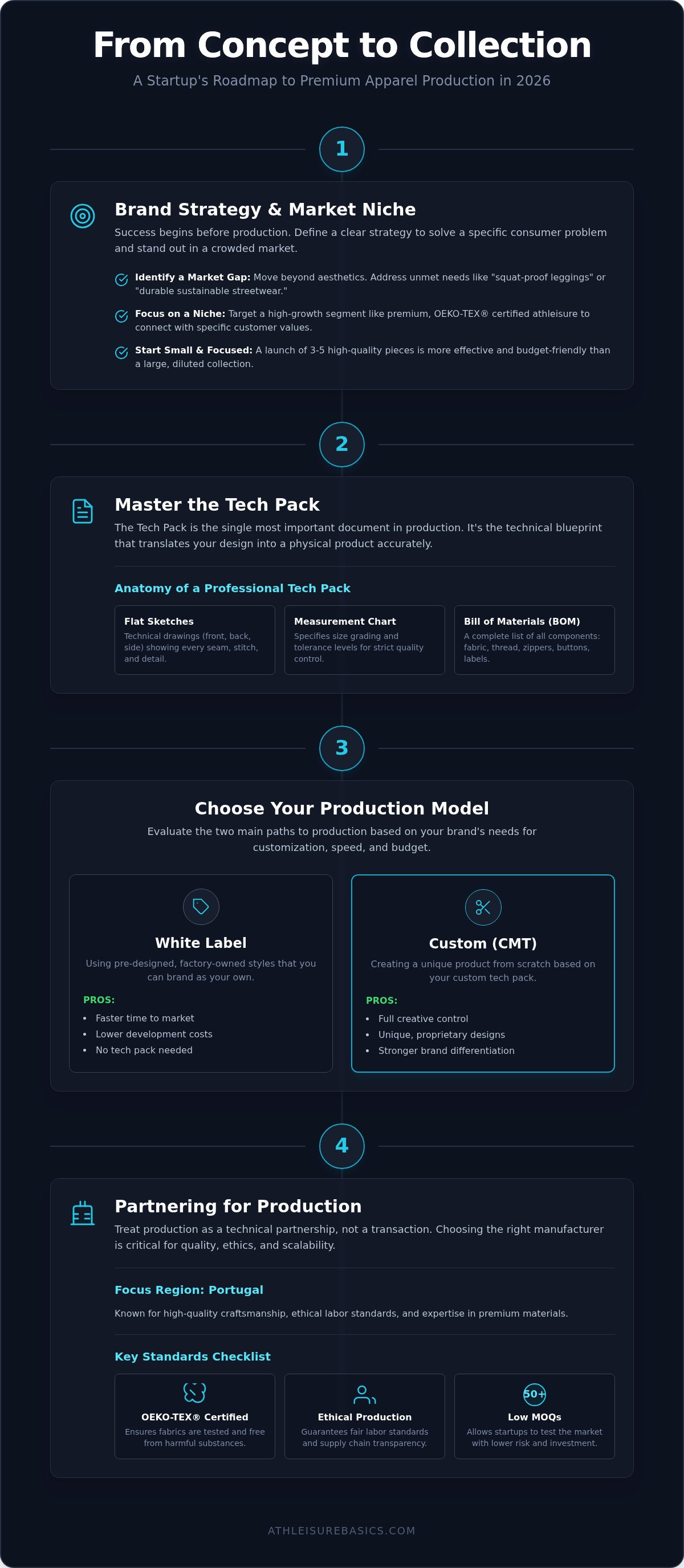
A complete tech pack leaves nothing to chance. It starts with detailed "flat" sketches that show the front, back, and side views of the garment without artistic styling. These drawings highlight every seam, pocket, and stitch line. Beyond the visuals, you must include a measurement chart with specific tolerance levels. These tolerances define the acceptable margin of error during sewing, which is vital for maintaining strict quality control. Finally, your BOM should list every component required, from the primary fabric and thread type to hardware like zippers, buttons, and brand labels.
Prototyping and Sampling
The first physical sample, often called a prototype, is the moment your tech pack is validated. This stage allows you to see how the fabric drapes and how the fit translates to a real body. It's common to find minor adjustments needed after seeing the first sample. Providing constructive, specific feedback to your manufacturer at this stage prevents costly errors during bulk production. Understanding the garment production process: A step-by-step guide will help you manage these iterations effectively. By refining your tech pack during the sampling phase, you ensure that the final production run is consistent and premium.
Sourcing Premium Fabrics and Sustainable Materials
Fabric choice is the primary driver of perceived brand value, especially in the athleisure market. When you're learning how to manufacture a clothing line, sourcing becomes a technical exercise in balancing performance with ethics. Customers judge a premium garment by its "hand feel" and how it performs during physical activity. High-end brands rely on a strategic mix of synthetic, natural, and blended performance fibers. Synthetics like recycled nylon provide necessary durability and stretch, while natural fibers like organic cotton or Tencel offer superior comfort and skin-friendliness. Blended fabrics often provide the best results, combining the strength of synthetics with the breathability of natural materials.
Modern consumers in 2026 prioritize transparency and safety above all else. This shift has made OEKO-TEX® and GOTS certifications essential for any emerging brand. These standards guarantee that your textiles are free from harmful chemicals and produced under socially responsible conditions. Portugal has emerged as a global hub for these high standards, offering access to world-class textile innovation. By sourcing materials in this region, you gain a competitive advantage through proximity to cutting-edge research and heritage craftsmanship that global competitors often struggle to match.
Selecting the Right Textile for Your Purpose
Choosing the right material depends entirely on your garment's intended function. High-impact sports require compression fabrics that support muscle movement and retain their shape over time. Conversely, yoga or lifestyle pieces demand lightweight breathability and a softer touch. Premium garments often incorporate advanced moisture-wicking technologies and anti-bacterial treatments to enhance the user experience. To understand these technical differences better, you should explore our guide on What is a textile? A complete guide for clothing brands. Selecting the correct textile ensures your product performs as promised and justifies a premium price point.
The Ethical Advantage of EU Sourcing
Sourcing within the European Union offers a distinct ethical advantage that resonates with today's conscious shoppers. Transparency in the supply chain is no longer optional; it's a requirement for building long-term brand trust. The "Made in Portugal" seal acts as a shorthand for quality and fair labor standards, protecting your brand's reputation from the risks associated with low-cost, unregulated factories. Additionally, manufacturing closer to your target market significantly reduces your carbon footprint. This logistical efficiency supports your brand's sustainability claims and allows for faster restocking cycles, which is a vital part of how to manufacture a clothing line that scales successfully.
Custom vs. White Label: Choosing Your Production Model
Selecting the right production model is a pivotal decision when learning how to manufacture a clothing line. There are two primary paths: White Label and Custom (CMT). White Label manufacturing allows you to add your branding to pre-existing, high-quality styles. It's an efficient way to enter the market without the long lead times of custom development. Conversely, Custom CMT (Cut, Make, Trim) production involves building unique garments from scratch based on your specific designs. The choice often comes down to your budget and how much customization your brand identity requires.
A major differentiator between these models is the Minimum Order Quantity (MOQ). For startups, the ability to order as few as 70 pieces for white label garments is a significant advantage. It lowers the barrier to entry by reducing initial inventory costs. Custom production, while more technical, remains accessible with MOQs starting at 250 pieces. This flexibility is central to how to manufacture a clothing line that remains profitable while scaling operations over time.
When to Choose White Label Manufacturing
White label is ideal for testing a market niche with minimal financial risk. Because the patterns and fabrics are already vetted, you can launch a collection in weeks rather than months. This speed to market is invaluable for catching trends or establishing an initial customer base. To dive deeper into this model, read our Private Label Portugal: The ultimate guide. It's a pragmatic solution for those who prioritize operational agility and high quality standards.
The Power of Custom CMT Production
Custom CMT production is for brands that want to create a signature fit that customers can't find elsewhere. This model gives you full control over every detail, from the exact placement of pockets to custom hardware and unique seam constructions. While it requires a more detailed tech pack, the result is proprietary brand equity. You aren't just selling clothes; you're selling a unique product experience. If you're ready to start your journey with a partner that supports both models, explore our manufacturing services to find the right fit for your vision.
Partnering for Success: Manufacturing in Portugal
Portugal has established itself as the premier global hub for premium, small-batch apparel production. For startups learning how to manufacture a clothing line, this region offers a unique combination of heritage craftsmanship and modern technical innovation. Unlike larger manufacturing hubs that prioritize volume over detail, Portuguese factories specialize in high-end garments and ethical labor standards. Manufacturing within the European Union also provides significant logistical benefits. You'll experience reduced shipping times and the elimination of complex duties for European-based sales, which protects your margins from the start.
At Athleisurebasics, we specifically tailor our operations to support emerging brands. We offer accessible minimum order requirements, including 70 pieces for white label and 250 for custom designs, to help you manage your initial capital effectively. Our production consulting serves as a bridge for beginners, ensuring that every technical choice aligns with your long-term growth goals. This collaborative approach allows you to move from your first production run to scaling your brand internationally with total confidence in your supply chain.
What to Look for in a Manufacturing Partner
Success in the apparel industry depends heavily on the quality of your collaboration. You must prioritize partners who demonstrate a clear communication style and responsiveness to your technical queries. A reliable manufacturer provides transparency regarding production timelines and maintains rigorous in-house quality control standards. To find the right fit for your business, consult our Clothing manufacturers Portugal: The ultimate 2026 guide. This resource helps you evaluate potential partners based on their technical capability and ethical certifications.
Final Steps: Quality Control and Logistics
The final stage of how to manufacture a clothing line involves securing your investment through strict quality control. You should implement a 100% inspection policy for your first bulk order to ensure every garment meets your brand’s standards. Beyond the product itself, your packaging and presentation play a vital role in your market positioning. Elevating the unboxing experience helps justify a luxury price point and builds immediate customer loyalty. Finally, establish a seamless logistics network for fulfillment. Efficient shipping and reliable customer satisfaction are the foundations of a lasting commercial presence in a competitive market.
Build Your Brand Legacy with Confidence
Success in the fashion industry requires a shift from creative vision to technical precision. By mastering your brand strategy and investing in professional tech packs, you've already mitigated the most common risks for new entrepreneurs. Your choice of materials and manufacturing location defines your brand’s reputation for years to come. Sourcing OEKO-TEX® certified fabrics from ethical hubs like Portugal ensures your collection meets the high standards modern consumers demand in 2026.
Navigating the complexities of how to manufacture a clothing line is much simpler with a partner that understands the startup journey. Whether you choose white label for a fast launch or custom CMT for a signature fit, the right support system makes all the difference. We provide the expertise and accessibility you need to transition from a small idea to a lasting commercial presence.
Our team offers low MOQs starting at 70 pieces for white label, premium materials, and expert production consulting to guide you through every stage. Launch your premium clothing line with Athleisurebasics today. Your journey toward a successful, high-end fashion brand starts with this first proactive step.
Frequently Asked Questions
How much does it cost to start a clothing line in 2026?
Starting costs depend entirely on your chosen production model and the number of styles in your debut collection. You must account for tech pack development, sampling, raw material sourcing, bulk production, and shipping logistics. While total investment varies based on fabric quality and design complexity, focusing on low MOQs helps manage initial capital while testing your market niche effectively.
What are the typical minimum order quantities (MOQ) for new brands?
Typical minimums in the global garment industry often reach 500 to 1,000 pieces per style. However, specialized partners like Athleisurebasics provide more accessible entry points with MOQs of 70 pieces for white label garments and 250 pieces for custom designs. These lower thresholds are essential for startups learning how to manufacture a clothing line without the risk of excessive unsold inventory.
Do I need to be able to sew to start a clothing line?
You don't need sewing skills to launch a professional apparel brand. Your role is to act as the creative and strategic lead while partnering with technical experts who handle the physical construction. By providing a detailed tech pack, you give the factory the technical blueprint they need to manage the cutting, sewing, and finishing of your garments to a premium standard.
How long does the garment production process usually take?
The timeline generally spans several months from the initial concept to final delivery. The sampling phase usually takes several weeks per iteration to ensure the fit and fabric meet your expectations. Once you approve the final sample, bulk production typically requires additional weeks depending on the factory's current schedule and the technical complexity of your designs.
What is the difference between white label and private label clothing?
White label clothing refers to pre-designed, high-quality garments that are ready for your branding. Private label is a similar concept where you add your custom tags to existing styles, whereas custom CMT involves building a unique product from scratch. White label is often the fastest route for startups to launch a premium collection with minimal development time and lower financial risk.
How do I find a reliable clothing manufacturer in Portugal?
Finding a reliable partner in Portugal involves verifying their technical capabilities and ethical certifications. Look for manufacturers that hold OEKO-TEX® certifications and offer transparent communication regarding their production processes. Assessing their responsiveness to technical queries during the initial consulting phase is a strong indicator of a successful, long-term collaborative relationship.
Can I start a clothing line with only one product?
You can absolutely launch with a single "hero" product. Many successful brands focus on mastering one specific garment, such as high-performance leggings or a premium hoodie, before expanding their range. This focused approach allows you to dedicate your entire budget to ensuring the highest possible quality for your debut item while building brand trust.
Is it better to manufacture in Europe or Asia for a startup?
Europe, particularly Portugal, is often the superior choice for startups prioritizing quality and ethical production. While Asian manufacturing may offer lower unit prices for massive volumes, European factories provide lower MOQs, faster shipping within the EU, and higher labor standards. This proximity makes it easier to manage the technical aspects of how to manufacture a clothing line while building a premium brand identity.


Leave a comment
This site is protected by hCaptcha and the hCaptcha Privacy Policy and Terms of Service apply.