
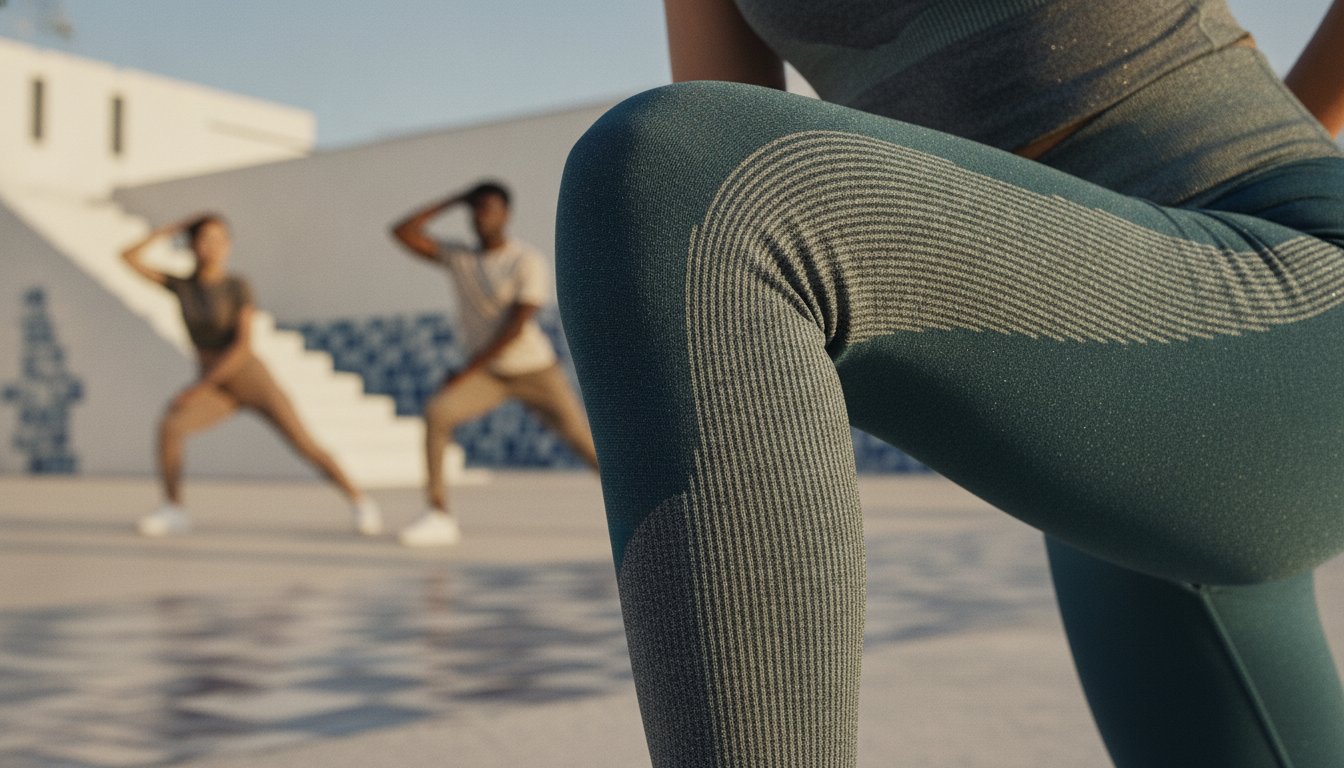
Premium Athleisure Fabrics: 2026 Guide for Apparel Brands
In the competitive 2026 market, your brand's success isn't defined by your logo. It's defined by the technical integrity of your athleisure fabrics. You've likely felt the frustration of decoding complex jargon like GSM and 4-way stretch while worrying if your first production run will pill or lose its shape after just two washes. It's a common hurdle for emerging founders who want to deliver quality without the risk of high minimum order quantities or unreliable suppliers.
We agree that the textile is the primary value proposition of any premium collection. This guide empowers you to master the technical and ethical aspects of material selection, ensuring your brand stands out for its performance and its principles. We will break down the essential properties of modern textiles, provide a framework for matching fabrics to specific garments, and explain why a reliable sourcing partner in Portugal is your best asset for navigating new EU regulations like the Digital Product Passport. By the end of this guide, you'll have the confidence to choose materials that elevate your brand and satisfy the most demanding athletes.
Key Takeaways
- Understand the technical requirements of modern transition garments that must perform during intense workouts and look premium in lifestyle settings.
- Distinguish between high-compression synthetics and luxury natural fibers to select the most effective athleisure fabrics for your specific product categories.
- Learn how to match fabric properties, such as interlock knits and antimicrobial finishes, to specific items like high-support leggings and lightweight performance tops.
- Identify the strategic advantages of sourcing from Portugal, including guaranteed OEKO-TEX® certification and strict adherence to EU environmental and labor laws.
- Discover how professional material sourcing support can simplify your production timeline and help you navigate complex technical specifications with confidence.
What Are Athleisure Fabrics and Why Do They Define Your Brand?
Choosing the right materials is the most critical decision a founder makes during the development phase. Athleisure fabrics are technical textiles engineered specifically for moisture management, thermal regulation, and multi-directional stretch. Unlike traditional fashion fabrics, these materials are designed to respond to the body's movement and physiological changes during physical exertion. They serve as the foundation of your product's performance and, by extension, your brand's reputation.
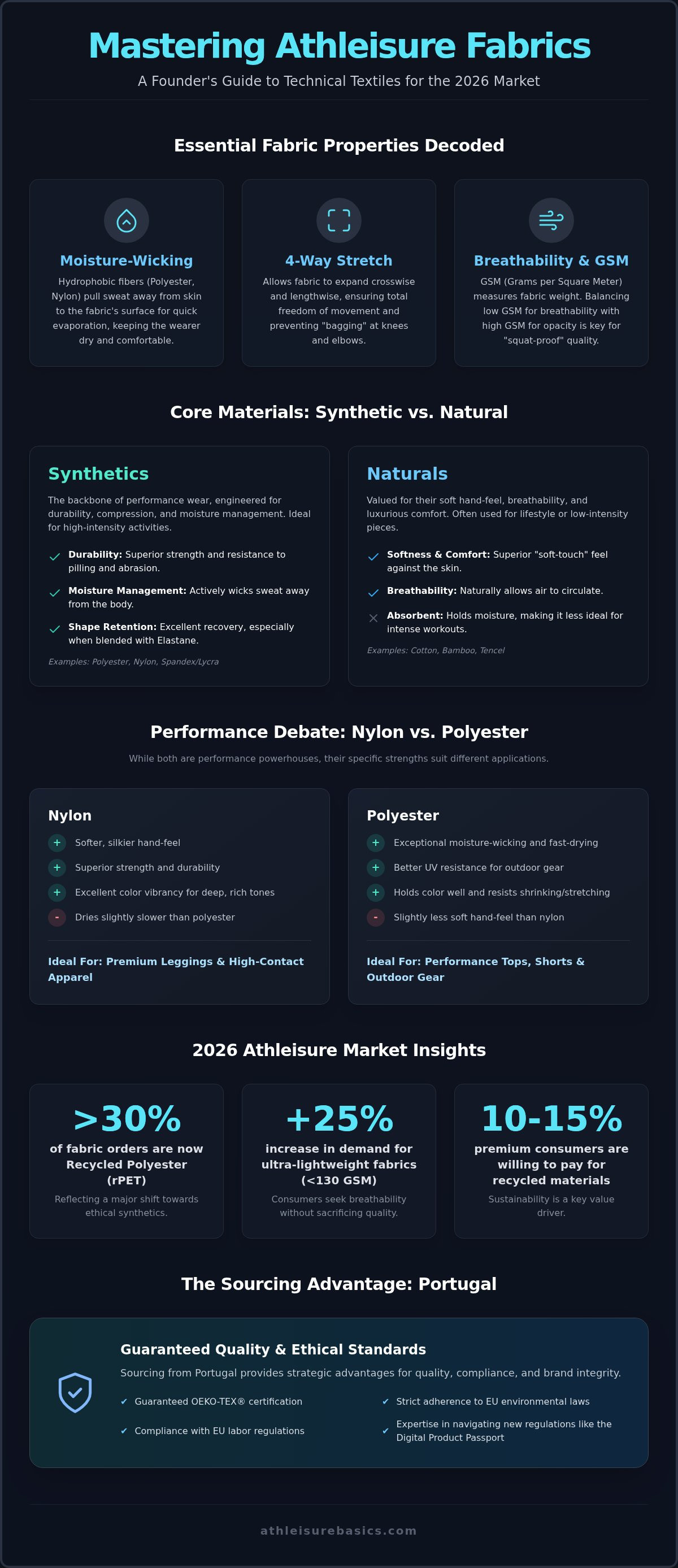
The modern consumer prioritizes the "transition garment" concept. This means your apparel must perform in a high-intensity gym setting while looking polished enough for a city environment. To understand how this category grew from niche gym wear to a global phenomenon, one can explore the history of What is Athleisure? and see that advanced textile engineering is the primary driver. If the fabric fails to bridge this gap, the garment loses its utility. High-quality textiles justify a premium retail price point and directly influence how customers perceive your brand's value. In 2026, this perception is also tied to sustainability. Recycled polyester (rPET) now constitutes over 30% of orders in the market, reflecting a significant shift toward ethical synthetics that don't sacrifice durability.
Key Technical Properties Every Founder Should Know
- Moisture-wicking vs. Absorbency: Synthetic fibers like polyester and nylon are hydrophobic, meaning they pull sweat away from the skin to the fabric's surface for quick evaporation. Natural fibers like cotton are absorbent; they hold moisture, which can make garments heavy and cold during a workout.
- 4-Way Stretch: This property allows the fabric to expand both crosswise and lengthwise. It's essential for maintaining freedom of movement and preventing permanent fabric deformation or "bagging" at the knees and elbows.
- Breathability and GSM: Grams per square meter (GSM) measures fabric weight. While 2026 trends show a 25% increase in demand for ultra-lightweight fabrics under 130gsm, you must balance weight with opacity to ensure your garments remain "squat-proof."
The Role of Textiles in Brand Storytelling
Your choice of textiles acts as a silent salesperson. High-performance materials significantly reduce return rates because they don't lose their shape or pill after a few laundry cycles. This reliability builds deep customer loyalty that marketing alone cannot buy. For the eco-conscious 2026 consumer, material transparency is a powerful tool. Using certified fabrics allows you to share a story of quality and responsibility, proving that your brand values integrity as much as it values aesthetics.
This commitment to sourcing luxury materials extends beyond technical knits; for example, brands incorporating premium accents often look for sustainable options like vegetable tanned leather Netherlands to maintain a consistent high-end feel.
Core Materials: Synthetic vs. Natural vs. Blended Textiles
The foundation of a successful collection lies in its fiber composition. Modern athleisure fabrics rely on a tactical balance between synthetic performance and natural comfort. While high-intensity activewear demands the durability of synthetics, lifestyle pieces often lean toward the "soft-touch" luxury of natural fibers. Understanding these differences allows you to engineer garments that meet specific consumer expectations for both function and feel.
Synthetics like nylon and polyester remain the backbone of the industry due to their superior compression and durability. However, these aren't the only ingredients. Elastane, often known by the brand names Spandex or Lycra, is the essential component for recovery. Without a strategic percentage of elastane, garments lose their shape after repeated wear, leading to the "baggy knee" effect that plagues lower-quality brands. In 2026, the market has shifted toward innovative blends that combine these high-performance fibers with luxury naturals like bamboo or cotton to create versatile streetwear that performs as well as it breathes.
Nylon vs. Polyester: The Great Performance Debate
Nylon is frequently the preferred choice for premium leggings because of its superior strength and softer hand-feel. It offers better color vibrancy, allowing for the deep, rich tones seen in luxury collections. Polyester, while slightly less soft, excels in moisture management. It dries faster than nylon and offers better UV resistance, making it ideal for outdoor performance gear. Sustainability is now a baseline requirement in this debate. Recycled polyester (rPET) constitutes over 30% of athleisure fabric orders in 2026. While consumers are often willing to pay a 10-15% premium for recycled materials, the price gap is narrowing, with the rPET premium dropping to between 5% and 10% this year.
The Luxury of Portuguese Cotton
Portuguese cotton is considered the gold standard for premium hoodies, joggers, and lifestyle blanks. The secret lies in the long-staple fibers, which provide exceptional pilling resistance and long-term durability. Unlike standard cotton, these premium fibers create a smoother surface that feels significantly more luxurious against the skin. Many high-end brands now combine this cotton with small percentages of elastane. This creates "luxury comfort" garments that retain the breathability of a natural fiber while offering the stretch and recovery of technical wear. If you are unsure which blend suits your specific tech pack, our team provides professional material sourcing support to help you navigate these complex choices.
Choosing between these materials requires a deep understanding of your target end-use. For instance, high-compression gym wear might require a 75% nylon and 25% elastane split, whereas a lifestyle jogger might perform best with a 95% Portuguese cotton and 5% elastane blend. By mastering these ratios, you ensure your products deliver the quality your customers expect.
Matching Fabrics to Your Athleisure Product Line
A common mistake for emerging brands is applying a single textile across an entire collection. To build a professional line, you must match the technical properties of your athleisure fabrics to the specific movement and lifestyle demands of each garment. A pair of high-performance leggings requires a completely different construction than a lifestyle hoodie or a moisture-wicking run tee.
- Leggings and Sports Bras: These pieces demand high-compression interlock knits with a significant elastane content, typically between 20% and 25%. Interlock construction is a double-knit process that creates a thick, supportive fabric that looks identical on both sides.
- Performance Tops and Tees: Focus on lightweight jersey fabrics. In 2026, we've seen a 25% increase in demand for ultra-lightweight fabrics under 130gsm. These should include antimicrobial and anti-odor finishes to ensure the garment remains fresh during high-intensity training.
- Outerwear and Hoodies: Heavyweight brushed fleece or technical softshells are the standard for layering. These materials provide thermal regulation while maintaining a structured, premium silhouette.
- Joggers and Shorts: Versatile French terry or lightweight woven stretch fabrics offer the best balance. Woven stretch is particularly effective for shorts because it provides durability and wind resistance without the bulk of a heavy knit.
The Importance of Fabric Weight (GSM)
Grams per Square Meter, or GSM, is the standard metric used to determine the density and thickness of a textile, which directly dictates the fabric's opacity and level of transparency. For tops and base layers, a lightweight range of 150 to 200 GSM is ideal for breathability. However, for "squat-proof" leggings, you must aim for a heavyweight threshold of 280 to 320 GSM. Selecting a lower weight for bottoms often leads to transparency issues that can damage your brand's reputation for quality.
Finishing Techniques That Elevate Your Garments
Technical finishes are what separate entry-level apparel from luxury athleisure. Brushing and sueding are essential for creating the "buttery soft" texture that consumers now expect; in fact, orders for brushed fabrics have increased by 40% year-over-year. For lifestyle outerwear, applying a Durable Water Repellent (DWR) coating adds functional value without changing the fabric's appearance. Finally, anti-pilling treatments are crucial for cotton-based items. These treatments ensure your hoodies and joggers maintain a smooth, new appearance even after the repeated friction of daily wear and industrial washing cycles.
When you align these technical choices with your product goals, you create a cohesive collection that feels intentional. Our team helps you navigate these specifications during tech pack development to ensure your chosen athleisure fabrics perform exactly as intended on the retail floor.
Ethical Sourcing and Quality Standards in Portugal
In 2026, transparency isn't just a marketing preference; it's a legal necessity. With the enforcement of the EU Green Claims Directive starting in September 2026, brands are now prohibited from making vague environmental claims without substantiated proof. This shift makes the origin of your athleisure fabrics a central part of your business strategy. Sourcing and producing in Portugal offers an immediate competitive advantage because the region operates under the world's strictest environmental and labor frameworks, providing the data you need for mandatory reporting.
The "Made in Portugal" label has become a global mark of premium craftsmanship. It signals to your customers that your apparel isn't just high-performing, but also ethically produced. By localizing your supply chain within Europe, you significantly reduce your brand’s carbon footprint and simplify the logistics of the new Digital Product Passport (DPP). This passport, mandatory for textiles in the 2026-2027 timeframe, requires you to track material composition and fiber origin, a task that's much easier when your suppliers are in a highly regulated, transparent hub.
Understanding Certifications: OEKO-TEX and Beyond
The OEKO-TEX® Standard 100 is the benchmark for high-performance apparel. It ensures that every component of your garment, from the technical synthetic fibers to the chemical dyes, has been tested for harmful substances. This is critical for athleisure fabrics because sweat and heat increase the skin's permeability, making chemical safety a top priority for health-conscious customers. For those using natural fibers like Portuguese cotton, the Global Organic Textile Standard (GOTS) provides additional security, ensuring that your organic claims are backed by a verifiable chain of custody from the field to the finished product.
The Portuguese Advantage for Emerging Brands
Choosing manufacturing in Portugal gives you direct access to the world's finest textile mills and dye houses. This geographic concentration allows for tighter quality control and faster lead times, which are essential for maintaining lean inventory. Portuguese factories maintain a unique balance of traditional expertise and modern technical innovation. This allows them to produce complex textiles that meet the durability and recyclability scores required by the EU's Ecodesign for Sustainable Products Regulation (ESPR).
Ethical standards in Portugal are supported by clear legislation, including a national minimum wage of €920 as of January 2026. This ensures that your brand isn't exposed to the reputational risks associated with low-wage manufacturing hubs. When you partner with a Portuguese facility, you're investing in a relationship based on quality and principled production.
If you're ready to build a collection backed by world-class ethical standards, start your custom production journey with our Portuguese manufacturing team today.
From Fabric Sourcing to Final Production with Athleisurebasics
Successfully launching a collection requires more than technical knowledge; it requires a manufacturing partner who can translate your material choices into finished goods. At Athleisurebasics, we bridge the gap between raw athleisure fabrics and retail-ready apparel. Our materials sourcing support is designed to remove the complexity of finding ethical, high-performance textiles that meet your brand’s specific standards and functional requirements.
Integrating fabric selection into the garment production process is a critical step in your development timeline. We offer two distinct pathways to help you scale efficiently based on your current growth stage. For brands seeking complete creative control over silhouettes and custom textile blends, our custom manufacturing services start at a low minimum order quantity (MOQ) of 250 pieces. If you prefer a faster market entry using our pre-developed, high-quality styles, our white-label service offers an accessible MOQ of just 70 pieces. This flexibility allows you to test new materials without the financial risk of massive inventory overhead.
Sourcing Support for Your Brand
We leverage an extensive network of premium Portuguese mills to find exclusive textiles that align with your brand vision. During the pre-production phase, we provide fabric swatches and lab dips to ensure color accuracy and tactile quality before bulk production begins. Our consultants also advise on fabric durability and performance testing. This ensures that your chosen athleisure fabrics don't just look good in a tech pack, but actually perform under the stress of athletic movement and industrial laundering.
Starting Your Production Journey
Your journey begins with tech pack development, where we help you document precise fabric specifications to prevent errors during manufacturing. By providing an 'all-in-one' service from sourcing to full CMT production, we ensure total consistency across your entire run. This holistic approach mitigates the risk of fabric deformation or color variance between batches, protecting your investment and your brand’s reputation. Our location in Portugal further guarantees that your production adheres to the highest EU quality and labor standards.
Maintaining consistency across production runs is a hallmark of our collaborative approach. We monitor every stage of the process, from the initial dye lot to the final quality control check. This level of oversight is why emerging founders trust our facility to handle their transition from initial concept to a lasting commercial presence.
Contact Athleisurebasics to start sourcing your premium fabrics today.
Elevate Your Brand with Superior Textile Selection
Choosing the right athleisure fabrics is the most significant investment you'll make in your brand's future. By mastering technical specifications like GSM and stretch recovery, you ensure your garments meet the high standards of the 2026 market. Prioritizing OEKO-TEX certified materials and ethical manufacturing in Portugal doesn't just satisfy regulatory requirements; it builds a foundation of trust with your customers that lasts for years. This strategic focus on quality is what separates lasting commercial presences from temporary trends.
We understand that transitioning from a concept to a finished collection can feel overwhelming for new founders. That's why we offer full-service CMT production and dedicated sourcing support to simplify every step of your journey. Whether you are starting with our low MOQ white-label options at 70 pieces or developing a fully custom line at 250 pieces, our team in Portugal is committed to your success. We provide the expertise needed to turn your creative vision into a tangible, high-performance reality.
Start your premium athleisure production in Portugal with Athleisurebasics. Your vision deserves the integrity and craftsmanship that only world-class textiles can provide. We are ready to help you scale your business with confidence and professional support.
Frequently Asked Questions
What is the best fabric for athleisure leggings?
Nylon and elastane blends provide the optimal balance of compression and soft hand-feel for high-performance leggings. These materials offer the necessary recovery to prevent bagging at the knees or waist during intense movement. When paired with a double-knit interlock construction and a weight above 280 GSM, they provide the opacity required for premium athletic collections. This combination ensures your products meet the durability standards expected by professional athletes.
What does OEKO-TEX certified mean for my clothing brand?
OEKO-TEX Standard 100 certification signifies that every component of your textile has been tested for harmful substances and is safe for human health. This is a critical quality seal for your brand because it provides transparent proof of chemical safety to your customers. It protects your reputation by verifying that your athleisure fabrics meet strict global health standards, which is increasingly important as skin permeability increases during exercise.
Can I use 100% cotton for activewear?
Using 100% cotton for activewear is generally not recommended because the fiber absorbs moisture rather than wicking it away. Wet cotton becomes heavy, loses its shape, and can cause significant chafing during physical activity. For better performance, we suggest using Portuguese cotton blends that incorporate small percentages of elastane or technical synthetics. These materials retain the breathability of natural fibers while adding the stretch and moisture management needed for modern training.
What is the difference between 2-way and 4-way stretch?
The primary difference is that 4-way stretch expands both crosswise and lengthwise, while 2-way stretch only expands in one direction. For premium apparel, 4-way stretch is the essential choice to ensure full freedom of movement and optimal shape retention. This multi-directional flexibility allows the garment to move with the body and return to its original silhouette without permanent fabric deformation or sagging after repeated use.
How do I know if a fabric is moisture-wicking?
You can identify moisture-wicking fabrics by examining their fiber composition and reviewing technical data sheets from your supplier. Synthetic fibers like polyester and nylon are naturally hydrophobic, meaning they push sweat to the fabric's surface for quick evaporation. Always confirm the presence of specific capillary-action knits or chemical finishes that enhance these properties. Requesting a sample to perform a simple water-drop test can also provide immediate proof of wicking capability.
Why is fabric sourcing in Portugal better than in Asia?
Sourcing in Portugal is often superior because of the region's strict adherence to EU environmental and labor standards. This geographic proximity to European markets allows for faster lead times and tighter quality control throughout the production cycle. Additionally, Portuguese suppliers are already prepared for new 2026 regulations like the Digital Product Passport. This makes it much easier for your brand to provide the material transparency and ethical proof that modern consumers demand.
What is a good GSM for a high-quality hoodie?
A weight between 350 and 450 GSM is ideal for a high-quality, premium hoodie. This heavyweight range provides the structured silhouette and thermal insulation expected from luxury streetwear collections. Using a fabric within this threshold ensures the garment feels substantial and maintains its integrity after multiple industrial wash cycles. Anything below 300 GSM may feel too thin for a premium outer layer and could compromise the brand's perceived value.
Do I need a tech pack to start sourcing fabrics?
Yes, you should have a detailed tech pack before you begin the process of sourcing athleisure fabrics. This document provides the mill with precise technical requirements, including exact fiber ratios, weight specifications, and required performance finishes. Without a tech pack, you risk receiving materials that don't align with your design goals or functional standards. Professional documentation ensures that your sourcing partner can find the exact match for your collection's specific needs.



Leave a comment
This site is protected by hCaptcha and the hCaptcha Privacy Policy and Terms of Service apply.