
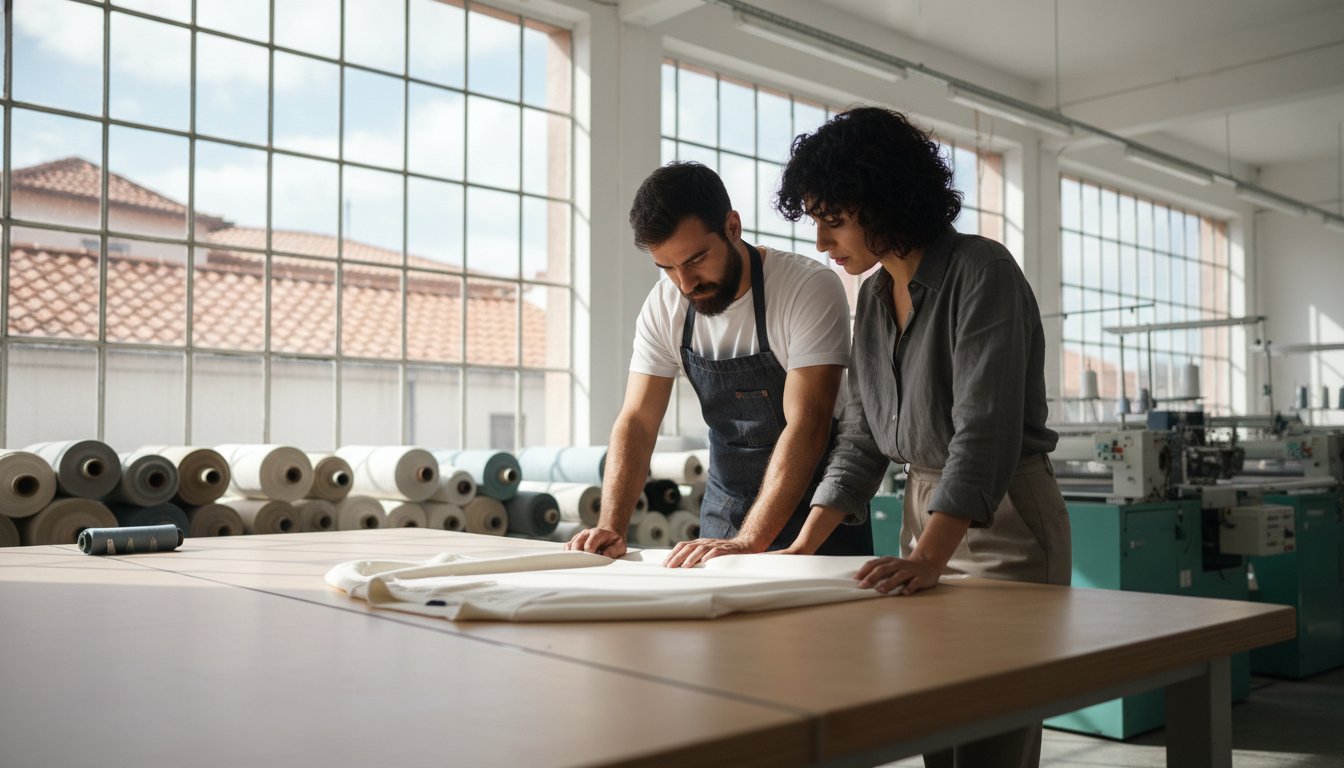
How to Get Clothing Manufactured in Portugal: A Step-by-Step Guide for Brands
What if you could launch a premium apparel line with just 60 pieces per style while maintaining the highest EU ethical standards? Many founders assume that learning how to get clothing manufactured in portugal requires massive capital or huge order volumes that simply aren't realistic for a startup. You've likely felt the anxiety of being ignored by suppliers or the confusion of choosing between CMT and FPP production models. It's a daunting hurdle that prevents nearly 40% of new brands from ever reaching the sampling stage.
We believe your vision deserves top-notch craftsmanship regardless of your current scale. This guide provides the definitive roadmap for the 2026 market to ensure your brand stands out for its superior quality. You'll master the complete process of sourcing and sampling in Portugal’s world-class textile hubs while gaining a clear understanding of modern MOQs and production costs. We're here to help you move from a concept to a finished product with total confidence in your manufacturing partner.
Key Takeaways
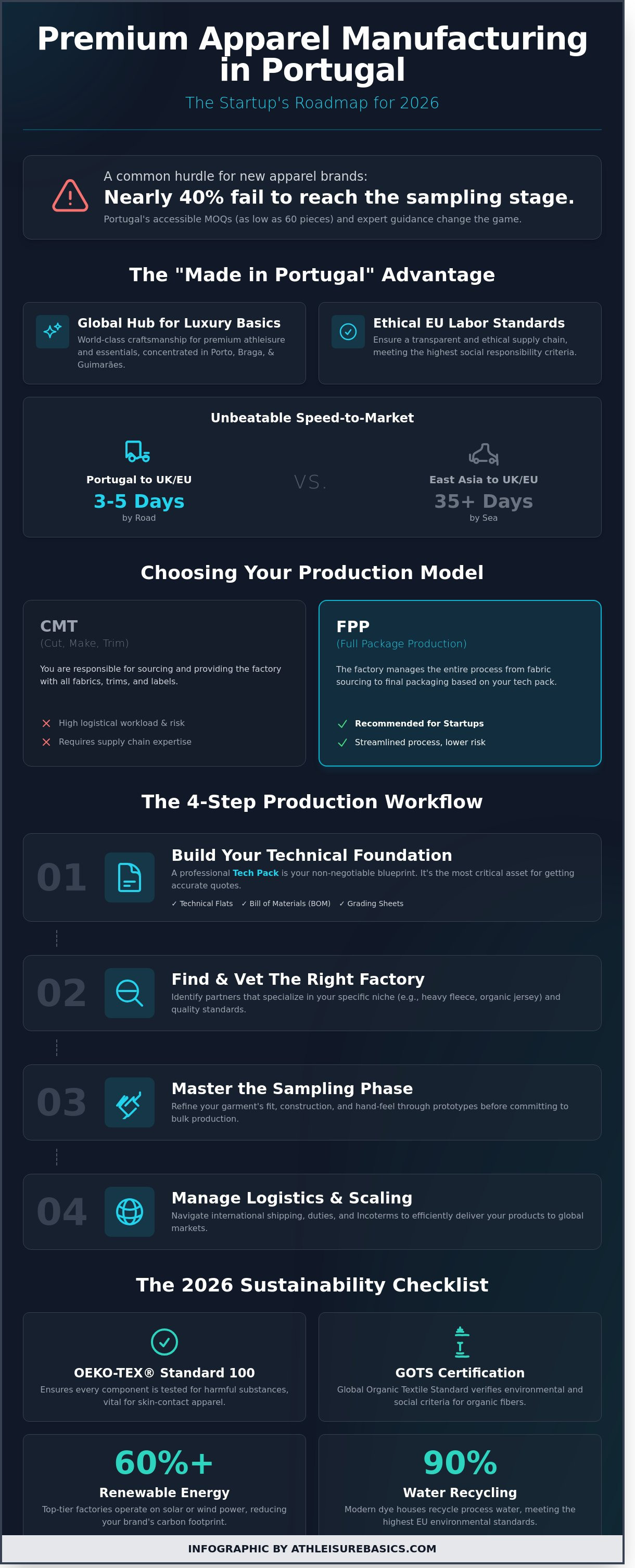
- Understand why Portugal's reputation for "Luxury Basics" and ethical EU labor standards makes it the premier destination for premium apparel brands in 2026.
- Learn why a professional Tech Pack is your most critical asset for securing factory quotes and ensuring your vision is translated into high-quality products.
- Discover the expert strategies for how to get clothing manufactured in portugal by vetting specialized partners that align with your brand's specific niche and quality standards.
- Master the sampling and production workflow to refine your garment's fit and construction before moving into full-scale manufacturing.
- Gain the logistical knowledge needed to navigate international shipping and Incoterms, allowing you to scale your brand efficiently from Portugal to global markets.
Why Manufacture in Portugal? The 2026 Industry Landscape
Portugal has cemented its position as the global hub for luxury basics and high-performance athleisure. By 2026, the "Made in Portugal" label represents more than just a geographic origin; it's a guarantee of ethical EU labor standards and premium craftsmanship. Most production is concentrated in the Northern Portuguese textile cluster, specifically the cities of Porto, Braga, and Guimarães. This region handles over 70% of the country's textile exports, offering a concentrated network of specialized spinning, dyeing, and sewing facilities that work in close proximity.
Brands targeting the UK and US markets choose Portugal to slash lead times and improve agility. Shipping from Porto to London takes 3 to 5 days by road, which is significantly faster than the 35-day sea freight typical of East Asian hubs. This proximity also reduces the carbon footprint of your supply chain, a critical factor as 2026 EU sustainability reporting requirements become stricter for small businesses. Learning how to get clothing manufactured in portugal starts with understanding this regional expertise and the speed it brings to your brand's growth.
CMT vs. FPP: Choosing Your Production Model
Choosing the right model defines your operational workload and risk profile. In Cut, Make, Trim (CMT), you supply the fabric and trims while the factory provides only the labor. This requires you to manage complex logistics and quality control for raw materials. For startups and emerging brands, Full Package Production (FPP) is usually the superior choice. The factory manages everything from fabric sourcing to final packing. This all-in-one approach reduces the risk of production errors and is the most efficient way to scale. Our guide on how to get clothing manufactured in portugal recommends FPP to ensure your vision translates into high-quality products without the logistical headaches.
Sustainability and Certifications in 2026
Sustainability isn't optional in the 2026 market; it's a baseline requirement for consumer trust. Portuguese factories lead the world with advanced certifications and green technology. When selecting a partner, look for these specific standards:
- OEKO-TEX® Standard 100: This ensures every thread, button, and accessory is tested for harmful substances, which is vital for skin-contact apparel.
- GOTS Certification: The Global Organic Textile Standard is the benchmark for organic sourcing, verifying both environmental and social criteria.
- Renewable Energy: Over 60% of top-tier factories in the Guimarães region now operate on 100% solar or wind energy.
- Water Recycling: Modern Portuguese dye houses often recycle up to 90% of their process water, meeting the highest EU environmental standards.
By partnering with these facilities, you aren't just buying clothes; you're investing in a transparent, ethical supply chain that protects your brand's reputation and the planet.
Step 1: Preparing Your Technical Foundation
Most founders think a simple sketch or a physical sample is enough to begin. It's not. If you want to know how to get clothing manufactured in portugal, you must first build a professional technical blueprint. Portuguese manufacturers are world-class artisans who specialize in premium garments; they expect clear, data-driven documentation before they'll provide an accurate quote. A complete tech pack acts as your production contract. It ensures that the 240 GSM organic cotton hoodie you envisioned is exactly what arrives at your warehouse.
Your technical foundation must define three critical pillars: material composition, hand-feel, and the specific "European fit." In Portugal, garment construction often leans toward a more tailored, high-end silhouette compared to the boxy fits found in mass-market exports. Defining your GSM (Grams per Square Meter) and specific finishes, like a carbon-brushed wash for softness, prevents misunderstandings that could waste thousands of Euros in sampling costs.
Creating a Tech Pack That Factories Love
A factory-ready design file is more than just a drawing. It's a comprehensive manual that allows a pattern maker to recreate your vision without asking questions. Your tech pack should include:
- Technical Flats: Clear 2D drawings with callouts for every seam, stitch type, and reinforcement point.
- Bill of Materials (BOM): A detailed list of every component, including OEKO-TEX certified threads, buttons, and recycled brand labels.
- Grading Sheets: Precise measurements that dictate how the design scales from a size Small to an XL while maintaining the intended silhouette.
Sourcing Fabrics and Trims Early
Smart brands choose their fabrics before they finalize their patterns. The weight and drape of a textile dictate how a pattern should be cut; a 180 GSM jersey behaves differently than a 300 GSM fleece. If you're a startup, ask about "stock" fabrics. Many mills in the Porto region keep premium textiles on hand. Choosing these allows you to hit low MOQ manufacturing goals, often reducing the minimum to just 60 or 100 pieces per style. If you require custom-dyed Pantone colors, remember that lab dips and bulk dyeing typically add 4 to 6 weeks to your timeline. Understanding these logistics is a vital part of learning how to get clothing manufactured in portugal efficiently.
Step 2: Sourcing and Vetting Your Manufacturing Partner
Finding the right partner is the most critical decision you'll make for your brand's future. Don't rely solely on basic search engine results. Approximately 70% of premium Portuguese factories operate through industry referrals or showcase at Modtissimo, an event that hosts over 400 exhibitors twice a year in Porto. Learning how to get clothing manufactured in portugal requires looking into these specialized hubs rather than generic directories.
You must vet for technical specialization from the start. A factory that produces heavy denim won't have the 4-needle flatlock machines required for high-performance leggings. Using the wrong equipment leads to seam failure and poor fit. Always ask for a factory's machine list before sending samples. This ensures their technical capabilities align with your specific product category.
The 250-piece minimum is a standard baseline for custom production in the region. While we offer white label options starting at 60 pieces, bespoke designs usually require higher volumes to offset the costs of pattern grading and custom fabric dyeing. Watch for red flags like a lack of OEKO-TEX Standard 100 certifications. Over 90% of reputable Portuguese exporters hold this certification to guarantee ethical and chemical safety. If a factory is vague about its physical location in the Porto or Braga regions, it's likely a middleman rather than a direct producer.
The First Inquiry: How to Get a Response
Factory owners prioritize "production-ready" brands. Attach your tech pack to the very first email to demonstrate professional intent. Mention your expected annual volume and a firm launch date for your 2026 collection. Ask specific questions about their machinery, such as their experience with recycled PES or circular knitting. This shows you've done your homework and aren't just "window shopping" for prices. It's the fastest way to prove you're a serious partner.
Visiting the Factory: Is it Necessary?
Porto and Braga house 85% of the country's textile industry. A physical visit allows you to witness the working conditions and craftsmanship firsthand. It transforms the relationship from a simple transaction into a long-term partnership. If travel isn't possible, insist on a virtual audit via a live video tour of the production floor. Seeing the machines in motion confirms the factory's capacity to scale your vision. This transparency is a cornerstone of how to get clothing manufactured in portugal while maintaining high EU ethical standards.
Step 3: The Sampling and Production Workflow
The sampling phase is where your technical drawings transform into physical products. Understanding how to get clothing manufactured in Portugal requires a firm grasp of this iterative process. You'll start with the Proto Sample. This first iteration focuses on fit and construction rather than final colors. It's your chance to verify that the pattern works in real life. Expect to pay between 200% and 300% of the bulk production price for prototypes. This higher cost covers the specialized labor required to set up machines for a single garment instead of a full production run.
Once the fit is locked, you'll request a Salesman Sample (SMS). These samples use the actual fabrics and trims intended for your final collection. They're essential for your 2026 marketing campaigns and pre-order photography. The final step is the Golden Sample. This is the "perfect" version of your garment that serves as a binding contract. Both you and the factory keep a copy. It acts as the benchmark for every piece that follows in the bulk order.
Managing the Sampling Feedback Loop
Precision is vital when providing feedback. Avoid vague terms like "make it feel better." Instead, provide specific measurements, such as "shorten the side seam by 1.5cm." Portuguese factories typically need 4 to 8 weeks to complete the sampling loop. This timeline accounts for fabric sourcing and the meticulous craftsmanship Portugal is known for. Being clear and decisive during this stage prevents costly delays and ensures your 2026 launch stays on schedule.
Bulk Production and Quality Assurance
When bulk production begins, your factory will implement Quality Control (QC) checkpoints. Most premium EU facilities utilize the AQL (Acceptable Quality Limit) 2.5 standard. This statistical method ensures that a specific percentage of the batch is inspected to guarantee consistency. You should expect two types of inspections. In-line inspections occur while the garments are still being sewn, allowing for immediate corrections. Final inspections happen after the garments are finished, pressed, and folded.
Standard packaging in Portugal often includes OEKO-TEX® certified materials. You must specify your labeling requirements early, including care labels and brand tags. Most brands now opt for sustainable, retail-ready packaging to minimize waste. If you're ready to move from concept to creation, submit your project to Athleisure Basics to start your sampling process today.
Step 4: Logistics and Scaling with Athleisurebasics
Moving your finished goods from the factory floor to your warehouse is the final hurdle in learning how to get clothing manufactured in portugal. Success depends on choosing the right shipping terms and understanding the trade lanes connecting Porto and Lisbon to the global market. We don't just produce your garments; we ensure they reach your doorstep through a transparent, professional logistics framework.
Shipping and Customs Made Simple
Manufacturing within the EU provides a massive advantage for brands targeting European markets. Goods moving between Portugal and other EU member states face zero customs duties and minimal paperwork. For UK and North American brands, the process remains highly efficient. By 2026, air express shipments from Portugal to London or New York typically arrive in 48 to 72 hours. Road freight across Europe takes approximately 5 business days for most major hubs. You'll need three essential documents to clear customs: a detailed commercial invoice, a precise packing list, and a certificate of origin to qualify for preferential tariff rates under modern trade agreements.
Why Athleisurebasics is Your Strategic Partner
We specialize in helping startup founders bridge the gap between a creative vision and a profitable reality. Most factories demand thousands of units, but we offer a low MOQ approach. You can launch your brand with just 70 pieces per style through our white label service. This reduces your initial capital risk by 60% compared to traditional manufacturing routes. As your brand gains traction, we help you scale. Our systems are built to transition your brand from small 70-piece runs to 250+ piece custom collections with bespoke patterns and specialized OEKO-TEX® certified fabrics.
Understanding Incoterms is vital for managing your landed costs. We typically work with two main structures:
- EXW (Ex Works): You're responsible for all transport costs and logistics from our facility door.
- FOB (Free on Board): We handle the logistics and costs until the goods are safely loaded onto the vessel or plane in Portugal.
The final stage of how to get clothing manufactured in portugal involves mastering these logistics to protect your margins. We provide the "Logo to Legacy" support needed to build a sustainable business, ensuring your premium Portuguese-made apparel arrives on time and in perfect condition.
Ready to take the next step? Get a custom manufacturing quote for your project today
Launch Your 2026 Collection with Confidence
Success in the 2026 fashion market requires a shift from mass production to ethical, high-quality craftsmanship. You've learned that the secret to how to get clothing manufactured in portugal lies in meticulous technical preparation and choosing partners who prioritize EU standards. By focusing on premium fabrics and transparent logistics, you're not just making clothes; you're building a sustainable legacy for your brand.
Athleisurebasics simplifies this journey for startups and established labels alike. We provide expert production consulting to navigate the complexities of European manufacturing without the typical industry hurdles. Our low MOQs start at just 70 pieces per style, allowing you to test the market without heavy financial risk. Every garment uses OEKO-TEX® certified premium fabrics, ensuring your products meet the highest safety and quality benchmarks from day one. We're here to turn your creative vision into a profitable reality through efficient, reliable workflows.
Don't let the technical details hold your vision back. Your brand deserves a partner that values quality as much as you do. Start your production journey with Athleisurebasics today and take the first step toward a successful launch. We're ready to help you scale your brand from a single logo to a lasting industry presence.
Frequently Asked Questions
How much does it cost to manufacture clothing in Portugal?
Production costs in Portugal typically range from €15 to €45 per unit for premium hoodies or trousers. This reflects the higher EU labor standards and superior quality materials used in 2025. While unit prices are higher than in Southeast Asia, you save 22% on shipping and import duties when selling within the European Union. These costs ensure your brand maintains a luxury positioning and ethical reputation.
What is the typical Minimum Order Quantity (MOQ) in Portugal?
Minimum Order Quantities (MOQ) in Portugal typically start at 60 pieces per style or color for white label services. For fully custom designs, most factories require 250 to 300 units to maintain production efficiency. These low MOQ options allow startups to launch with minimal risk. You don't have to worry about storing thousands of unsold garments in a warehouse.
How long does the manufacturing process take from design to delivery?
The manufacturing process usually takes 10 to 16 weeks from the initial design phase to final delivery. Sampling typically requires 4 weeks; bulk production takes another 6 to 10 weeks depending on the factory's schedule. Shipping within Europe adds 3 to 7 business days. This timeline allows your brand to stay agile and react quickly to changing fashion seasons.
Do I need a tech pack to start manufacturing in Portugal?
You definitely need a professional tech pack to start manufacturing in Portugal effectively. This document serves as the technical blueprint for your garment; it includes measurements, fabric specs, and trim details. Without a tech pack, factories can't provide an accurate quote or guarantee your final samples will be correct. We recommend finalizing these details before approaching any manufacturing partner.
Can I manufacture sustainable or organic clothing in Portugal?
Portugal is a global hub for sustainable fashion, with over 85% of textile mills offering GOTS or OEKO-TEX® certified materials. You can source premium organic cotton, recycled polyester, and innovative fabrics like SeaCell or Tencel easily. Manufacturing in Portugal ensures your products meet the highest ethical standards, which is a major selling point for modern, eco-conscious consumers.
Is it cheaper to manufacture in Portugal than in China?
Portugal isn't cheaper than China on a pure per-unit basis, but it's often more cost-effective for premium brands. When you account for the 12% import duty savings within the EU and 60% faster shipping times, the total investment is comparable. You also benefit from superior quality and ethical transparency, which allows you to charge a higher retail price point.
How do I pay my Portuguese manufacturing partner safely?
You should pay your Portuguese manufacturing partner using a standard 50/50 payment structure via SEPA or international bank transfer. You pay a 50% deposit to secure the fabric and start production; the final 50% is due after quality control but before shipping. Always verify the factory's VAT number and request a formal invoice to ensure every transaction is secure and documented.
What are the best types of clothing to manufacture in Portugal?
Portugal is the premier destination for high-end jersey wear, luxury knitwear, and technical sportswear. If you want to know how to get clothing manufactured in Portugal, start with premium hoodies, t-shirts, or leggings. These categories leverage the country's world-class craftsmanship and advanced textile technology. Portuguese factories are specialists in complex stitching and high-performance fabric finishes that startups need to scale.

Leave a comment
This site is protected by hCaptcha and the hCaptcha Privacy Policy and Terms of Service apply.