
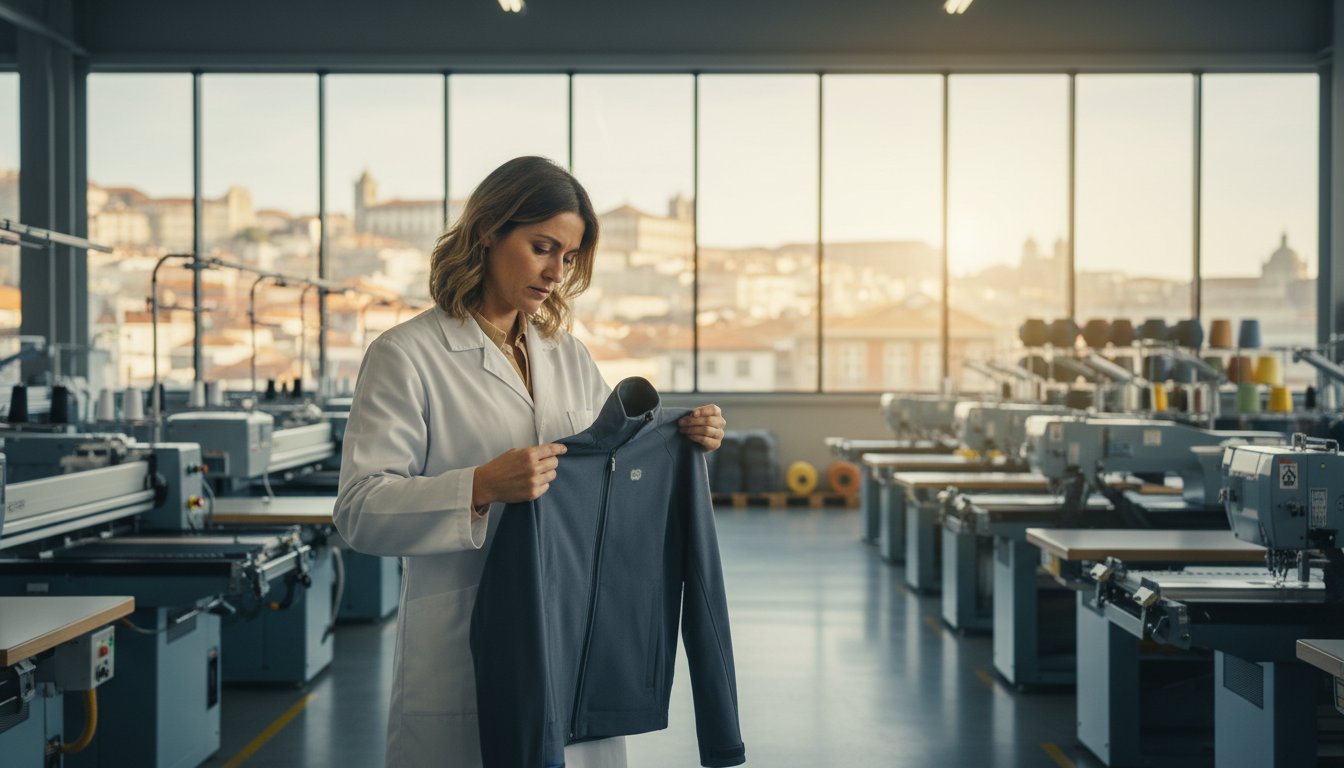
Manufacturing in Europe: The Ultimate Guide for Apparel Brands in 2026
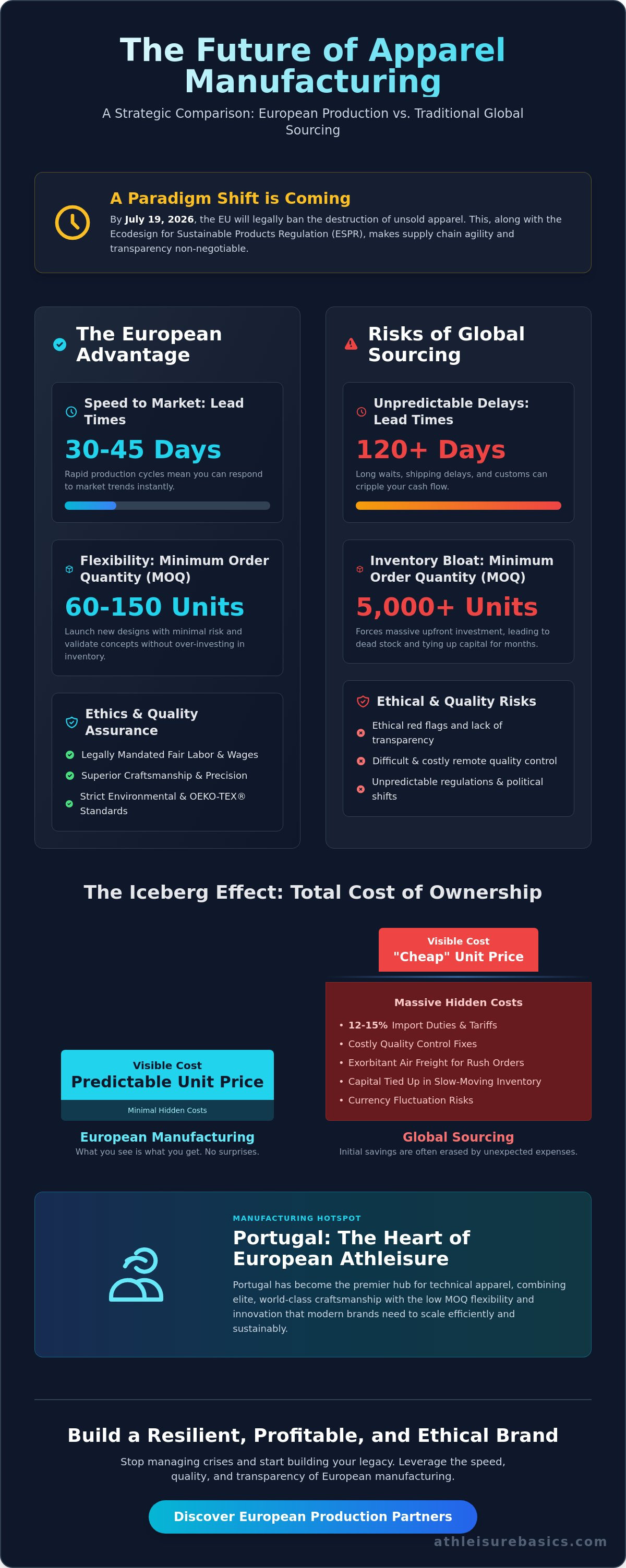
As of July 19, 2026, the European Union has legally banned the destruction of unsold apparel, signaling a permanent shift toward circularity that every brand must now manage. You've likely felt the frustration of waiting 120 days for overseas shipments only to discover quality issues or ethical red flags you can't control from a distance. It's a common struggle for founders who want to scale without sacrificing their values or their cash flow. Choosing to manufacture in europe isn't just about a label; it's a strategic move to regain control over your supply chain and meet the 2026 transparency standards that modern customers demand.
This guide shows you exactly why European production has become the premier choice for ethical, high-quality clothing. We'll demystify the process of finding a reliable partner and explain how to comply with new requirements like the Digital Product Passport. You'll discover how to leverage lead times of just 30 to 45 days and validate that premium, low MOQ production is entirely possible. Whether you're a startup or an established label, we'll provide the roadmap you need to turn your vision into a profitable, sustainable legacy.
Key Takeaways
- Master the strategic benefits of nearshoring to protect your brand from global supply chain disruptions and volatile shipping costs.
- Gain a clear understanding of the 'Made in Europe' value proposition, including the ethical transparency and environmental advantages of shorter shipping routes.
- Learn how to evaluate the Total Cost of Ownership to identify why premium production often leads to higher long-term profitability than cheap overseas alternatives.
- Navigate the regulatory landscape of the EU Single Market, including essential insights into VAT and customs for brands operating outside the region.
- Discover why Portugal is the premier hub for technical apparel, combining elite craftsmanship with the low MOQ flexibility needed to scale your brand efficiently.
The Landscape of Apparel Manufacturing in Europe for 2026
The European apparel market is projected to reach a valuation of USD 445.03 billion in 2026. This growth reflects a fundamental shift in how modern brands approach their supply chains. For decades, the industry chased the lowest possible unit price in distant markets. Today, the landscape is defined by a return to tradition paired with aggressive technological innovation. Brands are moving away from volatile global supply chains that are often plagued by 120-day lead times and unpredictable shipping costs. Instead, they're embracing nearshoring within europe to gain speed, agility, and peace of mind.
The European Union's textile industry serves as the primary driver for these global standards. By July 2026, the Ecodesign for Sustainable Products Regulation (ESPR) has created a unified framework for durability and transparency. This standardization ensures that labor rights and environmental protections aren't just optional "extras" but are legally mandated requirements. When you produce here, you're adopting the Premium European Standard. This means your garments are built with superior craftsmanship and technical precision that simply isn't matched by mass-market factories elsewhere.
Why 'Made in Europe' is a Powerful Marketing Asset
The "Made in Europe" label carries immense psychological weight with the modern consumer. It's a shorthand for luxury, heritage, and ethical responsibility. Research shows that shoppers frequently associate European origin with durability and superior quality. This perception allows your brand to command a higher retail price point. You aren't just selling a t-shirt or a pair of leggings; you're selling the assurance that the garment was made under fair conditions. This transparency builds a level of brand trust that is essential for long-term loyalty in a competitive market.
The Rise of Boutique Manufacturing and Low MOQs
The manufacturing sector has evolved to support the next generation of fashion entrepreneurs. The days of being forced into massive 5,000-unit orders are over. European factories have transitioned toward boutique-style production that prioritizes flexibility over raw volume. Many premium facilities now offer low MOQs starting at 60 to 150 pieces per style. This makes the region an ideal testing ground for new fashion concepts. You can launch a small, curated collection to validate your designs without risking your entire startup capital on unsold inventory. It's a pragmatic approach that turns your vision into a profitable reality quickly and efficiently.
The Economic and Ethical Advantages of European Production
Choosing europe for your production line offers a level of economic predictability that is rare in global trade. The stability of the Euro and the maturity of the legal systems across the continent protect your brand from the sudden currency devaluations or political shifts often seen in other manufacturing hubs. Beyond finance, the ethical framework is non-negotiable. EU labor laws mandate fair wages and safe working conditions, ensuring your brand story is backed by genuine integrity. Analyzing EU clothing import and export statistics reveals a growing reliance on internal trade as brands prioritize these ethical guarantees over the uncertainty of distant sourcing.
Many founders fall into the trap of looking only at the initial unit price. However, the "hidden costs" of manufacturing in Asia often erode those perceived savings. When you produce closer to home, you eliminate several financial risks that can kill a startup's cash flow:
- Import Duties: High tariffs on goods from outside the EU can add 12% to 15% to your final landing cost.
- Quality Control Gaps: Fixing production mistakes from 8,000 miles away is often more expensive than the original manufacturing run.
- Inventory Bloat: Long lead times force you to order massive quantities months in advance, tying up capital in unsold stock.
By manufacturing within the EU, you don't have to worry about a shipment being stuck at sea for 40 days or paying exorbitant fees to fix a batch of faulty samples. This stability creates a secure environment where you can focus on growth rather than crisis management.
Sustainability and OEKO-TEX® Standards
Modern consumers are more educated than ever about what touches their skin. European regulations strictly limit the use of harmful chemicals, ensuring that textiles meet the highest safety benchmarks. This is where certification becomes your strongest sales tool. OEKO-TEX is the gold standard for textile safety in 2026. By using OEKO-TEX® certified fabrics, you provide a clear promise of quality and safety that resonates with health-conscious buyers. If you're ready to prioritize these standards, you can explore our custom clothing options to see how we integrate certified materials into every style.
Speed-to-Market: The Competitive Edge
Speed is the ultimate weapon in the 2026 fashion market. Shipping within Europe typically takes between 2 and 5 days, compared to the 4 to 6 weeks required for sea freight from Asia. This proximity doesn't just save time on the final delivery; it accelerates the entire development cycle. You can receive, review, and iterate on samples in a matter of days. This agility allows your brand to react to emerging trends in real-time without the risk of overstocking inventory that might be out of style by the time it arrives. Shorter shipping routes also mean a drastically lower carbon footprint, aligning your logistics with the environmental values your customers care about.
Europe vs. Global Manufacturing: A Strategic Comparison
Evaluating the success of your manufacturing strategy requires looking past the invoice. While a factory in Asia might offer a lower initial unit price, the Total Cost of Ownership (TCO) often tells a different story. When you factor in 15% import duties, rising sea freight, and the financial burden of holding months of inventory, the gap narrows significantly. Producing in europe allows for a leaner supply chain where you only manufacture what you actually sell. This reduces the risk of deadstock and keeps your cash flow healthy.
Communication is another massive advantage that shouldn't be overlooked. Working within similar time zones means you won't wait 12 hours for a response to an urgent production query. Shared business cultures also lead to fewer misunderstandings regarding tech packs or quality expectations. According to recent analysis of European apparel market demand, consumers are increasingly willing to pay a premium for garments that offer clear proof of origin. This shift validates the 'Price Objection' as a myth; higher unit costs in the EU frequently lead to higher retail prices and better profit margins because the perceived value is so much stronger.
The 'China Plus One' Strategy
Diversifying your production hubs is a critical step for brand security in 2026. Many brands now adopt a 'China Plus One' strategy, keeping high-volume basics in Asia while moving their premium lines to European factories. This approach mitigates the risk of long-distance supply chain collapses that have been exposed by recent global events. By using Europe as your 'Quality Anchor', you ensure that your most important collections are protected by the EU legal framework. This provides a level of risk mitigation and intellectual property protection that is often difficult to enforce in other regions.
Quality Control and Craftsmanship
The tactile difference between a mass-produced garment and one from a European factory is immediate. You'll notice it in the precision of the stitching, the durability of the finishing, and the superior hand-feel of the fabrics. Luxury brands almost exclusively manufacture within the EU because they require this level of top-notch craftsmanship to justify their positioning. Proximity also makes quality control much simpler. You can hop on a short flight for an on-site inspection rather than relying on grainy photos or third-party reports. This hands-on approach ensures your final product always meets the highest industry standards.
Navigating Logistics and Regulations Within Europe
The EU Single Market is a powerful tool for apparel brands aiming for operational efficiency. It allows your goods to move between member states without internal customs duties or border delays. Once your clothing is manufactured in europe, it can be shipped from Portugal to Germany or France as easily as if it were moving between cities in the same country. This efficiency is a massive advantage for brands that need to restock inventory quickly to meet sudden spikes in customer demand.
For brands based outside the EU, understanding VAT and customs is essential for maintaining healthy margins. While you'll face import duties when bringing goods into the UK, USA, or Canada, the regulatory environment is transparent and predictable. Intellectual property protection is another core benefit of producing here. European jurisdictions offer robust legal frameworks to safeguard your designs. Registering your brand and unique patterns within the EU provides a level of security that makes it much easier to combat counterfeiting compared to markets with looser enforcement.
Vetting a manufacturer in 2026 requires looking beyond the factory floor. You must ensure they're prepared for the Digital Product Passport (DPP) registry mandated by the European Commission as of July 2026. A reliable partner will be transparent about their supply chain and ready to provide the data required for this new era of compliance. If you're ready to start your journey with a compliant, high-quality partner, you can submit your project today for a professional consultation.
Understanding EU Trade Agreements
Brands in the USA and Canada benefit from established trade frameworks that simplify the import of high-quality European textiles. As of July 2025, specific frameworks capped many tariffs at 15%, making premium production more cost-effective for North American labels. To ensure smooth cross-border shipping, your documentation must be flawless. This starts with detailed tech packs that clearly define materials and origin. You can learn more about these requirements in our guide to The Garment Production Process, which outlines every step from initial design to final delivery.
Certifications to Look For
Certifications act as a seal of trust for your customers who demand ethical transparency. The Global Organic Textile Standard (GOTS) is widely prevalent across European factories, ensuring that organic fibers are processed according to strict ecological and social criteria. Fair Trade and various ethical audit standards are also common. These certifications prove that your garments were made without the use of forced labor or harmful environmental practices. In a market where 2026 regulations like the ESPR are making sustainability a legal requirement, having these certifications in place gives your brand a significant head start.
Portugal: The Heart of European Athleisure Manufacturing
Portugal has emerged as the definitive leader for apparel brands in europe, particularly those focused on the high-growth athleisure and streetwear sectors. While other regions specialize in fast fashion or traditional tailoring, Portugal has carved out a niche in technical performance and premium jersey production. This leadership is built on a foundation of ethical manufacturing and superior craftsmanship. Effective January 1, 2026, the national minimum wage in mainland Portugal is €920 per month, ensuring that workers are paid fairly under strict EU standards. This transparency is why the region is the first choice for brands that value integrity as much as top-notch craftsmanship.
The strategic advantage of manufacturing here lies in the "textile clusters" found in Northern Portugal. These clusters represent a dense network of fabric mills, dye houses, and sewing rooms that work in close proximity. This industrial ecosystem allows for rapid prototyping and efficient CMT (Cut, Make, Trim) production. You aren't just hiring a factory; you're tapping into a centuries-old heritage of textile expertise that has been updated with modern 3D prototyping and AI-driven planning. This combination of tradition and technology ensures your products meet the highest industry standards for durability and fit.
The Portuguese Textile Advantage
The Porto region is the epicenter of this industrial excellence. It's world-renowned for its premium cotton and advanced technical fabrics that offer moisture-wicking and four-way stretch capabilities. Because the supply chain is so concentrated, lead times are significantly shorter than in other global regions. You can source raw materials and complete production all within a 50-mile radius, which drastically reduces your logistics costs and carbon footprint. For a deeper dive into why this region is the gold standard for ambitious brands, read our guide on Made in Portugal Clothing.
These advanced textiles are critical for creating the specialized apparel used in professional training environments, such as the athletic performance programs at Valorform.
Partnering with Athleisurebasics
We act as your trusted partner, bridging the gap between your brand's vision and the specialized factories of Northern Portugal. We understand that high MOQs can kill cash flow for startups and first-time founders. That's why we offer accessible entry points: our white label service starts at just 70 pieces per style, while custom clothing options begin at 250 pieces. Every garment we produce utilizes OEKO-TEX® certified materials, ensuring that your collection is safe, sustainable, and ready for the 2026 market requirements.
Our mission is to help you scale from a simple logo to a lasting legacy. We provide end-to-end production consulting to remove the barriers to entry that often stall new entrepreneurs. By choosing to produce in Portugal with us, you're choosing a partner invested in your long-term success and profitability. Ready to elevate your brand with superior quality? Start your production journey in Europe with Athleisurebasics today.
Scale Your Vision with the Premium European Standard
Manufacturing in europe has evolved from a luxury choice into a strategic necessity for brands that value speed and integrity. By leveraging lead times of 30 to 45 days and adhering to the 2026 EU sustainability mandates, you protect your business from the volatility of global shipping. You've learned that the 'Made in Portugal' seal of quality isn't just about heritage; it's about accessing a sophisticated ecosystem of technical expertise and ethical labor standards that justify a premium retail price.
We're here to simplify this transition for you. Whether you're a first-time founder or an established label, our production model removes the traditional barriers to entry. We provide OEKO-TEX® certified fabrics and low MOQ options starting at 70 units per style to ensure your cash flow remains healthy. It's time to turn your creative concepts into high-quality products that stand the test of time. Launch Your Premium Clothing Brand in Europe Now and let's start building your legacy together. You have the vision, and we have the expertise to make it a profitable reality.
Frequently Asked Questions
Is it more expensive to manufacture clothing in Europe than in China?
While initial unit prices are higher in Europe, the total cost of ownership is often more competitive for startups. You'll avoid the 120-day lead times typical of Asian production and reduce the risk of holding massive amounts of unsold inventory. By manufacturing closer to home, you save on high shipping fees and benefit from the 15% maximum tariff framework established in July 2025 for goods entering the US.
Which European country is best for clothing manufacturing?
Portugal is the premier destination for apparel manufacturing, especially for athleisure and technical streetwear. The region around Porto contains concentrated textile clusters that allow for rapid prototyping and efficient CMT production. Other hubs include Italy for luxury leather goods and Eastern European countries like Romania, where the gross minimum wage is approximately €850 as of July 2026, for a balance of cost and quality.
What are the minimum order quantities (MOQs) for European factories?
Minimum order quantities in European factories are highly accessible for emerging brands, typically starting between 70 and 250 units per style. This is a sharp contrast to the 1,000-unit minimums frequently required by large-scale factories in Asia. These lower thresholds allow you to launch curated collections without tying up all your capital, making it easier to test new fashion concepts with minimal financial risk.
How long does it take to ship clothing from europe to the USA or UK?
Shipping times are remarkably fast, with air freight deliveries reaching the UK or USA in just 2 to 7 business days. If you're shipping within the EU Single Market, road transport usually takes between 3 and 5 days. These rapid turnarounds are a massive advantage compared to the 40-day sea freight journeys from Asia, allowing your brand to restock bestsellers almost immediately to meet customer demand.
Do I need to pay customs duties when manufacturing in Europe?
You won't pay customs duties if your brand is based within the EU and you are shipping between member states. For brands in the USA, a formalized trade framework from July 2025 introduced a maximum 15% tariff on most EU-origin goods. It's essential to ensure your manufacturer provides a correct Certificate of Origin to benefit from these trade agreements and avoid unexpected fees at the border.
What certifications should I look for in a European clothing manufacturer?
You should prioritize manufacturers with OEKO-TEX® Standard 100 and GOTS certifications to ensure textile safety and organic integrity. As of July 2026, it's also critical to partner with factories that are ready for the Digital Product Passport (DPP) requirements. These certifications act as a seal of trust, proving to your customers that your garments meet the highest industry standards for both environmental and social responsibility.
Can I find sustainable and eco-friendly fabrics in Europe?
Yes, europe is the global leader in sustainable fabric production, driven by strict regulations like the Ecodesign for Sustainable Products Regulation. You'll find a vast selection of recycled polyesters, organic cottons, and innovative bio-based textiles in regions like Northern Portugal. These materials are often OEKO-TEX® certified, ensuring they're free from harmful chemicals and align with the circular economy goals mandated by the European Commission in 2026.
How do I communicate with a factory in Europe if I don't speak the language?
Most professional manufacturing partners in hubs like Portugal or Italy employ English-speaking project managers specifically to assist international brands. You don't need to speak the local language to navigate the production process effectively. Professional partners will guide you through tech pack development and quality control in English, acting as a supportive extension of your team to ensure your project moves from vision to reality.


Leave a comment
This site is protected by hCaptcha and the hCaptcha Privacy Policy and Terms of Service apply.