
What is Fabric? A Complete Guide for Aspiring Clothing Brands
The single most important decision you will make for your clothing brand has little to do with your logo or marketing strategy-it’s your choice of fabric. For aspiring founders, navigating the world of textiles can be overwhelming. Woven or knit? What does GSM even mean? Making the wrong selection can compromise your product quality and, ultimately, your brand's reputation before you even launch.
We believe that understanding textiles shouldn't be a barrier to turning your vision into a reality. As your trusted partner in manufacturing, we’re here to demystify the process and provide the clarity you need. This comprehensive guide is designed to empower you with the foundational knowledge to make expert decisions for your apparel line.
Here, you will learn the fundamentals-from fiber types to construction methods-so you can confidently discuss your needs with a manufacturer, align your material choices with your brand’s promise of quality, and build a product line that creates a lasting legacy.
The Building Blocks: What is Fabric and How is It Made?
To build a successful clothing brand, you must first understand your primary building block: fabric. At its core, fabric is a flexible material made from a network of natural or synthetic fibers. While the terms are often used interchangeably, all fabrics are textiles, and understanding the basics of what a textile is provides a crucial foundation. This knowledge empowers you to select materials that not only align with your brand's vision but also perform exactly as your customers expect, ensuring superior quality and satisfaction.
From Fiber to Yarn: The Origin of All Textiles
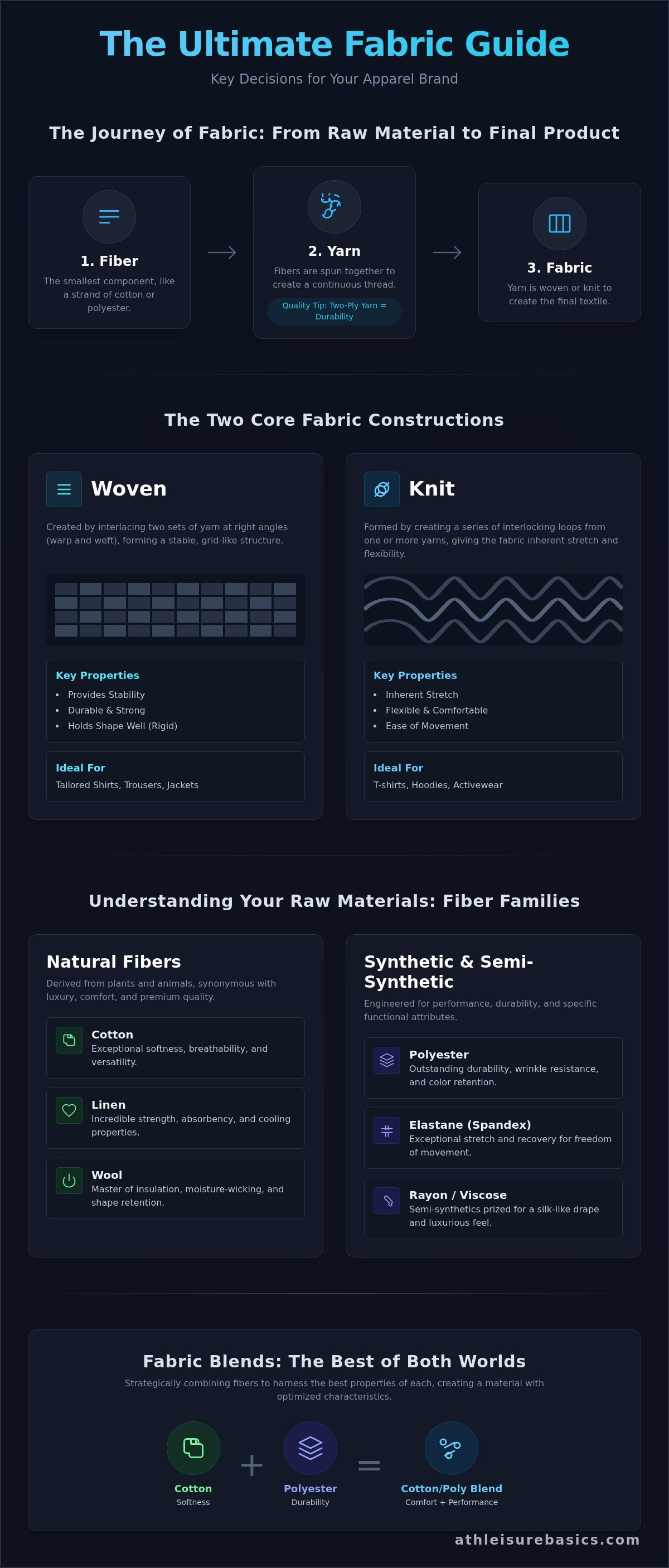
Every textile begins as a fiber-the smallest visible component, like a single strand of cotton or a filament of polyester. Through a process called spinning, these individual fibers are twisted together to create a continuous, strong thread known as yarn. The properties of this yarn directly impact the final material. A thicker, loosely twisted yarn creates a soft, bulky textile, while a fine, tightly twisted yarn produces a smooth, crisp shirting. For enhanced durability and a premium feel, two yarns are often twisted together to create a two-ply yarn, a hallmark of high-quality construction.
Woven vs. Knit: The Two Core Fabric Constructions
Once yarn is created, it is constructed into fabric using one of two fundamental methods. This choice is the single most important factor determining a material's properties, dictating everything from stretch to durability.
- Woven Fabrics: Created on a loom by interlacing two sets of yarn at right angles (the warp and weft), forming a stable, grid-like structure. Wovens are typically rigid, durable, and hold their shape, making them ideal for tailored shirts, trousers, and jackets.
- Knit Fabrics: Formed by creating a series of interlocking loops from one or more yarns. This looped structure gives knits inherent stretch and flexibility, offering comfort and ease of movement. This makes them the go-to choice for t-shirts, hoodies, and activewear.
The core difference is simple: wovens provide stability, while knits provide stretch. While a third category of non-woven materials exists (like felt), they are rarely used for primary apparel due to their lack of drape and strength. Understanding the distinction between wovens and knits is the first step toward making an informed sourcing decision for your brand.
Natural vs. Synthetic Fibers: Understanding Your Raw Materials
The journey to creating a premium garment begins with a single thread. Your choice of fiber-the raw material spun into yarn and then woven or knit into fabric-is the first and most critical decision in defining your product's quality, feel, and performance. Every fiber can be categorized into one of two families: natural, derived from plants and animals, or man-made, which includes synthetic and semi-synthetic options engineered for specific traits.
Understanding these fundamental differences is essential for turning your brand's vision into a tangible, high-quality product that resonates with your target customer.
The Appeal of Natural Fibers
Natural fibers are often synonymous with luxury, comfort, and superior quality. They are the cornerstone of premium apparel, valued for their inherent characteristics and connection to traditional craftsmanship. For brand owners, sourcing high-quality natural fibers is a clear signal of commitment to excellence.
- Cotton: Renowned for its exceptional softness, breathability, and versatility. Premium varieties, like the Portuguese cotton we specialize in, offer a superior hand-feel and durability. Its adaptability is a testament to the sophisticated fabric manufacturing process that transforms raw plant fiber into countless textures and weights.
- Linen: Celebrated for its incredible strength, absorbency, and cooling properties, making it ideal for warm-weather collections. Its characteristic texture adds a look of effortless sophistication.
- Wool: A master of insulation, wool provides warmth while wicking moisture away from the skin. Its natural elasticity and crimp give it excellent shape retention and wrinkle resistance.
The principles of using high-quality natural fibers extend beyond apparel into other luxury goods. For instance, to see how premium cotton is leveraged to create a high-end experience in home textiles, check out King of Cotton for inspiration on what quality materials can achieve.
The Function of Synthetic & Semi-Synthetic Fibers
While natural fibers offer classic appeal, man-made fibers are engineered for performance. They are crucial for creating modern garments that meet demands for durability, stretch, and specific functional attributes, often at a more accessible price point.
- Polyester: A workhorse fiber known for its outstanding durability, wrinkle resistance, and color retention. It is a staple in activewear and outerwear.
- Elastane (Spandex/Lycra): Essential for modern athleisure and form-fitting apparel, elastane provides exceptional stretch and recovery, ensuring comfort and freedom of movement.
- Rayon/Viscose: These semi-synthetics are derived from cellulose (wood pulp) but are chemically processed. They are prized for offering a silk-like drape and luxurious feel at a lower cost.
Fabric Blends: The Best of Both Worlds
Blending different fibers is a strategic technique used to create a final material with optimized characteristics. By combining natural and man-made fibers, manufacturers can harness the best properties of each. A common cotton/polyester blend, for instance, retains the softness of cotton while gaining the durability and wrinkle resistance of polyester. Blends are key to achieving a precise balance of comfort, function, and cost, allowing you to engineer a unique fabric perfectly suited to your design goals.
A Deeper Dive: Key Fabric Types for Modern Apparel Brands
Choosing a fiber is only the first step. How those fibers are constructed-either knitted or woven-defines the final fabric's drape, stretch, and texture. Understanding these core structures is essential for turning your design vision into a high-quality, market-ready product. For most modern apparel brands, especially in athleisure and casualwear, a solid grasp of key knit and woven materials is non-negotiable.
Essential Knit Fabrics for Your Collection
Knit fabrics are created with a single, continuous yarn looped together, giving them their characteristic stretch and comfort. This makes them the foundation of the athleisure and streetwear markets. As your manufacturing partner, we commonly work with these premium options:
- Jersey: The quintessential t-shirt fabric. Single-knit, lightweight, and soft with a natural drape, it's the go-to for comfortable, everyday essentials.
- French Terry: Known for the soft loops on one side and a smooth surface on the other. This midweight fabric is the industry standard for premium hoodies, sweatshirts, and joggers, offering comfort without excessive bulk.
- Rib Knit: Features visible vertical ribs and offers superior stretch and recovery. It is perfect for creating form-fitting tops, tank tops, and for functional details like cuffs and collars.
- Interlock: A double-knit fabric that is thicker and more stable than jersey. With a smooth, identical finish on both sides, it resists curling and is ideal for more polished garments like high-quality polos and premium basics.
Fundamental Woven Fabrics to Know
Woven fabrics are made by interlacing two sets of yarns at right angles. This creates a stable, durable structure with less stretch than knits, making them ideal for more structured garments. While less dominant in pure athleisure, they are vital for a well-rounded collection.
- Plain Weave: The simplest structure, creating a crisp, durable material. Think classic button-down shirts, poplin, and linings.
- Twill Weave: Recognizable by its diagonal pattern, this weave is exceptionally durable. It’s the foundation for denim, chinos, and structured jackets.
- Satin Weave: Creates a smooth, highly lustrous surface by having more threads on the top. It provides a luxurious feel perfect for high-end blouses, bomber jackets, or premium linings.
Understanding Fabric Weight (GSM)
One of the most critical specifications you will provide to a manufacturer is fabric weight, measured in Grams per Square Meter (GSM). This fundamental metric, a core concept taught at leading institutions like the Wilson College of Textiles, measures the density of the material. It directly impacts a garment’s feel, drape, and seasonal suitability.
- Lightweight (<150 GSM): Ideal for summer t-shirts, tank tops, and base layers.
- Medium-weight (150-350 GSM): The sweet spot for most premium t-shirts, sweatshirts, and hoodies.
- Heavyweight (>350 GSM): Used for luxury, oversized hoodies and outerwear that require structure and warmth.
Defining the GSM in your tech pack is crucial for ensuring your vision is produced with precision and consistency, collection after collection.
How to Choose the Right Fabric for Your Clothing Brand
Selecting the right material is one of the most critical decisions you'll make when launching your clothing line. The fabric you choose is more than a technical specification; it's a core part of your brand's identity and the primary way your customer experiences your product's quality. To turn your vision into a premium garment, it's essential to move beyond swatch books and adopt a strategic approach.
This simple three-step framework will help you make a confident, informed decision that aligns your product with your brand promise.
Step 1: Define Your Garment's Function and Feel
Before you consider aesthetics, start with purpose. The intended use of your garment should be the primary driver of your material choice. Ask yourself what the product needs to do for your customer. This functional-first approach provides a clear direction for sourcing.
- Performance: Does it need to offer four-way stretch for activewear, or moisture-wicking properties for high-intensity training?
- Comfort: Should it have a soft, brushed hand-feel for loungewear, or a breathable, lightweight drape for a summer t-shirt?
- Structure: Does your design require a heavy, crisp material to hold its shape, like a premium hoodie or structured jacket?
Step 2: Align Fabric with Your Brand Identity
Your material choice sends an immediate message about your brand's position in the market. It’s a tangible expression of your values and quality standards. A customer can feel the difference between a generic material and a premium one, and this perception directly impacts their willingness to buy.
- Luxury Brands: Lean towards superior quality natural fibers like Supima cotton, merino wool, or specialty blends that communicate top-notch craftsmanship.
- Sustainable Brands: Prioritize certified materials like GOTS-certified organic cotton, recycled polyester (rPET), or TENCEL™ to build trust and authenticity.
- Performance Brands: Focus on technical synthetic blends engineered for specific functions like compression, thermal regulation, or UV protection.
Step 3: Consider Durability, Care, and Cost
Finally, balance your creative vision with practical business realities. A beautiful fabric is only successful if it performs well for the customer and works within your budget. Evaluate how the material will wear and wash over time, as durability is key to customer satisfaction and loyalty. Furthermore, easy care instructions can be a powerful selling point. Balancing these factors with the cost-per-garment ensures your product is not only desirable but also profitable.
Navigating these choices is essential to building a successful brand. Need help sourcing the perfect material for your collection? We guide you through the process.
Sourcing Fabric: Your First Step in the Production Journey
Fabric sourcing is more than just picking a material; it’s the foundational step that defines the quality, feel, and longevity of your final product. In the manufacturing context, it involves identifying, vetting, and procuring the ideal textiles that align with your brand’s vision, performance standards, and budget. For startups, getting this right is non-negotiable. The quality of your chosen fabric directly impacts customer satisfaction and brand reputation, making expert sourcing a critical investment from day one.
While the process can seem complex, navigating it efficiently is the key to launching a successful collection. This is where a strategic partnership can transform a potential roadblock into a competitive advantage.
The Role of a Manufacturing Partner in Sourcing
For new and growing brands, managing the logistics of sourcing can be overwhelming. A full-service manufacturing partner demystifies this process, leveraging their expertise and network to your benefit. They act as your guide, ensuring your materials meet the highest standards.
Working with an experienced partner provides several key advantages:
- Established Mill Relationships: Manufacturers have long-standing, trusted relationships with top-tier textile mills, giving you access to premium materials that aren't available to the general public.
- Quality and Cost Efficiency: They are experts at sourcing materials that meet your exact specifications for quality, function, and price, ensuring you get the best value without compromise.
- Time Savings and Risk Reduction: A partner handles the vetting, negotiation, and logistics, saving you valuable time and mitigating the risks of working with unverified suppliers. This ensures consistency across your entire production run.
At Athleisurebasics, we specialize in sourcing superior quality, Made in Portugal fabrics that give our clients' products a distinct edge in the market.
Why Certifications Like OEKO-TEX® Matter
In a conscious market, what’s not in your fabric is just as important as what is. This is why globally recognized certifications are crucial. The STANDARD 100 by OEKO-TEX® is one of the world's most trusted labels for textiles tested for harmful substances. When a material is OEKO-TEX® certified, it guarantees that every component has been tested and found to be harmless to human health.
This certification is more than a technical detail; it's a powerful statement about your brand's values. It communicates a commitment to safety, quality, and responsible production, building immediate trust with your customers. In a crowded marketplace, showcasing this mark of excellence can be a key differentiator that elevates your brand and justifies a premium price point.
Your Next Step: Sourcing Premium Fabric for Your Brand
Understanding the world of textiles-from the fundamental differences between natural and synthetic fibers to the specific weaves that define your garments-is the first step in building a brand that stands for quality and integrity. The right fabric isn't just a material; it's the core of your customer's experience, the vehicle for your design, and the foundation of your brand's reputation.
Taking the next step to source materials that live up to your vision can feel daunting. As a trusted partner for startups and first-time founders, we make this process seamless and efficient. We provide expert sourcing support, offering direct access to premium, OEKO-TEX® Certified Portuguese fabrics known for their superior quality. With our commitment to low MOQs for premium materials, you can launch your collection without the high-risk investment, ensuring your brand starts on the strongest possible footing.
Ready to source premium fabrics for your brand? Get a quote today.
Your vision for a successful clothing brand is within reach. Let's build it together.
Frequently Asked Questions
What is the difference between 'fabric' and 'textile'?
While often used interchangeably in conversation, 'textile' is a broad term for any material made from interlocking fibers, including yarn, thread, and raw woven goods. 'Fabric,' on the other hand, refers to the finished textile-the ready-to-use cloth that is cut and sewn into garments. Think of it this way: all fabrics are textiles, but not all textiles are fabrics. As your partner, we help you select the perfect finished material for your vision.
What does GSM mean in fabric and why is it important for my brand?
GSM stands for Grams per Square Meter and is a critical metric measuring a material's weight and density. A higher GSM indicates a heavier, more substantial material, ideal for premium hoodies or winter wear, while a lower GSM is suited for lightweight t-shirts. Choosing the correct GSM is vital for aligning the product's feel with your brand's quality promise, ensuring the final garment meets customer expectations for both comfort and durability.
How do I get fabric samples before starting production?
Securing samples is a crucial step to guarantee quality before committing to a full production run. As your manufacturing partner, we make this process simple. Based on your requirements, we can provide you with swatches from our extensive library of premium, in-stock materials. For fully custom orders, we source and send physical samples for your approval, ensuring you have complete confidence in the material's color, weight, and texture before we proceed.
What are the most sustainable fabrics for a new clothing line?
For brands prioritizing sustainability, several excellent materials are available. Organic cotton, grown without harmful chemicals, is a top choice for its softness and low environmental impact. Recycled polyester (rPET) gives plastic waste a new life and is perfect for activewear. Other leading options include TENCEL™ Lyocell, known for its closed-loop production, and hemp. We can guide you through our OEKO-TEX® certified options to build a truly responsible brand.
Can I provide my own fabric to a manufacturer like Athleisurebasics?
While we pride ourselves on sourcing superior quality, ethically produced materials from trusted Portuguese mills, some brands prefer to supply their own material. This production model is known as CMT (Cut, Make, Trim). We recommend contacting our team to discuss your project's specific needs, as this approach involves different logistical and quality assurance steps to ensure your provided material meets our highest industry standards for production.
What is the most durable type of fabric for everyday wear?
For outstanding durability, high-quality cotton with a dense weave, such as a French Terry or Piqué, is an excellent choice. Our Portuguese cotton is renowned for its long-staple fibers that create a stronger, more resilient yarn. For enhanced performance and wrinkle resistance, a premium cotton-polyester blend is another highly durable fabric that maintains its structure and color through repeated washing, ensuring product longevity and customer satisfaction.
Why is Portuguese cotton considered a premium material?
Portuguese cotton is celebrated as a luxury material due to its exceptionally long-staple fibers. These longer fibers are spun into a yarn that is significantly stronger, softer, and more durable than conventional short-staple cottons. This results in garments that resist pilling, retain their shape, and offer a superior feel. Paired with Portugal’s rich textile heritage and high ethical production standards, it signifies a commitment to top-notch craftsmanship and lasting quality.


Leave a comment
This site is protected by hCaptcha and the hCaptcha Privacy Policy and Terms of Service apply.