
What is Sustainable Fabric? A Complete Guide for Clothing Brands
Navigating the world of textiles can feel overwhelming, especially when terms like "eco-friendly" and "conscious" are everywhere. As a brand founder, you're tasked with making a critical choice: selecting a sustainable fabric that not only aligns with your values but also delivers the premium quality your customers demand. The fear of greenwashing, confusion over certifications, and concerns about cost and performance can make this decision feel daunting, leaving you unsure where to begin.
For a tangible example of these principles in action, the collections from luxury activewear brand JC London showcase how premium, recycled materials can be transformed into high-performance, stylish garments.
We believe building a responsible brand should be empowering, not confusing. This comprehensive guide is designed to be your trusted partner, providing the clarity you need to move forward with confidence. We will demystify the different types of sustainable materials, from organic cotton to innovative recycled fibers, and explain what key certifications like OEKO-TEX® actually mean for your product. You will gain a practical framework for sourcing and verifying textiles, enabling you to build a brand legacy rooted in both superior quality and ethical production.
Defining 'Sustainable Fabric': A Look Beyond the Buzzwords
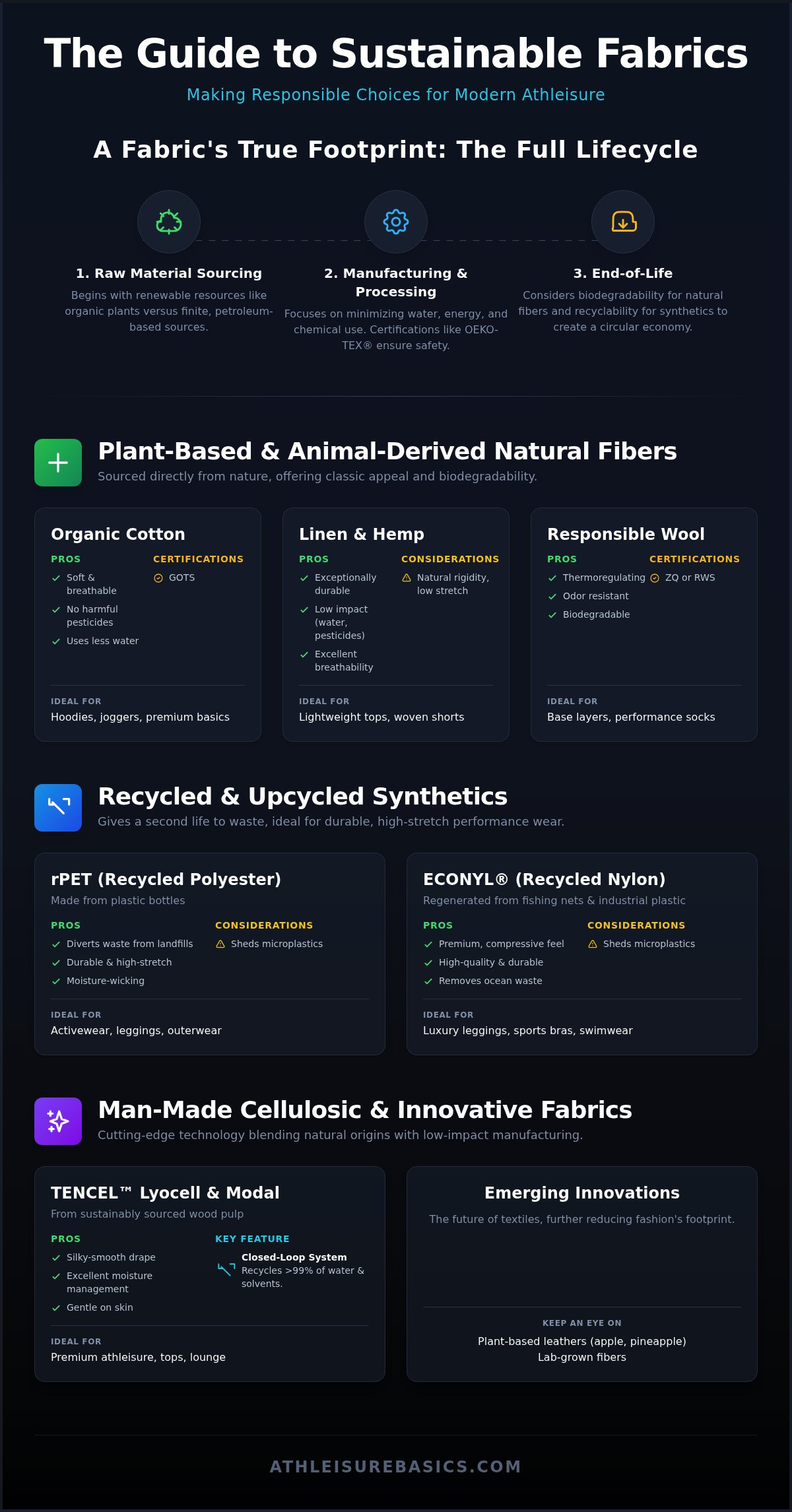
In the world of athleisure, the term 'sustainable' is often used, but what does it truly mean for your brand's vision? A truly sustainable fabric is not defined by a single feature, like being organic or recycled. Instead, its credentials are measured across its entire lifecycle-from the seed planted in the ground to its potential for a second life. This holistic view considers the material's total environmental and social footprint.
Understanding this lifecycle is the first step to making informed, responsible sourcing decisions. It involves evaluating every stage of production to see how it contributes to, or detracts from, ecological balance. To fully grasp what is a green textile, we must look at its journey through cultivation, processing, and eventual disposal. True sustainability also encompasses ethical manufacturing, ensuring that fair labor practices and safe working conditions are upheld to the highest industry standards.
Raw Material Sourcing
The foundation of any fabric is its raw material. A key distinction lies between renewable resources (like organic cotton, hemp, or Tencel™ Lyocell from eucalyptus trees) and finite, petroleum-based sources used for virgin polyester. We must consider:
- Resource Impact: Conventional cotton, for example, is notoriously thirsty and pesticide-heavy. In contrast, organic or regenerative farming practices prioritize soil health, reduce water consumption, and eliminate harmful chemicals.
- Land Use: Materials like linen (from flax) or hemp can grow in poor soil, requiring less dedicated agricultural land than other crops.
Manufacturing and Processing
Transforming raw fiber into finished fabric is an energy- and water-intensive process. A sustainable approach focuses on efficiency and minimizing waste. For instance, Tencel™ is produced in a closed-loop system that recycles over 99% of the water and non-toxic solvents used. In contrast, conventional dyeing processes can release harmful chemicals into waterways. Opting for OEKO-TEX® certified materials ensures that every component is tested for harmful substances, providing a new level of quality assurance.
End-of-Life Considerations
A fabric’s final chapter is just as important as its first. Materials like organic cotton or linen are biodegradable, meaning they can naturally decompose without leaving toxins behind. For synthetic fabrics, recyclability is critical for creating a circular fashion economy. However, it's important to note that fabric blends (e.g., cotton/polyester) are significantly more difficult to recycle, often leading them to landfills. Choosing mono-materials can greatly improve a garment's end-of-life potential.
Categories of Sustainable Fabrics: Natural, Recycled, and Innovative
Choosing the right sustainable fabric is a foundational decision for any modern athleisure brand. The options can be overwhelming, but they generally fall into three distinct categories. Understanding the pros and cons of each empowers you to make strategic sourcing decisions that align with your brand's vision, performance standards, and commitment to ethical production.
Plant-Based & Animal-Derived Natural Fibers
These are materials sourced directly from nature, offering a classic appeal and biodegradability. However, their performance and sustainability profile can vary significantly.
- Organic Cotton: A popular choice for its superior softness and breathability, ideal for hoodies and joggers. Unlike conventional cotton, it is grown without harmful pesticides and uses significantly less water. To ensure authenticity, look for certifications from trusted bodies like the Global Organic Textile Standard (GOTS), which verifies the entire supply chain.
- Linen & Hemp: These are exceptionally durable, low-impact crops that require minimal water and no pesticides. They offer excellent breathability, but their natural rigidity can be a drawback for high-stretch activewear unless blended with other fibers.
- Responsible Wool: Prized for its natural thermoregulation and odor resistance, wool is a high-performance fiber. For brand owners, the key is sourcing from farms with high animal welfare standards (e.g., ZQ or RWS certified). While biodegradable, some chemical treatments can hinder this process.
Recycled & Upcycled Synthetics
This category gives a second life to post-consumer and post-industrial waste, directly addressing the global plastic problem. These materials are essential for creating durable, high-stretch performance wear.
- rPET (Recycled Polyester): Made from plastic bottles, rPET diverts waste from landfills and oceans. It offers the same durability, stretch, and moisture-wicking properties as virgin polyester, making it a workhorse for activewear.
- ECONYL® (Recycled Nylon): This premium material is regenerated from waste like fishing nets and industrial plastic. It delivers a high-quality, compressive feel perfect for luxury leggings, sports bras, and swimwear.
A Key Consideration: While recycling is a massive step forward, these synthetics can shed microplastics when washed. This is a critical factor to communicate transparently to your customers, perhaps alongside recommendations for using wash bags that capture microfibers.
Man-Made Cellulosic & Innovative Fabrics
Representing the cutting edge of textile technology, this category blends natural origins with innovative, low-impact manufacturing processes to create a superior sustainable fabric.
- TENCEL™ Lyocell & Modal: Derived from sustainably sourced wood pulp (often from eucalyptus or beech trees), these fibers are produced in a closed-loop system that recycles over 99% of the water and solvents used. The result is a fabric known for its silky-smooth drape, excellent moisture management, and gentleness on the skin-a perfect match for premium athleisure.
- Emerging Innovations: The industry is constantly evolving. Keep an eye on new materials like plant-based leathers (from apple or pineapple waste) and lab-grown fibers, which promise to further reduce the environmental footprint of fashion.
How to Choose the Right Sustainable Fabric for Your Athleisure Brand
Selecting the ideal sustainable fabric for your athleisure line is a critical business decision that directly impacts product performance, brand perception, and profitability. The key is to align the material's properties with the specific garment's function. This requires a strategic framework that balances performance needs, sustainability credentials, and cost, ensuring you deliver a premium product that resonates with conscious consumers.
Performance vs. Sustainability: Finding the Perfect Balance
In fabric sourcing, it's essential to recognize that no single material is perfect across all metrics. The most sustainable option may not offer the technical performance your customers demand. For instance, high-stretch activewear almost always requires elastane (spandex), a synthetic fiber that is crucial for fit and recovery but complicates end-of-life recycling. The solution lies in strategic blending-combining fibers to achieve a superior result. By blending recycled polyester with a small percentage of elastane, you can create a high-performance, durable fabric with a significantly lower environmental footprint. Navigating these trade-offs is a challenge the entire industry faces, and it's why organizations like Cascale, the global nonprofit alliance for the consumer goods industry, are developing tools to drive more informed, responsible business practices.
Best Sustainable Choices for Hoodies & Sweatshirts
For comfort-focused items like hoodies and sweatshirts, your fabric choice defines the garment's quality and feel. The goal is to select a material that offers softness, breathability, and a premium hand-feel. Consider these top-tier options:
- Organic Cotton French Terry or Fleece: This is the gold standard for luxury loungewear. It’s exceptionally soft, breathable, and free from harmful pesticides, offering classic comfort your customers will appreciate.
- Recycled Cotton/Polyester Blends: Blending recycled cotton with recycled polyester enhances durability, reduces shrinkage, and diverts waste from landfills. It’s a cost-effective way to build a resilient, eco-conscious product.
Pay close attention to fabric weight, measured in Grams per Square Meter (GSM). A higher GSM (300-400+) signifies a heavier, more luxurious and durable garment, which is essential for positioning your brand in the premium market.
Top Eco-Friendly Fabrics for Leggings & Activewear
When it comes to high-performance leggings, sports bras, and tops, the technical properties of a sustainable fabric are non-negotiable. Your customers expect durability, excellent moisture management, and complete freedom of movement.
- Recycled Polyester (rPET) or Recycled Nylon: These materials are industry leaders for a reason. They provide exceptional durability, compression, and moisture-wicking properties, making them ideal for high-impact workouts. They also give a second life to post-consumer waste like plastic bottles.
- TENCEL™ Lyocell Blends: Known for its incredible softness and silky feel, TENCEL™ Lyocell offers superior moisture management and breathability. Blended with recycled synthetics and elastane, it creates a premium fabric perfect for yoga, Pilates, or studio-to-street styles.
For this category, ensure any fabric you choose features robust 4-way stretch. This property allows the garment to move with the body, providing the comfort and flexibility essential for active performance.
Key Certifications Explained: How to Verify Sustainability Claims
In a market filled with vague claims, third-party certifications are your most powerful tool against greenwashing. They provide concrete, audited proof that a material or process meets stringent global standards. For brand owners, understanding these labels is not just about compliance; it's about building a brand with integrity and transparency. A credible certification is your assurance that a sustainable fabric is exactly what it claims to be.
Different certifications cover specific stages of the supply chain, from the raw material source to the final garment. As your manufacturing partner, we encourage you to ask for and understand the documentation behind every fabric you choose.
Certifications for Raw Materials
These verify the origin and integrity of the fibers themselves, ensuring they are grown or sourced according to strict environmental protocols.
- GOTS (Global Organic Textile Standard): Widely considered the gold standard for organic fibers like cotton. GOTS certification guarantees that the entire production process-from harvesting to manufacturing-is socially and environmentally responsible.
- GRS (Global Recycled Standard): This standard verifies the recycled content in a fabric, such as recycled polyester. It also ensures responsible social, environmental, and chemical practices are used in its production through a rigorous chain of custody.
- FSC (Forest Stewardship Council): Essential for man-made cellulosic fibers like TENCEL™ Lyocell and Modal. FSC certification confirms that the wood pulp used to create the fibers comes from responsibly managed forests that provide environmental, social, and economic benefits.
Certifications for Chemical Safety
These standards ensure that textiles are safe for human use and that chemicals are managed responsibly during production, protecting both workers and consumers.
- OEKO-TEX® STANDARD 100: A globally recognized label confirming that every component of the final product has been tested for harmful substances. This is a baseline standard for consumer safety and a hallmark of premium quality that we prioritize at Athleisurebasics.
- bluesign®: A holistic system that audits the entire textile supply chain to reduce its environmental impact. A bluesign® APPROVED fabric means it was manufactured with the highest degree of safety for the environment, workers, and consumers.
Certifications for Ethical Production
A truly sustainable fabric is also one that is produced ethically. These certifications focus on the people behind the product, ensuring fair labor practices and safe working conditions.
- Fair Trade Certified: This label ensures that farmers and workers receive fair wages, work in safe conditions, and benefit from community development funds, empowering them to build sustainable livelihoods.
- SA8000: A leading social certification standard for factories and organizations. It provides a comprehensive framework for protecting workers' rights, from preventing child labor to ensuring fair wages and a safe workplace.
- B Corp Certification: While not specific to a fabric, this certification evaluates a company's entire social and environmental performance. Partnering with a B Corp-certified supplier signals a deep, holistic commitment to ethical business practices.
Sourcing Sustainable Fabrics: Partnering with Your Manufacturer
Understanding the benefits of different materials is the first step. The next, more critical phase is bringing them into your collection. This is where your manufacturing partner becomes your most valuable asset. They are your hands-on guide to navigating the complexities of sourcing, ensuring the fabrics you choose align with your brand's vision, quality standards, and ethical commitments.
Essential Questions to Ask Your Manufacturer
To ensure a potential partner is equipped to meet your sustainability goals, start by asking these direct questions. Their answers will reveal their capabilities and transparency.
- What sustainable fabrics do you have in your stock library? A robust in-stock selection provides flexibility and lower minimums.
- Can you source custom fabrics, and what are the MOQs? This is crucial for brands with a unique material vision.
- Can you provide certification documents (e.g., OEKO-TEX®, GOTS) for your fabrics? Reputable partners will readily supply proof of their claims.
- How does using a sustainable fabric affect the production timeline? Ask about potential lead time differences for sourcing or milling.
Navigating MOQs and Costs
For many startups, the higher Minimum Order Quantities (MOQs) and initial costs of sustainable materials can feel like a barrier. These are often due to specialized production runs and rigorous certification processes. However, a strategic partner can help you overcome this.
By leveraging a manufacturer’s in-stock fabric library, you can access premium materials without committing to a massive custom order. This approach makes launching a sustainable line both accessible and cost-effective, turning the investment into a powerful brand differentiator that conscious consumers value.
How Athleisurebasics Simplifies Sourcing for You
At Athleisurebasics, we remove the guesswork and risk from sourcing. As your trusted partner in ethical, high-quality production, we provide the expertise and infrastructure to build your brand with integrity.
- Curated Fabric Library: We offer a premium selection of in-stock, OEKO-TEX® certified fabrics perfectly suited for modern athleisure, available with low MOQs.
- Expert Sourcing Support: Our team acts as your guide, helping you find the ideal material that meets your performance, aesthetic, and sustainability requirements.
- Top-Tier Mill Relationships: Benefit from our established network of the best textile mills in Portugal, ensuring superior quality and reliability.
We are committed to making premium, sustainable manufacturing accessible. Let's discuss the perfect fabric for your brand.
Turn Your Vision into a Sustainable Reality
Navigating the world of sustainable materials is a defining opportunity for today's clothing brands. As we've explored, success hinges on a few core principles: understanding the differences between natural, recycled, and innovative materials, and rigorously verifying all claims with trusted certifications. Choosing the right sustainable fabric is not just a trend-it is the foundation upon which you build consumer trust and brand integrity. It’s a direct reflection of your commitment to quality and a healthier planet.
Making these critical decisions shouldn't be a barrier to launching your brand. As your manufacturing partner in Portugal, Athleisurebasics provides the expert sourcing support startups need to succeed. We help you navigate the complexities, connecting you with premium, OEKO-TEX® Certified Fabrics that bring your vision to life with uncompromising quality and ethical production standards. Your legacy begins with the right materials and the right partner.
Build your brand on quality and ethics. Get a quote today.
Frequently Asked Questions About Sustainable Fabrics
Are sustainable fabrics more expensive than conventional ones?
Sustainable fabrics can have a higher initial cost due to factors like organic farming certifications, ethical labor, and advanced recycling technologies. However, this is an investment in superior quality, durability, and your brand's value proposition. As your manufacturing partner, we help source cost-effective, premium materials that align with your budget and quality standards, ensuring you can build a profitable brand with a positive impact.
What is the single most sustainable fabric for clothing?
There is no single "most" sustainable fabric, as the best choice depends on your product's specific performance requirements. For durability, hemp and organic linen are excellent. For a soft, luxurious feel with a closed-loop production process, TENCEL™ Lyocell is a superior option. For high-performance activewear, recycled polyester is ideal. We guide you in selecting the optimal material that aligns with your brand’s vision and functional needs.
How durable are eco-friendly fabrics, especially for activewear?
Eco-friendly fabrics offer exceptional durability, often exceeding conventional materials in longevity. For instance, recycled polyester (rPET) maintains the high-performance strength and resilience required for demanding activewear, ensuring it withstands intense workouts and frequent washing. Choosing a high-quality sustainable fabric ensures your products meet the highest industry standards for performance and craftsmanship, building a legacy of quality for your brand.
What's the difference between recycled polyester and organic cotton?
These materials differ fundamentally in origin and function. Recycled polyester is a synthetic performance fabric made from post-consumer plastics, offering excellent moisture-wicking and stretch for leggings and tops. Organic cotton is a natural fiber grown without synthetic pesticides, known for its superior softness and breathability, making it perfect for hoodies and joggers. Both are premium, sustainable choices that serve different purposes in a modern athleisure collection.
Can I get samples of sustainable fabrics before starting production?
Absolutely. As your trusted partner, we consider this a critical step in turning your vision into a high-quality product. We provide fabric samples to ensure you are completely confident in the material’s hand-feel, color, and performance before committing to a full production run. This integral part of our process guarantees that the final product aligns perfectly with your brand's standards and de-risks your investment.
How do I market the sustainability of my products to customers effectively?
Effective marketing hinges on transparency and authentic storytelling. Clearly communicate your material choices on product pages, hang tags, and social media. Use specific facts, such as "Made from 10 recycled plastic bottles," and leverage certifications like GOTS or OEKO-TEX® as seals of trust. Sharing the story of your ethical, "Made in Portugal" production process builds a powerful connection with consumers and justifies your brand’s premium positioning.
Does using sustainable fabric affect the colors I can use in my designs?
For the most part, your color palette will not be limited. The majority of our premium sustainable fabric options are compatible with a vast range of vibrant, long-lasting colors using certified low-impact dyes (like those compliant with OEKO-TEX® standards). While some undyed natural fibers or plant-based dyes have a more earthy palette, modern technology ensures you can achieve nearly any color you envision for your brand without compromising on quality.



Leave a comment
This site is protected by hCaptcha and the hCaptcha Privacy Policy and Terms of Service apply.