
What is Wholesale? A Complete Guide for Clothing Brands
Thinking of launching your own clothing brand, but feeling lost in a sea of industry jargon? The fear of high minimum orders and navigating terms like 'MOQ' and 'private label' can feel overwhelming, stopping a great vision before it even begins. Many aspiring entrepreneurs are unclear on the fundamental business model that powers the fashion industry: wholesale. This confusion often creates a barrier, making the dream of starting a successful line seem more complicated than it needs to be.
This guide is designed to eliminate that confusion and provide a clear, actionable roadmap. We will break down exactly what wholesale means and how you can leverage it to your advantage. You will learn the critical differences between reselling, private labeling, and custom manufacturing, helping you choose the most cost-effective and low-risk path for your brand. By the end, you’ll have the confidence and knowledge to source superior quality products and successfully launch the clothing brand you’ve envisioned.
Key Takeaways
- Grasp the core difference between wholesale and retail pricing to build a profitable business model from day one.
- Clarify the two primary paths for launching a brand: buying finished goods to resell or partnering with a factory to create your own line.
- Learn the essential industry language, like MOQs and tech packs, to communicate your vision to manufacturers with professional confidence.
- Identify the key criteria for selecting a reliable manufacturing partner who can ensure superior quality and help you scale successfully.
What Does Wholesale Mean in the Fashion Industry?
For any entrepreneur looking to launch or scale a clothing brand, understanding the term ‘wholesale’ is the first crucial step. In its simplest form, wholesale is the practice of purchasing goods in large quantities directly from a manufacturer or distributor, not for personal use, but for the purpose of reselling them. At its core, the concept of What is wholesale? is a business-to-business (B2B) transaction designed for commerce.
The primary advantage is economic: buying in bulk significantly lowers the cost per unit. This price difference is what creates the margin needed to build a profitable brand. It’s important to clarify that ‘wholesale’ describes how you buy your inventory-in bulk-not necessarily what you buy. This distinction opens up two distinct strategic paths for your brand, each with its own set of benefits and challenges.
Wholesale vs. Retail: The Fundamental Difference
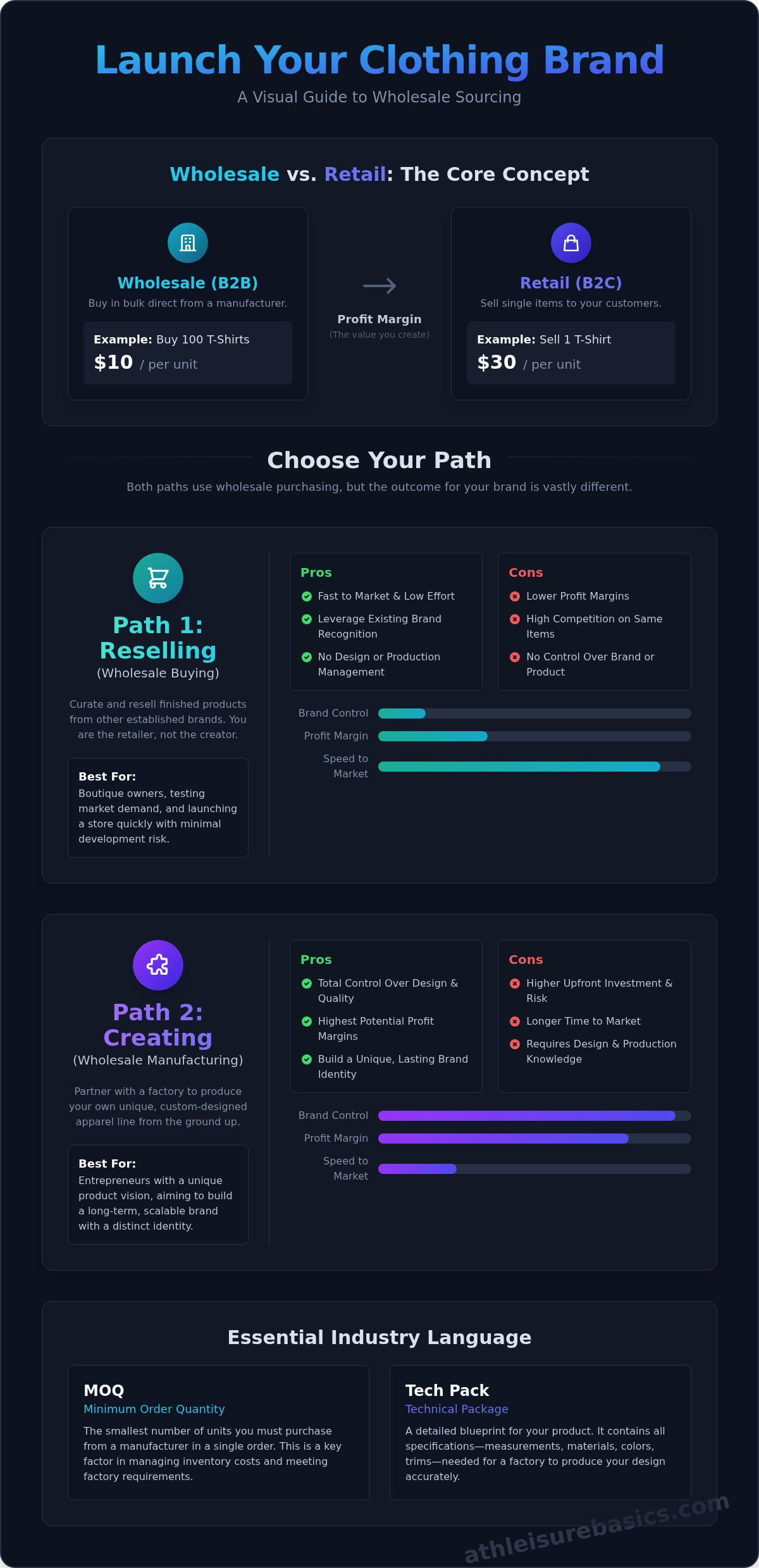
The distinction between wholesale and retail pricing is the foundation of the fashion supply chain. Retail is the direct-to-consumer (B2C) sale of a single item. In contrast, a wholesale transaction is a bulk purchase made by a business. For example, you might acquire a premium t-shirt for a wholesale price of $10 per unit because you are buying 100 of them. You can then sell that same t-shirt to your customers at a retail price of $30, creating a healthy profit margin to reinvest in your business.
The Two Paths for Your Brand: Buying vs. Creating
As a brand owner, your sourcing strategy will follow one of two wholesale models. Both involve purchasing in bulk, but the approach and outcome are vastly different:
- Buying Finished Goods: This involves purchasing ready-made apparel from other brands or distributors to resell in your own store. You are essentially curating a collection of existing products.
- Manufacturing Your Own Products: This path involves partnering with a factory to produce your own unique, custom-designed apparel in bulk. This is where you bring your specific vision to life.
Both are forms of wholesale purchasing, but one focuses on curation while the other focuses on creation. This guide is designed to help you determine which path best aligns with your brand’s vision, budget, and long-term goals.
Path 1: Wholesale Buying (Reselling Other Brands)
The wholesale buying model is one of the fastest ways to launch a retail business. In this approach, you act as a traditional retailer, curating and purchasing finished products from established brands to sell in your own store. You are not creating a new product; you are creating a new sales channel for existing ones. This path is defined by speed and simplicity, allowing you to stock your shop without engaging in the complexities of design and production.
While efficient, this model presents a clear trade-off between convenience and control. Understanding the advantages and limitations is crucial for aligning your strategy with your long-term business vision.
- Pros: You leverage the built-in brand recognition and marketing efforts of the brands you stock. There is zero design work or manufacturing management required, allowing you to focus entirely on marketing and sales.
- Cons: Profit margins are typically lower, as the brand's margin is already included in the price. You will face high competition from other boutiques selling the same items, and you have no ability to build a unique product-based brand identity.
How Does a Resale Model Work?
The process of sourcing products from wholesalers is straightforward. You begin by applying for a wholesale account with a brand, its distributor, or through a marketplace. Once approved, you must meet their Minimum Order Quantities (MOQs) to purchase inventory. These products are then shipped to you, ready to be listed and sold in your online or physical store.
Is This Model Right for You?
This path is an excellent choice for boutique owners who want to offer a diverse, curated collection of products quickly. It is also effective for testing market demand with minimal upfront investment in product development. However, it is not suitable for entrepreneurs who have a unique vision for a product or aim to build a lasting brand legacy. The complete lack of control over design, quality, and branding makes it impossible to create a truly distinct offering.
Path 2: Wholesale Manufacturing (Creating Your Own Brand)
For entrepreneurs ready to build a lasting brand from the ground up, wholesale manufacturing is the definitive path forward. This model moves beyond reselling existing products and empowers you to turn your creative vision into a tangible, unique product line. Instead of buying finished goods, you partner directly with a factory to produce apparel based on your specific requirements.
This approach gives you ultimate control over design, quality, and brand identity, leading to significantly higher profit margins. While the official definition of wholesale trade focuses on the distribution of goods, this manufacturing partnership is about creating those goods. It’s the journey from a simple logo to a powerful legacy. This path typically splits into two main approaches, each serving a different stage of a brand's growth.
White Label / Private Label: The Fast-Track Option
White Label manufacturing is the most efficient way to launch a clothing brand with minimal risk. The process is simple: you select from a curated collection of premium, pre-designed garments and add your own branding, such as logos and custom labels. This model is built for speed and accessibility, offering a streamlined path to market with a low Minimum Order Quantity (MOQ). It is the perfect solution for startups and first-time founders looking to test their ideas and build a customer base without a large initial investment. Explore our low MOQ White Label service to see how quickly you can launch.
Custom (CMT) Manufacturing: For a Truly Unique Vision
When your brand vision demands something truly original, Custom (Cut, Make, Trim) Manufacturing is the answer. This process involves creating a completely unique product from scratch based on your detailed technical pack (tech pack). It offers unparalleled control over every single element, from the specific fabric composition and weight to the precise fit, stitching, and custom hardware. While this route requires a higher MOQ and a more involved development process, it is the ideal choice for established brands or founders with a specific, non-negotiable design concept they need to bring to life.
Key Terminology in Wholesale Manufacturing
Before you contact a factory or production partner, it is essential to speak the language of the industry. Engaging with a manufacturer is a partnership, and arriving prepared demonstrates that you are a serious and professional brand owner. Understanding the following concepts will demystify the production process and empower you to make informed decisions, whether you are pursuing a white label service or full custom manufacturing. These terms are the foundation for turning your vision into a premium, market-ready product.
MOQ (Minimum Order Quantity)
The MOQ is the minimum number of units a factory requires you to order per style, and often per color. Factories implement MOQs to operate efficiently; processes like dyeing fabric, setting up cutting machinery, and organizing sewing lines involve significant setup costs. Producing in bulk allows them to absorb these costs and offer a viable price per unit. For startups and emerging brands, finding a partner with a low MOQ is a strategic advantage. It reduces your initial financial risk, minimizes excess inventory, and provides the flexibility to test new designs before committing to a larger wholesale order.
Tech Pack
Think of a Tech Pack as the master blueprint for your garment. This comprehensive document contains every technical specification a factory needs to produce your design accurately. It eliminates guesswork and ensures consistency across your entire production run. A detailed Tech Pack typically includes:
- Technical sketches (flats) of the garment from all angles.
- A complete list of materials (fabric, threads, trims).
- Precise measurements and grading for all sizes.
- Color specifications, including Pantone codes.
- Details on branding elements like labels, tags, and embroidery placement.
For custom manufacturing, a professional Tech Pack is non-negotiable for achieving superior quality.
Lead Time
Lead time is the total duration from the moment you confirm your order to the moment the finished products are delivered to you. This timeline encompasses several critical stages, including material sourcing, sample creation and approval, bulk production, and final quality control checks. Lead times can vary significantly based on your manufacturer's location and capacity. This is where European manufacturing offers a distinct advantage. Our production in Portugal often provides shorter, more reliable lead times, allowing you to launch your brand and scale more efficiently. Feeling more prepared? Our team is ready to help you navigate these details and get started.
How to Choose the Right Wholesale Manufacturing Partner
Selecting a manufacturer is the single most important decision you will make for your clothing brand. This relationship goes beyond simple transactions; your manufacturer is your most critical partner in turning a vision into a tangible, profitable product. The right partner ensures superior quality, consistent reliability, and ethical production standards that build brand trust. While price is a factor, prioritizing clear communication, industry expertise, and a genuine understanding of a startup’s needs will set you up for long-term success.
Key Criteria for Selection
When evaluating potential partners, look for a balance of these critical factors:
- Product Quality: Always request samples to assess the craftsmanship, stitching, and feel of the garments. Inquire about their material sourcing-do they use premium, certified fabrics like OEKO-TEX® cotton?
- Low MOQ Capability: For new and growing brands, low Minimum Order Quantities (MOQs) are non-negotiable. This provides the flexibility to test new styles, manage cash flow efficiently, and scale your wholesale business without the risk of excess inventory.
- Communication: A great partner is responsive, clear, and supportive. Are they easy to reach? Do they answer your questions thoroughly and guide you through the process?
- Expertise: Ensure the manufacturer specializes in your product category. If you’re launching an athleisure line, partnering with a factory known for its technical fabrics and performance wear construction is essential.
Why 'Made in Portugal' is a Mark of Quality
While manufacturing in Asia can seem cheaper, discerning brands are increasingly choosing Portugal as a mark of premium quality and ethical production. Portuguese factories are renowned for superior craftsmanship, backed by strict EU labor laws that guarantee fair wages and safe working conditions. You gain access to world-class European textiles, including luxurious Portuguese cotton, and benefit from faster logistics and seamless communication, especially for brands in the EU, UK, and US.
Your Next Step: Preparing to Get a Quote
To get the most accurate quote, come prepared with a clear idea of your project, an estimated budget, and a tech pack if you are pursuing custom manufacturing. Don’t worry if you don’t have every detail finalized. A supportive production partner will work with you to refine your concepts and explain the next steps. The goal is to start a conversation to see if the fit is right. Ready to take that step?
Let's build your brand together. Get a quote today.
Turn Your Wholesale Vision into Reality
Understanding the landscape of wholesale is the foundational step toward building a profitable clothing brand. Whether you choose the path of reselling or the more ambitious journey of manufacturing your own line, success hinges on making informed, strategic decisions. For entrepreneurs ready to create a unique brand legacy, selecting the right manufacturing partner isn't just a detail-it's the most critical decision you'll make.
At Athleisurebasics, we exist to turn your vision into high-quality, tangible products. We are your trusted partner from design to delivery, specializing in premium, ethically-made apparel manufactured in Portugal. Our low MOQs are specifically designed to empower startups, making it easier and more cost-effective than ever to launch a professional clothing line without the risk of high-volume orders.
Your goal of building a successful brand is within reach. Let us handle the complexities of production so you can focus on growth.
Ready to create your own brand? Explore our manufacturing services.
Frequently Asked Questions
What is the difference between a wholesaler and a manufacturer?
A manufacturer is the entity that physically produces clothing from raw materials, turning your unique designs and tech packs into finished garments. They are your partner for custom creation. In contrast, a clothing wholesale supplier stocks pre-made, unbranded (or branded) items from various manufacturers. They act as a middleman, allowing you to buy existing styles in bulk for resale. Choosing between them depends on your need for customization versus speed and simplicity.
Can I buy just one or two items at a wholesale price?
Generally, no. Wholesale pricing is exclusively for bulk purchases intended for resale. The discounted price-per-unit is based on the volume of the order, which allows your brand to achieve a profitable retail margin. Purchasing individual items is considered a retail transaction and is priced accordingly. The entire model is built to serve businesses, not individual consumers, by facilitating inventory acquisition for your store or online brand.
Do I need a business license or permit to buy wholesale for my brand?
Yes, virtually all legitimate manufacturers and wholesale suppliers will require proof that you are a registered business. This is typically a reseller's permit, business license, or Tax ID number (like an EIN in the US). This documentation serves two key purposes: it verifies your status as a business buying for resale, not personal use, and it often allows you to make purchases without paying sales tax, as that tax will be collected from the end customer.
What is a realistic Minimum Order Quantity (MOQ) for a startup clothing brand?
MOQs vary significantly. Traditional custom manufacturing can require 500-1000+ units per style, which is often too high for a startup. A more realistic and accessible option for new brands is a low MOQ partner. For example, our white label service provides premium, ready-to-customize garments with MOQs as low as 60 pieces per style and color. This approach minimizes financial risk and allows you to test your market effectively before scaling up production.
How do I calculate the final retail price from the wholesale cost?
A standard industry formula is "keystone pricing," where you simply double the wholesale cost. If a hoodie costs you $25, the keystone retail price would be $50. However, for a premium brand, a 2.5x to 4x markup is more common to account for marketing, shipping, operational costs, and a healthier profit margin. Always calculate your total "landed cost" (including shipping and duties) before setting your final price to ensure profitability.
Is it cheaper to manufacture in Portugal or in Asia?
While the initial per-unit cost may appear lower in some Asian countries, it is crucial to evaluate the total value. Manufacturing in Portugal ensures superior, premium quality and ethical production under stringent EU regulations. It also offers significant advantages like faster lead times, lower shipping costs to Europe and North America, and enhanced supply chain reliability. For brands focused on building a legacy of quality and trust, the long-term value of Portuguese manufacturing often proves more profitable.

Leave a comment
This site is protected by hCaptcha and the hCaptcha Privacy Policy and Terms of Service apply.