
Appliqué Techniques for Custom Apparel Production
Why Appliqué Matters in Modern Apparel Production
In 2025, apparel brands increasingly rely on physical texture, material contrast, and layered construction to differentiate products in saturated global markets. Appliqué enables production teams to build depth directly into garments by integrating fabric components rather than relying solely on surface decoration.
This construction-based approach improves durability, maintains visual clarity over time, and aligns with premium positioning strategies across streetwear, athleisure, and lifestyle collections. For brands producing custom made hoodies, appliqué offers a controlled, repeatable method for long-term branding performance.
What Is Appliqué in Apparel Manufacturing?
Appliqué is a textile embellishment technique where fabric shapes are attached to a base garment using stitching, bonding, or a hybrid of both methods. Unlike ink-based decoration, appliqué adds physical layers that create elevation, texture, and material contrast.
Because appliqué introduces additional fabric mass, it is most commonly used on hoodies, sweatshirts, and heavyweight custom t shirts that can structurally support layered construction without distortion. The technique is valued for its longevity, visual impact, and compatibility with industrial-scale production.
Common Types of Appliqué Used in Production
Sewn Appliqué
Sewn appliqué secures fabric components to garments using lockstitch, zigzag stitch, or satin stitch constructions. Satin stitching is most common for logos and lettering because it fully encapsulates raw edges, improving wash resistance and preventing fraying.
This method is frequently selected for sweatshirts because mechanical stitching provides strong anchoring across repeated laundering cycles. Sewn appliqué is also easier to repair or reinforce during quality control inspections.
Bonded Appliqué
Bonded appliqué uses heat-activated adhesive films or webbing to attach fabric pieces without needle penetration. This reduces needle damage on delicate base fabrics and helps preserve garment stretch characteristics.
However, adhesive selection is critical, as insufficient bonding strength or excessive heat can lead to edge lifting or adhesive bleed-through. Bonded appliqué is often used for flat shapes with minimal curvature or where stitch visibility must be minimized.
Combination Appliqué
Combination appliqué integrates temporary or permanent adhesive bonding for placement, followed by perimeter stitching for reinforcement. This approach stabilizes fabric pieces during sewing and improves placement accuracy in bulk production.
It is widely adopted in high-volume factories because it balances speed, durability, and consistent visual alignment across size ranges. Combination methods are particularly effective for multi-layer or oversized appliqué designs.
How Appliqué Works in Apparel Production
Appliqué production begins with digital artwork conversion into cut patterns, followed by precision cutting using CO₂ laser cutters that seal fabric edges to reduce fraying. Industry-standard materials such as tackle twill are frequently used due to their dimensional stability and compatibility with dense stitching.
The appliqué piece is positioned using temporary bonding films or alignment fixtures before permanent attachment. Final stitching or bonding is executed under controlled tension to prevent puckering and maintain flatness across the garment surface.
Appliqué vs Screen Printing
| Feature | Appliqué | Screen Printing |
|---|---|---|
| Surface Texture | Raised, fabric-based | Flat ink layer |
| Durability | High resistance to abrasion and washing | Ink may crack or fade over time |
| Best Use Case | Logos, lettering, premium branding | Large graphic artwork |
When to Use Appliqué in Custom Apparel
When brands look to customize a hoodie for premium streetwear or elevated athleisure collections, appliqué provides tactile differentiation that printing methods cannot achieve. It is particularly effective when durability, material contrast, and long-term brand visibility are core requirements.
Appliqué is also suited for limited-edition releases, varsity-inspired designs, and heritage branding concepts that rely on traditional textile construction rather than surface graphics.
Appliqué in Athleisure and Lifestyle Apparel
In athleisure collections, appliqué is commonly used to reinforce brand identity while maintaining a clean, structured aesthetic. It performs well on mid- to heavyweight fabrics that are designed to balance comfort with visual presence.
Appliqué can also be applied to heavyweight custom t shirts where thicker jersey or interlock fabrics can support layered elements without compromising drape or wearability.
Compliance and Material Standards
All appliqué components must comply with regional textile safety regulations governing dyes, adhesives, and fabric treatments. This includes restricted substance lists, colorfastness standards, and wash durability testing.
All adhesives should be verified against the OEKO-TEX® Standard 100 to ensure chemical safety. Brands sourcing recycled polyester appliqué materials frequently reference Textile Exchange guidance for responsible sourcing and traceability.
Common Mistakes to Avoid
| Mistake | Impact on Production |
|---|---|
| Mismatched fabric shrinkage rates | Leads to warping after washing and up to 15% material waste |
| Excessive heat during bonding | Causes adhesive bleed-through and surface discoloration |
| Low stitch density | Results in edge lifting and reduced appliqué lifespan |
| Ignoring fabric stretch behavior | Creates puckering and distortion during wear |
FAQs About Certification and Standards
Does appliqué require dedicated certification?
Appliqué itself is not certified as a technique, but all materials used must comply with applicable textile safety standards. This includes dyes, adhesives, and base fabrics. Compliance requirements vary by destination market and product category.
Are bonded appliqués permitted in EU production?
Bonded appliqués are permitted in the EU when adhesives meet REACH chemical safety requirements. Testing is typically required to confirm restricted substance compliance. Documentation should be retained for audit purposes.
Is appliqué suitable for regulated apparel categories?
Appliqué can be used on regulated apparel provided all materials meet safety and labeling standards. Additional testing may be required depending on end-user exposure and garment classification.
FAQs About Sourcing and Production
Is appliqué scalable for bulk production?
Once cutting templates, placement guides, and stitch parameters are standardized, appliqué scales efficiently in bulk manufacturing. Automated cutting and semi-automated sewing further improve consistency. Lead times stabilize after initial setup.
Does appliqué increase lead times?
Compared to flat printing methods, appliqué typically adds several production days due to cutting and attachment steps. However, predictable workflows reduce delays once processes are established.
What materials are most commonly used?
Tackle twill, felted cotton, and polyester blends are widely used due to their dimensional stability. These materials tolerate dense stitching and repeated washing without deformation.
FAQs About Materials and Care
How does appliqué perform after washing?
Properly constructed appliqué maintains adhesion and edge integrity through repeated wash cycles. Stitch encapsulation and compatible fabric pairing are key to long-term performance. Poor material matching is the primary cause of failure.
Can appliqué be used on fleece?
Yes, fleece and French terry are among the most common base fabrics for appliqué. Their structure supports stitching and bonding while maintaining comfort. Stabilization may be required for lighter fleece weights.
Does appliqué increase garment weight?
Appliqué adds minimal weight relative to overall garment mass. The impact depends on fabric thickness, coverage area, and stitch density. In most cases, the difference is not perceptible to the wearer.
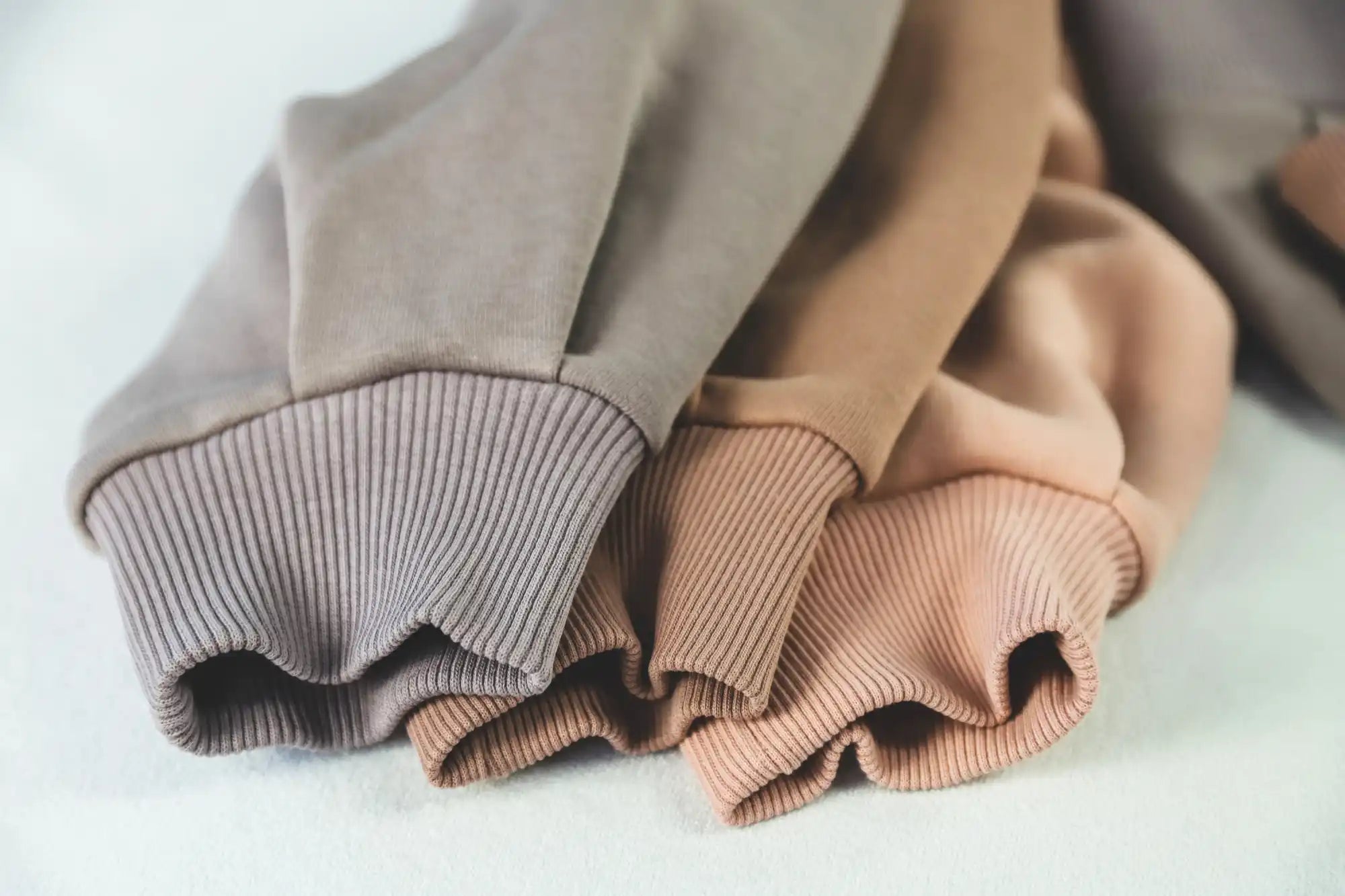
Materials & Fabrics for Clothing Production
Explore cotton, French terry, jersey, fleece, and sustainable blends used in premium apparel manufacturing.
Explore Premium Apparel Fabrics Guide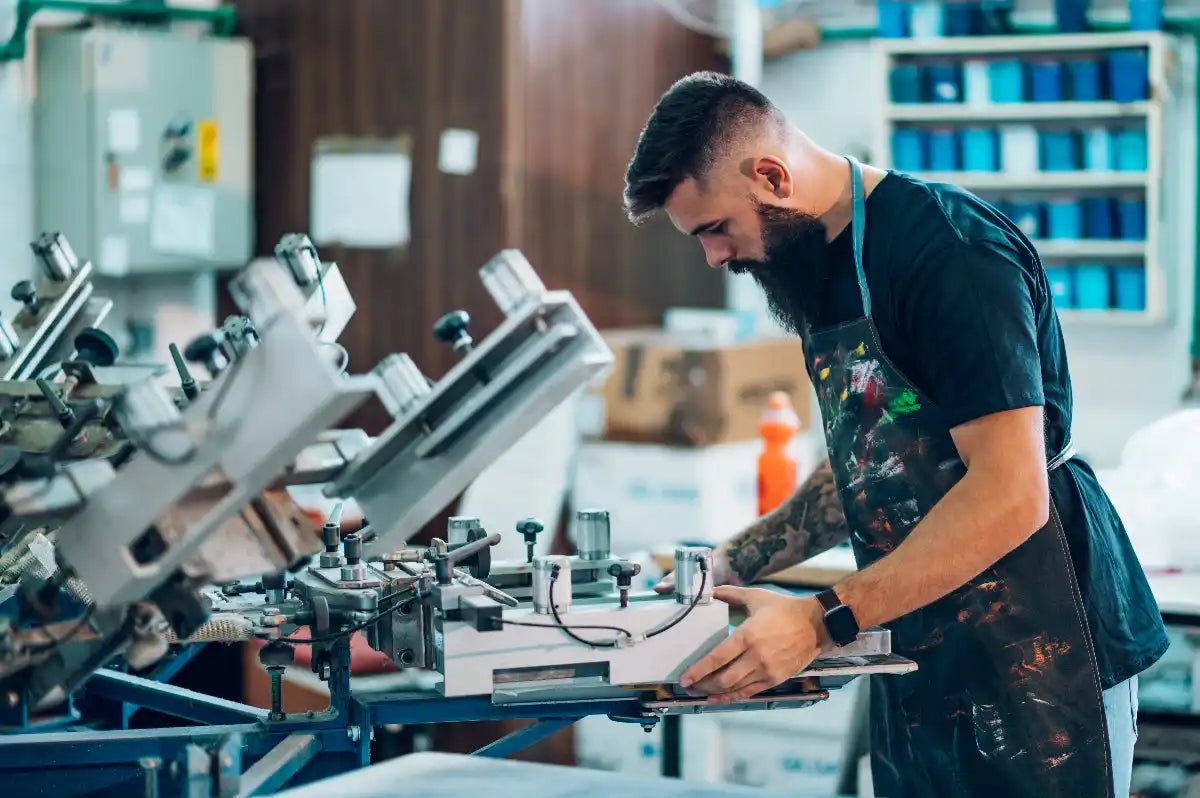
Printing Techniques for Apparel Production
Screen printing, embroidery, puff prints, and digital methods for custom clothing manufacturing.
Explore Custom Apparel Printing Techniques
Dyeing Techniques in Clothing Manufacturing
Garment dye, pigment, acid wash, and stone wash finishes that create unique apparel designs.
Compare Apparel Finishing Techniques
Popular Clothing Items for Custom Apparel
Hoodies, joggers, t-shirts, leggings, and biker shorts — essentials for every apparel collection.
Explore Popular Custom Clothing Items
Trends & Designs in Modern Apparel
Oversized fits, streetwear influences, and activewear styles driving custom clothing production.
Explore Trends & Designs for Apparel Development
Sustainable & Ethical Clothing Production
OEKO-TEX® certified fabrics, organic cotton, and ethical apparel manufacturing in Portugal.
Understand Sustainable & Ethical Clothing Production
Essentials for Custom Clothing Production
Custom labels, packaging, and trims that elevate your apparel brand in production.
Explore Essentials for Custom Clothing Production
Resources for Custom Clothing Production
Startup guides, logistics support, and scaling strategies for apparel brands and wholesale clients.
Explore Resources for Custom Clothing Production
Clothing Manufacturing Glossary
Explore a complete glossary of clothing and garment manufacturing terms
The Complete Clothing Manufacturing Glossary
The Best Clothing Manufacturers
Explore global clothing manufacturers by country
Explore The Best Clothing Manufacturers
The Latest Clothing Industry Updates in 2025
Discover the latest news about important topics in the clothing industry in 2025,
Stay On Top Of Clothing Industry Updates
Worldwide Best Manufacturers of Clothes in 2026
Top clothing manufacturers worldwide organized by product type
Find The Worldwide Best Manufacturers of Clothes