
Heat Transfer Labels for Custom Made Hoodies & T-Shirts
Heat transfer labels have become a preferred branding solution for modern apparel production, particularly for brands prioritizing comfort, scalability, and regulatory compliance. Unlike sewn-in labels, heat transfer labels apply branding and mandatory garment information directly onto the fabric surface, creating a seamless and irritation-free finish.
Within the broader framework of Brand Essentials for Custom Clothing Production , heat transfer labels play a critical role in elevating core products such as custom made hoodies, custom t shirts, and lightweight athleisure garments intended for extended daily wear.
What Are Heat Transfer Labels?
Heat transfer labels are designs printed onto a carrier film or transfer sheet and permanently bonded to fabric using controlled heat and pressure. The transferred artwork may include logos, brand names, sizing information, care instructions, or regulatory disclosures.
Once applied, the label becomes part of the garment surface rather than a separate sewn component. This construction eliminates bulk and friction, making heat transfer labels especially suitable for activewear, sensitive-skin garments, and lightweight apparel.
Why Heat Transfer Labels Matter in Apparel Production
Labeling decisions affect more than appearance—they influence labor efficiency, production timelines, wearer comfort, and long-term brand perception. Heat transfer labels streamline finishing operations while delivering consistent branding across multiple styles and sizes.
- Reduced sewing labor during finishing stages
- No internal seams or stitched edges
- Improved comfort for prolonged wear
- Consistent branding across SKUs and collections
For brands that customize a hoodie across seasonal drops or manage private-label programs, heat transfer labels allow branding to be applied without altering garment construction.
How Heat Transfer Labels Work
Heat transfer labels rely on thermoplastic adhesive layers or ink systems that activate when exposed to heat. The artwork is printed in reverse onto a carrier film using inks engineered to bond with textile fibers.
During application, the transfer is positioned on the garment and pressed using a calibrated heat press typically set between 150°C and 165°C (302°F–329°F). A dwell time of approximately 12 seconds allows the adhesive layer to melt and anchor into the fabric surface.
After pressing, the carrier film is peeled away, leaving the label permanently bonded. Proper curing ensures resistance to washing, stretching, and abrasion throughout the garment’s usable life.
Heat Transfer Labels vs Woven Labels
| Feature | Heat Transfer Labels | Woven Labels |
|---|---|---|
| Skin Comfort | Tagless, no irritation | May cause friction |
| Application Method | Heat-pressed | Sewn into seams |
| Production Speed | Fast, integrated finishing | Slower, labor-intensive |
| Design Flexibility | High detail, full color | Limited by weave structure |
Fabric Compatibility and Performance Considerations
Fabric composition and surface texture significantly influence heat transfer label performance. Smooth, stable fabrics allow for optimal adhesion, while heavily textured or brushed surfaces may require specialized transfer films.
- Cotton and cotton blends
- Polyester and poly-cotton fabrics
- French terry and fleece
- Performance and stretch knits
For large-scale programs involving bulk custom made hoodies , fleece weight and interior brushing should be evaluated carefully to ensure consistent bonding and wash durability.
Wash Durability and Care Performance
High-quality heat transfer labels are designed to withstand repeated laundering without cracking or peeling when properly applied. Durability depends on ink chemistry, adhesive quality, and accurate press calibration.
Brands supplying retail or wholesale markets should conduct wash testing aligned with intended care instructions before approving bulk production.
Compliance, Certifications, and Global Standards
Heat transfer labels must comply with regional apparel labeling regulations, including fiber disclosure, country of origin, and care instructions. The method of application is accepted as long as information remains legible and permanent.
- OEKO-TEX® Standard 100 for ink and material safety
- REACH compliance for EU chemical regulation
- US CPSIA requirements for consumer apparel
Using compliant and tested transfer materials reduces regulatory risk for brands distributing products across multiple markets.
Common Mistakes to Avoid
- Using incorrect heat or pressure settings for the fabric type
- Applying transfers to heavily textured or brushed surfaces
- Skipping wash and wear validation testing
- Overcrowding label placement areas
- Selecting low-grade transfer films or inks
FAQs About Certification & Standards
Are heat transfer labels compliant in the US and EU?
Yes, heat transfer labels are compliant in both US and EU markets when required information remains legible and durable after washing. Regulations focus on the permanence and accuracy of fiber content, country of origin, and care instructions. The application method itself is accepted as long as the label does not degrade during normal garment use.
Do heat transfer labels require certification?
Heat transfer labels themselves are not certified as finished components. However, the inks and adhesives used in the transfer process should meet recognized safety and chemical standards. Using compliant materials helps brands reduce regulatory and recall risks.
Are heat transfer inks safe for prolonged skin contact?
When compliant inks are used, heat transfer labels are considered safe for direct and prolonged skin contact. Certified ink systems are tested for harmful substances and skin irritation. Proper curing during application is essential to ensure long-term safety and performance.
FAQs About Sourcing & Production
Can heat transfer labels be applied during bulk production?
Yes, heat transfer labels are well suited for bulk apparel production. They integrate easily into standard finishing workflows without requiring changes to garment construction. This makes them efficient for mid- to high-volume production runs.
Do heat transfer labels reduce production labor costs?
Heat transfer labels eliminate the need for sewing label components into garments. This reduces labor time during finishing and minimizes sewing-related defects. Overall production efficiency often improves as a result.
Are heat transfer labels suitable for private-label programs?
Yes, heat transfer labels are commonly used in private-label and white-label apparel programs. Branding can be applied later in the production cycle, increasing flexibility. This is especially useful for multi-brand or seasonal collections.
FAQs About Materials & Care
Do heat transfer labels crack or peel after washing?
High-quality heat transfer labels are designed to withstand repeated washing when properly applied. Cracking or peeling typically results from incorrect heat settings or insufficient curing. Pre-production wash testing helps confirm durability.
Can heat transfer labels be applied to performance fabrics?
Yes, heat transfer labels can be applied to many performance fabrics with adjusted temperature and pressure settings. Heat-sensitive materials require careful calibration to avoid damage. Testing ensures both adhesion and fabric integrity.
Do heat transfer labels affect garment breathability?
Heat transfer labels have minimal impact on garment breathability, particularly when used for interior neck branding. They cover a small surface area and add no bulk. Compared to sewn labels, they often improve overall wearing comfort.
About the Author
This guide was prepared by the AthleisureBasics Production Team. With over 15 years in apparel manufacturing, we specialize in helping brands navigate the technical complexities of custom clothing production and global supply chain compliance.
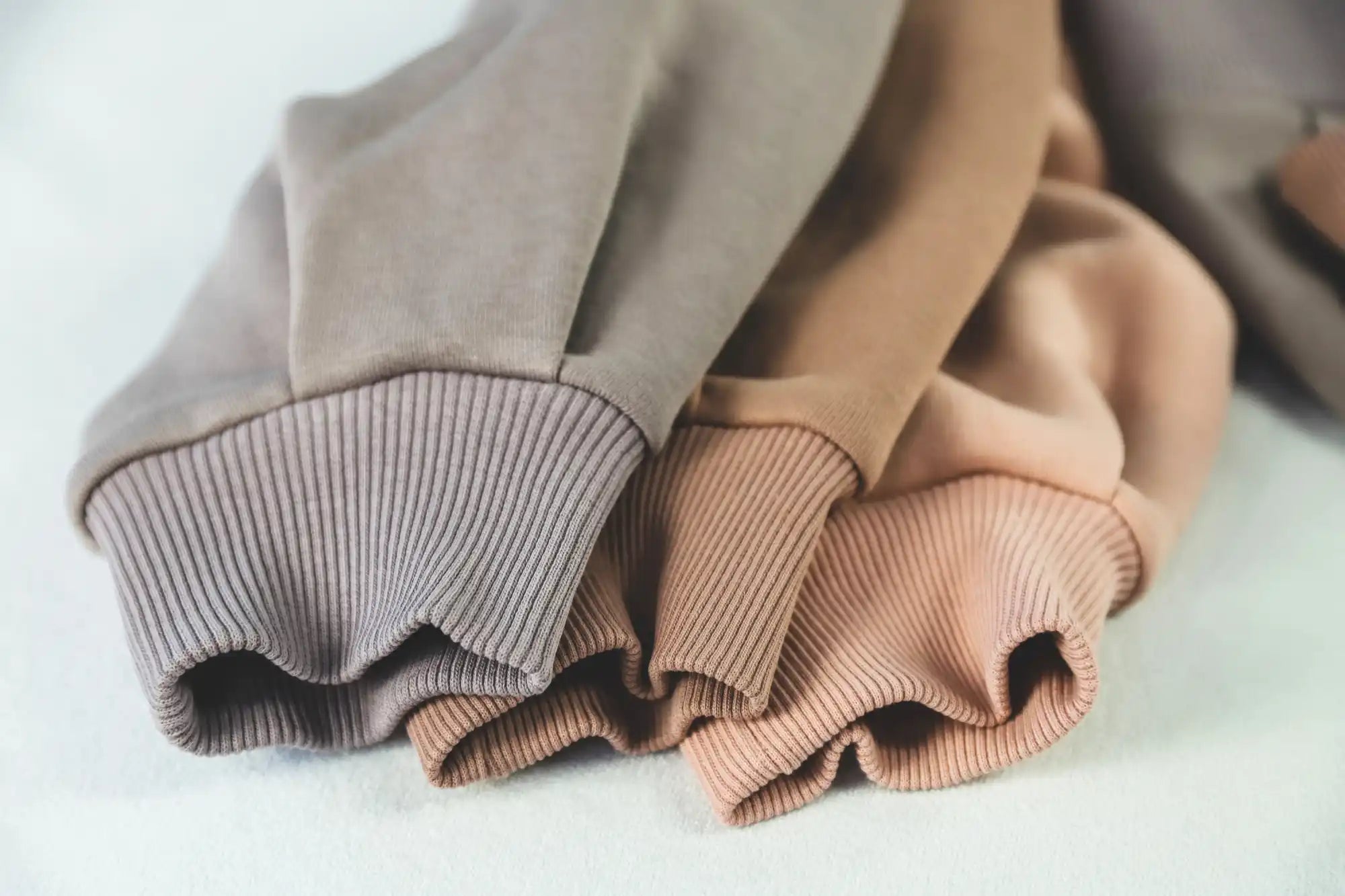
Materials & Fabrics for Clothing Production
Explore cotton, French terry, jersey, fleece, and sustainable blends used in premium apparel manufacturing.
Explore Premium Apparel Fabrics Guide
Printing Techniques for Apparel Production
Screen printing, embroidery, puff prints, and digital methods for custom clothing manufacturing.
Explore Custom Apparel Printing Techniques
Dyeing Techniques in Clothing Manufacturing
Garment dye, pigment, acid wash, and stone wash finishes that create unique apparel designs.
Compare Apparel Finishing Techniques
Popular Clothing Items for Custom Apparel
Hoodies, joggers, t-shirts, leggings, and biker shorts — essentials for every apparel collection.
Explore Popular Custom Clothing Items
Trends & Designs in Modern Apparel
Oversized fits, streetwear influences, and activewear styles driving custom clothing production.
Explore Trends & Designs for Apparel Development
Sustainable & Ethical Clothing Production
OEKO-TEX® certified fabrics, organic cotton, and ethical apparel manufacturing in Portugal.
Understand Sustainable & Ethical Clothing Production
Essentials for Custom Clothing Production
Custom labels, packaging, and trims that elevate your apparel brand in production.
Explore Essentials for Custom Clothing Production
Resources for Custom Clothing Production
Startup guides, logistics support, and scaling strategies for apparel brands and wholesale clients.
Explore Resources for Custom Clothing Production
Clothing Manufacturing Glossary
Explore a complete glossary of clothing and garment manufacturing terms
The Complete Clothing Manufacturing Glossary
The Best Clothing Manufacturers
Explore global clothing manufacturers by country
Explore The Best Clothing Manufacturers
The Latest Clothing Industry Updates in 2025
Discover the latest news about important topics in the clothing industry in 2025,
Stay On Top Of Clothing Industry Updates
Worldwide Best Manufacturers of Clothes in 2026
Top clothing manufacturers worldwide organized by product type
Find The Worldwide Best Manufacturers of Clothes