
Hem Tags for Custom Clothing Production
In modern custom clothing production, branding increasingly relies on construction details rather than oversized graphics. Apparel brands producing custom made hoodies, heavyweight t-shirts, and structured sweatshirts use hem tags as a subtle but consistent branding signature.
A hem tag is a small woven or printed label sewn into the garment’s hem or waistband. It provides brand recognition without disrupting the garment’s core design, making it especially valuable for long-term collections and wholesale programs.
What Is a Hem Tag?
A hem tag is a secondary branding label attached to the bottom hem of a shirt or hoodie, or the waistband of pants. Unlike neck labels, hem tags are externally visible while remaining discreet.
They are typically woven, center-folded or loop-folded, and stitched directly into the seam so the label becomes a permanent part of the garment structure.
How Hem Tags Are Applied During Production
Hem tags are inserted during garment construction or final hemming. The label is usually center-folded or loop-folded, then placed between fabric layers before stitching.
Factories commonly use overlock stitching or coverstitch seams to secure the tag without adding bulk. Ultrasonic cutting is often applied during label production to soften edges and prevent skin irritation. Once sewn, the hem tag withstands repeated washing and daily wear.
Hem Tag Materials and Construction Options
Material selection determines durability, comfort, and visual clarity. Most brands select woven labels due to their structural stability and colorfastness.
- Damask woven polyester labels
- Cotton woven labels
- Recycled polyester woven labels
Damask weaving allows higher thread density, which improves logo sharpness and abrasion resistance.
Woven Hem Tags vs Printed Hem Tags
| Feature | Woven Hem Tags | Printed Hem Tags |
|---|---|---|
| Durability | High, long-term wash resistance | Moderate, ink may fade |
| Texture | Textured, premium feel | Smooth, flatter surface |
| Best Use | Custom made hoodies, sweatshirts | Lightweight garments |
Hem Tags in Custom Made Hoodies
When brands decide to customize a hoodie, hem tags provide a subtle contrast to embroidery or print-based branding. They work particularly well on oversized, drop-shoulder, and heavyweight fleece silhouettes.
Hem tags are often positioned on the lower side seam so branding remains visible when layered. This approach balances visibility with minimalism, especially when combined with custom embroidery on sweatshirts.
Best Practices for Hem Tags in Custom T Shirts
In custom t shirts, hem tags elevate perceived quality without altering the shirt’s fit or drape. Heavier jersey fabrics support hem tags more effectively, preventing curling or distortion.
Soft woven labels and precise placement are essential to maintain wearer comfort, particularly for all-day use garments.
Hem Tags vs Neck Labels
| Aspect | Hem Tags | Neck Labels |
|---|---|---|
| Primary Function | External branding | Branding and compliance |
| Visibility | Visible during wear | Internal only |
| Comfort Impact | Minimal when woven | Critical to avoid irritation |
Compliance and Certification Considerations
While hem tags are not regulated as standalone components, the materials used must meet textile safety requirements. Materials should be verified against OEKO-TEX® Standard 100 standards to ensure consumer safety.
Dyes and yarns must also comply with EU REACH regulations and CPSIA requirements for children’s apparel. Using certified suppliers reduces regulatory risk during international distribution.
Common Mistakes to Avoid
- Incorrect placement: Misaligned tags result in asymmetric garments that fail quality inspections and increase rejection rates.
- Inconsistent sizing: Varying label dimensions slow packing workflows and increase warehouse sorting errors.
- Stiff materials: Rough labels cause wearer discomfort, leading to higher return rates.
- Fabric mismatch: Heavy labels on lightweight fabrics cause distortion and reduce garment lifespan.
Integrating Hem Tags Into Brand Essentials
Hem tags are most effective when standardized across collections and aligned with neck labels, care labels, and packaging. Early specification allows factories to scale production efficiently.
For a broader overview of trims and finishing systems, visit Brand Essentials for Custom Clothing Production.
FAQs About Certification & Standards
Do hem tags require certification?
Hem tags themselves are not legally certified, but the materials used should meet recognized textile safety standards. Certified materials reduce chemical exposure risks and simplify compliance audits.
Are hem tags compliant for US and EU markets?
Hem tags are compliant when paired with required care and fiber labels. Material compliance is essential for both regions.
Do certifications affect sourcing costs?
Certified materials may carry slightly higher unit costs. However, they significantly reduce compliance risks and long-term liability.
FAQs About Sourcing & Production
When are hem tags added during manufacturing?
Hem tags are inserted during garment construction or final hemming. This ensures structural integrity and wash durability.
Can hem tags be standardized across styles?
Yes, standardization improves efficiency and reduces unit costs. Many brands use one hem tag across multiple SKUs.
Do hem tags slow production timelines?
When specified early, hem tags do not meaningfully impact production speed. Late changes, however, can cause delays.
FAQs About Materials & Care
Do hem tags shrink after washing?
Quality woven labels are stabilized to match garment shrinkage. Poor-quality labels may distort after laundering.
Are hem tags suitable for sensitive skin?
Soft woven labels with ultrasonic-cut edges minimize irritation. Material selection is critical for comfort.
How long do hem tags last?
Woven hem tags typically last the lifetime of the garment. Durability depends on stitching quality and fabric compatibility.
Next Steps for Your Brand
If your brand plans to develop new collections using certified materials and scalable production methods, reach out to our team via the request form to discuss hem tag options and production integration.
Request production information
Materials & Fabrics for Clothing Production
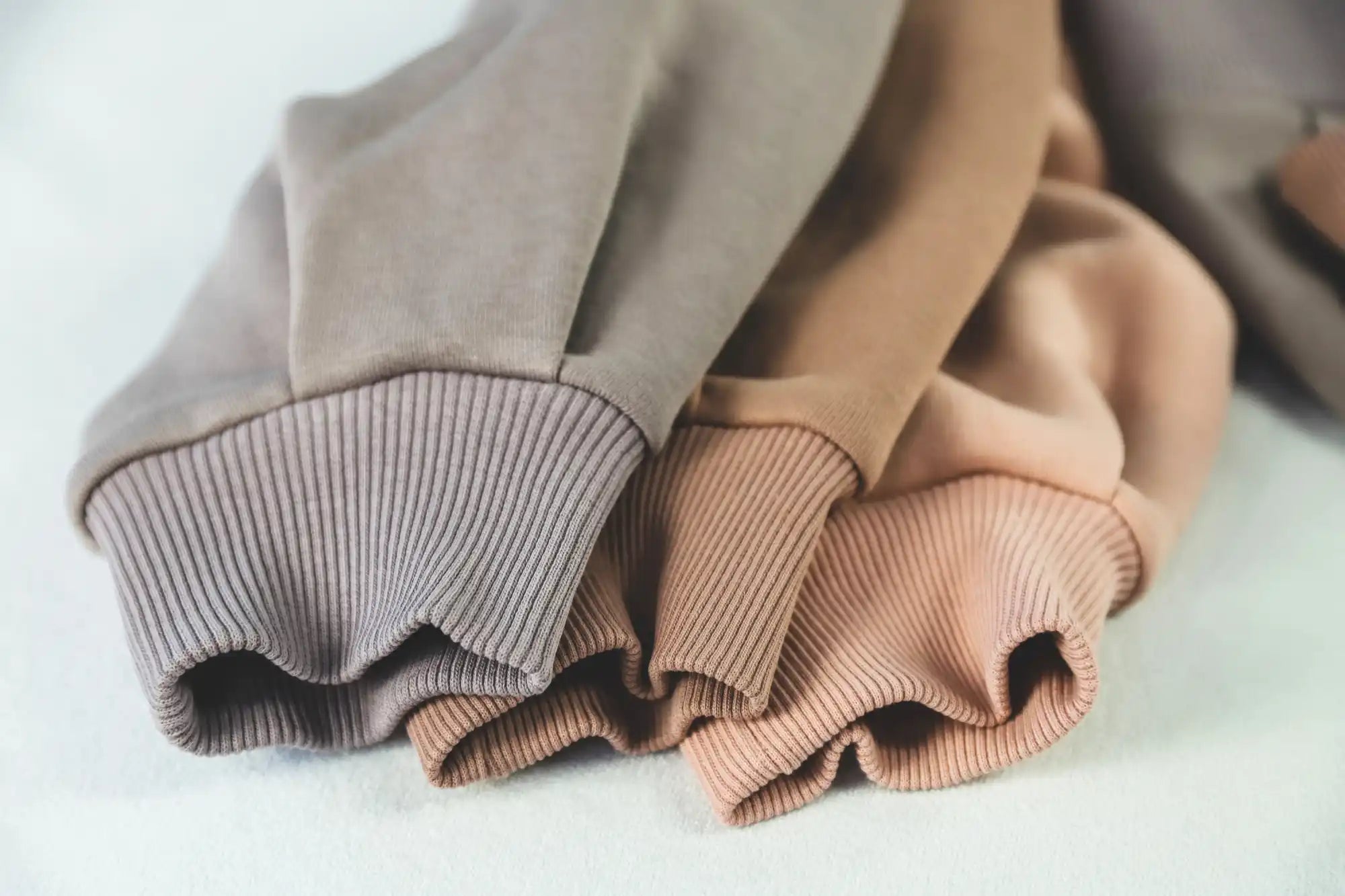
Explore cotton, French terry, jersey, fleece, and sustainable blends used in premium apparel manufacturing.
Explore Premium Apparel Fabrics Guide
Printing Techniques for Apparel Production
Screen printing, embroidery, puff prints, and digital methods for custom clothing manufacturing.
Explore Custom Apparel Printing Techniques
Dyeing Techniques in Clothing Manufacturing
Garment dye, pigment, acid wash, and stone wash finishes that create unique apparel designs.
Compare Apparel Finishing Techniques
Popular Clothing Items for Custom Apparel
Hoodies, joggers, t-shirts, leggings, and biker shorts — essentials for every apparel collection.
Explore Popular Custom Clothing Items
Trends & Designs in Modern Apparel
Oversized fits, streetwear influences, and activewear styles driving custom clothing production.
Explore Trends & Designs for Apparel Development
Sustainable & Ethical Clothing Production
OEKO-TEX® certified fabrics, organic cotton, and ethical apparel manufacturing in Portugal.
Understand Sustainable & Ethical Clothing Production
Essentials for Custom Clothing Production
Custom labels, packaging, and trims that elevate your apparel brand in production.
Explore Essentials for Custom Clothing Production
Resources for Custom Clothing Production
Startup guides, logistics support, and scaling strategies for apparel brands and wholesale clients.
Explore Resources for Custom Clothing Production
Clothing Manufacturing Glossary
Explore a complete glossary of clothing and garment manufacturing terms
The Complete Clothing Manufacturing Glossary
The Best Clothing Manufacturers
Explore global clothing manufacturers by country
Explore The Best Clothing Manufacturers
The Latest Clothing Industry Updates in 2025
Discover the latest news about important topics in the clothing industry in 2025,
Stay On Top Of Clothing Industry Updates
Worldwide Best Manufacturers of Clothes in 2026
Top clothing manufacturers worldwide organized by product type
Find The Worldwide Best Manufacturers of Clothes