
Overdye Process in Clothing Manufacturing
The overdye process has become a defining technique in modern apparel production. By applying a new dye over an already-colored garment, manufacturers achieve layered color depth and unique visual effects. In 2025, the method is widely used in premium streetwear, athleisure, and sustainable fashion collections.
What Is the Overdye Technique?
Overdyeing refers to dyeing an already dyed or finished garment in a new color bath. When the new dye interacts with the original color, it creates rich tonal variations, shadows, and depth—giving each garment its own unique character.
Key Features
- Layered color complexity: multidimensional tones and depth.
- Distinct results: each batch looks slightly different.
- Eco-benefits: recolors existing stock instead of discarding it.
- Softer hand feel: enhanced through multiple wet processes and enzyme finishing.
Step-by-Step Overview
| Stage | Process | Focus |
|---|---|---|
| 1. Selection | Choose pre-dyed cotton, fleece, or Tencel™ garments. | Natural fibers take overdye evenly. |
| 2. Pre-Treatment | Wash to remove finishes or residues. | Ensures even dye penetration. |
| 3. Secondary Dye Bath | Immerse in new dye under controlled heat and pH. | Reactive or pigment dyes often used. |
| 4. Fixation | Bonding agents set the new color. | Improves wash durability. |
| 5. Finishing | Rinse, enzyme wash, and dry. | Softens fibers and refines tone. |
Why Brands Choose Overdye
- Visual depth: tonal overlays create a premium aesthetic.
- Limited-edition appeal: variations enhance exclusivity.
- Sustainable angle: extends product life and reduces waste.
- Softness: double processing improves comfort.
- Trend alignment: fits 2025 demand for artisanal finishes.
Comparison: Overdye vs. Other Techniques
| Technique | Result | Sustainability | Best For |
|---|---|---|---|
| Overdye | Layered, tonal hues | High (recolors existing) | Streetwear & athleisure |
| Pigment Dye | Vintage, washed finish | Medium | Casual basics |
| Reactive Dye | Bright, uniform shades | Medium | Premium cotton |
| Acid Wash | Contrasted, marble effects | Low | Denim & fleece |
Modern Applications
Overdyeing supports a range of design styles—from muted minimalist palettes to high-contrast streetwear drops. Popular combinations include:
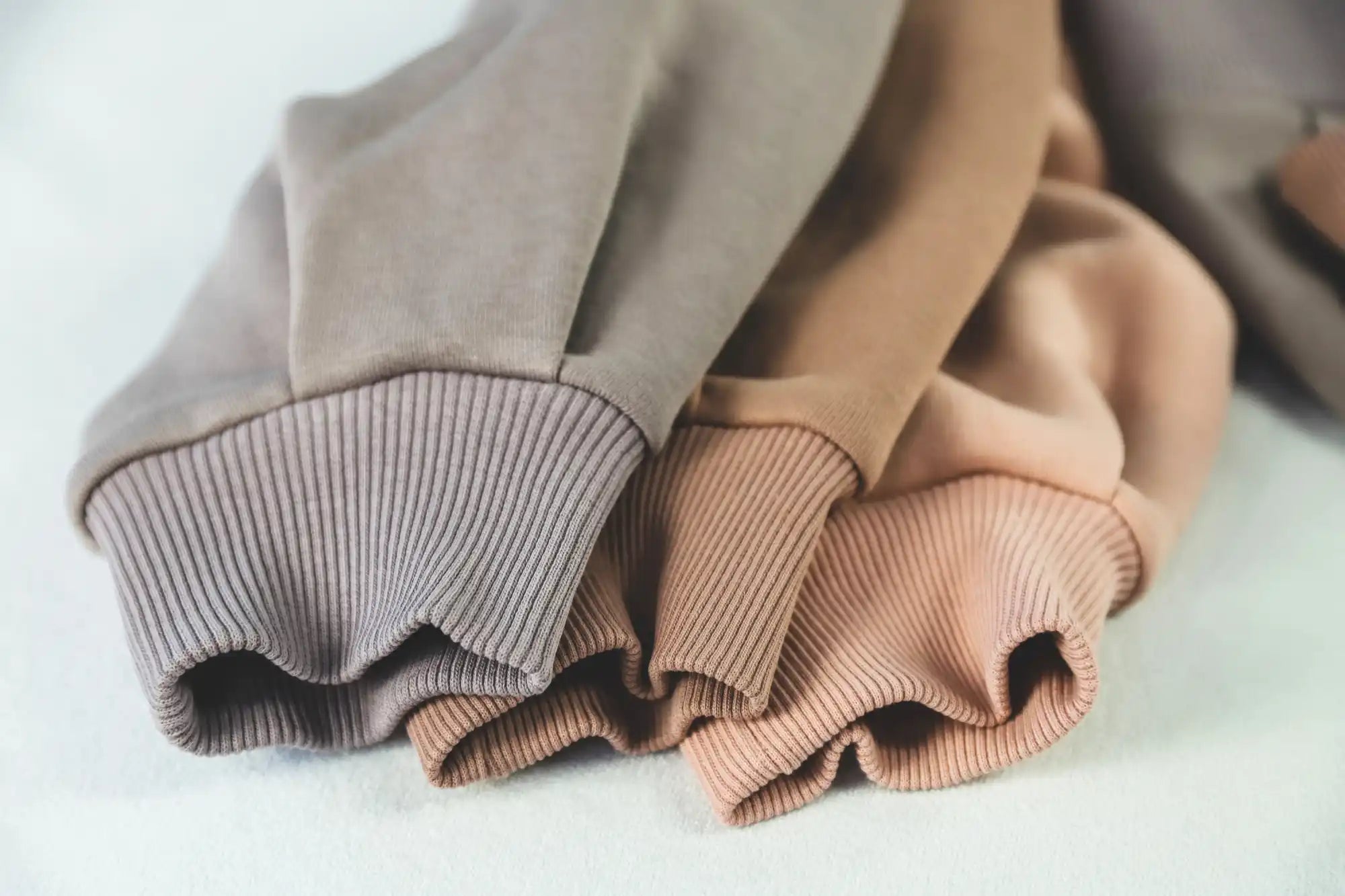
- Beige base + Olive overdye → Khaki depth
- Grey base + Navy overdye → Washed indigo
- Cream base + Rose overdye → Soft blush pastel
- Brown base + Black overdye → Deep charcoal
Explore our premium hoodies collection ideal for overdye experiments, and see additional dyeing techniques explained in our Dyeing & Finishing Playbook.
The Technical Science
Reactive dyes bond chemically with cellulose fibers, while pigment dyes sit on the surface to produce matte, vintage effects. Maintaining dye bath temperatures near 50 °C and alkaline conditions (pH 10–11) helps achieve consistent tone. Enzyme washes reduce fiber fuzz, improving softness—essential for luxury streetwear.
Sustainability in Overdyeing
Modern European dye houses use closed-loop systems that cut water use by up to 70%. The process aligns with GOTS and Bluesign® principles.
| Factor | Overdye Impact |
|---|---|
| Textile Waste | Recolors existing garments. |
| Energy Use | Shorter cycles reduce energy per unit. |
| Chemical Management | Closed systems recycle residues. |
| Carbon Emissions | Less new fabric production required. |
Challenges and Quality Control
- Maintain consistent formulas to reduce batch variation.
- Use spectrophotometers for tone accuracy.
- Account for shrinkage from multiple wet cycles.
- Double-rinse to prevent future color bleeding.
Future Trends
Industry forecasts show overdye finishing growing nearly 30% by 2026 as brands adopt AI-assisted color mapping, botanical dyes, and upcycling programs.
Implementing Overdye in Your Brand
- Start with neutral or light-colored organic cotton or Tencel™ bases.
- Work with experienced European dye facilities.
- Prototype several tone layers.
- Combine overdye with subtle embroidery or minimal prints.
- Use overdye storytelling to differentiate your brand.
For custom overdye production, reach out through our request form to explore available options.
FAQs on Certifications & Standards
What certifications cover overdyeing?
GOTS, Bluesign®, and OEKO-TEX® ensure chemical and environmental compliance.
Can garments stay certified after overdye?
Yes, if GOTS-approved dyes are used.
Are reactive dyes eco-friendly?
Modern reactive dyes use low salt and high fixation, minimizing waste.
FAQs on Sourcing & Production
Where is overdyeing most advanced?
Portugal leads in sustainable overdyeing due to high-efficiency dyeing systems.
Average timeline?
Typically 3–5 days including lab dips and finishing.
Can small brands access overdye services?
Yes—low-MOQ facilities in Portugal and Italy offer small runs.
FAQs on Materials & Care
Does overdyeing change texture?
Yes, it softens fleece and jersey fabrics.
How should customers wash overdye products?
Cold wash, separate for the first few cycles.
Will pieces fade?
A soft fade is natural and adds character.
Conclusion
The overdye process blends creativity, durability, and sustainability. For apparel brands aiming to elevate color depth and storytelling, overdyeing remains one of the most effective techniques. Explore more techniques in our Acid Wash Oversized Collection or submit a customization request through our Quote Form.
Materials & Fabrics for Clothing Production
Explore cotton, French terry, jersey, fleece, and sustainable blends used in premium apparel manufacturing.
Explore Premium Apparel Fabrics Guide
Printing Techniques for Apparel Production
Screen printing, embroidery, puff prints, and digital methods for custom clothing manufacturing.
Explore Custom Apparel Printing Techniques
Dyeing Techniques in Clothing Manufacturing
Garment dye, pigment, acid wash, and stone wash finishes that create unique apparel designs.
Compare Apparel Finishing Techniques
Popular Clothing Items for Custom Apparel
Hoodies, joggers, t-shirts, leggings, and biker shorts — essentials for every apparel collection.
Explore Popular Custom Clothing Items
Trends & Designs in Modern Apparel
Oversized fits, streetwear influences, and activewear styles driving custom clothing production.
Explore Trends & Designs for Apparel Development
Sustainable & Ethical Clothing Production
OEKO-TEX® certified fabrics, organic cotton, and ethical apparel manufacturing in Portugal.
Understand Sustainable & Ethical Clothing Production
Essentials for Custom Clothing Production
Custom labels, packaging, and trims that elevate your apparel brand in production.
Explore Essentials for Custom Clothing Production
Resources for Custom Clothing Production
Startup guides, logistics support, and scaling strategies for apparel brands and wholesale clients.
Explore Resources for Custom Clothing Production
Clothing Manufacturing Glossary
Explore a complete glossary of clothing and garment manufacturing terms
The Complete Clothing Manufacturing Glossary
The Best Clothing Manufacturers
Explore global clothing manufacturers by country
Explore The Best Clothing Manufacturers
The Latest Clothing Industry Updates in 2025
Discover the latest news about important topics in the clothing industry in 2025,
Stay On Top Of Clothing Industry Updates
Worldwide Best Manufacturers of Clothes in 2026
Top clothing manufacturers worldwide organized by product type
Find The Worldwide Best Manufacturers of Clothes