
Rib Knit Fabric: The Stretch-Resilient Essential for Apparel Brands
In the global apparel industry, rib knit fabric stands out as one of the most adaptable and durable textiles. Recognized by its distinctive vertical ridges and crosswise elasticity, rib knit fabric provides the perfect balance of comfort, recovery, and structure. It’s a mainstay in clothing design for everything from cuffs and collars to waistbands, tanks, and activewear.
What Is Rib Knit Fabric?
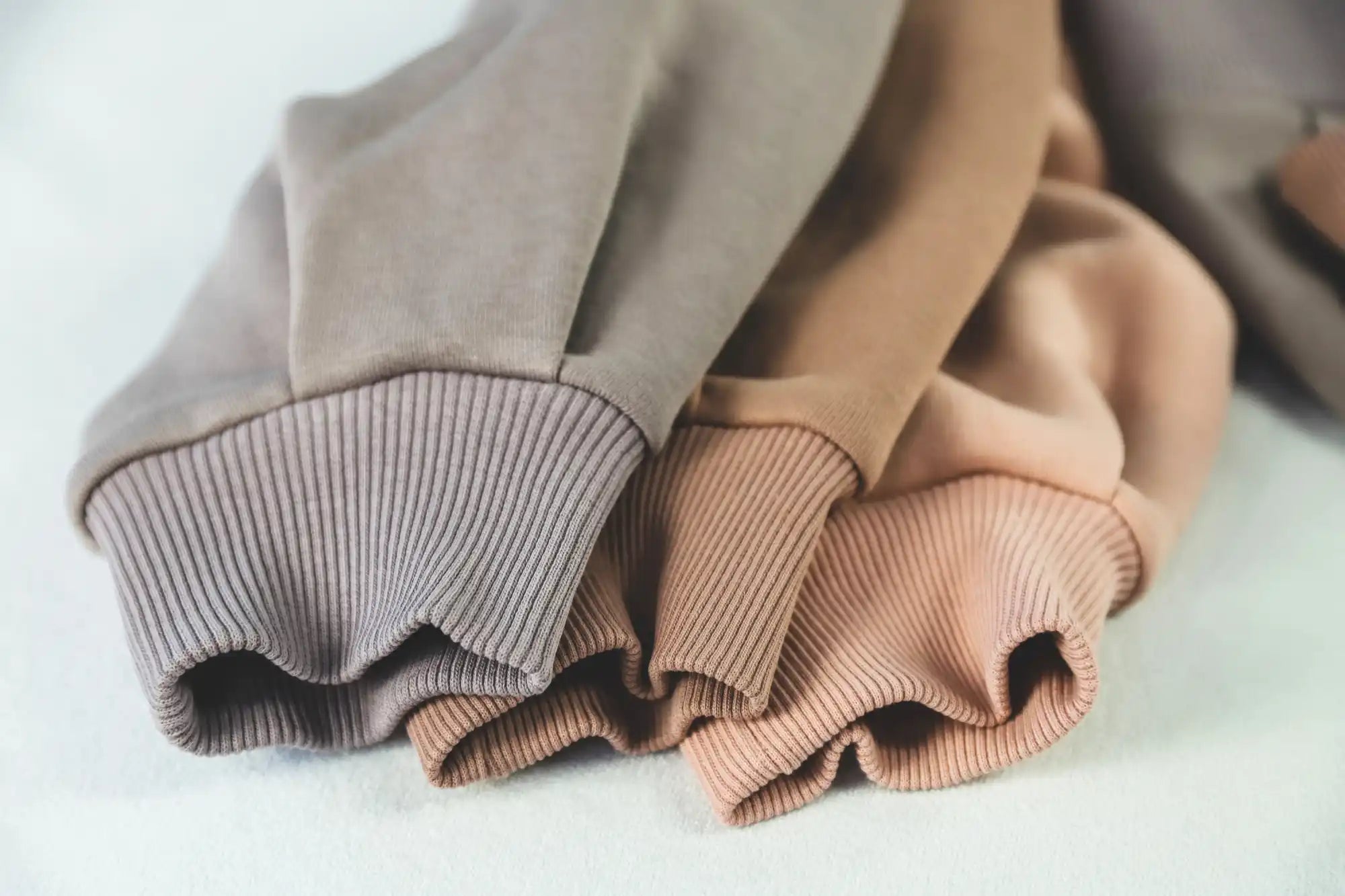
Rib knit fabric is a type of knitted textile made using alternating knit and purl stitches, creating raised vertical ribs on both sides. These ribs are what give the material its signature stretch and resilience compared to flat jersey knit.
| Characteristic | Description |
|---|---|
| Structure | Alternating knit and purl stitches forming vertical ribs |
| Texture | Soft, elastic, slightly thicker than jersey knit |
| Stretch | Excellent crosswise stretch and recovery |
| Common Fibers | Cotton, spandex blends, viscose, recycled polyester |
The rib ratio—such as 1×1, 2×2, or 3×1—determines the density of the ridges and the level of elasticity. A 1×1 rib is soft and highly stretchable, while 3×1 ribs provide stronger structure.
Why It Matters in Apparel Manufacturing
1. Superior Stretch and Recovery
Rib knit can stretch to twice its width and return to its original form, making it ideal for trims and body-hugging garments. This elasticity ensures consistent fit and shape retention.
2. Comfort and Function
Its double-sided texture makes rib knit soft and breathable, suitable for both casualwear and activewear. Cotton-based versions enhance comfort, while polyester blends add quick-drying performance.
3. Sustainability Potential
Modern mills now produce rib knits using organic cotton or recycled polyester, aligning with 2025’s sustainability goals and global textile certifications.
Types of Rib Knit Fabric
| Type | Description | Best For |
|---|---|---|
| 1×1 Rib | Fine, evenly spaced ribs with maximum stretch | Necklines, cuffs, loungewear |
| 2×2 Rib | Balanced ribs with moderate structure | Sweaters, waistbands, dresses |
| 3×1 Rib | Wider ribs, firm texture | Outerwear trims, body-fitting tops |
| Interlock Rib | Double-layered knit with high recovery | Leggings, activewear |
| Cord Rib | Heavyweight knit with deep channels | Structured jackets |
Rib Knit vs. Jersey Knit
| Feature | Rib Knit | Jersey Knit |
|---|---|---|
| Stretch | High, crosswise | Moderate |
| Texture | Raised ribs both sides | Smooth front, flat back |
| Shape Retention | Strong | Moderate |
| Ideal Use | Trims, fitted apparel | T-shirts, dresses |
Composition and Technical Properties
Most rib knit fabrics use cotton-elastane blends for comfort and flexibility. Others incorporate polyester or bamboo viscose for moisture management and softness.
| Property | Benefit |
|---|---|
| Crosswise Stretch | Allows movement and comfort |
| Shape Recovery | Keeps fit consistent after washing |
| Breathability | Comfortable for all seasons |
| Durability | Resists wear and fraying |
| Ease of Sewing | Works well with stretch-stitch machines |
Market Insight (2025)
The global athleisure and knitwear market—driven by fabrics like rib knit—is projected to grow at a 7.2% CAGR from 2024–2028 (Source: Statista, 2025). This reflects growing demand for comfort-based, sustainable textiles.
Applications in Apparel
- Cuffs, Collars, Waistbands: Provides elasticity and structure.
- Body-Fitting Tops: Offers soft stretch and shape retention.
- Athleisure & Loungewear: Combines performance and comfort.
- Accessories: Beanies, gloves, and socks for elasticity and warmth.
Sourcing High-Quality Rib Knit Fabric
- Fiber Transparency: Confirm organic or recycled origins.
- Stretch Recovery: Test rebound after extension.
- Weight Consistency: 180–280 GSM is ideal for most apparel.
- Certifications: Look for GOTS and OEKO-TEX® Standard 100.
Care and Maintenance
- Wash cold and gentle to preserve elasticity.
- Avoid high-heat drying or ironing.
- Use mild detergent—harsh chemicals weaken elastane.
- Store folded to prevent stretching.
Sustainability and Certifications
Design & Production Best Practices
- Pre-shrink rib fabric before cutting.
- Match rib GSM to garment fabric for balance.
- Align ribs vertically during sewing to maintain elasticity.
- Ensure color consistency between body and trim fabrics.
FAQs: Certifications & Standards
Which certifications ensure rib knit safety?
OEKO-TEX® Standard 100 and GOTS certify safety and organic integrity.
Do certified fabrics cost more?
Yes, around 5–10% more, but they enhance brand credibility.
Are blended rib knits certifiable?
Yes, if the certified fibers meet minimum content thresholds.
FAQs: Sourcing & Production
What’s the MOQ for rib knits?
Low-MOQ suppliers offer as little as 50–100 meters per color.
How to ensure consistent dye shades?
Use the same supplier for rib and body fabrics.
Can rib knits be embroidered?
Yes, with stabilizing backing to prevent distortion.
FAQs: Materials & Care
Why does rib knit lose elasticity?
Excess heat and harsh detergents degrade elastane.
Is rib knit breathable for hot climates?
Yes—especially cotton and bamboo blends.
What GSM suits trims best?
220–260 GSM offers optimal flexibility and durability.
Conclusion
Rib knit fabric combines style, structure, and sustainability—an essential material for brands designing high-quality, comfort-driven apparel. From performancewear to everyday basics, its technical and aesthetic benefits make it a cornerstone for 2025 apparel innovation.
Interested in developing new collections using certified rib knit fabrics?
Connect with the Athleisure Basics team through the request form.
Materials & Fabrics for Clothing Production
Explore cotton, French terry, jersey, fleece, and sustainable blends used in premium apparel manufacturing.
Explore Premium Apparel Fabrics Guide
Printing Techniques for Apparel Production
Screen printing, embroidery, puff prints, and digital methods for custom clothing manufacturing.
Explore Custom Apparel Printing Techniques
Dyeing Techniques in Clothing Manufacturing
Garment dye, pigment, acid wash, and stone wash finishes that create unique apparel designs.
Compare Apparel Finishing Techniques
Popular Clothing Items for Custom Apparel
Hoodies, joggers, t-shirts, leggings, and biker shorts — essentials for every apparel collection.
Explore Popular Custom Clothing Items
Trends & Designs in Modern Apparel
Oversized fits, streetwear influences, and activewear styles driving custom clothing production.
Explore Trends & Designs for Apparel Development
Sustainable & Ethical Clothing Production
OEKO-TEX® certified fabrics, organic cotton, and ethical apparel manufacturing in Portugal.
Understand Sustainable & Ethical Clothing Production
Essentials for Custom Clothing Production
Custom labels, packaging, and trims that elevate your apparel brand in production.
Explore Essentials for Custom Clothing Production
Resources for Custom Clothing Production
Startup guides, logistics support, and scaling strategies for apparel brands and wholesale clients.
Explore Resources for Custom Clothing Production
Clothing Manufacturing Glossary
Explore a complete glossary of clothing and garment manufacturing terms
The Complete Clothing Manufacturing Glossary
The Best Clothing Manufacturers
Explore global clothing manufacturers by country
Explore The Best Clothing Manufacturers
The Latest Clothing Industry Updates in 2025
Discover the latest news about important topics in the clothing industry in 2025,
Stay On Top Of Clothing Industry Updates
Worldwide Best Manufacturers of Clothes in 2026
Top clothing manufacturers worldwide organized by product type
Find The Worldwide Best Manufacturers of Clothes