
Swing Tags for Custom Clothing Production
Swing tags, often referred to as hang tags, are a foundational element in professional custom clothing production. While garments such as custom made hoodies, heavyweight t-shirts, and embroidered sweatshirts deliver functional value, swing tags deliver context, credibility, and brand positioning at the point of sale.
For apparel brands and sourcing teams, swing tags are not decorative afterthoughts. They are standardized trims that support compliance, communicate material quality, and elevate even basic silhouettes into recognizable branded products across retail and wholesale environments.
What Are Swing Tags in Custom Clothing Production?
Swing tags are removable external cards attached to garments using temporary fasteners such as plastic swift tacks, safety pins, or waxed cotton cords. Unlike neck labels or care labels, swing tags are designed to be removed before wear and exist solely to communicate information at purchase.
In custom clothing production, swing tags typically display brand identity, fabric composition, garment specifications, pricing, country of origin, certifications, and digital touchpoints such as QR codes.
Strategic Advantages of Swing Tags for Apparel Brands
- They explain material quality and justify premium pricing.
- They reinforce compliance without overcrowding internal labels.
- They standardize presentation across wholesale channels.
- They enable storytelling without altering garment construction.
How Swing Tags Work in Apparel Manufacturing
Swing tags are developed during the trim and accessories phase alongside labels and packaging. Artwork and content are finalized early to avoid delays, then printed using offset or digital methods depending on production volume.
After garments complete washing, embroidery, and final inspection, swing tags are attached during the finishing stage. This sequencing prevents ink bleeding, paper deformation, and tag loss during factory processing.
Swing Tag Materials and Paper Weights
Material choice and paper weight directly affect durability, sustainability perception, and brand feel. Standard retail swing tags typically use 350 GSM cardstock, while premium collections often specify 600 GSM or thicker boards for rigidity and tactile impact.
| Material | Cost | Sustainability | Brand Feel |
|---|---|---|---|
| Cardstock (350 GSM) | Low | Moderate | Clean, commercial |
| Recycled Paper | Medium | High | Natural, responsible |
| Plastic / PVC | High | Low | Durable, industrial |
Eco-focused brands increasingly specify soy-based inks and low-VOC coatings to reduce environmental impact while maintaining print clarity.
Attachment Hardware and Brand Perception
Swing tags are commonly attached using plastic swift tacks, waxed cotton cords, or metal safety pins. Plastic swift tacks are cost-efficient and widely used for volume production, while waxed cords and pins are typically reserved for premium or limited-run garments.
Poor attachment choices can damage fabrics, distort necklines, or undermine perceived value, particularly on lightweight jerseys and brushed fleece garments.
Swing Tags for Custom Made Hoodies
Custom made hoodies often involve higher fabric weights, brushed interiors, and reinforced construction. When brands decide to customize a hoodie, the swing tag becomes the primary canvas for explaining fabric GSM, fleece composition, and durability features.
For oversized or heavyweight hoodies, swing tags help buyers understand value beyond visual design alone, supporting confident purchasing decisions.
How It Works for Hoodies and Sweatshirts
Swing tags for hoodies are attached only after washing and embroidery to avoid lint transfer and ink damage. Tags often reference fabric weight, stitch density, and care considerations specific to fleece garments.
Clear technical descriptions reduce post-purchase confusion and minimize return rates.
Best Practices for Custom T Shirts and Basic Apparel
In custom t shirts and minimalist basics, swing tags carry disproportionate importance. With limited visual complexity in the garment itself, value is communicated through information rather than embellishment.
Details such as cotton type, yarn quality, and garment dye processes help buyers understand why one t-shirt differs from another at retail.
Swing Tags vs Stickers and Inserts
Swing tags remain the most standardized external branding element in apparel retail. Stickers and inserts are often removed during merchandising, while swing tags remain attached until purchase.
For wholesale distribution, swing tags ensure consistent brand communication regardless of retailer display practices.
Compliance, Certifications, and Labeling Support
Swing tags support but do not replace mandatory care labels. They are frequently used to reinforce fiber content, origin statements, and sustainability certifications.
Certifications referenced on swing tags may include GOTS, GRS, and OEKO-TEX® Standard 100 when claims are verifiable and documented. For official guidance, brands should consult Textile Exchange and OEKO-TEX® directly.
External references:
Textile Exchange
OEKO-TEX®
Common Mistakes to Avoid
- Attaching swing tags before washing, leading to ink bleeding and destroyed tags.
- Using incorrect certification logos, resulting in compliance and legal risk.
- Overloading tags with text, reducing legibility and increasing print costs.
- Using thin paper on premium garments, undermining perceived quality.
- Selecting rigid fasteners that damage lightweight fabrics.
FAQs About Certification & Standards
Can swing tags display sustainability certifications?
Swing tags may display certifications such as GOTS, GRS, or OEKO-TEX® Standard 100 when the garment and supply chain are certified. All claims must be supported by valid documentation and correct logo usage. Incorrect claims can lead to regulatory penalties or retailer rejection.
Are swing tags legally required?
Swing tags are not legally required, but the information presented must not conflict with mandatory care labels. Required disclosures such as fiber content and origin must still appear on permanent labels. Swing tags are commonly used to reinforce compliance messaging.
Do certification requirements differ by region?
Certification standards are globally recognized, but labeling regulations vary by market. Brands selling in the US, EU, or UK must ensure claims align with local consumer protection laws. Reviewing guidance from official authorities is recommended.
FAQs About Sourcing & Production
When should swing tags be finalized?
Swing tags should be finalized before bulk production begins. Late changes often delay finishing and packing workflows. Most factories treat swing tags as core trims similar to labels.
Can factories attach swing tags?
Yes, most cut-and-sew factories attach swing tags during finishing. Tags are applied after washing and inspection to prevent damage. Clear instructions ensure consistency across runs.
Do swing tags increase production costs?
Swing tags add a small per-unit cost depending on material, paper weight, and attachment method. Premium finishes increase costs but may improve perceived value. Standardization helps control expenses.
FAQs About Materials & Care
Do swing tags affect garment care?
No, swing tags are removed before wear and do not affect washing or durability. All care instructions must be on internal labels. Swing tags are used only at point of sale.
Can swing tags explain fabric treatments?
Yes, swing tags often explain garment dyeing, enzyme washes, or brushed finishes. These processes may not be visually obvious. Clear explanations help reduce returns.
What materials are best for durable swing tags?
350 GSM cardstock is standard for retail, while premium brands use 600 GSM or thicker boards. Recycled paper is preferred for sustainability-focused collections. Attachment choice should match fabric type.
Learn more about scalable trim systems in our guide to Brand Essentials for Custom Clothing Production .
If your brand plans to develop new collections using certified fabrics, scalable trims, and consistent finishing standards, reach out to our team through the request form to discuss material availability, swing tag specifications, and production alignment.
Written by the AthleisureBasics Sourcing Team, specialists in trim development and retail compliance for global apparel brands.
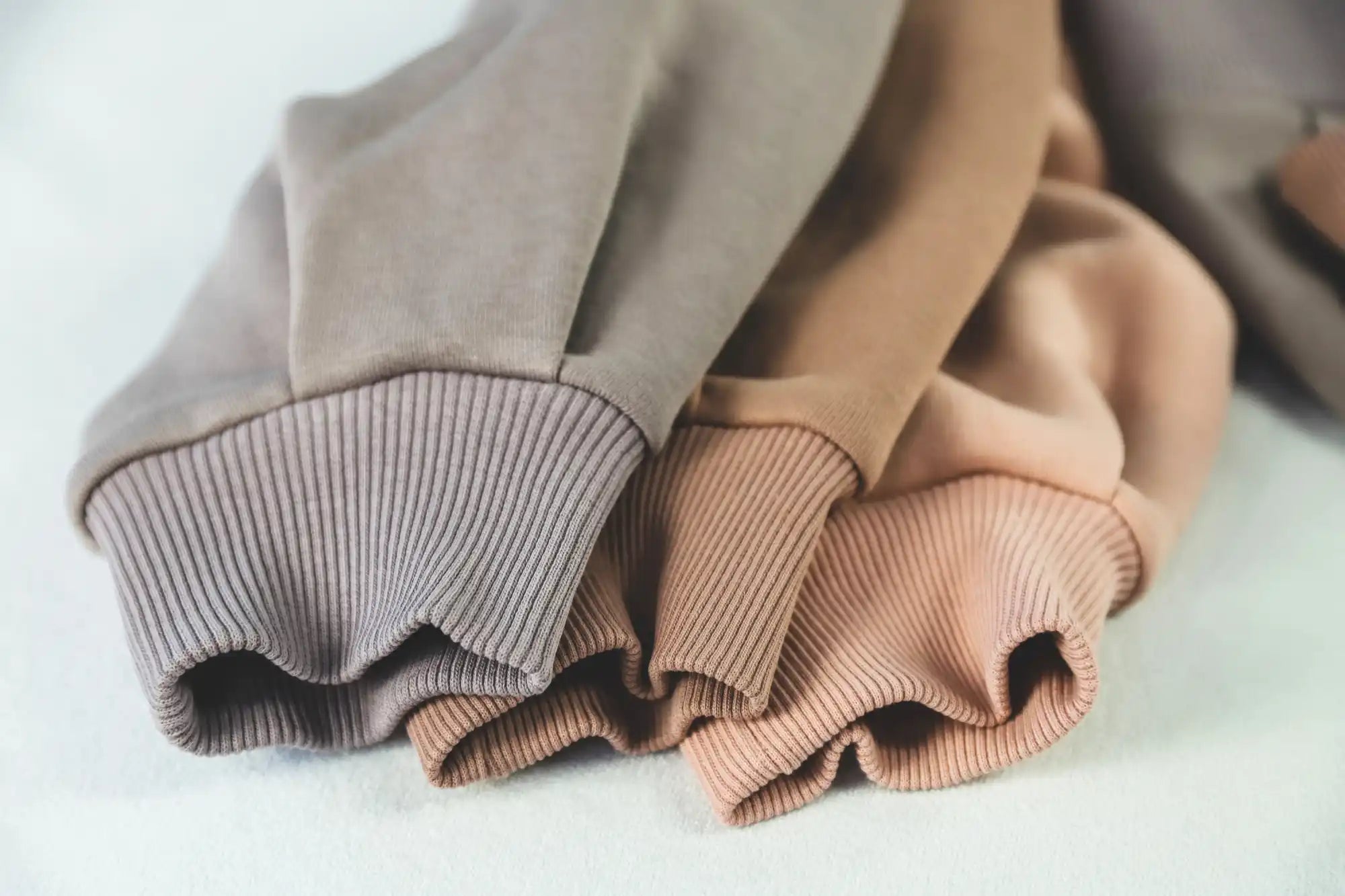
Materials & Fabrics for Clothing Production
Explore cotton, French terry, jersey, fleece, and sustainable blends used in premium apparel manufacturing.
Explore Premium Apparel Fabrics Guide
Printing Techniques for Apparel Production
Screen printing, embroidery, puff prints, and digital methods for custom clothing manufacturing.
Explore Custom Apparel Printing Techniques
Dyeing Techniques in Clothing Manufacturing
Garment dye, pigment, acid wash, and stone wash finishes that create unique apparel designs.
Compare Apparel Finishing Techniques
Popular Clothing Items for Custom Apparel
Hoodies, joggers, t-shirts, leggings, and biker shorts — essentials for every apparel collection.
Explore Popular Custom Clothing Items
Trends & Designs in Modern Apparel
Oversized fits, streetwear influences, and activewear styles driving custom clothing production.
Explore Trends & Designs for Apparel Development
Sustainable & Ethical Clothing Production
OEKO-TEX® certified fabrics, organic cotton, and ethical apparel manufacturing in Portugal.
Understand Sustainable & Ethical Clothing Production
Essentials for Custom Clothing Production
Custom labels, packaging, and trims that elevate your apparel brand in production.
Explore Essentials for Custom Clothing Production
Resources for Custom Clothing Production
Startup guides, logistics support, and scaling strategies for apparel brands and wholesale clients.
Explore Resources for Custom Clothing Production
Clothing Manufacturing Glossary
Explore a complete glossary of clothing and garment manufacturing terms
The Complete Clothing Manufacturing Glossary
The Best Clothing Manufacturers
Explore global clothing manufacturers by country
Explore The Best Clothing Manufacturers
The Latest Clothing Industry Updates in 2025
Discover the latest news about important topics in the clothing industry in 2025,
Stay On Top Of Clothing Industry Updates
Worldwide Best Manufacturers of Clothes in 2026
Top clothing manufacturers worldwide organized by product type
Find The Worldwide Best Manufacturers of Clothes