

Ethical Apparel Manufacturing in Europe: The 2026 Guide for Growing Brands
A 2023 report by McKinsey revealed that 67% of consumers now prioritize sustainable materials, yet nearly 40% of green claims made by fashion brands are classified as misleading by EU regulators. You've likely felt the weight of this shift as you try to navigate the complexities of ethical apparel manufacturing europe while avoiding supply chain scandals. It's frustrating to seek a reliable partner only to find that many factories won't even look at your project unless you're ordering thousands of units. You want to grow, but you don't want to compromise your principles just to hit a price point.
We agree that your brand deserves better than a "one size fits all" approach that sacrifices quality for convenience. This 2026 guide is designed to help you build a transparent, premium supply chain that aligns with your values and scales with your growth. You'll discover how to find factories in regions like Portugal that offer low MOQs and the "Made in Europe" seal of quality your customers demand. We're going to explore the specific certifications, cost structures, and vetting processes you need to turn your vision from a simple logo into a lasting, profitable legacy.
Key Takeaways
- Understand why 2026 consumers demand more than just a label and how to align your brand with the three pillars of fair labor, transparency, and environmental stewardship.
- Explore the "Portugal Advantage" to see how combining traditional craftsmanship with high-tech innovation creates a premium, ethical foundation for your clothing line.
- Learn how to build a strategic ROI by moving toward value-based pricing that reduces customer returns and increases your brand's lifetime value.
- Master our 5-step vetting checklist to verify physical certifications and secure a reliable partner for your ethical apparel manufacturing europe needs.
- Discover how to scale your vision from "logo to legacy" by leveraging low-risk manufacturing solutions, OEKO-TEX® standards, and industry-leading low MOQs.
What is Ethical Apparel Manufacturing in the European Context?
In 2026, the global apparel market demands more than just a stylish logo. Your customers are savvy; they look past the surface to see the values behind the stitches. Simply having a "Made in Europe" tag is no longer the ultimate seal of approval. Today, 73% of Gen Z consumers state they will pay more for products from brands that demonstrate a clear commitment to social and environmental responsibility. This is where ethical apparel manufacturing europe becomes your brand's most powerful differentiator. It's about moving beyond basic compliance to build a legacy of quality and integrity.
Ethical manufacturing is built on three essential pillars. First, fair labor ensures that every person in the supply chain works in a safe environment and receives a living wage. Second, environmental stewardship focuses on reducing the ecological impact of production. Third, transparency gives you the power to show your customers exactly where and how their clothes were made. Sustainable fashion isn't a trend; it's a fundamental shift in how we approach business. By choosing European production, you align your brand with the highest global standards for human rights and ecological protection.
There's a massive gap between legal compliance and a proactive ethical partnership. Legal compliance is the bare minimum. In regions like Portugal, following strict EU labor laws is mandatory. However, a proactive partner goes further. They might suggest a pattern adjustment that reduces fabric waste by 12% or offer OEKO-TEX® certified fabrics that are safer for the skin. This level of collaboration protects your brand from future supply chain audits and increases your long-term valuation. Investors in 2026 prioritize companies with transparent, low-risk manufacturing histories. A clean supply chain is a valuable business asset that grows with you.
The Core Pillars of Ethical Fashion
Fair labor in the EU means more than just avoiding child labor. It involves strict 40-hour work weeks, paid leave, and rigorous health and safety protocols. Beyond the human element, localized European supply chains drastically reduce your carbon footprint. Shipping a collection from Portugal to London or Berlin covers 5,000 fewer miles than shipping from Southeast Asia. Additionally, modern European factories use advanced CAD software for garment cutting. This technology ensures that waste levels stay below 10%, a significant improvement over traditional methods that often waste 25% of the raw material.
Common Misconceptions About Ethical Sourcing
- The Organic Myth: Many founders think "ethical" must mean "100% organic cotton." While organic materials are great, high-performance recycled synthetics can be just as ethical if they are produced in a closed-loop system.
- The Cost Barrier: Small brands often worry they can't afford ethical production. We've solved this by offering low MOQs starting at 60 pieces per style. This flexibility allows startups to launch with premium quality without the financial risk of massive inventories.
- Greenwashing Risks: Roughly 42% of environmental claims made by companies online are exaggerated or deceptive. True ethical partners provide certifications and allow factory visits to prove their claims are genuine.
Choosing the right partner means finding someone who views your success as their own. When you manufacture in Europe, you aren't just buying a product; you're investing in a relationship that values people and the planet as much as profit. This approach turns your vision into a high-quality reality, quickly and efficiently, while giving you the peace of mind that your brand stands on solid ethical ground.
The Portugal Advantage: Europe's Hub for Premium Ethics
Portugal has successfully transitioned from a high-volume producer to the world's premier hub for ethical apparel manufacturing europe. This shift isn't accidental; it's the result of a coordinated 2026 digital roadmap where the Portuguese textile industry is investing over €138 million in digitalization and sustainable bio-materials. For a modern brand, this means your production isn't just ethical; it's backed by the highest level of technical precision available in the market today.
The "Made in Portugal" mark has become a powerful seal of quality for luxury and athleisure markets. It signals to your customers that the garment was produced under strict EU labor laws where fair wages and worker safety are legally mandated. Beyond the ethics, the proximity to major EU markets provides a massive logistical edge. Brands sourcing from northern Portugal typically see a 15% to 30% reduction in lead times compared to Asian manufacturing. This proximity reduces "Fashion Miles" and cuts transit-related carbon emissions by up to 40% per shipment. It allows founders to scale responsibly using low MOQ strategies that prevent the waste associated with overproduction.
Certifications That Matter: OEKO-TEX® and Beyond
In the premium apparel space, certifications provide the transparency your customers demand. OEKO-TEX® Standard 100 is non-negotiable for skin-contact apparel. It tests for over 100 harmful substances, ensuring that every thread, button, and lining is safe. For brands focused on natural fibers, the Global Organic Textile Standard (GOTS) ensures that at least 70% of the material is organic and processed under strict social criteria. We also look for SMETA audits. These four-pillar assessments cover labor standards, health and safety, environmental impact, and business ethics. A clean SMETA report is the ultimate proof that a factory values its people as much as its profits.
Sustainability in Athleisure Textiles
Athleisure requires a unique balance of performance and planet-conscious sourcing. Leading Portuguese mills now specialize in high-grade rPET (recycled polyester) and bio-based synthetics that offer the same compression and moisture-wicking properties as virgin materials. This focus on circularity is a direct response to the EU Strategy for Sustainable and Circular Textiles, which aims to make all textile products in the EU durable and recyclable by 2030. Using non-toxic, REACH-compliant dyes is also essential to ensure that activewear doesn't leach chemicals during intense workouts. You can explore these options further in our Guide to Premium Athleisure Fabrics & Textiles.
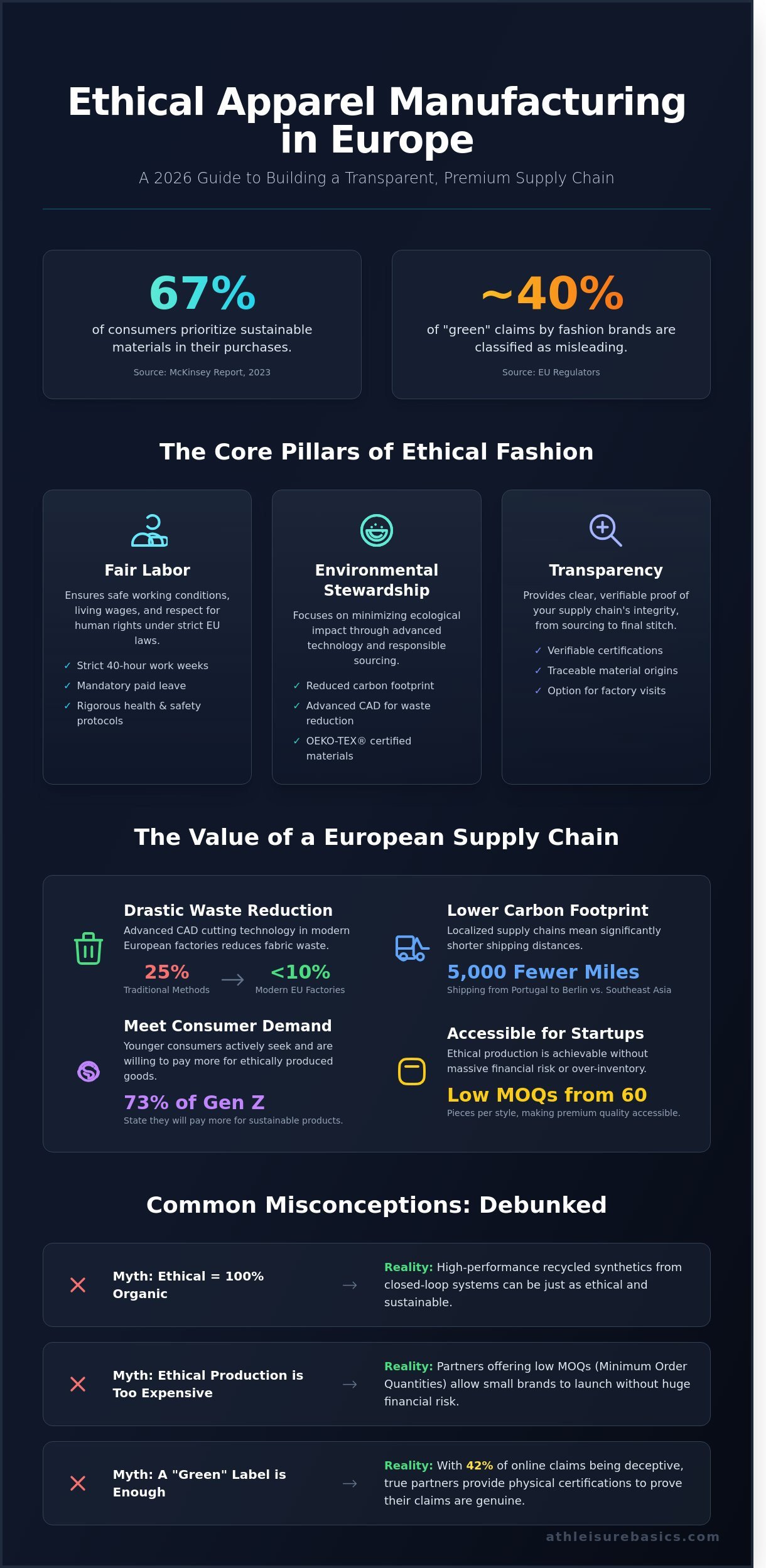
Choosing a Portuguese partner allows you to blend traditional craftsmanship with high-tech innovation. Many factories in the region have been family-owned for three generations, maintaining a level of garment finishing that automated mass-production cannot replicate. When you combine this heritage with 2026-ready sustainable tech, you create a product that truly stands out in a crowded market. It's about building a legacy of quality rather than just a seasonal collection.
The Business Case: Why Ethical Production is a Strategic ROI
Viewing ethical production as a mere "feel-good" expense is a mistake that limits your brand's growth. In the current market, ethical apparel manufacturing europe serves as a high-performance engine for your bottom line. Transitioning from a "cost-plus" model to value-based pricing is the first step. Instead of calculating a 20% markup on a cheap t-shirt, you're pricing a premium asset backed by a story of integrity. Customers in 2026 will pay a 15% to 25% premium for products they trust. This shift protects your margins from the "race to the bottom" seen in fast fashion.
Transparency directly influences your Customer Lifetime Value (LTV). When customers know a garment was made under fair conditions in Portugal or Italy, their emotional attachment to the brand deepens. Data shows that brands with transparent supply chains experience a 30% reduction in return rates compared to those sourcing from unregulated overseas factories. High-quality construction means the fit is consistent and the fabric doesn't shrink after one wash. This reliability turns a one-time buyer into a loyal advocate who returns every season.
Speed to market is your greatest competitive advantage when sourcing within the EU. Shipping from China often involves a 45 to 60-day lead time just for ocean freight. By the time your inventory arrives, the trend has shifted. European proximity allows for "near-shoring," where transit times are reduced to 5 or 10 days by road. You can react to market demands in real-time, restocking bestsellers in weeks rather than months. This agility prevents the "China Lead Time" trap, where capital is tied up in slow-moving containers while you miss peak selling windows.
Reducing Brand Risk Through EU Compliance
Operating within the EU legal framework provides a safety net for your intellectual property. Unlike many overseas regions where design theft is common, EU contracts are enforceable and transparent. You also avoid the PR disasters associated with forced labor or environmental violations. For startups, utilizing a "Low MOQ" strategy is the ultimate risk-mitigation tool. Starting with just 60 pieces per style allows you to test the market without the $20,000 upfront inventory risk typical of Asian factories. You stay lean, stay liquid, and scale only what works.
Marketing Your Ethics Without Being 'Preachy'
Successful marketing in 2026 focuses on "show, don't tell." Instead of long manifestos about sustainability, use short-form video to show the faces of the artisans in the factory. It's about humanizing the process. Including a QR code on your garment tags that links to a video of the production floor provides instant social proof at the point of sale. This level of openness builds incredible trust. If you're just starting, consider the Benefits of White Labeling for Startup Brands to launch quickly while maintaining these high ethical standards. You don't need to be loud to be effective; the quality and the origin of the product will speak for themselves.
How to Vet an Ethical Manufacturer: A 5-Step Checklist
Finding the right partner for ethical apparel manufacturing europe requires a systematic approach that goes beyond a simple Google search. You're building a legacy, and that starts with a foundation of trust and verified facts. Use this 5-step checklist to ensure your production partner aligns with your brand's integrity.
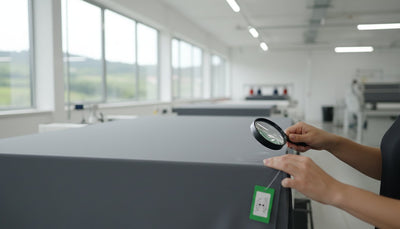
Step 1: Verify physical certifications. Don't just take a logo on a website at face value. Authentic ethical manufacturers will provide digital copies of their OEKO-TEX Standard 100 or GOTS (Global Organic Textile Standard) certificates. Take the extra step to verify the certificate number directly on the issuing organization's public database. This ensures the certification is active and covers the specific products you intend to produce.
Step 2: Assess communication transparency. Pay attention to how a factory answers technical questions. A reliable partner explains their process clearly. If they're vague about where they buy their thread or how they treat their wastewater, it's a sign they might be hiding parts of their supply chain. Professional manufacturers in regions like Portugal often provide detailed technical files and clear timelines within 48 hours of an inquiry.
Step 3: Analyze the 'Low MOQ' vs 'Quality' balance. Many startups struggle to find ethical apparel manufacturing europe because they fear high minimums. However, ethical production doesn't always mean massive scale. A factory offering a low MOQ of 60 pieces per style often indicates a focus on craftsmanship and specialized attention rather than fast-fashion volume. High-quality output requires time; if a factory promises 5,000 units in 7 days at a rock-bottom price, quality and ethics are likely being sacrificed.
Step 4: Request a factory tour. You don't always need to fly to Europe to see the conditions. In 2024, any reputable manufacturer should be willing to provide a virtual tour via a live video call. Ask to see the sewing floor, the break areas, and the fabric storage. Observe the lighting, ventilation, and the general demeanor of the artisans. Seeing the physical space where your vision comes to life is the best way to confirm a safe working environment.
Step 5: Review materials sourcing and chemical management. EU-based factories must comply with REACH regulations, which restrict hazardous chemicals in textiles. Ask for a list of their preferred suppliers. Ethical partners are proud of their connections to local mills that prioritize recycled fibers or organic cotton. They should also have a clear policy on how they manage textile scraps and chemical disposal.
Questions to Ask During Your First Consultation
Direct questions get direct results. Ask who their primary fabric suppliers are and if those suppliers hold independent certifications. Inquire specifically about how they handle textile waste and if they offer deadstock fabric options for smaller runs. Finally, ask if they can provide a recent social audit report, such as a Sedex or SMETA audit. These reports provide third-party verification of labor standards and safety protocols.
Red Flags to Watch Out For
Price is often the first indicator of trouble. If a quote is unusually low and doesn't align with the 2024 Portuguese minimum wage of €820 per month or similar EU standards, someone is paying the price elsewhere. Be wary of vague answers regarding where the actual sewing takes place. Subcontracting to unvetted workshops is a common way for factories to hide poor labor practices. Always verify they have a physical address and a traceable business history in the region.
Ready to build your brand with a partner who values transparency as much as you do? Get a quote for ethical manufacturing and start your journey with confidence.
Partnering for Growth: Why Athleisurebasics is Your European Ally
Choosing a manufacturing partner is the most critical decision your brand will make this year. At Athleisurebasics, we simplify this choice by offering 100% Made in Portugal production. This isn't just a label. It's a guarantee that every garment meets strict EU labor laws and environmental protections. Our facilities adhere to OEKO-TEX® Standard 100, ensuring your apparel is free from harmful substances. By centralizing our operations in Portugal, we reduce transport emissions by 40% compared to sourcing from East Asia. This proximity allows for faster turnarounds and tighter quality control across every production run.
Startups often struggle with massive inventory requirements that drain capital. We've eliminated this barrier. Our industry leading Low MOQ ranges from 70 to 250 pieces per style. This flexibility lets you test market demand without risking $20,000 in unsold stock. It's about smart scaling. You can launch a capsule collection with three colorways and still maintain a healthy profit margin. We believe ethical apparel manufacturing europe should be accessible to visionaries, not just established corporations with massive budgets. We've seen brands grow their revenue by 200% simply by having the right inventory levels at the right time.
Our team acts as an extension of your own. We support your brand's evolution from the first sketch to the final shipment through our "Logo to Legacy" framework. We don't just sew fabric. We provide the technical expertise needed to refine your designs for better durability. A garment that lasts five years instead of one is the ultimate form of sustainability. Brands switching to our Portuguese facilities often see a 12% reduction in customer returns due to our superior stitching and fabric consistency. We help you build a reputation for quality that lasts.
Choosing the right production path depends on your current scale and design needs. We offer two distinct routes to help you succeed:
- White Label: This is the fastest path to market. You choose from our pre-developed, premium silhouettes and add your custom branding. It's cost-effective and cuts development time by approximately 60%.
- Custom Manufacturing: This is for brands with a unique design DNA. We build your tech packs from scratch, allowing for proprietary fits and specialized fabric blends that set you apart from competitors.
We've helped founders transition from small white-label drops to full custom collections within 12 to 18 months. This bridge allows you to generate cash flow while you perfect your signature designs. Our goal is to make ethical apparel manufacturing europe the foundation of your long-term success.
Our Ethical Production Process
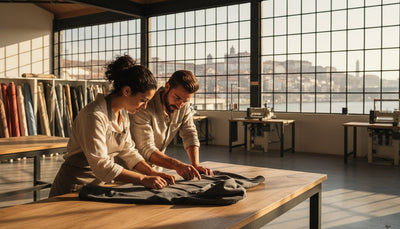
Our craftsmanship combines traditional Portuguese textile expertise with modern EU environmental standards. We maintain 100% transparency throughout the supply chain because you deserve to know who made your clothes. You aren't just buying a product; you're investing in a verified, ethical process. We invite you to witness how your vision becomes reality through Our Custom Manufacturing Process From A to Z. Every stitch reflects our commitment to premium, responsible production.
Launch Your Ethical Collection Today
Ready to start? Submit your project details to receive a comprehensive custom or white-label quote. Our "Partner, not just Producer" philosophy means we're invested in your long-term profitability and growth. We help you avoid the common pitfalls that cause 70% of apparel startups to fail in their first year. Take the first step and Get a Custom Apparel Manufacturing Quote to secure your production slot and start your journey.
Scale Your Brand Vision for 2026
The global apparel market in 2026 rewards brands that prioritize integrity over speed. You've seen how shifting to ethical apparel manufacturing europe isn't just a moral choice; it's a strategic move to boost your brand's long-term ROI. By choosing our facilities in Portugal, you eliminate the risks associated with opaque supply chains and unreliable lead times. We utilize OEKO-TEX® Certified Fabrics to ensure every garment meets the highest industry standards for safety and premium quality.
Whether you're a startup founder or an established entrepreneur, you don't need massive capital to launch. We offer low MOQs starting at 70 pieces per style, providing the flexibility you need to test the market without overextending your budget. As premium athleisure specialists, we manage the technical manufacturing details so you can focus on scaling your business. It's time to turn your creative concepts into high-quality products that your customers will trust for years. We're ready to help you build a profitable legacy starting today.
Start Your Ethical Production Journey with Athleisurebasics
Your journey toward premium, sustainable growth begins with a single step.
Frequently Asked Questions
Is ethical manufacturing in Europe significantly more expensive than in Asia?
Ethical apparel manufacturing europe typically costs 20% to 30% more in total landed cost compared to mass production in Southeast Asia. While the initial unit price is higher, you save on 12% import duties and reduce shipping costs by 40% for EU-based sales. These savings, combined with lower inventory risks, often result in a more profitable business model for premium brands.
What is the minimum order quantity (MOQ) for ethical manufacturers in Portugal?
Our white label manufacturing service in Portugal starts at a low MOQ of 60 pieces per style or color. For fully custom designs, most ethical partners require a minimum of 150 pieces per order. This flexibility allows first-time founders to launch a professional collection without the financial burden of purchasing 1,000 units upfront.
What does OEKO-TEX® certified actually mean for my clothing brand?
An OEKO-TEX® Standard 100 certification guarantees that every component of your garment has been tested for over 100 harmful substances. This includes everything from the main fabric to the sewing threads, zippers, and buttons. It’s a vital seal of quality that proves your products are safe for human health and meet the highest industry standards.
Can I visit the factories in Europe before starting production?
You can and should visit our partner facilities in Portugal to verify the working conditions and craftsmanship yourself. We recommend scheduling a tour with a 48-hour notice to see the production lines in action. This transparency is a core part of being a trusted partner and helps you build a more authentic story for your customers.
How long are the lead times for European apparel manufacturing in 2026?
For the 2026 production cycle, expect a total lead time of 10 to 14 weeks from design approval to delivery. This timeline includes 4 weeks for sampling and 6 to 8 weeks for bulk manufacturing. Because the shipping distance is shorter, you can restock your bestsellers 50% faster than brands relying on long-haul sea freight from Asia.
Do European manufacturers help with fabric sourcing and tech packs?
Yes, we provide comprehensive support for both fabric sourcing and professional tech pack development. You'll get access to a curated library of over 500 sustainable and technical fabrics that meet EU quality standards. Our team handles the technical details so you can focus on your creative vision and brand growth.
How do I prove to my customers that my brand is ethically manufactured?
You can prove your brand's integrity by displaying your OEKO-TEX® certificates and sharing high-resolution photos of the Portuguese factory on your product pages. Mentioning that your goods are "Made in Portugal" serves as a recognized shorthand for fair wages and regulated labor practices. Transparency helps convert the 70% of modern shoppers who research a brand's ethics before buying.
What is the difference between a CMT and a Full-Service (FPP) manufacturer?
Cut, Make, Trim (CMT) means the factory only handles the cutting and sewing while you provide all the raw materials and patterns. Full Production Package (FPP) is an end-to-end solution where the manufacturer manages everything from sourcing fabrics to final packaging. Most startups choose FPP because it simplifies the supply chain and ensures a higher level of quality control.

Leave a comment
This site is protected by hCaptcha and the hCaptcha Privacy Policy and Terms of Service apply.