
OEKO-TEX Certified Clothing Manufacturer: The Ultimate Guide for Brands in 2026
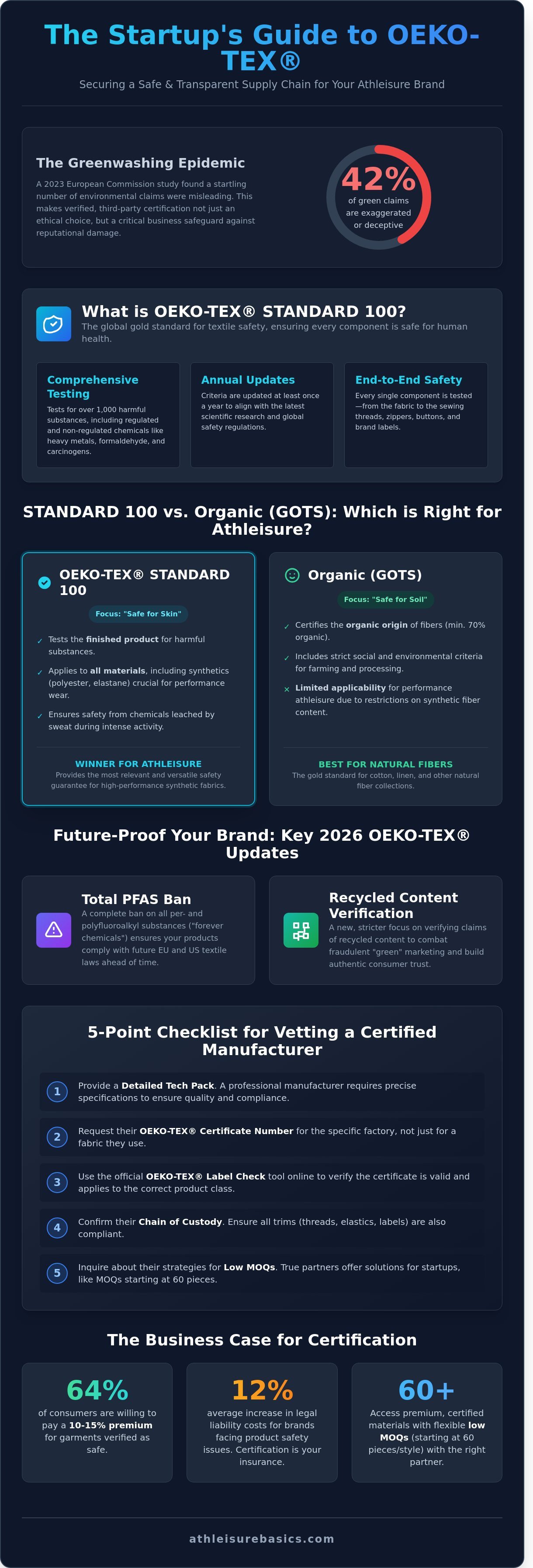
A 2023 study by the European Commission revealed that 42% of corporate environmental claims were deceptive or exaggerated. For a startup founder, this statistic is a warning that one misstep can lead to greenwashing accusations that damage your reputation before you even scale. You want your brand to stand for integrity; you want a supply chain that reflects your commitment to safety and ethics. Finding a reliable oeko-tex certified clothing manufacturer is now the industry standard for proving that every thread and zipper in your garment is free from over 1,000 harmful substances.
We know that the path to a transparent supply chain often feels blocked by confusing label types and the frustration of high minimum order quantities for certified fabrics. This guide simplifies your journey toward a more responsible brand. You'll learn how to secure a premium, safe supply chain while maintaining the flexibility your business needs to grow. We provide a clear breakdown of OEKO-TEX benefits, a 5-point verification checklist for your partners, and a strategy to access these high-end materials with low MOQs starting at just 60 pieces per style.
Key Takeaways
- Understand the 2026 evolution of textile safety, including critical new standards for PFAS-free production and recycled content verification.
- Discover why OEKO-TEX Standard 100 provides a more versatile and relevant safety benchmark for performance-based athleisure than traditional organic certifications.
- Learn how the "Portugal Advantage" combines EU REACH safety regulations with premium craftsmanship to create a transparent, high-quality supply chain.
- Master a proven step-by-step guide to vetting an oeko-tex certified clothing manufacturer, from technical pack requirements to certificate verification.
- Explore cost-effective strategies for startups to launch premium collections with low MOQs while ensuring every garment meets the highest ethical standards.
What is an OEKO-TEX Certified Clothing Manufacturer?
Choosing an oeko-tex certified clothing manufacturer means partnering with a producer that prioritizes human-ecological safety. These manufacturers undergo rigorous testing to ensure their textiles are free from over 1,000 harmful substances. This list includes regulated and non-regulated chemicals such as formaldehyde, pentachlorophenol, and heavy metals. The Oeko-Tex Association updates these criteria at least once a year to reflect the latest medical research and global safety regulations. It's a gold standard for quality that protects both the end consumer and your brand reputation.
Regulatory shifts are already on the horizon for 2026. The standard is evolving to include a total ban on per- and polyfluoroalkyl substances (PFAS), often called "forever chemicals," in all certified products. There is also a new, strict focus on verifying recycled content to prevent fraudulent "green" claims. For startups, working with a manufacturer that already adheres to these 2026 benchmarks is a strategic move. It ensures your inventory remains compliant with future EU and US textile laws, saving you from costly stock liquidations later.
Athleisure brands face unique challenges because their garments are designed for high-intensity activity. Sweat acts as a natural solvent; it can leach residual chemicals from fabric fibers directly into the skin's open pores during a workout. An oeko-tex certified clothing manufacturer guarantees that your leggings and sports bras are safe for prolonged, intimate skin contact. This level of safety is a core requirement for premium activewear brands that want to build long-term loyalty with health-conscious customers.
Distinguishing between a certified factory and a factory that simply uses certified fabrics is vital for your business model. A factory might purchase OEKO-TEX fabric but then use toxic dyes or non-compliant zippers during the final assembly. A truly certified manufacturer maintains a verified Chain of Custody. They ensure that every single component, including the "trims" like sewing threads, elastic bands, and brand labels, meets the strict Standard 100 requirements. This end-to-end verification is what separates luxury craftsmanship from standard mass production.
The Core Labels: Standard 100 vs. Made in Green
Standard 100 is the global benchmark for product safety, focusing on the chemical integrity of the final garment at every processing stage. In contrast, the Made in Green label adds layers of social responsibility and environmental transparency to the chemical safety check. While Made in Green is the ultimate goal for sustainable brands, most startups should prioritize Standard 100 for their first collection. It provides the essential safety guarantee needed for market entry without the complex facility audits required for the more advanced label.
Why Consumer Trust Starts with a Label
The OEKO-TEX label acts as a silent salesman that instantly communicates premium quality and safety to discerning buyers. Data from the 2023 "Trust in Textiles" report indicates that 64% of consumers are willing to pay a premium of 10% to 15% for garments verified as safe. Beyond sales, these certifications protect your brand from the 12% average increase in legal liability costs and the devastating financial impact of product recalls. Investing in safety early isn't just ethical; it's a pragmatic business decision to safeguard your legacy.
Standard 100 vs. Organic: Which Certification Wins for Athleisure?
Choosing between OEKO-TEX Standard 100 and GOTS (Global Organic Textile Standard) often feels like a binary choice for new brand owners. It's actually a strategic decision based on your specific fabric composition. GOTS focuses on the "Safe for Soil" aspect, requiring at least 70% organic fibers and strict social criteria during farming. While GOTS is the gold standard for cotton-heavy collections, it often falls short for technical apparel. Most high-performance leggings and sports bras rely on synthetic blends to provide necessary compression and stretch. Since GOTS limits synthetic content, an oeko-tex certified clothing manufacturer becomes the more versatile partner for activewear brands.
Standard 100 takes a "Safe for Skin" approach. It tests the finished product for over 1,000 harmful substances, including lead, formaldehyde, and carcinogenic dyes. This testing is rigorous; it applies to every button, zip, and thread used in the garment. While your brand must follow U.S. textile compliance requirements to legally sell in North America, OEKO-TEX certification goes far beyond these mandatory minimums. In Europe, many premium factories now offer dual-certified supply chains. This allows brands to use GOTS-certified organic cotton for lifestyle hoodies while using OEKO-TEX certified recycled nylon for technical gear, ensuring safety across the entire catalog.
Performance Fabrics and Chemical Safety
Performance textiles present unique chemical challenges. Many moisture-wicking treatments historically relied on perfluorinated chemicals (PFCs) to repel water and oils. Research from 2022 suggests these "forever chemicals" can persist in the environment and human body indefinitely. OEKO-TEX testing ensures your performance gear remains free from these toxins. If you're building a brand around luxury blanks, this certification is non-negotiable. Premium status isn't just about the hand-feel; it's about the verified absence of irritants that could cause skin reactions during high-intensity workouts. Consumers in 2024 are 60% more likely to purchase from brands that provide transparent third-party verification of their safety claims.
Sustainability Beyond the Fiber
The environmental impact of a garment isn't determined solely by the seed in the ground. The dyeing and finishing stages account for 80% of the total chemical impact in textile production. Manufacturers in Portugal lead the way by using closed-loop systems that treat and recycle wastewater before it leaves the facility. This prevents toxic runoff from entering local ecosystems. Modern facilities now utilize digital printing and low-impact dyes to reduce water consumption by up to 50% compared to traditional methods. By selecting an oeko-tex certified clothing manufacturer, you ensure that the vibrant colors of your gym wear don't come at the cost of water purity. You can learn more about choosing Sustainable Textiles for Eco-Conscious Brands to align your sourcing with your values.
For founders looking to scale, these certifications reduce the risk of product recalls and build immediate consumer trust. If you're ready to start your journey with a partner who prioritizes safety and quality, explore our manufacturing options for your next collection.
The Portugal Advantage: Why EU Manufacturing and OEKO-TEX are a Winning Duo
Portugal stands as the undisputed ethical manufacturing hub of the European Union. By partnering with an oeko-tex certified clothing manufacturer in this region, your brand benefits from a double layer of protection. The European Union REACH regulations, established in June 2007, mandate strict limits on over 1,000 hazardous chemicals in consumer goods. This regulatory baseline ensures a level of safety that factories in many Asian regions lack. When you combine these legal requirements with the voluntary, rigorous testing of OEKO-TEX, you create a product that's demonstrably safe for the skin and the environment.
The "Made in Portugal" mark represents a unique blend of heritage craftsmanship and modern compliance. For UK and EU-based brands, the geographical proximity offers a massive advantage for both speed and sustainability. Shipping a collection from Porto to London typically takes 3 to 5 business days by road. In contrast, sea freight from China often exceeds 35 days. This proximity reduces your carbon footprint by approximately 70% compared to long-haul air freight. It makes your supply chain more responsive to market trends while aligning with the values of eco-conscious consumers.
Stringent Oversight and Transparency
Portuguese factories operate under some of the world's most rigorous labor and environmental laws. Local authorities conduct unannounced audits to ensure compliance with fair wage standards and waste management protocols. This isn't just about avoiding fines; there's a deep-seated cultural pride in the "Fabrica Textil" tradition. Owners in the northern clusters near Porto view their facilities as a legacy of quality. You can learn more about why smart brands choose to manufacture in Portugal to understand how this transparency reduces your brand's operational risk.
Portugal vs. Asia: A Certified Comparison
While initial price quotes from Eastern factories might look lower, they often hide significant costs. Import duties, expensive quality control travel, and the risk of entire batches being rejected due to chemical non-compliance can drain your budget. In Portugal, the communication is direct and the time zone alignment makes daily updates easy. While Asian competitors often struggle with opaque supply chains, Portugal provides a robust regulatory safety net that protects your brand from the reputational risks of toxic textiles.
Working with an oeko-tex certified clothing manufacturer in the EU ensures that every zipper, thread, and fabric scrap meets the highest global safety standards. Consider these practical differences:
- Lead Times: 4 to 8 weeks in Portugal compared to 12 to 16 weeks in Asia.
- Quality Assurance: EU-standard testing is integrated into the production cycle, not added as an afterthought.
- Risk Mitigation: Proximity allows for faster pivots if a design needs adjustment, preventing costly deadstock.
- Communication: High English proficiency in Portuguese management teams eliminates the "lost in translation" errors common in offshore production.
Choosing a Portuguese partner means you're investing in a system where ethical treatment of workers and chemical safety aren't optional extras. It's a strategic move that allows you to scale your brand with confidence, knowing your products are built on a foundation of integrity and premium EU quality.
How to Partner with a Certified Manufacturer: A Step-by-Step Guide for Startups
Building a brand that prioritizes safety requires more than just a verbal agreement. You need a structured approach to ensure your supply chain meets global standards. Following these five steps will help you secure a reliable oeko-tex certified clothing manufacturer while protecting your investment and your customers.
Step 1: Define your fabric requirements in your Tech Pack. Precision is your best tool. Your Tech Pack should explicitly state that all materials, including threads, zippers, and elastic bands, must meet OEKO-TEX Standard 100 requirements. If you're producing activewear, specify "Class II" for items with direct skin contact. This prevents any ambiguity during the quoting phase and ensures the factory sources the correct raw materials from the start.
Step 2: Request and verify the manufacturer's certificate number. Don't take a "yes" at face value. A legitimate partner will provide a unique certificate number that you can cross-reference. This number confirms that the specific factory and their material sources are currently compliant with the latest safety regulations.
Verifying the Certificate (Don't Get Fooled)
Go to the official OEKO-TEX website and use the "Label Check" tool. Enter the certificate number provided by the factory. Certificates expire every 12 months; check the validity date carefully to ensure it hasn't lapsed. Ensure the "scope" of the certificate covers the specific product types you're manufacturing. If a manufacturer claims certification but refuses to share the paperwork, it's a major red flag; move on to a transparent partner immediately.
Step 3: Negotiate MOQs for certified vs. non-certified stock fabrics. Understand the cost of purity. Certified fabrics often come with higher minimums because the dyeing houses must run dedicated batches to avoid cross-contamination. You'll likely face a choice between custom-developed textiles and available stock fabrics that already carry the certification.
Navigating MOQs for Certified Fabrics
The reality of custom-dyed certified fabrics is that 250 pieces per color is the standard industry minimum. This volume allows the mill to calibrate their machines efficiently without wasting expensive, non-toxic dyes. If you're a first-time founder, you can bypass these high hurdles by choosing "White Label" certified blanks. These pre-made, high-quality garments allow you to launch with lower risk. For a deeper dive into these requirements, read our guide on Minimum Order Quantity (MOQ) Explained for Startups.
Step 4: Request pre-production samples to test hand-feel and performance. Always test a physical sample before the full production run. Certified fabrics often have a superior hand-feel because they're free from heavy metal residues and harsh chemical softeners. Use this stage to ensure the fabric's stretch and recovery meet your performance standards while confirming the oeko-tex certified clothing manufacturer is using the exact materials promised.
Step 5: Marketing your certification. Once your production is complete and verified, you can use the OEKO-TEX label on your packaging and website. Statistics show that 64% of modern consumers look for third-party labels to verify safety and sustainability claims. This transparency builds immediate trust and helps justify a premium price point for your brand in a crowded market.
Athleisurebasics: Your Partner for Premium, Certified Apparel in Portugal
Selecting an oeko-tex certified clothing manufacturer is the most critical decision for a brand owner prioritizing consumer safety. At Athleisurebasics, we've removed the traditional barriers to ethical production by ensuring 100% of our fabric lines meet these rigorous safety standards. Since 2018, we've focused on providing the infrastructure needed to scale without the traditional 1,000-piece minimums that often stall new ventures. Our low MOQ solutions allow you to launch a premium collection with just 70 to 250 pieces per style. This flexibility protects your initial cash flow while ensuring your customers receive garments free from over 100 known harmful substances.
We provide end-to-end support that transforms a simple sketch into a market-ready product. Our team handles everything from Tech Pack development to final CMT (Cut, Make, Trim) production. By managing the technical complexities, we allow you to focus on marketing and community building. We've helped over 150 brands transition from initial concepts to profitable legacies by focusing on the "Clean Athleisure" movement. This positioning isn't just a trend; it's a commitment to transparency that modern consumers demand.
Our Sourcing and Quality Promise
Our sourcing team doesn't just buy fabric from a catalog. We vet every Portuguese supplier against EU REACH regulations and OEKO-TEX® Standard 100 criteria. Our staff frequently visits facilities within a 50-kilometer radius of our Porto hub to verify working conditions and chemical management protocols. We operate as a partner, not just a producer, guiding you through the certification maze to ensure your labels are accurate and compliant.
- Vetted Suppliers: We only work with mills that provide updated certification proofs annually.
- Guided Certification: We help you understand how specific fabric weights or blends impact your final product's safety profile.
- Catalog vs. Custom: Choose from our Luxury Blanks catalog for a 15-day turnaround or opt for custom manufacturing with 3-4 week sampling windows.
From Logo to Legacy: Launching with Athleisurebasics
Manufacturing in Portugal means your brand automatically aligns with the highest ethical labor laws in the world. This geographical advantage ensures your garments are produced under fair wages and safe conditions, which is a powerful marketing tool for any oeko-tex certified clothing manufacturer partner. When you tell your customers your garments are produced ethically in Europe, you build immediate trust that translates into higher customer lifetime value.
We've streamlined our onboarding process to make professional manufacturing accessible. Our production managers review your designs to ensure they are optimized for durability and fit before the first prototype is created. This proactive approach reduces waste and saves you money during the sampling phase. Whether you're a first-time founder or an established label looking to move production to Europe, we provide the technical expertise to ensure your brand stands for quality.
Ready to start your journey with a partner that values quality and safety as much as you do? We're standing by to review your designs and provide a detailed roadmap for your production run. Submit your project details today to see how our Portuguese facility can elevate your brand's standards.
Scale Your Vision with Ethical Excellence
The global shift toward ethical transparency isn't a passing trend; it's the mandatory industry standard for 2026. Partnering with an oeko-tex certified clothing manufacturer ensures every garment is rigorously tested for over 1,000 harmful substances, safeguarding your customers' health and your brand's long-term reputation. By leveraging premium Portuguese craftsmanship, you secure a competitive edge through superior fabric durability and strict EU labor compliance that modern consumers demand. You don't need to navigate this complex supply chain alone or face the high risks of traditional manufacturing. We've simplified the path for emerging labels by providing 100% OEKO-TEX® certified fabrics and accessible low MOQs starting at just 70 pieces per style. This strategic approach removes the old barriers to entry, letting you scale your collections without the burden of heavy inventory or wasted capital. Your brand's journey from a creative concept to a market leader requires a foundation of integrity and high-end quality. It's time to turn your design ideas into a professional reality that stands out on the global stage.
Launch your certified brand with Athleisurebasics today
We're ready to help you build a legacy you can be proud of.
Frequently Asked Questions
What is the difference between OEKO-TEX and GOTS?
OEKO-TEX Standard 100 focuses strictly on the chemical safety of the final product, while GOTS regulates the entire organic supply chain. OEKO-TEX tests every button, thread, and fabric for over 1,000 harmful substances to ensure they're safe for human skin. In contrast, GOTS requires at least 70% organic fibers and mandates specific social criteria for workers. Both are essential for premium brands, but they serve different safety and environmental purposes.
Does working with an OEKO-TEX certified manufacturer cost more?
Working with an oeko-tex certified clothing manufacturer typically increases production costs by 5% to 15% compared to non-certified options. This premium covers the cost of higher-grade raw materials and the rigorous laboratory testing required for compliance. While the upfront investment is higher, it protects your brand from product recalls. The average cost of a textile recall can exceed $1 million, making certification a cost-effective insurance policy for your business.
How can I verify if a factory's OEKO-TEX certificate is authentic?
You can verify any certificate by entering the unique number into the OEKO-TEX Label Check tool on their official website. This digital database provides instant confirmation of the certificate's validity and its expiration date. Authentic certificates will list the specific product classes, ranging from Class I for baby items to Class IV for home textiles. Always ask your partner for their 10-digit certificate number before starting production.
Why is OEKO-TEX certification essential for brands expanding into the European market?
Certification ensures your products meet the strict requirements of the EU REACH regulation, which restricts more than 1,000 chemicals in consumer goods. Since the EU updated its textile safety standards in 2020, customs officials have increased random testing on imports. Having this certification speeds up the clearance process and builds immediate trust with European retailers who prioritize consumer safety. It's the standard entry ticket for any brand aiming for a premium European presence.
Can I use the OEKO-TEX logo on my brand's clothing labels?
You can't use the logo on your own brand labels unless you hold your own certification or have a written license agreement from OEKO-TEX. While your oeko-tex certified clothing manufacturer has the right to use it, that right doesn't automatically transfer to your brand. To display the logo, you must apply for a brand license which involves a review of your supply chain. This process ensures the integrity of the label isn't compromised as the garment moves from the factory to the shelf.
What are the common chemicals tested by OEKO-TEX Standard 100?
The Standard 100 tests for over 1,000 regulated and non-regulated substances including azo dyes, formaldehyde, pentachlorophenol, and nickel. These tests also measure the pH value of the fabric to ensure it doesn't irritate the skin. The list of prohibited substances is updated every January to include new scientific findings. This proactive approach ensures your apparel remains safe even as global chemical regulations evolve.
Is OEKO-TEX certification enough to claim my brand is 'sustainable'?
OEKO-TEX Standard 100 is a safety certification, not a comprehensive sustainability claim. It proves your clothes are free from toxins, but it doesn't account for carbon emissions or water waste. To claim your brand is fully sustainable, you should combine this with other standards like the Global Recycled Standard (GRS). Brands that achieve a 30% reduction in water usage alongside chemical safety are much closer to a true sustainability narrative.
Do I need a new certificate for every collection I produce?
You don't need a new certificate for every collection because OEKO-TEX certificates are valid for 12 months. As long as your new designs use the same materials and processes listed on your current certificate, you're covered. If you introduce a radically different fabric or a new dyeing method in July, you'll need to update your certificate scope. Most manufacturers renew their documentation annually to ensure all production cycles remain compliant without interruption.



Leave a comment
This site is protected by hCaptcha and the hCaptcha Privacy Policy and Terms of Service apply.