
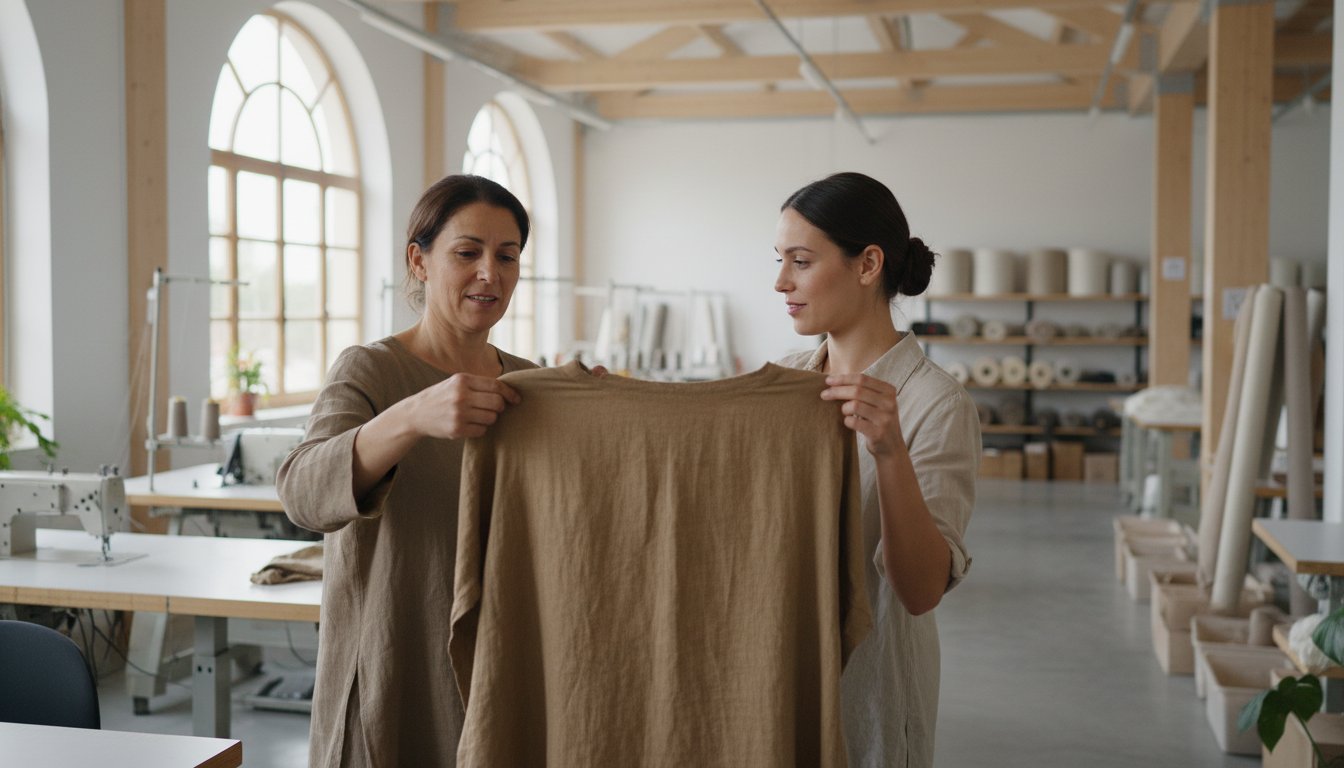
Ethical Clothing Manufacturing: A Founder's Guide for 2026
Launching a clothing brand with a conscience can feel like navigating a minefield. You're passionate about building a legacy, but the world of ethical clothing manufacturing is filled with vague promises and the constant fear of greenwashing. How do you find a partner you can trust when you’re worried that true ethical production is too complex or costly for a startup? It’s a challenge that can stall even the most brilliant vision before it begins.
This is where that uncertainty ends. Building your brand on a foundation of integrity isn't just possible-it's your most powerful asset for long-term growth and customer loyalty. In this founder's guide for 2026, we demystify the entire process. We will provide a clear, practical framework for evaluating partners and an actionable checklist to ensure they meet the highest standards of quality and ethics. You will gain the confidence to turn your vision into a premium brand without ever compromising your values.
Key Takeaways
- Discover how ethical practices are not a cost but a strategic investment that builds brand value and customer loyalty in a crowded market.
- Learn to evaluate partners beyond surface-level claims by focusing on the three core pillars of ethical production: people, planet, and transparency.
- Get an actionable framework for vetting suppliers, including the critical questions you must ask to secure a reliable and principled partner.
- Implementing ethical clothing manufacturing is achievable for startups; this guide shows you how to make impactful choices from day one.
What is Ethical Clothing Manufacturing? Beyond the Buzzword
In today's market, "ethical" is more than just a popular buzzword-it's a non-negotiable standard for building a brand with a lasting legacy. True ethical clothing manufacturing is a holistic commitment to responsible production that considers every aspect of a garment's journey. It’s a direct response to the growing demand from consumers who want to know that the products they buy are made with integrity, standing in stark contrast to the high-volume, low-transparency model of fast fashion.
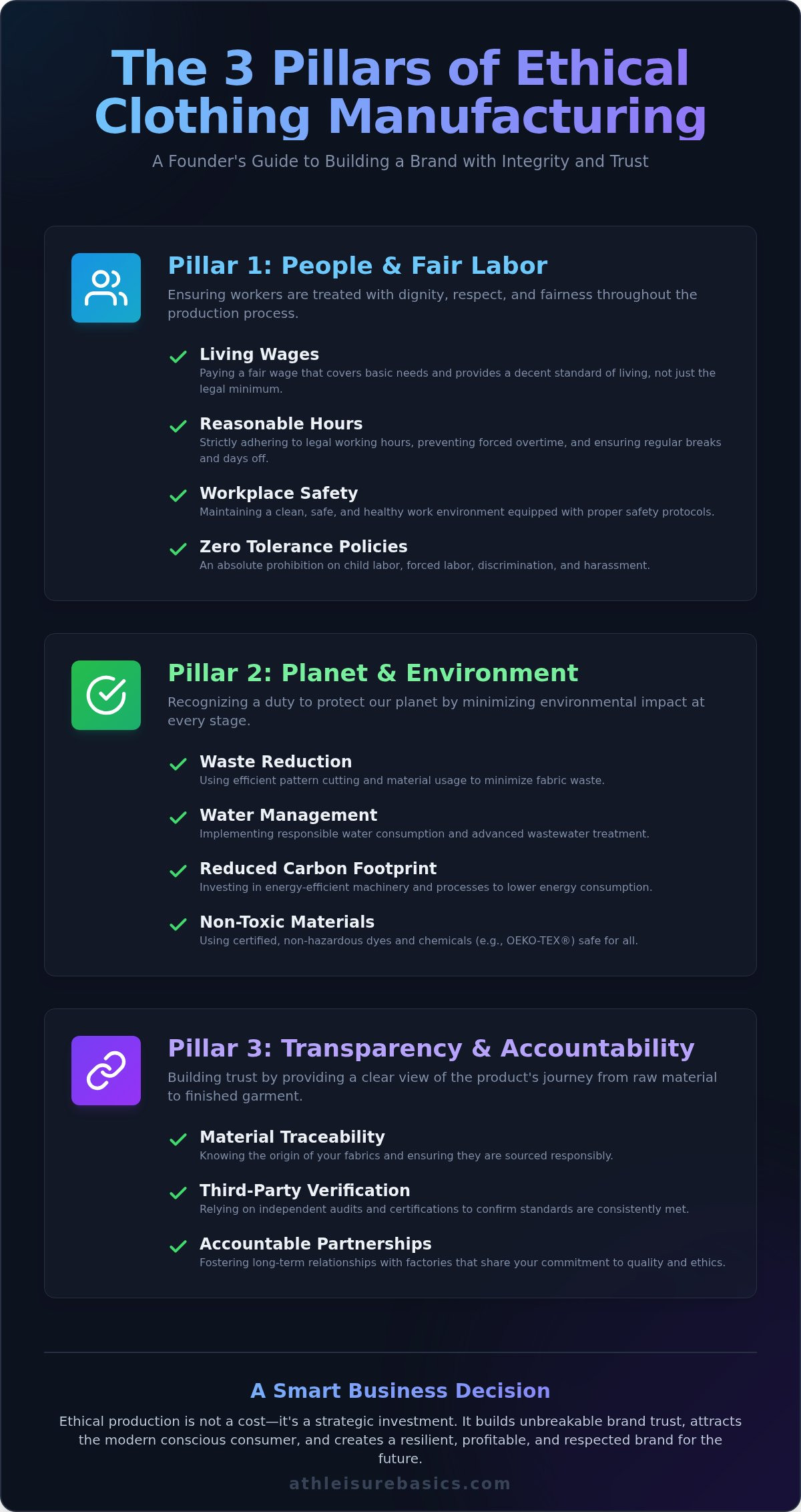
This approach is built on three core pillars that ensure your brand’s vision is realized without compromising on principles. For startups and established brands alike, understanding these pillars is the first step toward building a supply chain you can be proud of.
Pillar 1: Fair Labor and Safe Working Conditions
At its heart, ethical production is about people. It ensures that the skilled artisans and workers who bring your designs to life are treated with dignity and respect. This commitment is demonstrated through clear, enforceable standards that go far beyond basic legal requirements.
- Living Wages: Workers are paid a fair wage that covers their basic needs and allows for a decent standard of living, not just the legal minimum.
- Reasonable Hours: Strict adherence to legal working hours, prevention of forced overtime, and provision of regular breaks and days off.
- Workplace Safety: Maintaining a clean, safe, and healthy work environment, free from hazards and equipped with proper safety protocols.
- Zero Tolerance Policies: An absolute prohibition of child labor, forced labor, and any form of discrimination or harassment.
Pillar 2: Environmental Responsibility
A responsible manufacturer recognizes its duty to protect the planet. This involves implementing practices that minimize environmental impact at every stage of production. These standards are a crucial part of the broader Sustainable fashion movement, which aims to create a system that is restorative and regenerative by design. Key actions include:
- Waste Reduction: Efficient pattern cutting and material usage to minimize fabric waste.
- Water Management: Responsible water consumption and advanced wastewater treatment to prevent pollution.
- Reduced Carbon Footprint: Investing in energy-efficient machinery and processes to lower energy consumption.
- Non-Toxic Materials: Using certified, non-hazardous dyes and chemicals (like OEKO-TEX®) that are safe for workers, consumers, and the environment.
Pillar 3: Supply Chain Transparency and Accountability
Trust is built on transparency. An ethical supply chain is one where you can trace your product's journey from raw material to finished garment. This level of accountability is essential for verifying claims and building long-term, reliable partnerships with your suppliers.
- Material Traceability: Knowing the origin of your fabrics and ensuring they are sourced responsibly.
- Third-Party Verification: Relying on independent audits and certifications to confirm that ethical standards are being met consistently.
- Accountable Partnerships: Fostering long-term relationships with factories that share your commitment to quality and ethical practices.
Why Ethical Production is a Smart Business Decision
For ambitious clothing brands, viewing ethical production as a cost is a critical mistake. In today's crowded marketplace, it is a strategic investment in your brand's future. Committing to ethical clothing manufacturing is no longer a niche preference; it is a powerful differentiator that builds a resilient, profitable, and respected brand. It moves your business from simply selling a product to building a legacy, mitigating the significant risks associated with supply chain scandals and aligning your vision with the values of the modern market.
Build Unbreakable Brand Trust and Loyalty
Today's consumers don't just buy products; they buy into a brand's story, values, and mission. Transparency in your manufacturing process creates an authentic connection with your audience, fostering a loyal community that champions your brand. This positive reputation is a priceless asset, leading directly to higher customer lifetime value and creating brand advocates who drive organic growth. When customers trust how their clothes are made, their loyalty becomes unbreakable.
Attract the Modern, Conscious Consumer
The market is undergoing a fundamental shift. As consumers become more educated on the problems of fast fashion, a growing and influential segment is actively seeking out brands that prioritize people and the planet. Research consistently shows these conscious consumers are willing to pay a premium for ethically produced goods. By embedding ethical practices into your core operations, your brand’s principles become one of your most effective marketing tools, attracting a dedicated customer base that is motivated by values, not just price.
This consumer demand for ethical sourcing is a powerful force across many industries, not just fashion. For example, brands in the beverage space like Café Delicioso have built a loyal following by focusing on premium, ethically sourced coffee, demonstrating that a commitment to values resonates with customers in any market.
The Inseparable Link Between Ethics and Quality
High standards for worker welfare and environmental care are directly linked to superior product quality. Factories in Portugal that invest in their people and processes are not cutting corners-they are committed to excellence at every stage. This commitment translates into tangible benefits for your brand:
- Expert Craftsmanship: Happy, skilled, and fairly compensated workers are more meticulous, focused, and have significantly lower error rates. Their expertise is woven into every seam.
- Premium Materials: An ethical approach to sourcing naturally leads to higher-grade, more durable, and often certified materials like GOTS organic cotton or OEKO-TEX® fabrics.
- Process Integrity: Ethical facilities maintain rigorous quality control standards, ensuring that every garment that leaves the factory is a testament to top-notch craftsmanship.
How to Find and Vet an Ethical Clothing Manufacturer
Finding the right production partner is one of the most critical steps in launching your brand. This isn't just about placing an order; it's about building a relationship founded on trust, quality, and shared values. The search for an ethical clothing manufacturing partner requires due diligence, but knowing what to look for-and where to look-can transform a daunting task into a strategic advantage for your business.
Key Certifications to Look For
Globally recognized certifications offer verifiable proof that a manufacturer adheres to high standards. They are a crucial first step in your vetting process.
- OEKO-TEX®: Guarantees that every component of the article, from the thread to the buttons, has been tested for harmful substances.
- GOTS (Global Organic Textile Standard): The leading standard for organic fibers, certifying the entire textile supply chain on strict ecological and social criteria.
- Fair Trade Certified™: Ensures that workers receive fair wages, work in safe conditions, and benefit from community development funds.
- BCI (Better Cotton Initiative): Promotes better standards in cotton farming and practices for a more sustainable future for the sector.
Critical Questions to Ask a Potential Partner
A transparent and ethical partner will welcome your questions. Use this checklist to open a dialogue about their operations and ensure their values align with yours:
- Can you provide details about your workers' wages, hours, and benefits?
- What are your processes for waste management and water treatment?
- Do you allow third-party or client audits of your facility?
- Can you provide full traceability for the origin of your fabrics?
The Importance of Location: Why 'Made in Portugal' Matters
While certifications are crucial, a manufacturer's location can be a powerful shortcut to guaranteeing high standards. Choosing to manufacture in Portugal provides a built-in framework of accountability. Strict EU labor laws protect workers, and robust environmental regulations are legally mandated. These standards directly address the global challenges highlighted by initiatives like the UN Alliance for Sustainable Fashion. This, combined with Portugal's rich textile heritage and proximity to Western markets, makes it an ideal hub for brands committed to quality and ethical clothing manufacturing.
Red Flags to Watch Out For
Trust your instincts. If a potential partner raises concerns, it's better to walk away. Be vigilant for these common red flags:
- Unusually low pricing: If a quote seems too good to be true, it likely comes at a human or environmental cost.
- Lack of transparency: Evasive or vague answers to questions about their supply chain or labor practices.
- No verifiable presence: A lack of a professional website, physical address, or legitimate company registration.
- Poor communication: Slow response times, resistance to providing samples, or an unwillingness to sign a detailed contract.
Implementing Ethical Practices as a Startup Brand
Many emerging brands believe that ethical production is a luxury reserved for large corporations with deep pockets. This is a common myth. For startups, embedding ethical principles from day one is not only achievable but a powerful strategic advantage. The key is to focus on progress over perfection and to understand that the single most important decision you will make is choosing the right manufacturing partner.
A committed partner doesn't just produce your garments; they guide you through the complexities of launching a brand responsibly. By making smart, incremental choices, even the smallest brand can build a foundation of integrity that resonates with today's conscious consumer and sets a course for sustainable growth.
The Power of Low MOQ Ethical Manufacturing
Low Minimum Order Quantities (MOQs) are a game-changer for startups. This approach directly combats overproduction-a major source of waste in the fashion industry. It allows you to launch and test your collection with minimal financial risk, ensuring you only produce what your market demands. Working with a producer who specializes in supporting new brands gives you the flexibility to scale responsibly. Discover our low MOQ options for ethical startups.
Material Choices: Small Changes, Big Impact
You don't need a massive budget to make a difference with your materials. Start by selecting high-quality, certified fabrics like OEKO-TEX® cotton, which guarantees textiles are free from harmful substances. Prioritizing superior quality not only enhances your product but also promotes longevity, encouraging customers to buy less and wear more. Access to premium, ethically sourced textiles is more attainable for small brands than ever before.
Communicating Your Values to Your Customers
Your commitment to ethical clothing manufacturing is a powerful story that deserves to be told. Be transparent on your website and social media about your journey. Share details about why you chose to manufacture in Portugal and introduce the skilled artisans behind your products. Weaving your ethical stance into your brand identity doesn't just attract customers; it builds a loyal community that shares and champions your values.
Partner with Athleisurebasics: Your Ethical Partner in Portugal
Understanding the benefits of manufacturing in Portugal is the first step. The next is finding a production partner who embodies these high standards and is committed to your brand's success. At Athleisurebasics, we have built our entire operation on the principles of quality, transparency, and ethical production, making us the ideal partner for startups and values-driven brands ready to launch.
We are more than just a manufacturer; we are your strategic ally in bringing a premium product to market. We translate the advantages of being "Made in Portugal" into a tangible, efficient, and supportive experience for your brand.
Our Commitment to EU Standards and Quality Craftsmanship
All production at Athleisurebasics takes place in our state-of-the-art facilities in Portugal, operating under strict European Union labor laws. This guarantees fair wages, safe working conditions, and respect for every worker. We merge generations of Portuguese textile expertise with modern technology to produce premium athleisure that stands out for its superior feel and durability. Quality is not an option; it is our standard.
OEKO-TEX® Certified Fabrics and Transparent Sourcing
The foundation of any great garment is the material. We exclusively use high-quality fabrics that are OEKO-TEX® Standard 100 certified, ensuring they are free from harmful substances and safe for both your customers and the environment. Our team provides expert guidance on material sourcing, offering full transparency so you can confidently share your product’s story with your community.
Designed for Startups: Low MOQs and Expert Guidance
We believe that access to ethical clothing manufacturing shouldn't be reserved for large corporations. That’s why we built our model to empower emerging brands. Our industry-leading low Minimum Order Quantities (MOQs) reduce financial risk and allow you to launch with flexibility. We guide you through the entire process, from design finalization to production, ensuring your vision is transformed into a high-quality product efficiently and ethically.
Choosing the right partner is the most critical decision you'll make. By partnering with us, you secure a supply chain that reflects your brand's commitment to excellence and integrity.
Let's build your ethical brand together. Get a quote.
Partner with Purpose: Build Your Brand on a Foundation of Integrity
As we've explored, building a successful clothing brand in 2025 means putting ethics at the core of your operations. The key takeaways are clear: principled production is a powerful market differentiator, and finding the right manufacturing partner is the most critical step in your journey. Embracing ethical clothing manufacturing is no longer a compromise on quality or scalability; it's a strategic investment in your brand's legacy and connection with conscious consumers.
You don't have to navigate this complex landscape alone. At Athleisurebasics, we partner with startups and emerging brands to make ethical production accessible. With manufacturing in Portugal under strict EU standards, low MOQs designed for growth, and a commitment to premium OEKO-TEX® certified fabrics, we provide the foundation you need to launch with confidence. We help you turn your vision into a high-quality, ethically-made reality.
Ready to build a brand you can be proud of? Start Your Ethical Production Journey. Get a Quote Today. Your vision for a successful, principled brand is closer than you think.
Frequently Asked Questions About Ethical Manufacturing
How much more does ethical clothing manufacturing cost?
Ethical clothing manufacturing often involves a higher upfront investment, primarily due to fair labor wages, superior-quality materials, and compliance with stringent environmental regulations. While this can increase the per-unit cost compared to fast-fashion models, it translates into a premium product with a powerful story. This investment enhances brand value, builds customer loyalty, and ultimately supports a more profitable and sustainable business legacy. The focus shifts from a low price to superior long-term value.
What is the difference between 'ethical' and 'sustainable' manufacturing?
While often used together, 'ethical' and 'sustainable' focus on different aspects of production. 'Ethical' primarily concerns human welfare: fair wages, safe working conditions, and workers' rights. 'Sustainable' focuses on environmental impact: using eco-friendly materials, minimizing waste and pollution, and conserving resources. The best manufacturing partners, like those in Portugal, excel in both areas, creating a truly responsible supply chain that respects both people and the planet.
Can a small brand with a limited budget still be ethical?
Absolutely. Being ethical is about making principled choices, not having an unlimited budget. Partnering with a manufacturer that offers low Minimum Order Quantities (MOQs) is the key. This allows you to produce smaller, more manageable batches while still benefiting from ethical labor standards and high-quality craftsmanship. It makes launching an ethical brand accessible and reduces the financial risk for startups and first-time founders, proving that integrity and profitability can go hand-in-hand.
How can I be sure a factory is truly ethical without visiting in person?
Verifying a factory’s ethics from afar requires focusing on objective proof. Look for internationally recognized third-party certifications that audit supply chains. Manufacturing within a region with strong government oversight, such as the European Union, provides another layer of assurance due to legally mandated labor protections. A trustworthy partner will also be transparent, readily sharing information about their compliance, standards, and production processes, giving you confidence in their operations without a physical visit.
What does OEKO-TEX® certification mean and why is it important?
OEKO-TEX® is a globally recognized, independent testing and certification system for textile products. If a fabric is OEKO-TEX® certified, it means every component has been tested and found to be free from a long list of substances harmful to human health. This certification is a critical mark of quality and safety, reassuring you and your customers that your products are non-toxic. It demonstrates a commitment to superior standards and responsible production from raw material to finished garment.
Is manufacturing in Portugal a more ethical choice than in Asia?
Manufacturing in Portugal offers a distinct ethical advantage due to its strict adherence to European Union labor laws. These regulations legally enforce fair wages, safe working conditions, and employee rights-standards that are rigorously monitored. While ethical factories exist worldwide, the EU framework provides a baseline guarantee of protection and transparency that is not consistently present in many Asian manufacturing hubs. This makes Portugal a more reliable and secure choice for brands prioritizing ethical production.
What is a 'living wage' and how does it differ from a minimum wage?
A minimum wage is the legally mandated lowest amount an employer can pay, which often fails to cover basic living expenses. In contrast, a living wage is the income necessary for a worker to afford a decent standard of living, including essentials like food, housing, healthcare, and transportation for their family. True ethical manufacturing aims to provide a living wage, ensuring that employees are not just surviving but are able to live with dignity and security.


Leave a comment
This site is protected by hCaptcha and the hCaptcha Privacy Policy and Terms of Service apply.