

Ethical Manufacturing Certifications for Clothing: The 2026 Brand Owner’s Guide
By July 19, 2026, the EU’s Ecodesign for Sustainable Products Regulation will officially prohibit large enterprises from destroying unsold textiles, signaling that sustainability is no longer a marketing choice but a legal mandate. You likely feel the pressure of this shifting landscape, especially when choosing the right ethical manufacturing certifications for clothing among the confusing alphabet soup of GOTS 8.0, SA8000:2026, and the new bluepass system. It’s natural to worry that a single oversight could lead to greenwashing accusations or inflated supply chain costs. We understand that your goal is to launch a legacy, not just a label.
This guide will help you master the complex world of textile standards to build a transparent, credible, and truly premium brand. You’ll gain a clear list of the essential 2026 standards, a pragmatic framework to evaluate the superior craftsmanship of Portuguese factories against Asian alternatives, and the confidence to prove your supply chain’s integrity to every customer. We will examine the transition to the Materials Matter Standard and explain how digital product passports will change your production workflow as you scale. By the end of this guide, you will have the tools to turn your vision into high quality products with total transparency.
Key Takeaways
- Navigate the 2026 transition from optional "green" marketing to mandatory transparency requirements enforced by new EU legal frameworks.
- Identify the core ethical manufacturing certifications for clothing your brand needs, including the updated GOTS 8.0 and the transition to the Materials Matter Standard.
- Evaluate how chemical safety standards like OEKO-TEX® and the unified bluepass mark protect your brand from greenwashing accusations and regulatory risks.
- Understand the strategic advantage of manufacturing in Portugal, where EU labor laws provide a baseline of ethical production that surpasses many voluntary social audits.
- Learn how to integrate these complex standards into a scalable production process without compromising on luxury quality or minimum order flexibility.
The Landscape of Ethical Clothing Certifications in 2026
Launching a clothing brand in 2026 requires more than a good eye for design. It demands a rigorous approach to sourcing. Ethical manufacturing is now defined by verifiable data rather than vague promises. Consumers expect to see exactly where their garments were made and under what conditions. Using ethical manufacturing certifications for clothing is the most efficient way to prove your brand's integrity without conducting individual audits on every factory. It's about moving from a "trust me" model to a "show me" model.
These certifications act as a shield against supply chain scandals. When you partner with factories that hold recognized standards, you're protecting your business from the legal and reputational fallout of labor violations. While some brands rely on Worldwide Responsible Accredited Production (WRAP) to ensure social compliance, others look toward EU-based production to meet even stricter regional laws. For athleisure brands, these standards are even more critical. Performance fabrics often require complex chemical treatments. This makes certifications like OEKO-TEX® essential to ensure your leggings or sports bras are safe for prolonged skin contact.
The ROI of Ethical Certification for Startups
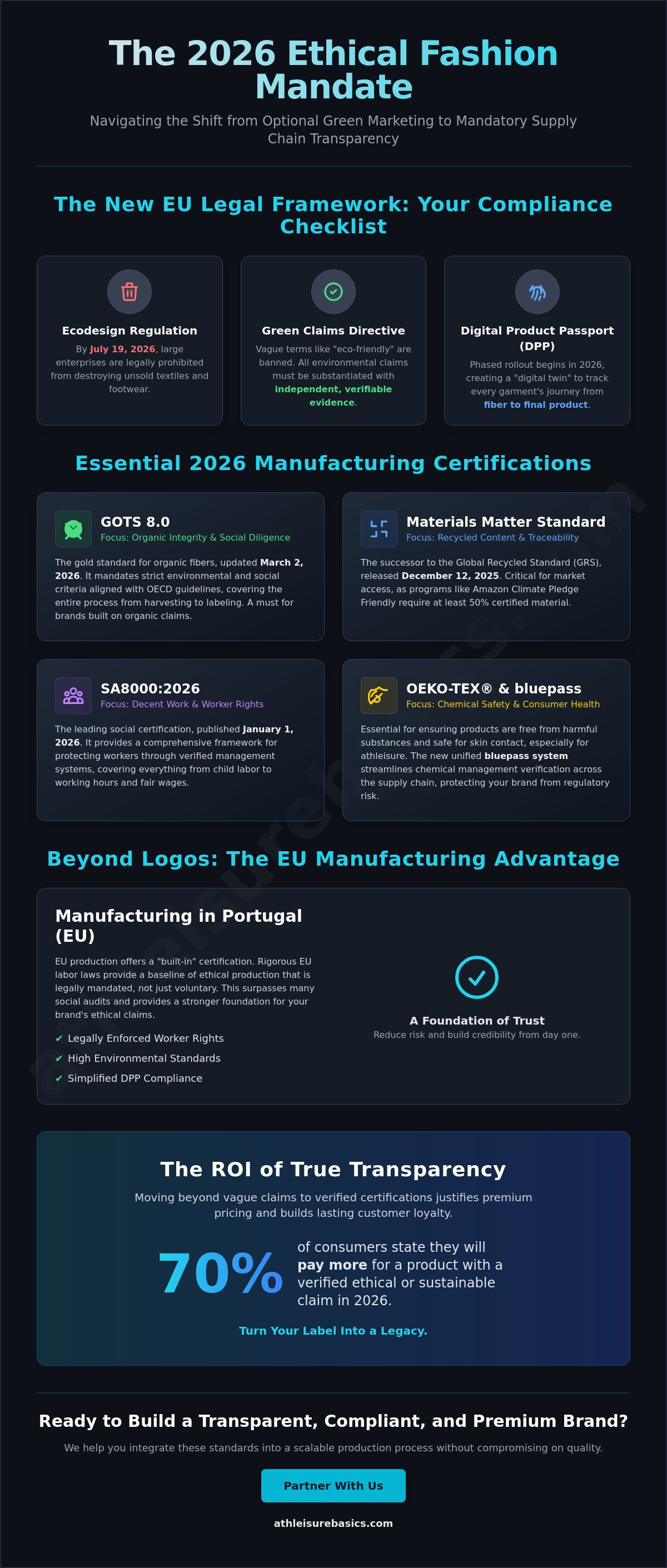
Startups often view certification costs as a barrier, but they're actually a foundation for premium positioning. In 2026, over 70% of consumers state they'll pay more for a product with a verified ethical claim. By moving beyond "eco-friendly" labels to specific ethical manufacturing certifications for clothing, you justify your price point and build a "logo to legacy" brand. Transparency is your most powerful marketing tool. It turns a simple purchase into a principled choice for your customer, fostering long-term loyalty that survives market trends. To see how established brands translate these values into their retail strategy, you can explore E-commerce Product Sales and observe how quality and mission-driven messaging create a lasting impact.
The 2026 Regulatory Environment: EU Green Claims Directive
The legal landscape has shifted significantly. The EU Green Claims Directive now requires brands to substantiate every environmental claim with independent evidence. This makes a certified supply chain a legal necessity for anyone selling in the European market. You also need to prepare for the Digital Product Passport (DPP), which begins its phased rollout in 2026. This "digital twin" for every garment will track the garment production process from fiber to finished product. Working with certified partners simplifies this data collection, ensuring your brand stays compliant and profitable.
Essential Social and Environmental Standards: GOTS, GRS, and SA8000
Choosing the right ethical manufacturing certifications for clothing starts with understanding the "big three": GOTS, GRS, and SA8000. These aren't just logos for your website. They're rigorous frameworks that audit every step of your production. GOTS 8.0, released on March 2, 2026, remains the premier standard for organic fibers. It doesn't just track the cotton; it mandates strict due diligence aligned with OECD guidelines, ensuring that environmental and social criteria are met from harvesting to labeling. If you're building a brand focused on organic integrity, this version is your baseline.
For brands using recycled materials, the Global Recycled Standard (GRS) is currently transitioning to the new Materials Matter Standard, released on December 12, 2025. This update is critical because a product must contain at least 50% certified GRS material to qualify for the Amazon Climate Pledge Friendly program. Beyond the environmental impact, you must also prioritize the human element. The SA8000:2026 Standard for Decent Work, published on January 1, 2026, protects workers through verified management systems. For a deeper look at how these intersect, you can explore various Ethical Fashion Certifications and Standards that define modern labor rights.
GOTS vs. OCS: Which Organic Standard Does Your Brand Need?
The Organic Content Standard (OCS) only verifies the percentage of organic fiber in a final product. It doesn't account for the chemicals used in dyeing or the labor conditions in the factory. GOTS is more expensive and complex to implement, but it offers full supply chain transparency. For startups aiming for a premium, "logo to legacy" positioning, GOTS is the superior choice. It provides the verified claims that 2026 consumers demand, justifying a higher price point for your luxury basics.
Certified Fabric vs. Certified Factory: Avoid This Common Mistake
It's a common trap. Many founders buy GOTS-certified fabric and believe they can automatically use the GOTS logo on their finished garments. They can't. To claim a product is certified, the factory performing the cut, make, and trim (CMT) services must also hold its own GOTS certification. Without this, the chain of custody is broken. Always ask your manufacturing partner for a Transaction Certificate (TC) for every production run. This document is the only legal proof that your specific batch of clothing meets the standard. We help our partners manage these complexities during the garment production process to ensure your brand's claims remain bulletproof.
If you're looking for a manufacturing partner that understands the nuances of these certifications, our team at Athleisure Basics can guide you through sourcing the right certified materials for your next collection.
Chemical Safety and Material Integrity: OEKO-TEX® and bluesign®
Chemical certifications also play a vital role in preventing environmental pollution. The dyeing and finishing stages are historically the most toxic parts of the garment production process. By adhering to these standards, you ensure that your supply chain isn't dumping hazardous waste into local waterways. This proactive risk management protects your brand's reputation and ensures your collection meets the highest industry standards for luxury apparel.
OEKO-TEX® Standard 100: A Minimum Requirement for Premium Brands
The OEKO-TEX® Association updated its limit values on June 1, 2026, introducing stricter restrictions on substances like n-Hexane and DBDPE. When a product is "Tested for Harmful Substances," it means every component—from the main fabric to the sewing thread and zippers—has been verified safe. Most athleisure brands fall under Product Class II, which covers items with direct skin contact. Portuguese factories are global leaders in this area. They often maintain OEKO-TEX® certifications as a baseline, making them the ideal partner for startups that refuse to cut corners on quality.
bluesign® and the Future of Sustainable Dyeing
The bluesign® system eliminates hazardous substances from the very beginning of the manufacturing process. It's an "input stream" management system that ensures only safe chemicals enter the factory. By September 27, 2026, all consumer-facing labels must transition to the new unified "bluepass" mark to comply with the EU's Empowering Consumers for the Green Transition directive. This mark includes a QR code that provides a "digital twin" of the garment's chemical profile. Choosing bluepass-verified materials significantly boosts your brand’s sustainability report and prepares you for upcoming EU transparency laws.
Working with an expert partner makes these transitions seamless. At Athleisure Basics, we prioritize OEKO-TEX® certified materials to ensure your vision results in a safe, superior quality product that your customers can trust.
Beyond the Logo: Why EU Manufacturing Standards Are a Certification
While many brand owners focus on collecting specific logos, the geographical origin of your garments often provides a more robust guarantee of integrity. In the European Union, national labor laws are so comprehensive that they frequently exceed the requirements of standard ethical manufacturing certifications for clothing like WRAP or BSCI. When your production is based in a country like Portugal, you aren't just buying a label. You're operating within a legal framework that mandates fair wages, safe working conditions, and strict environmental protections by default.
This legal baseline removes the burden of constant auditing from the startup founder. In high-risk manufacturing regions, a social certification is often the only thing standing between a brand and a labor scandal. In Portugal, the law itself acts as the primary auditor. This geographic advantage also offers unmatched transparency. The proximity of European textile hubs allows you to visit your production lines easily, fostering a "partner, not just producer" relationship that is difficult to maintain across continents.
Portugal vs. Asia: A Manufacturing Comparison for Ethical Brands
Choosing clothing manufacturers Portugal offers built-in brand protection that Asian factories often struggle to match without expensive third-party oversight. While initial unit costs might appear lower in high-risk regions, the hidden costs of mandatory due diligence, frequent travel for quality control, and the risk of supply chain disruptions often erode those margins. Portuguese factories provide a stable, ethical foundation that allows you to scale your brand quickly and efficiently without the fear of greenwashing accusations.
The Environmental Advantage of Portuguese Production
The environmental benefits of nearshoring are substantial. Producing made in portugal clothing significantly reduces your carbon footprint by shortening shipping distances to European and North American markets. Beyond logistics, Portugal leads in sustainable infrastructure. Many textile hubs now operate on over 60% renewable energy. Strict EU regulations on water usage and textile waste also ensure that your production supports a circular economy. This alignment with EU quality and ethical standards ensures your brand's legacy is built on genuine sustainability.
If you're ready to secure your supply chain with a reliable partner, submit your project to Athleisure Basics today to see how our Portuguese production can elevate your brand.
Implementing Ethical Standards with Athleisurebasics
Athleisure Basics acts as your trusted partner to simplify the complexities of 2026 compliance. We understand that startups face significant risks when trying to secure ethical manufacturing certifications for clothing. Our goal is to remove these barriers by providing a transparent, reliable supply chain based entirely in Portugal. We don't just manufacture clothes; we help you build a legacy by ensuring every piece meets the highest industry standards for quality and ethics. This "partner, not just producer" approach is designed to reduce the perceived risks for new entrepreneurs.
Our partnership model focuses on pragmatism and accessibility. We offer low MOQ white-label and custom manufacturing services to help you scale without the high financial risk of massive inventory. By choosing to produce in the EU, your brand automatically aligns with superior labor and environmental laws that often surpass voluntary social audits. This allows you to focus on growth while we handle the technical details of the garment production process. We make it easy to launch quickly and efficiently.
Our Sourcing and Material Standards
We carefully select each textile partner based on their commitment to premium craftsmanship and ethical production. All our fabrics are OEKO-TEX® certified, ensuring they are tested for harmful substances according to the updated June 1, 2026, limit values. Our full CMT (Cut, Make, Trim) production takes place in verified Portuguese facilities where transparency is the norm. We provide the documentation and transaction certificates necessary to back up your brand’s claims, protecting you from greenwashing accusations. This level of detail ensures your brand's integrity remains unquestioned as you scale from logo to legacy.
Start Your Ethical Brand Today
Launching a sustainable line is easier when you have the right support. Our white label service starts at 60 pcs per style or color, providing the ultimate flexibility for first-time founders. We offer comprehensive consulting services for tech pack development and material sourcing to ensure your vision translates into a high quality product. Our team speaks with the confidence of an industry insider to guide you through every choice.
- Submit your project details or tech packs for review.
- Receive a transparent, professional quote and production timeline.
- Review sample creations to ensure top-notch craftsmanship.
- Scale your brand with confidence and superior EU quality.
Get a Custom Apparel Manufacturing Quote Today and take the first step toward building a truly ethical clothing brand with a partner you can trust.
Secure Your Brand's Future with Verified Integrity
The year 2026 marks a definitive shift where vague sustainability claims no longer suffice. As new EU regulations like the Ecodesign for Sustainable Products Regulation take effect, your choice of ethical manufacturing certifications for clothing becomes the foundation of your market access. You've learned that certifications like GOTS 8.0 and OEKO-TEX® are more than just logos; they're essential tools for transparency. By prioritizing EU-based ethical production, you ensure your supply chain meets the highest global standards while protecting your brand from legal and reputational risks.
Athleisure Basics is ready to be your trusted partner in this journey. We provide a seamless path from logo to legacy by offering OEKO-TEX® certified fabrics and a low MOQ starting at 70 pieces per style. This flexibility allows you to launch your collection quickly and efficiently without the burden of excessive inventory. You don't have to navigate these complex requirements alone. Our expertise in Portuguese manufacturing ensures your products are premium, principled, and profitable.
Launch your ethical clothing brand with our premium Portuguese manufacturing—Get a quote today!
Your vision for a high quality, transparent brand is within reach. We're here to help you turn that vision into a successful reality through craftsmanship you can trust.
Frequently Asked Questions
What is the most important ethical certification for a new clothing brand?
The Global Organic Textile Standard (GOTS) is the most critical certification for startups seeking full supply chain transparency. Version 8.0, released on March 2, 2026, ensures that both environmental and social criteria are met from fiber harvesting to finished garment labeling. For athleisure brands, OEKO-TEX® Standard 100 is equally important as it verifies chemical safety for products with direct skin contact.
How much do ethical manufacturing certifications cost for a startup?
Annual certification costs for a single facility typically range from $1,200 to $3,000 for the Global Organic Textile Standard (GOTS). These fees cover the auditing process and administrative overhead required to maintain the standard. Startups can often avoid paying these direct costs by partnering with already certified manufacturers in Portugal, as the certification stays with the facility performing the work.
Can I use the GOTS logo if my manufacturer is certified but I am not?
You cannot use the GOTS logo on your products unless your brand is also certified as a business entity. While your manufacturer’s certification covers the production process, the GOTS chain of custody requires every link in the supply chain to be verified. You can, however, state that your products are "made in a GOTS certified facility" in your marketing copy if you hold the proper Transaction Certificates.
Is "Made in Portugal" better than having a WRAP certification?
"Made in Portugal" often provides a more reliable ethical guarantee than a voluntary WRAP certification because it's backed by mandatory EU labor laws. Portuguese facilities must comply with strict national regulations regarding fair wages, worker safety, and collective bargaining. These legal requirements often meet or exceed the benchmarks set by standard ethical manufacturing certifications for clothing in high-risk regions.
How do I check if a clothing manufacturer’s certifications are valid?
You can verify the validity of any certification by searching the official public databases of the issuing organization. The GOTS Public Database and the OEKO-TEX® Label Check allow you to enter a factory's license or certificate number to see its current status. Always ask for a copy of the current certificate and check the expiration date to ensure compliance hasn't lapsed.
What is the difference between OEKO-TEX and organic certification?
OEKO-TEX® Standard 100 focuses on chemical safety and tests the final product for harmful substances, while organic certifications like GOTS verify the source of the fibers. A garment can be OEKO-TEX® certified without being organic. Conversely, an organic shirt might not meet OEKO-TEX® standards if the dyes used in the final stages contain restricted substances like n-Hexane or PFAS.
Are ethical certifications mandatory for selling clothing in the EU?
Ethical certifications are not strictly mandatory for market entry, but new legal frameworks like the EU Green Claims Directive make them essential for substantiating sustainability claims. By July 19, 2026, the Ecodesign for Sustainable Products Regulation (ESPR) will impose stricter transparency rules. Using recognized ethical manufacturing certifications for clothing is the most efficient way to comply with these upcoming data requirements.
How does nearshoring in Portugal improve my brand’s sustainability?
Nearshoring in Portugal improves sustainability by significantly reducing the carbon emissions associated with long distance shipping to European and North American markets. Portuguese textile hubs also operate under strict EU environmental laws regarding water usage and waste management. In 2026, many of these facilities utilize over 60% renewable energy, ensuring your production process aligns with a circular economy model.



Leave a comment
This site is protected by hCaptcha and the hCaptcha Privacy Policy and Terms of Service apply.