
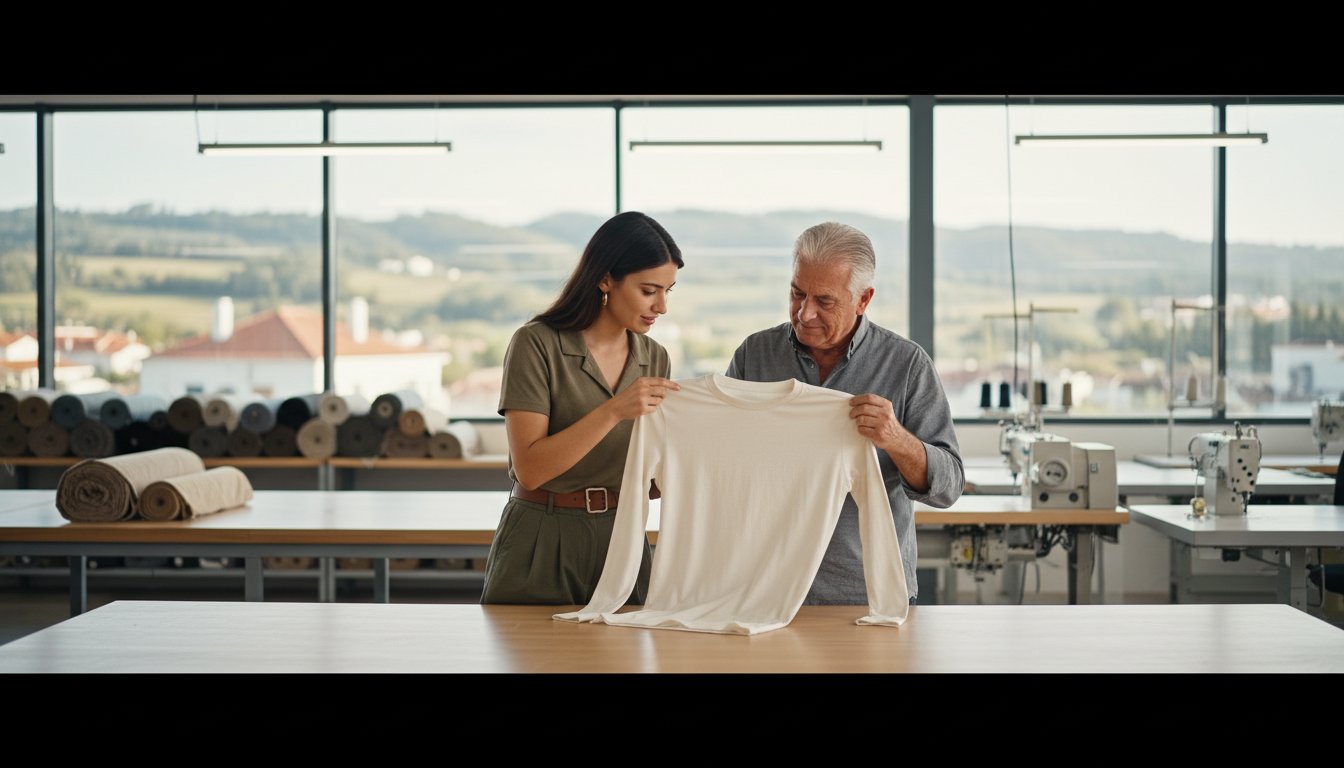
How to Find a Reliable Garment Factory: The 2026 Founder’s Guide
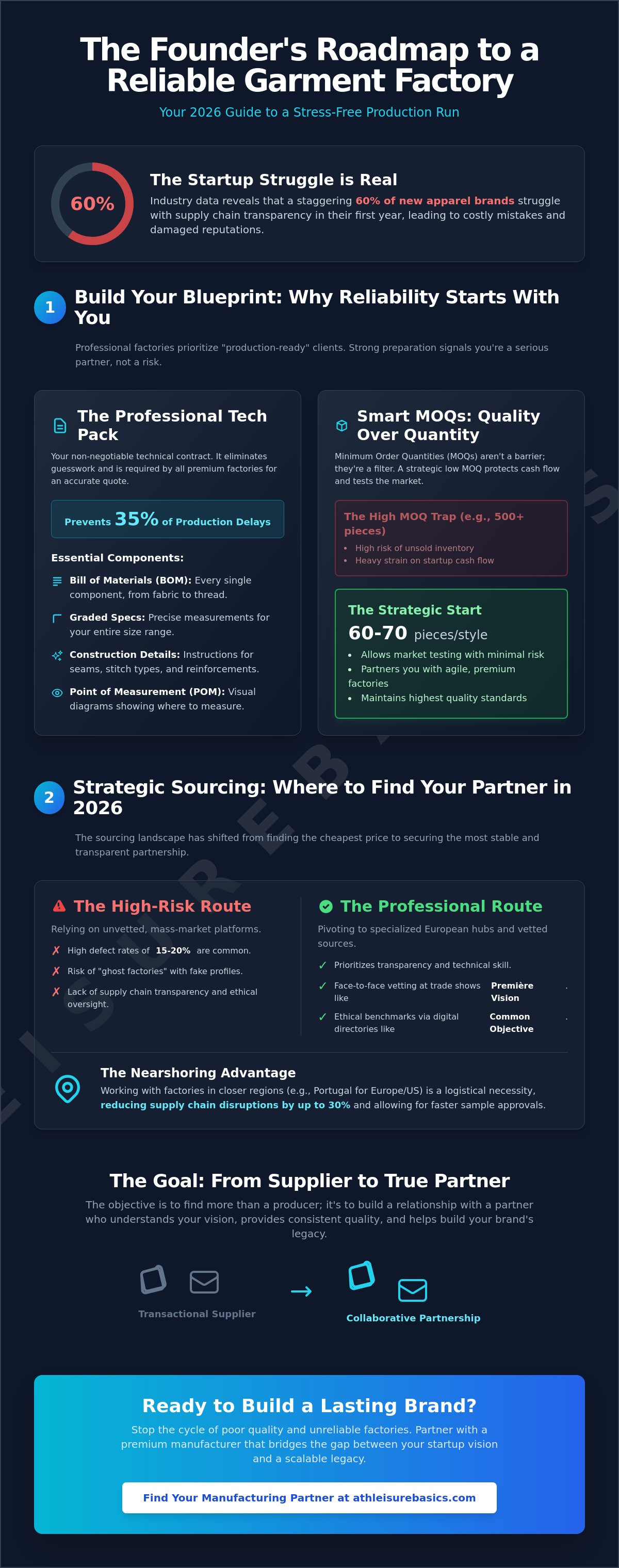
What if your next production run cost you your entire brand reputation instead of just your initial deposit? Every founder dreams of a seamless launch, yet many find themselves stuck in a cycle of poor quality samples and factories that ignore low volume inquiries. Understanding how to find a reliable garment factory is the difference between a profitable scale and a costly mistake. Industry data suggests that 60% of new apparel brands struggle with supply chain transparency in their first year.
You've likely felt the anxiety of hidden production costs or the fear of being scammed by an overseas supplier. It's common to worry that your brand isn't big enough for top-tier craftsmanship. We agree that your vision deserves a partner, not just a producer, who respects your growth goals and provides consistent, premium quality. You need a setup that offers flexibility without compromising on the highest industry standards.
In this 2026 guide, you'll learn how to identify and vet manufacturing partners that align with your standards. We'll cover everything from ethical OEKO-TEX® certifications to the specific benefits of manufacturing in regions like Portugal. By the end, you'll have a clear roadmap to a stress-free production run that turns your ideas into a lasting legacy.
Key Takeaways
- Understand why manufacturing reliability begins with your own brand preparation and clear communication standards.
- Discover how to find a reliable garment factory by looking beyond generic platforms toward specialized European hubs and trade shows.
- Master the "Three Pillars" vetting framework to evaluate a partner's technical skill, ethical standards, and modern traceability policies.
- Use the sampling phase as a strategic litmus test to judge a factory's "First Fit" quality before committing to full-scale production.
- Learn how partnering with a premium Portuguese manufacturer can bridge the gap between your startup vision and a scalable brand legacy.
Preparing Your Brand: Why Reliability Starts with You
Reliability in manufacturing isn't a one-way street. It's the precise intersection of consistent quality, on-time delivery, and transparent communication. Many entrepreneurs search for how to find a reliable garment factory without realizing that a factory's perceived unreliability is often a symptom of poor brand preparation. In the global clothing industry, clarity is the primary currency. If your instructions are vague, the results will be inconsistent. Professional manufacturers prioritize "production-ready" clients because they represent lower operational risk. By entering the conversation with professional documentation, you signal that your brand is a serious business partner rather than a hobbyist.
The Tech Pack: Your Blueprint for Success
Think of the Tech Pack as your legal and technical contract. High-end factories in regions like Portugal often ignore inquiries that lack this documentation because it's impossible to provide an accurate quote without it. A complete Tech Pack eliminates guesswork during the garment production process, reducing the likelihood of costly sampling errors. Industry data suggests that 35% of production delays in the startup sector are caused by missing technical details. Your documentation must be comprehensive to ensure your vision survives the transition from screen to stitch.
Essential components of a professional Tech Pack include:
- Bill of Materials (BOM): A detailed list of every component, from main fabric to thread type and button finishes.
- Graded Specs: Precise measurements for every size in your range, not just the sample size.
- Construction Details: Specific instructions on seam types, stitch counts, and reinforcement points.
- Point of Measurement (POM) Diagrams: Visual guides showing exactly where measurements should be taken.
Understanding MOQ as a Risk Management Tool
Minimum Order Quantities (MOQ) are often viewed as a barrier, but they're actually a filter for quality. In the 2026 premium market, the "Low MOQ" movement has matured. You don't need to order 500 pieces to get luxury-grade craftsmanship. Starting with 60 to 70 pieces per style is a strategic move that protects your cash flow. It allows you to test the factory's reliability and your market's response without the burden of unsold inventory.
Don't mistake low volume for low priority. A factory that offers flexibility at 60 pieces is often more technologically advanced and agile than a mass-production facility. It's about finding a partner that values precision over sheer volume. When you're learning how to find a reliable garment factory, look for those that treat a small, high-quality run with the same technical rigor as a large-scale order. This approach ensures your brand stays profitable while maintaining the highest industry standards.
Strategic Sourcing: Where to Find Professional Garment Factories in 2026
By 2026, the strategy for how to find a reliable garment factory has shifted from finding the cheapest price to securing the most stable partnership. While Alibaba remains a massive resource, premium brands are pivoting toward specialized European hubs to avoid the 15% to 20% defect rates often found with unvetted mass-market producers. Founders now prioritize transparency and technical expertise over sheer volume.
Face-to-face vetting remains the gold standard for high-stakes manufacturing. Trade shows like Première Vision Paris or Munich Fabric Start provide a physical touchpoint where you can inspect fabric hands and meet the production managers. These interactions eliminate the risk of "ghost factories" that look impressive on a digital profile but lack the actual machinery to deliver your designs. If you can't travel, digital directories like Common Objective or Good On You offer a filtered approach, listing only factories that meet specific ethical and environmental benchmarks.
The "Local Advantage" is no longer just a trend; it's a logistics necessity. Since the shipping delays of 2024, "nearshoring" has become a primary survival tactic for brands. Working with a factory within a two-hour flight or the same time zone reduces supply chain disruptions by up to 30%. It allows for faster sample approvals and more frequent quality checks, ensuring your launch timeline stays on track.
Online Platforms vs. Industry Referrals
Large B2B marketplaces offer incredible scale, but they often lack the curation required for technical apparel or luxury goods. If you are starting a clothing business, these platforms can be overwhelming and filled with middlemen. Instead, leverage niche industry communities and founder networks to find "hidden gem" factories that don't need to advertise on global search engines. When you find a candidate, always verify "Made in Portugal" or EU-based claims through official certifications like the ATP (Associação Têxtil e Vestuário de Portugal). This ensures your products aren't being sub-contracted to lower-quality regions without your knowledge.
Geographic Hotspots: Why Portugal Leads in Reliability
Portugal has solidified its reputation as the premier destination for high-end jersey, activewear, and luxury basics. This isn't just about heritage; it's about stability. Many northern Portuguese textile clusters report a 98% worker retention rate, which is a direct result of strict EU labor laws and fair wages. This stability translates to consistent craftsmanship and fewer production delays for your brand. For a detailed breakdown of the top facilities in this region, see our clothing manufacturers portugal guide.
Finding a partner who understands your vision is the first step toward a successful launch. If you're ready to move from concept to production, you can get a custom quote to see how a professional Portuguese partner can scale your brand.
The Vetting Framework: Moving from Supplier to Partner
Selecting a manufacturing site is a high-stakes decision that defines your brand's future. To succeed, you must move beyond a transactional mindset and find a partner that aligns with your growth. This requires a vetting framework built on three pillars: technical skill, communication, and ethics. When you are learning how to find a reliable garment factory, you have to look past the initial sales pitch. Technical skill in 2026 means more than just sewing; it involves the ability to handle high-performance synthetic blends and complex 4-way stretch fabrics without compromising seam strength. Ethics are equally vital. With global regulations tightening, a factory's labor practices directly impact your brand's legal standing and reputation.
In the current market, transparency is your greatest asset. Always ask for a factory’s Traceability Policy. This document should outline their supply chain from raw fiber to finished garment. If a manufacturer cannot provide this, they aren't prepared for the transparency demands of 2026. You should also evaluate the human element. Does the representative understand your brand vision? A true partner doesn't just execute orders; they help you scale from a simple logo to a lasting legacy. Watch for red flags like ghosting, vague pricing structures, or a refusal to share physical proof of certifications. You can cross-reference potential leads with textile industry associations to verify their standing within the professional community.
Essential Certifications to Look For
Certifications provide the objective proof you need to market your products confidently. OEKO-TEX® Standard 100 is non-negotiable for athleisure because it guarantees the fabric is free from harmful chemicals. For brands focused on sustainability, GOTS (Global Organic Textile Standard) and GRS (Global Recycled Standard) are the benchmarks. Don't just accept a logo on a website. Request the specific certificate numbers and verify them directly with the issuing bodies. Industry data from 2025 showed that 12% of displayed certificates were either expired or belonged to a different facility; verification is a mandatory step in how to find a reliable garment factory.
The Communication Litmus Test
Communication is the heartbeat of production. Measure response times during your initial inquiry. A professional factory typically provides a detailed response within 24 to 48 business hours. Be wary of a factory that says "yes" to every request without asking for technical clarification. This often signals a lack of expertise or a desperate attempt to secure a deposit. A reliable partner offers constructive feedback on your tech packs and suggests improvements for better durability. Ensure the factory provides a dedicated account manager. Having one point of contact prevents your project from getting lost in a general inbox and ensures your production stays on schedule.
The Sampling Process: Your Final Reliability Litmus Test
The sampling phase is where a factory's promises meet reality. It's the most critical step in learning how to find a reliable garment factory that can actually execute your vision. Skipping this step, even for white-label products where the patterns already exist, is a risk that industry data shows leads to a 70% higher defect rate in bulk orders. A sample isn't just a piece of clothing; it's a physical contract of quality. If a factory can't deliver a perfect "First Fit" sample, they won't maintain standards during a 500-unit bulk run.
What to Look for in a Prototype
Your first prototype should be scrutinized with a technical eye. Check the stitch consistency by counting the stitches per inch (SPI). Premium activewear typically requires 10 to 12 SPI for maximum durability. Perform a "wash test" immediately. Launder the garment three times at 30 degrees Celsius to check for shrinkage or color bleeding. A reliable factory ensures shrinkage stays below 3% for high-quality cotton and 1% for synthetic blends. Compare every measurement against your tech pack. If the chest width is off by more than 1 cm, the factory's cutting precision is likely insufficient for scaling.
Negotiating Terms and Production Timelines
Reliability is measured in days and dollars. When researching how to find a reliable garment factory, look for a professional manufacturer in Portugal or the EU that offers a 50/50 payment structure: 50% deposit to start and 50% before shipping. This protects both parties and serves as the industry standard for trust. Ask for a detailed timeline that breaks down fabric sourcing, which often takes 30 to 45 days, and the actual Cut, Make, Trim (CMT) process, which should take 15 to 21 days for low MOQ orders. Establish your Quality Control (QC) expectations now. Specify that you require a pre-shipment inspection report before the final 50% payment is released.
Building a long-term partnership relies on the feedback loop. Use the sampling phase to see how the factory handles corrections. If they're defensive about mistakes, they aren't the right partner. A supportive manufacturer views your feedback as a tool to perfect the bulk production. They'll suggest adjustments to seam construction or fabric weight to ensure your brand's legacy is built on superior quality. This transparency is what separates a simple vendor from a true production partner.
Building a Legacy with a Reliable Portuguese Manufacturing Partner
Building a clothing brand is a marathon, not a sprint. When you start researching how to find a reliable garment factory, you'll quickly realize that the best partners offer much more than just sewing and assembly. Athleisurebasics bridges the gap between your initial startup vision and the reality of premium production. We understand that founders need a partner who values quality as much as they do, which is why we've streamlined our operations to support growth at every stage.
We provide "Full CMT" (Cut, Make, Trim) services for brands that demand total design control. This model ensures every detail, from the precision of the cut to the final stitch, matches your original tech pack exactly. Scaling a business shouldn't involve gambling your entire budget on a single massive order. Our low MOQ of 70 to 250 pieces per style is specifically designed to help founders test the market and manage inventory without high financial risk. We combine this flexibility with a strict commitment to OEKO-TEX® standards and ethical Portuguese craftsmanship, ensuring your products are safe, sustainable, and superior in quality.
Custom vs. White Label: Choosing Your Path
Deciding between custom and white label production depends on your brand's timeline and goals. Custom manufacturing is the right choice if you want to build a unique brand identity from the ground up with proprietary fits and specialized fabrics. If you need to launch faster or want to test a concept with lower overhead, our white label services provide luxury blanks that are ready for your branding. Both paths benefit from the same high-end Portuguese construction. For a deeper look at these strategies, explore our guide on private label portugal.
Partnering for the Long Haul
We operate with a "Partner, not just Producer" mindset to ensure your brand's longevity. This means we provide active production consulting to help you avoid common manufacturing pitfalls before they happen. Our team supports you through the technical complexities of material sourcing and tech pack development, turning rough sketches into production-ready blueprints. Knowing how to find a reliable garment factory is only the first step; the second is maintaining a relationship built on transparency and consistent EU standards. We are dedicated to maintaining the highest EU quality and ethical standards in every garment we produce.
- Full CMT Control: You maintain authority over designs, fabrics, and trims.
- Risk Mitigation: Low MOQs of 70 to 250 pieces allow for sustainable scaling.
- Ethical Assurance: All production meets OEKO-TEX® and EU labor requirements.
- Expert Guidance: We assist with sourcing and technical development from day one.
Build Your Fashion Legacy with a Strategic Partner
Building a successful fashion brand in 2026 requires more than just a great design. It demands a foundation built on trust, technical precision, and ethical standards. You've learned that vetting partners through rigorous sampling and prioritizing transparency are non-negotiable steps for any founder. Understanding how to find a reliable garment factory means looking beyond the initial quote to find a partner that aligns with your long-term vision and quality requirements. For those who want to see how these high standards translate into a curated selection of apparel and accessories, you can learn more about Evelumi 伊芙露米. By focusing on manufacturing hubs like Portugal, you ensure your products meet strict EU ethical standards while benefiting from world-class craftsmanship.
Athleisure Basics is here to help you navigate this complex landscape. We offer Made in Portugal excellence using OEKO-TEX® certified fabrics to ensure your collection is both sustainable and premium. Our low MOQ starting at 70 pieces per style allows you to scale your business efficiently without the risk of excessive inventory. It's your time to move from the planning phase into a physical product that your customers will love. Your vision deserves a partner that values quality as much as you do.
Ready to launch your brand? Get a custom manufacturing quote from Athleisurebasics today.
Frequently Asked Questions
What is the best way to find a clothing manufacturer for a startup?
The most effective method involves using verified industry platforms like Maker's Row or Sqetch and attending trade shows such as Première Vision Paris. These platforms host over 10,000 suppliers combined, allowing you to filter by location and production capacity. Networking within founder communities like the Fashion Designers & Entrepreneurs group also provides direct referrals. This structured search helps you learn how to find a reliable garment factory that understands the specific needs of a new brand.
How do I know if a garment factory is ethical and reliable?
You should verify their certifications, specifically OEKO-TEX Standard 100 or GOTS, which require annual audits of environmental and social conditions. Reliable partners provide transparent documentation and allow third-party inspections of their facilities. According to the 2023 Fashion Transparency Index, 52 percent of major brands now disclose their first-tier supplier lists. Always request a list of current clients and contact them to confirm the factory's communication consistency and lead time accuracy.
Can I start a clothing brand with a low budget and low MOQs?
You can launch a successful brand with low MOQs by selecting white label services or boutique manufacturers that specialize in small batches. Many European factories now offer minimums as low as 60 pieces per style. This approach significantly reduces your initial inventory risk and lets you test market demand without a massive upfront investment. It's a pragmatic way to scale your vision into a profitable legacy while maintaining the highest quality standards from the start.
What questions should I ask a clothing manufacturer before hiring them?
Ask about their specific minimum order quantities, production lead times, and their policy regarding defective items. You need to know if they provide end-to-end services, such as fabric sourcing and pattern creation. Inquire about their experience with your specific niche, like premium activewear or luxury streetwear. Clear communication at this stage ensures you find a partner who aligns with your technical requirements and your brand's growth timeline.
Is it better to manufacture clothing in Europe or Asia?
Europe is generally the superior choice for brands prioritizing ethical standards and faster shipping to Western markets. Manufacturing in Portugal ensures compliance with strict EU labor laws and provides proximity to major fashion hubs, which reduces carbon footprints. While Asian hubs like Vietnam or China often have lower unit costs for massive volumes, European factories excel in premium craftsmanship and provide the flexibility needed for smaller, high-quality collections.
What are the red flags when dealing with a new garment factory?
Avoid any factory that refuses to sign a Non-Disclosure Agreement or cannot provide physical samples of their previous work. Poor communication is another major warning sign; if they take more than 48 hours to reply to a basic inquiry, you'll likely face production delays. If a factory lacks clear certifications like ISO 9001, they might not follow standardized quality control processes. These indicators are critical when you're learning how to find a reliable garment factory.
How much does it cost to get a sample made by a factory?
Sampling costs typically range from 2 to 3 times the estimated bulk production price per unit. This fee covers the time spent on pattern making, sourcing materials, and machine setup for a single item. Industry reports from 2024 show that sample development can take anywhere from 2 to 6 weeks depending on the complexity. You should always confirm if the factory credits the sample fee back to your account once you place a full production order.
Do I need a tech pack to talk to a garment factory?
You absolutely need a professional tech pack to ensure the factory understands your design specifications and measurements. This document acts as a blueprint that reduces errors and prevents costly production mistakes. Without a detailed tech pack, a manufacturer can't provide an accurate quote or create a sample that matches your vision. It's the most important tool for maintaining quality and consistency across your entire product line as you scale.


Leave a comment
This site is protected by hCaptcha and the hCaptcha Privacy Policy and Terms of Service apply.