

Recycled Fabric Apparel Production: The 2026 Brand Owner’s Guide
By 2026, over 25% of fashion brands will face direct legal scrutiny regarding their sustainability claims under new EU transparency directives. You likely recognize that moving toward circular materials is no longer a choice for a premium brand; it's a necessity for survival. It's stressful for any founder to deal with the fear of greenwashing accusations or the struggle to find low MOQ factories that actually understand recycled fabric apparel production. You want your products to be as ethical as they are high quality, without getting caught in the confusion of GRS versus OEKO-TEX labels.
We promise to demystify this complex process so you can launch a truly sustainable clothing brand with total confidence. Quality shouldn't be a gamble. This guide provides a clear roadmap for sourcing certified textiles and securing a reliable manufacturing partner in Europe. We'll examine the specific production timelines for the 2026 season, clarify the essential certifications you need to protect your reputation, and show you how our Made in Portugal standards ensure your vision is built on transparency and top-notch craftsmanship.
Key Takeaways
- Understand the critical shift from virgin polyester to rPET and the operational differences between closed-loop and open-loop manufacturing systems.
- Discover the technical nuances between mechanical and chemical recycling to select the most durable, high-quality materials for your premium collections.
- Navigate the "Trust Gap" by learning how to demand Transaction Certificates and verify GRS standards for authentic recycled fabric apparel production.
- Learn to develop precise Tech Packs specifically for recycled textiles, accounting for fabric shrinkage to maintain top-notch craftsmanship and fit.
- Scale your sustainable vision efficiently with low MOQ options and ethical manufacturing strategies designed to bridge the gap for growing brands.
What is Recycled Fabric Apparel Production?
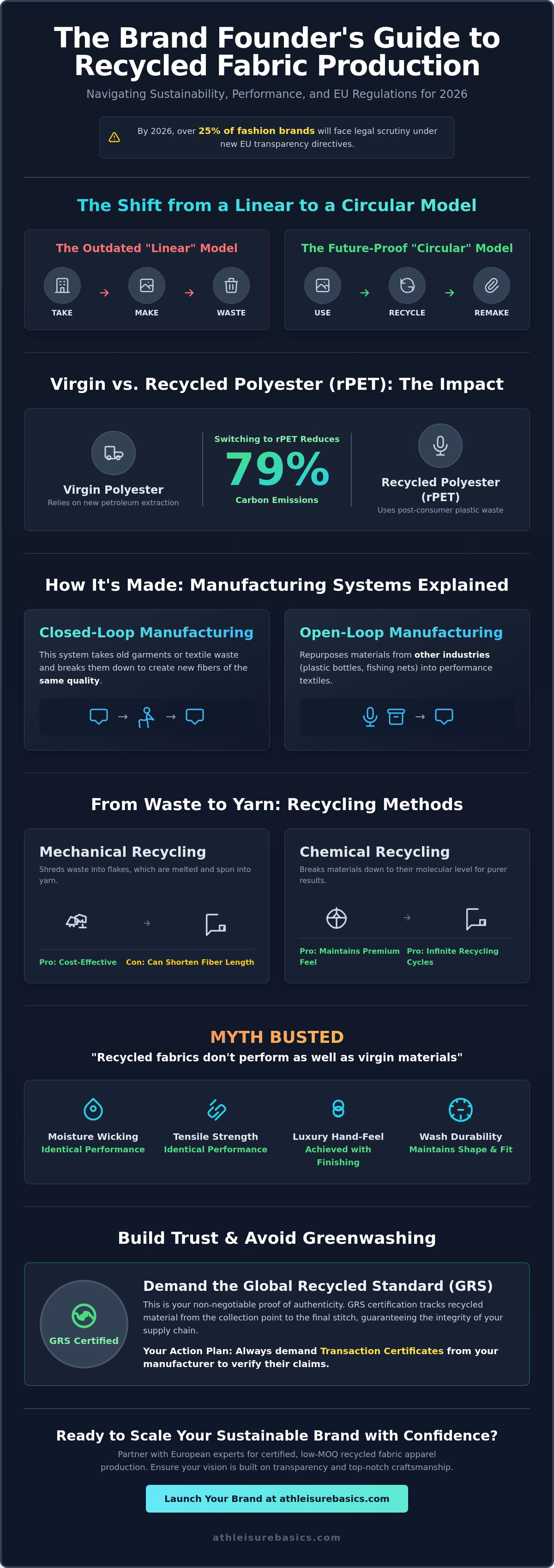
At its core, What is Recycled Fabric Apparel Production? involves transforming pre-consumer or post-consumer waste into high-quality garments. This process replaces the outdated "take-make-waste" linear model with systems designed for longevity and reuse. In 2026, professional brand owners are moving away from traditional virgin polyester, which relies on petroleum extraction, toward rPET (recycled Polyethylene Terephthalate). This shift isn't just about optics; it reduces carbon emissions by approximately 79% compared to virgin material production.
Recycled fabric apparel production functions through two primary systems:
- Closed-loop manufacturing: This system takes old garments or textile waste and breaks them down to create new fibers of the same quality.
- Open-loop manufacturing: This involves repurposing materials from other industries, such as plastic water bottles or recovered fishing nets, into performance textiles.
The Rise of Circular Fashion in 2026
Consumer behavior has shifted significantly, with 73% of Gen Z shoppers reporting they're willing to pay a premium for sustainable products. This demand for transparency is driving the adoption of "cradle-to-cradle" designs where every component of a legging or sports bra is intended to be reclaimed. Legislative pressure is also a major factor. The EU's Ecodesign for Sustainable Products Regulation (ESPR) now mandates that textile products sold within the union meet specific durability and recyclability benchmarks by 2030. Circularity is the elimination of waste through intentional design. By partnering with experts who understand these regulations, you can ensure your brand remains compliant and profitable as the industry evolves.
Virgin vs. Recycled: The Performance Myth
Many first-time founders worry that recycled fabrics lack the durability or stretch required for high-intensity training. This is a common misconception that modern textile engineering has solved. Today's recycled nylon and polyester offer identical moisture-wicking properties and tensile strength to their virgin counterparts. You don't have to sacrifice quality to be ethical. Premium Portuguese mills have perfected the finishing processes, ensuring a luxury "hand-feel" that rivals any traditional textile. These high-performance fabrics maintain their compression and shape through hundreds of wash cycles. When you choose recycled fabric apparel production through established European partners, you're getting a product that meets the highest industry standards for both performance and sustainability.
Types of Recycled Textiles Used in Modern Production
To scale a sustainable brand, you need to understand how waste becomes wearable fabric. Recycled fabric apparel production relies on two primary methods: mechanical and chemical recycling. Mechanical recycling involves shredding post-consumer waste, like plastic bottles or old garments, into small flakes. These flakes are melted and spun into new yarn. While this process is cost-effective, it can shorten fiber length, which sometimes impacts the final texture. Chemical recycling is more advanced. It breaks materials down to their molecular building blocks. This allows for infinite recycling cycles without losing the premium feel your customers expect from luxury apparel.
- Recycled Polyester (rPET): Sourced from plastic bottles and intercepted ocean plastic.
- Recycled Nylon (Econyl): Regenerated from fishing nets and fabric scraps; it's the premium choice for compression and stretch.
- Recycled Cotton: Made from pre-consumer cutting scraps or post-consumer garments.
Synthetic Recycled Fibres for Athleisure
Recycled Polyester (rPET) is the backbone of high-performance activewear. Switching to rPET in your production line can reduce carbon emissions by approximately 79% compared to virgin polyester. This significant reduction helps brands meet ESG goals without sacrificing performance. To guarantee the integrity of your supply chain, verify that your manufacturer uses Global Recycled Standard (GRS) certified yarns. This certification tracks the material from the collection point to the final stitch. Understanding what is a textile at a fundamental level allows you to choose the right GSM and knit for your specific designs. For luxury leggings and technical swimwear, recycled nylon remains the top tier choice because it maintains its shape and color vibrancy through hundreds of wash cycles.
Innovative Bio-Based and Blended Recycled Fabrics
By 2026, premium streetwear brands are increasingly moving toward bio-based blends. We're seeing a surge in seaweed and mushroom-based fibers blended with recycled synthetics to create unique, breathable textures. Recycled cotton presents a specific technical challenge. Because the shredding process creates shorter fibers, using 100% recycled cotton often results in a garment that lacks durability. To solve this, we recommend a blend of 30% recycled cotton with 70% organic virgin cotton. This specific ratio ensures garment longevity while maintaining a soft, high-end hand feel. Navigating Certifications and Avoiding Greenwashing is a critical step for brand owners as these complex blends enter the market. These innovative materials allow you to position your brand as a leader in textile technology. If you want to see how these materials can work for your next collection, you can explore our custom clothing options to find the perfect match for your vision.
Navigating Certifications and Avoiding Greenwashing
Trust is the most valuable currency in sustainable fashion. Without verified proof, your brand faces the "Trust Gap," a divide where consumers and regulators doubt your environmental claims. To close this gap, you must demand Transaction Certificates (TCs) from your supplier for every order. A TC isn't just a generic certificate; it's a verified document issued by a third party for each specific shipment. It confirms that the exact batch of material used in your recycled fabric apparel production actually contains the recycled content you're claiming.
Choosing the right standard is your first line of defense. The Global Recycled Standard (GRS) and the Recycled Claim Standard (RCS) are the industry benchmarks. While RCS focuses solely on verifying the percentage of recycled content, GRS goes much further. It includes strict requirements for social conditions, environmental management, and chemical restrictions. In 2024, many EU retailers began requiring GRS compliance to mitigate legal risks associated with new greenwashing directives.
Safety is another critical factor. Recycled materials, especially those derived from post-consumer waste, can carry legacy chemicals from their previous life. The OEKO-TEX® Standard 100 certification is essential here. It ensures that the recycled pulp or fibers don't contain harmful substances like formaldehyde or heavy metals. This testing provides the safety assurance your customers expect from a premium brand.
Before signing a contract, verify a factory’s Scope Certificate (SC) on the Textile Exchange database. An SC proves the facility is authorized to produce certified goods, but it's only the first step. You must also ensure the factory can provide the TCs for your specific production run.
The Importance of the GRS Label
The GRS label is a comprehensive tool that covers more than just fiber content. It ensures the factory meets high social and environmental processing requirements. To use the GRS logo on your brand’s packaging or marketing, you must follow strict labeling guidelines and obtain approval from your certifier. A fabric is only "certified" if the entire chain of custody is documented from the raw material source to the final garment.
Beyond the Fabric: Ethical Manufacturing Standards
A garment made from recycled polyester isn't truly sustainable if it's produced in a facility that exploits workers. Ethical manufacturing is the backbone of a responsible brand. This is why many founders choose Made in Portugal Clothing. Portuguese factories operate under strict EU labor laws, ensuring fair wages, safe working conditions, and regulated working hours. When you combine ethical labor with recycled fabric apparel production, you create a product that aligns with both environmental and humanitarian values. This dual approach is what builds a lasting legacy for your brand.
The Production Process: From Recycled Yarn to Finished Garment
Executing a successful collection requires a technical understanding of how non-virgin fibers behave during manufacturing. The recycled fabric apparel production cycle differs from standard production because the raw materials often have different elasticity and heat sensitivity profiles. Follow these five steps to ensure your final product meets premium standards.
- Step 1: Certified Sourcing. We partner with reputable European mills that provide Global Recycled Standard (GRS) certified yarns. This ensures the mechanical or chemical recycling process is fully traceable from the plastic bottle or textile waste to the cone of yarn.
- Step 2: Technical Specifications. Your Tech Pack must account for unique fiber behavior. Recycled polyester can exhibit shrinkage rates up to 5% higher than virgin polyester during high-heat sublimation or curing. We adjust patterns to compensate for these variances.
- Step 3: Rigorous Sampling. We perform "wear-tests" on every prototype. This stage compares the recycled sample against virgin equivalents to check for pilling resistance, moisture-wicking capabilities, and "hand-feel" softness.
- Step 4: Low-Waste Cutting. During bulk production, we utilize advanced CAD marker making. This software optimizes the layout on the fabric roll to reduce textile scrap by up to 15%, ensuring your sustainable mission extends to the cutting room floor.
- Step 5: Certification Verification. The final batch undergoes quality control where we verify the GRS Transaction Certificates (TCs). This documentation is vital for your brand's transparency and legal compliance in the EU and US markets.
Sourcing Recycled Materials in Portugal
The Northern Portugal textile cluster offers a distinct advantage for recycled fabric apparel production. Because spinning, weaving, and dyeing facilities are often located within a 30km radius, the "carbon miles" of your raw materials are significantly lower than Asian alternatives. We help brands access "deadstock" recycled fabrics from these mills. This strategy allows you to utilize high-end, leftover recycled materials for even lower MOQs, making it easier to launch a sustainable line without massive upfront investment. You can learn more about how we manage these stages in our guide to The Garment Production Process.
Designing for Longevity and Recyclability
True sustainability involves considering the end of the garment's life. We encourage the "Design for Disassembly" principle. This means avoiding mixed-fiber hardware, such as metal zippers on polyester hoodies, which complicates the recycling process later. Choosing mono-materials, like 100% recycled polyester or 100% organic cotton, makes future textile-to-textile recycling possible. For branding, we recommend using water-based eco-friendly inks and recycled polyester threads for embroidery. These small choices ensure the entire garment remains as circular as the fibers it's made from.
Ready to build a sustainable legacy? Start your recycled apparel project with our expert team today.
Scaling Your Sustainable Brand with Athleisurebasics
Building a brand in 2026 requires more than just a good design; it demands a responsible supply chain. Athleisurebasics bridges the gap for startups that want to enter the market without the burden of massive inventory. We've streamlined recycled fabric apparel production to ensure that your first collection meets premium standards while respecting the planet. By choosing a partner that understands the nuances of sustainable textiles, you can focus on growth while we handle the technical complexities of manufacturing.
Low MOQ Recycled Production for Startups
Traditional manufacturers often demand thousands of units, which creates a barrier for new founders. We've changed that model. Our white label service features a 70-piece MOQ per style and color, which applies directly to our sustainable blanks. This low entry point allows you to test market-fit for recycled products without overextending your capital. Starting small reduces waste and ensures you don't end up with deadstock, which is a core tenet of sustainability. If you want to learn more about the advantages of local manufacturing, check out our Clothing Manufacturers Portugal Guide.
- Risk Mitigation: Test your recycled designs with 70 pieces before scaling up.
- Inventory Efficiency: Maintain a lean business model with fast replenishment options.
- Premium Quality: Every piece benefits from Portuguese craftsmanship and EU ethical standards.
Custom Sustainable Solutions
If your vision requires something beyond our white label catalog, our custom solutions provide the flexibility you need. We leverage an extensive partner network to source unique recycled textiles, from ocean-bound plastics to post-consumer cotton. Our team provides expert consulting on tech packs to ensure that your chosen recycled fabrics perform perfectly under the stress of activewear or lifestyle use. We don't just produce your clothes; we act as your guide from the first sketch to the final shipment.
Our commitment to quality is backed by OEKO-TEX® certified materials. This certification guarantees that every thread and button is free from harmful substances, aligning your brand with the highest safety and environmental standards. This "Partner, not just Producer" philosophy means we're invested in your long-term success. We help you turn your vision into a legacy of high-quality, ethical products that your customers can trust. Experience the difference of premium recycled fabric apparel production with a team that values your growth.
Ready to take the next step? Launch your recycled collection with a custom quote today.
Scale Your Vision with Sustainable Excellence
Success in 2026 requires more than just a vision; it demands a commitment to ethical standards and technical precision. Mastering recycled fabric apparel production involves understanding fiber origins and securing valid certifications to protect your brand's reputation. By choosing OEKO-TEX® certified factories, you ensure every garment meets strict safety and environmental criteria. This transition from raw recycled yarn to a finished luxury product is the foundation of a modern, profitable business.
Athleisurebasics serves as your expert partner in this journey. We provide access to premium Portuguese craftsmanship and offer a low MOQ starting at 70 pieces per style. This flexibility allows you to scale efficiently without the risk of overproduction. Our team simplifies the complexities of sustainable manufacturing so you can focus on building your brand's future. It's time to turn your sustainable vision into a high-quality reality.
Start Your Sustainable Production Journey with Athleisurebasics
We're ready to help you build a brand that lasts.
Frequently Asked Questions
Is recycled fabric more expensive than regular fabric?
Recycled fabrics generally cost 10% to 30% more than virgin materials because the supply chain for collecting and processing waste is more complex. You're paying for the specialized technology required to turn plastic bottles or textile waste into high-quality yarn. As global production capacity increases by a projected 15% by 2026, these price gaps should narrow. For now, view the extra cost as an investment in your brand's premium, ethical positioning.
What is the minimum order quantity for recycled clothing production?
Our standard minimum order quantity for recycled fabric apparel production starts at 60 pieces per style and color for white label options. This low MOQ allows startups to launch a sustainable collection without the risk of holding excessive inventory. Larger custom projects might require higher minimums depending on the specific textile blend. We focus on flexibility to help you scale your brand profitably from your very first order.
How can I prove to my customers that my clothes are actually recycled?
You can provide definitive proof by using materials certified by the Global Recycled Standard (GRS) or OEKO-TEX Standard 100. These certifications track the material from the source to the final garment, ensuring full transparency in your supply chain. We provide the necessary documentation and certificates for every production run. Displaying these recognized logos on your hangtags or website builds immediate trust with 75% of eco-conscious consumers who look for third-party verification.
Does recycled polyester feel different on the skin?
Modern recycled polyester is molecularly identical to virgin polyester, so it feels exactly the same against the skin. Advanced mechanical and chemical recycling processes ensure the fibers are smooth, durable, and moisture-wicking. You won't sacrifice the premium feel your customers expect from high-end athleisure. In blind touch tests conducted by textile labs, participants can't distinguish between recycled and non-recycled synthetic blends. Your customers get the same luxury experience while supporting environmental goals.
Can all types of clothing be made from recycled fabrics?
Almost any garment can be manufactured using recycled alternatives, including leggings, hoodies, and outerwear. Recycled polyester and nylon are perfect for performance wear, while recycled cotton blends work well for t-shirts and sweatshirts. While 100% recycled content is possible for many items, some high-stretch garments might require a small percentage of virgin elastane to maintain shape. We help you select the right fabric blend to ensure your vision meets the highest industry standards.
Why is Portugal considered a leader in recycled textile production?
Portugal leads the industry because of its century-long textile heritage combined with massive recent investments in green technology. The country adheres to strict EU environmental regulations and labor laws, ensuring every garment is produced ethically. In 2023, the Portuguese textile sector invested over 100 million Euros in sustainable innovation. Manufacturing here gives your brand a Made in Portugal seal of quality that resonates with luxury markets worldwide, offering a superior alternative to mass production.
What happens to recycled clothes at the end of their life?
Recycled clothes can often enter a circular loop to be processed into new fibers or industrial insulation. Pure polyester or nylon garments are easier to recycle mechanically than complex fiber blends. By 2026, new EU regulations will require brands to take more responsibility for textile waste. We encourage designing for circularity by choosing mono-materials that simplify the end-of-life recycling process. This approach ensures your brand remains compliant with evolving European environmental standards.
Do recycled fabrics require special care or washing instructions?
Recycled fabrics don't require special washing procedures beyond standard care for high-quality apparel. We recommend washing at 30 degrees Celsius and avoiding tumble dryers to extend the life of the garment and save energy. Using a microplastic filter bag is a great suggestion for your customers when washing recycled synthetics. These simple steps maintain the fabric's integrity and support your brand's commitment to long-term sustainability while keeping the premium feel intact.


Leave a comment
This site is protected by hCaptcha and the hCaptcha Privacy Policy and Terms of Service apply.