
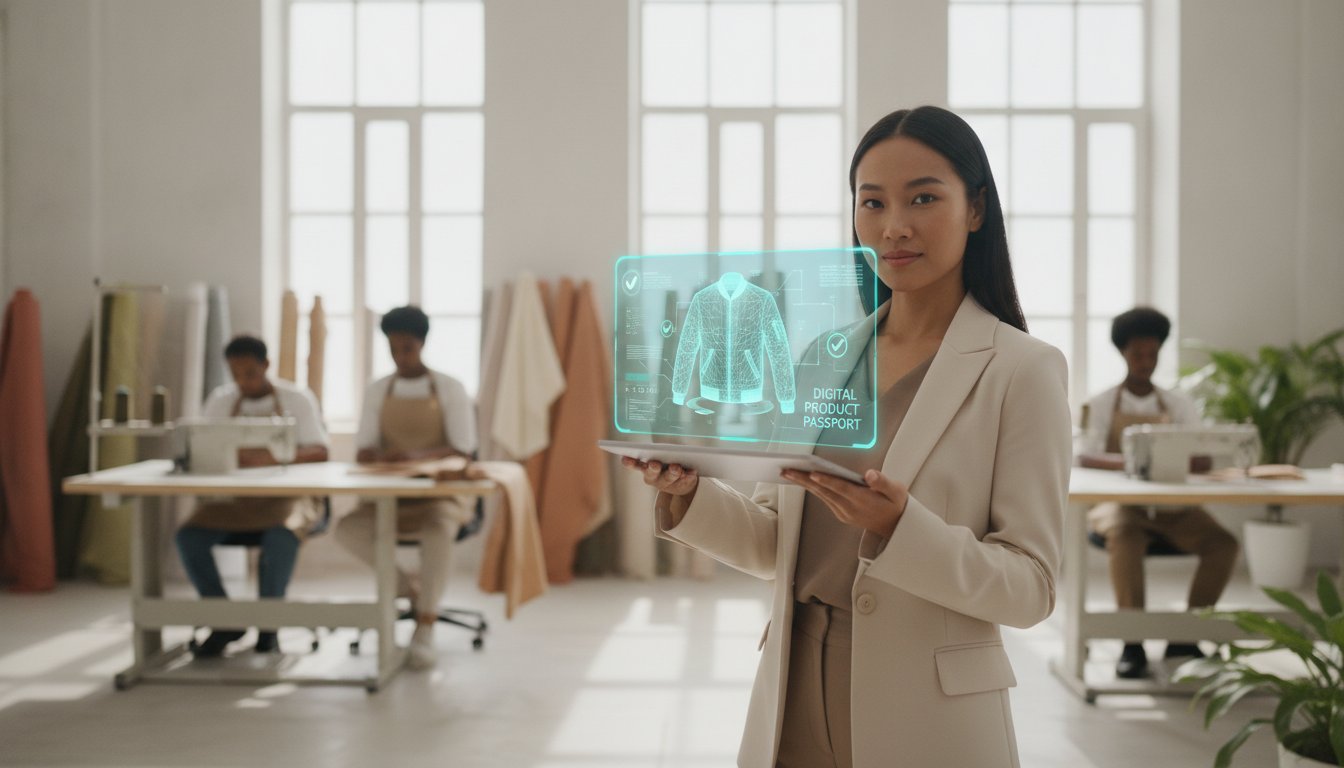
How to Find Ethical Clothing Suppliers: A 2026 Guide for Emerging Brands
By July 2026, the era of "plausible deniability" in fashion supply chains has officially ended with the rollout of Digital Product Passports and stricter EU transparency laws. For emerging brands, the risk isn't just a moral one; it's a legal and commercial necessity to know exactly who is sewing your labels. You likely feel the pressure of building a brand that stands for something, yet you're facing the daunting reality of high minimum order quantities and a confusing maze of textile certifications. It’s natural to worry about accidentally partnering with a facility that doesn't meet your standards, especially when you're just starting to scale.
This guide will show you exactly how to find ethical clothing suppliers that align with your vision without requiring massive upfront investments. You'll learn how to vet manufacturers using the updated SA8000:2026 standards, which certifications like OEKO-TEX® actually protect your brand, and how to secure a production partner that welcomes small orders. We provide a clear checklist for verification and help you navigate the 2026 regulatory landscape with confidence. This ensures your brand's growth is both sustainable and secure as you transition from concept to finished product.
Key Takeaways
- Identify the three pillars of ethical production and understand why radical transparency is now a legal requirement for textile brands in 2026.
- Master how to find ethical clothing suppliers by focusing on regional manufacturing hubs that offer built-in regulatory oversight and high quality standards.
- Implement a 5-step vetting process to verify critical certifications like OEKO-TEX® and SA8000 while assessing factory conditions through virtual tours.
- Learn how EU regulations like the Ecodesign for Sustainable Products Regulation serve as a powerful risk-management tool for your emerging brand.
- Discover how to overcome high minimum order quantity barriers by partnering with suppliers that offer accessible 70-piece thresholds for new collections.
What Defines an Ethical Clothing Supplier in 2026?
In 2026, the definition of an ethical supplier has shifted from a voluntary "nice-to-have" to a non-negotiable legal framework. It rests on three critical pillars: labor rights, environmental stewardship, and radical transparency. For founders researching how to find ethical clothing suppliers, it's vital to recognize that "ethical" now includes digital traceability. The implementation of Digital Product Passports (DPPs) in the EU means every stitch and fabric source must be documented. This transparency directly impacts your brand's valuation. Investors and customers now view supply chain clarity as a primary indicator of long-term business health and risk management.
Compliance isn't just about a logo on your website anymore. Under the Ecodesign for Sustainable Products Regulation (ESPR) effective as of July 19, 2026, large companies face a strict ban on destroying unsold clothing and footwear. This regulation signals a broader shift where ethical manufacturing is a prerequisite for market entry. Understanding What is Sustainable Fashion? involves looking beyond just the raw materials. While using recycled polyester or organic cotton is a start, true ethical production focuses on the human and industrial processes behind the garment. It's the difference between a "green" fabric and a "fair" factory.
Labor Standards and Human Rights
Ethical facilities prioritize fair living wages over the bare legal minimums often found in unregulated manufacturing hubs. In 2026, the industry benchmark is the revised SA8000:2026 standard for social accountability. These facilities ensure safe structural conditions and respect the rights of workers to organize through collective bargaining. When you evaluate a partner, look for active evidence of these standards. It ensures the people making your clothes have a voice and a secure livelihood, which protects your brand from the reputational risks associated with sweatshop labor.
Environmental Impact and Waste Management
Top-tier manufacturers manage their chemical footprint through strict protocols like the OEKO-TEX® Standard 100, which updated its limit values in June 2026 to include stricter substance testing. Modern factories also integrate renewable energy sources, such as on-site solar arrays, to power their machinery. Waste management has evolved too. Instead of discarding textile offcuts, ethical partners implement advanced digital cutting algorithms and closed-loop waste reduction strategies. These processes ensure that the environmental load of your production run is as low as possible.
Where to Start Your Search for Ethical Manufacturers
Identifying the right production partner is a high-stakes task for any new label. While generic search engines return thousands of results, the process of how to find ethical clothing suppliers requires a more filtered approach. You should prioritize industry-specific ecosystems where transparency is a baseline requirement rather than an optional feature. Successful sourcing is as much about selecting the right geographical ecosystem as it is about the specific facility.
Online Directories and Sourcing Platforms
Platforms like Common Objective are effective because they vet factories based on social and environmental performance. Use these databases to filter for key certifications to look for, such as GOTS or the updated SA8000:2026 standards. Be wary of profiles that use vague terminology without providing specific certificate numbers or recent audit dates. A reliable supplier will transparently display their credentials to simplify your vetting process.
Regional Manufacturing Hubs
Focusing your search on established regional clusters provides an immediate layer of security and saves significant time. Northern Portugal is the premier destination for European luxury and technical apparel. This region offers a concentrated network of specialized facilities that have adhered to strict EU labor laws for decades. Manufacturing here allows you to leverage a "Made in Europe" seal, which strengthens your brand storytelling and builds consumer trust. The geographical proximity also minimizes the carbon footprint of your logistics chain, helping you stay compliant with 2026 environmental standards.
Professional networking is another powerful tool in your sourcing kit. Use LinkedIn to connect with other brand founders for "off-market" recommendations on how to find ethical clothing suppliers that don't advertise on mainstream platforms. Attending trade shows like Première Vision or Munich Fabric Start provides the opportunity to meet factory owners in person. These face-to-face interactions are essential for assessing a partner's expertise and their willingness to support your brand's specific growth trajectory. If you want to bypass the complexity of cold-outreach, custom clothing production in Portugal offers a direct route to ethical manufacturing with accessible 70-piece minimums for new collections.
The 5-Step Vetting Process for Potential Partners
Shortlisting a manufacturer is only the beginning. When you analyze how to find ethical clothing suppliers, the vetting stage is where you mitigate the risk of future legal or reputational crises. You must move beyond marketing claims and verify the operational reality of the facility. A structured evaluation ensures your production partner actually shares your brand values. Use this five-step framework to audit potential partners before signing any contracts.
- Step 1: Verify Active Certifications. Request digital copies of all ethical and environmental certifications. Do not accept a simple list of logos. You need to see the current validity dates and certificate numbers.
- Step 2: Request a Factory Tour. Transparency is a prerequisite for ethical production. Whether it is a physical visit or a live virtual tour via video call, seeing the production floor in real-time reveals worker conditions and safety standards.
- Step 3: Evaluate Technical Communication. Submit a preliminary tech pack and monitor the response. An expert partner will offer feedback on construction or material efficiency. Sluggish or vague communication at this stage often predicts production delays later.
- Step 4: Conduct Rigorous Sampling. Order samples to verify the quality of raw materials and craftsmanship. This is your chance to test the durability and skin-safety of the finished garment.
- Step 5: Audit Subcontractor Policies. Ask if any part of the production is outsourced. Ethical suppliers maintain a strict, transparent subcontractor policy to ensure every part of your garment meets the same high standards.
Understanding Key Certifications
In 2026, certifications are your primary risk-management tool. The OEKO-TEX® Standard 100 remains essential for skin-contact apparel, especially with the stricter substance limits introduced in June 2026. For fiber integrity, the Global Organic Textile Standard (GOTS) is the gold standard for organic claims. To verify labor conditions, look for the SA8000:2026 standard or a recent Sedex audit. These third-party verifications provide the objective proof required for your Digital Product Passports.
Questions to Ask Every Factory Owner
Direct questioning reveals the depth of a supplier's commitment. Use these specific queries to assess their operational integrity:
- Who are your primary fabric suppliers, and can you provide their specific ethical certifications?
- Can you share your most recent third-party social audit report from the last 12 months?
- What specific protocols do you have in place for managing fabric waste and handling deadstock materials?
Establishing these facts early prevents costly mistakes. It allows you to build a relationship based on documented performance rather than optimistic promises. If you need assistance in preparing for these conversations, professional clothing production consulting services can help you refine your tech packs and vetting criteria to ensure a seamless transition into ethical manufacturing.
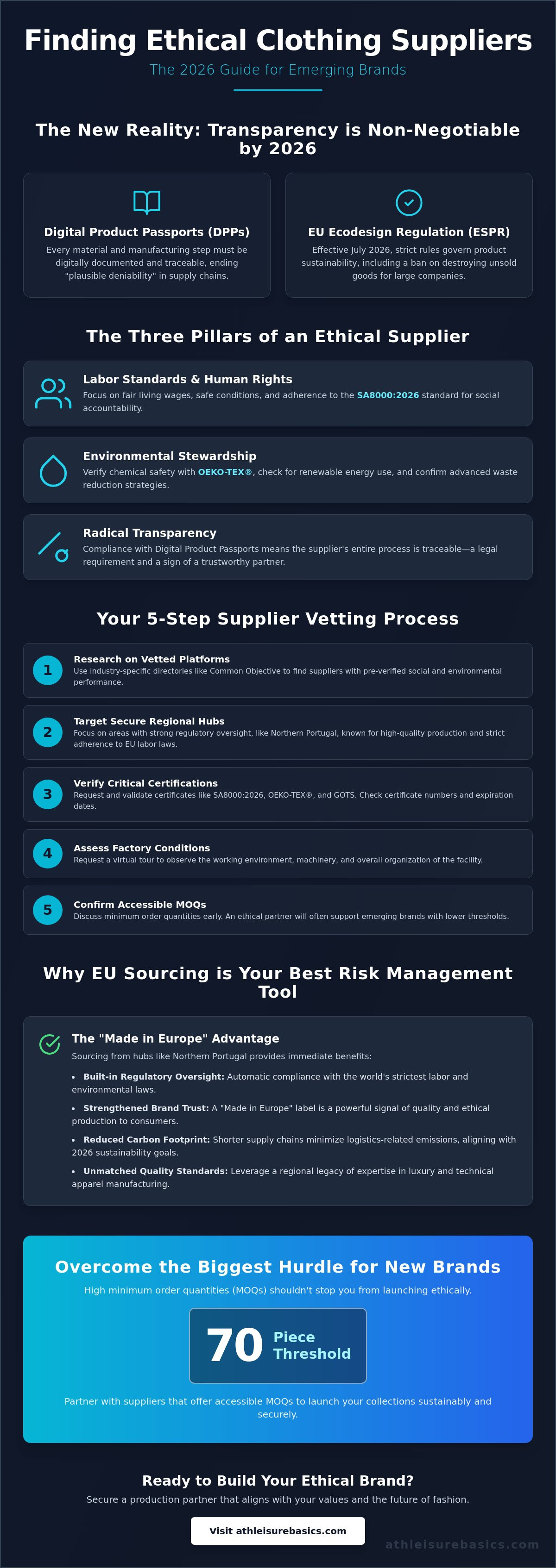
EU vs. Global Sourcing: Why Regulation is Your Best Friend
Sourcing from regions with high regulatory standards is the most effective way to de-risk your business model. While voluntary codes of conduct in global manufacturing hubs are common, they often lack the enforcement power of established law. When you consider how to find ethical clothing suppliers, focusing on jurisdictions where labor and environmental rights are legally protected provides an immediate layer of security. This legal baseline removes much of the guesswork from your vetting process, as compliance is a prerequisite for a factory's operating license.
The EU Green Deal has established rigorous textile manufacturing standards for 2026, creating a predictable environment for brand owners. These regulations mean that European factories must operate with a level of transparency that is often optional in other regions. Beyond labor, the legal framework in Europe offers superior intellectual property protection. This ensures your unique designs and tech packs remain yours, providing clear legal recourse that is difficult to secure in non-regulated zones. Shipping from within the EU also addresses the ethical implications of long-haul freight. Shorter transit times significantly lower your carbon footprint and allow you to maintain a leaner inventory, which helps avoid the waste associated with overproduction.
The Portuguese Advantage in Athleisure
The Porto region in Northern Portugal represents a unique cluster where traditional craftsmanship meets modern innovation. Brands that choose to manufacture in Portugal gain immediate access to a network of suppliers specializing in high-performance and recycled fabrics. These facilities are deeply integrated into the EU's circular economy goals, making it easier for you to meet the data requirements for Digital Product Passports. This regional expertise is particularly valuable for athleisure brands that require complex stitching and specialized technical materials that meet strict environmental limit values.
Cost vs. Value: The True Price of Ethical Production
Emerging founders often focus on the initial unit price when researching how to find ethical clothing suppliers. However, a lower price frequently hides the "unethical tax" of potential supply chain disruptions, poor quality control, and the risk of reputational damage. When you calculate the ROI of a shorter, more transparent supply chain, the value becomes evident. Ethical production supports higher retail margins because modern customers are willing to pay a premium for verified integrity. This transparency builds the deep customer loyalty necessary for long-term growth and brand resilience.
If you're ready to secure your supply chain with a partner that values transparency as much as you do, our custom clothing manufacturing services in Portugal provide the ethical foundation your brand needs to scale with confidence.
Partnering with Athleisurebasics for Ethical Growth
Building a lasting presence in the fashion industry requires more than just knowing how to find ethical clothing suppliers; it requires a partner who understands the unique constraints of an emerging business. Athleisurebasics serves as that dedicated ally. We combine the high standards of Portuguese craftsmanship with an operational model specifically designed to remove barriers for new entrepreneurs. Our commitment to premium, OEKO-TEX® certified production ensures your products meet the latest June 2026 safety and environmental limit values, providing the material integrity your customers expect.
We bridge the gap between complex custom design and accessible white-label solutions. Whether you need full CMT production or luxury blanks to kickstart your collection, our infrastructure is built to scale with you. Our team provides end-to-end support, from materials sourcing to tech pack development. This collaborative approach simplifies industrial processes and mitigates the risks typically associated with new market entries. By choosing a partner rooted in a regulated European hub, you secure a transparent supply chain that is ready for the 2026 Digital Product Passport requirements.
Low MOQ: The Ethical Choice for Small Brands
Overproduction remains one of the largest contributors to global textile waste. By offering accessible 70-piece minimum order requirements, we empower you to test the market without the financial or environmental risk of creating deadstock. This approach is fundamental to understanding clothing manufacturing MOQs for startups. You can scale your operations responsibly, moving from 70 units to 250 or more as your demand grows. This flexibility ensures your brand remains agile and principled as you navigate your first commercial milestones.
Our Process: From Tech Pack to Finished Garment
Transparency is the foundation of our garment production process. We don't just act as a manufacturer; we provide clothing production consulting services to help you navigate every sourcing decision. We assist with technical choices that impact both the quality and the ethical footprint of your garments. This end-to-end service model is geared towards removing entry barriers and highlighting the operational agility of your brand. We handle the logistical complexities of Portuguese manufacturing so you can focus on long-term brand development and market strategy.
If you are looking for a knowledgeable collaborator to help you master how to find ethical clothing suppliers and launch your next collection, we are ready to assist. Our team is invested in your success from the first sample to the final shipment. Contact us for a custom manufacturing quote today to begin your journey toward sustainable, high-end production.
Scaling Your Brand with Integrity in 2026
Sourcing ethically is no longer a secondary consideration; it's a foundational business strategy backed by the 2026 regulatory landscape. Success in today's market depends on moving beyond vague marketing claims and embracing the transparency required by Digital Product Passports. By focusing on regional hubs with established labor protections and rigorous environmental standards, you protect your brand from reputational risks and legal hurdles. As you refine your process for how to find ethical clothing suppliers, remember that the most reliable partners are those who treat your growth as a collaborative journey.
Eliminating the barriers to entry is essential for scaling your vision responsibly. We provide the expertise needed to transition from initial tech packs to premium finished garments. Our facility offers the assurance of OEKO-TEX® Certified Fabrics and the prestige of being Made in Portugal. With our low 70-piece MOQs for startups, you can launch collections without the burden of excessive inventory. Start your ethical production journey with Athleisurebasics today. Your path from a creative concept to a successful commercial brand is within reach when you have a principled partner by your side.
Frequently Asked Questions
What is the difference between an ethical and a sustainable supplier?
Ethical production focuses on labor rights and worker welfare, while sustainable production targets environmental protection and circularity. A comprehensive strategy for how to find ethical clothing suppliers involves vetting for both pillars. A supplier might use organic fabrics but have poor labor conditions, so you must verify both social audits and environmental certifications to ensure total compliance.
How can I verify a manufacturer's ethical claims without visiting the factory?
You can verify a manufacturer's claims by requesting their specific certification numbers and checking them against official databases like OEKO-TEX® or GOTS. Requesting a live virtual factory tour via video call provides a real-time view of working conditions and safety standards. Third-party audit reports from organizations like Sedex offer objective proof of compliance without requiring a physical visit to the facility.
Are ethical clothing suppliers always more expensive?
Ethical manufacturing is not always more expensive when you calculate the total cost of brand security and risk management. Higher unit prices often reflect fair wages and high-quality materials that reduce the risk of returns or reputational damage. Investing in a transparent supply chain allows your brand to command higher retail prices and build the deep customer trust necessary for long-term growth.
What are the most important certifications for an athleisure brand?
Athleisure brands should prioritize OEKO-TEX® Standard 100 to guarantee that performance fabrics are safe for skin contact during intense exercise. GOTS is essential if you are marketing organic cotton products, while the SA8000:2026 standard verifies social accountability. These certifications provide the verifiable data required for the Digital Product Passports that are becoming mandatory for textile products sold in the EU.
Can I find ethical clothing suppliers with low MOQs?
Yes, you can find ethical partners that offer accessible minimums to prevent overproduction and textile waste. Many high-standard factories in Portugal now offer 70-piece minimums to help startups launch collections without the financial burden of excessive inventory. This approach allows you to scale your business responsibly while maintaining a commitment to premium, small-batch manufacturing that aligns with your values.
What is greenwashing and how do I spot it in a supplier's pitch?
Greenwashing occurs when a supplier uses vague, unsubstantiated terms like "conscious" or "earth-friendly" without providing verifiable proof. To spot it, ask for specific data on water usage, chemical management, or labor audits. If a manufacturer cannot provide a valid certificate number or a recent third-party report, their claims are likely a marketing tactic rather than an operational reality.
Why is manufacturing in Portugal considered more ethical than other regions?
Portugal is considered a global leader because it operates under strict EU labor laws and environmental regulations that are legally enforced. The region has a deep history of textile craftsmanship and a highly integrated supply chain that includes advanced recycled fabric mills. Manufacturing in Portugal ensures your brand benefits from high-tech production and ethical standards that protect both workers and the planet.
What questions should I ask a new supplier during our first meeting?
During your first meeting, ask if they outsource any part of their production to subcontractors and request to see their most recent social audit report. Understanding how to find ethical clothing suppliers involves asking direct questions about their material sources and their waste management protocols. You should also inquire about their willingness to provide the full transparency required for your brand's Digital Product Passport.



Leave a comment
This site is protected by hCaptcha and the hCaptcha Privacy Policy and Terms of Service apply.