

OEKO-TEX Fabrics: 2026 Guide for Premium Brands
In 2026, a premium label carries little weight if you cannot prove your textiles are chemically safe. You likely recognize that today's athleisure customers are more informed and cautious than ever before. They aren't just looking for high performance; they're scrutinizing labels to avoid the greenwashing traps that have recently plagued the fashion industry. It's often difficult to navigate the gap between organic marketing and actual safety certifications while trying to find a reliable manufacturing partner for your startup.
This guide will show you how choosing oeko-tex certified fabrics serves as the essential safety baseline for your brand. By prioritizing OEKO-TEX Standard 100, you ensure every garment is tested for harmful substances and aligns with the strict EU Green Claims Directive currently in force. We'll explore the updated 2026 regulations, explain why safety certifications differ from organic ones, and show you how a Portuguese manufacturing partnership can streamline your sourcing process for premium performance materials.
Key Takeaways
- Understand why OEKO-TEX Standard 100 is the industry benchmark for verifying that every component of your garment is free from harmful chemicals.
- Learn how to leverage safety labels as a silent salesman to build immediate credibility with health-conscious athleisure consumers.
- Differentiate between safety-focused and organic-focused standards to select the most effective certification strategy for your collection.
- Discover the essential steps for sourcing oeko-tex certified fabrics and verifying supplier credentials during the tech pack development phase.
- Explore why Portugal is the strategic choice for brands seeking high-end manufacturing that aligns with strict EU environmental and labor regulations.
What is OEKO-TEX Standard 100? Defining Textile Safety in 2026
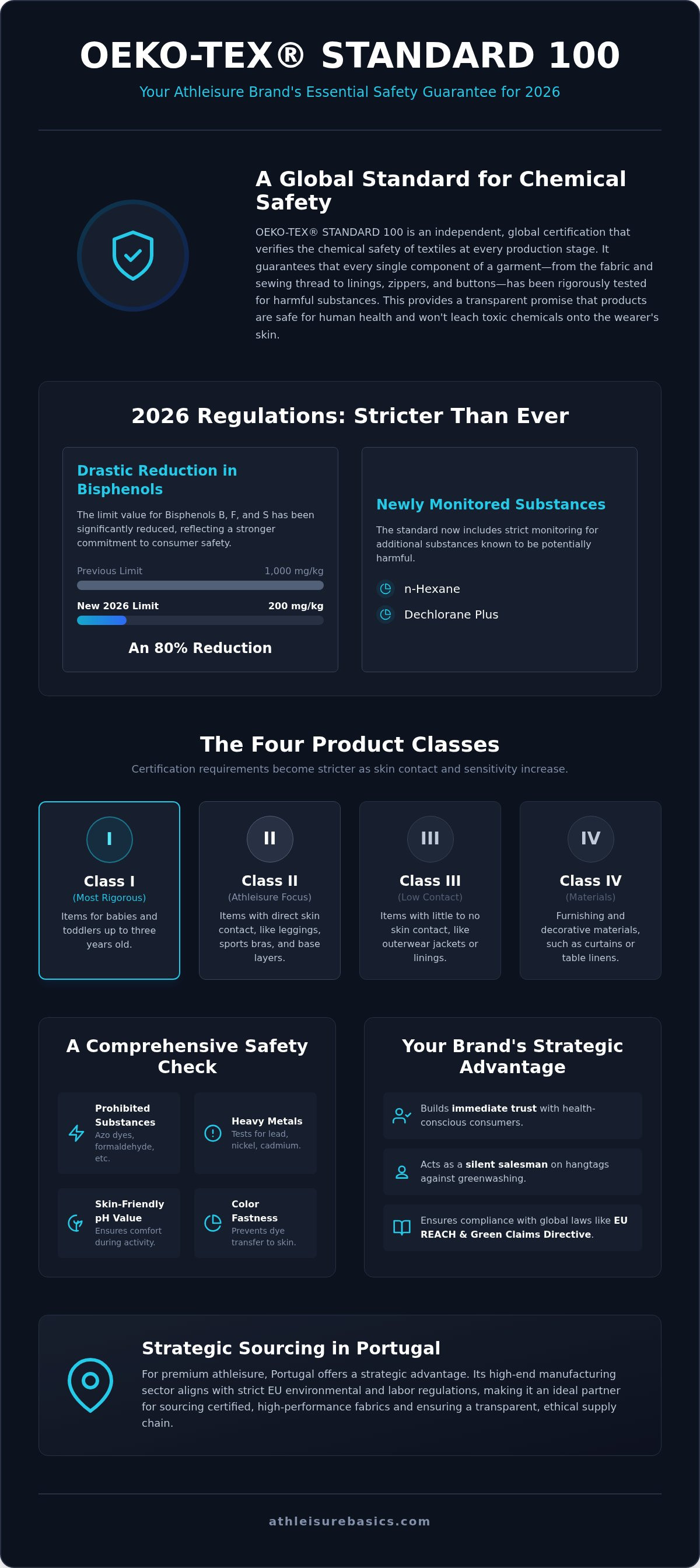
OEKO-TEX Standard 100 is an independent, global certification system that verifies the chemical safety of textiles throughout every stage of production. Understanding What is OEKO-TEX involves looking past the surface of a garment. This standard ensures that every component; including the sewing thread, linings, and even the zippers; has been tested for harmful substances. For brands sourcing oeko-tex certified fabrics, this label provides a transparent guarantee that their products won't leach toxic chemicals into the wearer's skin during use.
Premium athleisure relies heavily on synthetic blends and performance finishes to achieve moisture-wicking and compression properties. These treatments often involve complex chemical processes that can leave behind residues if not managed correctly. As of June 1, 2026, the criteria for these materials have become even more stringent. Limit values for Bisphenols B, F, and S have been reduced from 1,000 mg/kg to 200 mg/kg. Additionally, new substances like n-Hexane and Dechlorane Plus are now strictly monitored. These updates reflect a growing commitment to consumer safety in an era where high-tech fabrics are the industry norm.
The Four Product Classes of OEKO-TEX
The certification is divided into four distinct classes based on the textile's intended use and the intensity of skin contact. The requirements become stricter as the sensitivity of the skin increases.
- Class I: This is the most rigorous category, covering items for babies and toddlers up to three years old.
- Class II: This includes items with direct skin contact, such as leggings, sports bras, and base layers. Most premium athleisure products fall into this category.
- Class III: Reserved for items with little to no skin contact, such as outerwear or linings.
- Class IV: Covers furnishing materials and decorative items like curtains or table linens.
What Exactly is Tested?
The testing process is exhaustive and goes well beyond current legal requirements. It includes substances that are already prohibited by law and chemicals that aren't yet regulated but are known to be harmful to human health.
- Prohibited azo dyes, formaldehyde, and pentachlorophenol are primary targets during the screening process.
- Tests for heavy metals and nickel ensure that any hardware won't cause allergic reactions or skin irritation.
- The pH value is carefully analyzed to ensure the fabric remains skin-friendly, even during intense physical activity when pores are open.
- Color fastness is verified to prevent dyes from transferring to the skin when the wearer sweats.
By using oeko-tex certified fabrics, you're not just clearing a regulatory hurdle. You're adopting a rigorous safety protocol that builds long-term trust with your customers and protects your brand's reputation in a competitive market.
Why Premium Athleisure Brands Require OEKO-TEX Certification
Emerging brands often struggle to differentiate themselves from fast fashion giants that dominate on price. In the premium athleisure sector, your competitive advantage lies in material integrity and consumer safety. Utilizing oeko-tex certified fabrics isn't just a technical choice; it's a strategic business decision that protects your brand's reputation from day one. By prioritizing these standards, you signal to your customers that you value their well-being as much as their performance.
The certification acts as a silent salesman on your hangtags. Today's fitness enthusiasts are deeply invested in their health and increasingly aware of the chemicals used in synthetic performance gear. When they see the OEKO-TEX Standard 100 label, they receive immediate, third-party verification that your garments are safe for prolonged skin contact. This builds a level of trust that unverified organic claims simply cannot match, especially in a market where greenwashing is a constant concern.
From a legal perspective, this certification simplifies global expansion. It ensures your products effortlessly meet international safety laws, including the EU REACH standards. With the EU Green Claims Directive now in full force as of 2026, brands are prohibited from making environmental or safety claims without verifiable documentation. Having these certificates on hand prevents legal friction and positions your company as a transparent, principled player in the global market.
The Marketing Advantage of Certified Textiles
Integrating safety into your brand's core values allows for more powerful storytelling. You can confidently market chemical-free benefits to your audience, knowing your claims are backed by rigorous laboratory testing. Displaying the logo on your website and packaging provides visual proof of quality that resonates with health-conscious buyers. It transforms a technical specification into a premium brand promise that justifies a higher price point.
Risk Mitigation for Startup Founders
Product recalls or skin irritation complaints can be financially devastating for a new venture. Synthetic performance fabrics often require complex dyes and finishes that carry a higher risk of chemical residue. By prioritizing these materials within your garment production process, you mitigate these risks before the first item reaches a customer. This level of oversight ensures that every production run maintains the same high standard of safety and performance, reducing the likelihood of costly operational setbacks.
If you're ready to secure your supply chain, our team can provide the materials sourcing support needed to find reliable, certified mills in Portugal.
OEKO-TEX vs. GOTS: Choosing the Right Standard for Your Line
Choosing the correct certification is a pivotal decision for your brand's market positioning. While both standards promote better textile practices, they address different concerns within the supply chain. OEKO-TEX Standard 100 focuses exclusively on the safety of the finished product for the consumer. In contrast, the Global Organic Textile Standard (GOTS) tracks the entire ecological and social journey of organic fibers from the farm to the factory. Understanding these nuances helps you avoid the common trap of overpaying for certifications that don't align with your specific product category.
For many premium athleisure brands, oeko-tex certified fabrics are the logical choice for high-performance gear. Performance textiles typically rely on synthetic fibers like polyester, nylon, or spandex to provide compression and moisture management. Because these are oil-based or recycled materials, they cannot carry an organic label. However, they still require rigorous safety verification to ensure the chemical treatments used for wicking or anti-odor properties are non-toxic. Choosing OEKO-TEX allows you to prove your garments are safe without the impossible requirement of organic fiber origin.
Some labels adopt a hybrid approach to maximize their appeal. You might use GOTS-certified materials for your lifestyle loungewear while sticking to OEKO-TEX for your technical leggings. This strategy offers several advantages:
- It allows you to capture both the "eco-conscious" and "health-conscious" market segments.
- It optimizes your production budget by applying the GOTS premium only where it adds the most marketing value.
- It ensures consistent safety standards across your entire product range.
If you are working with organic fibers but want the same chemical safety guarantee, you can also look into the OEKO-TEX ORGANIC COTTON certification. This provides a bridge between the two worlds by combining organic tracking with signature laboratory testing for harmful substances.
When to Prioritize OEKO-TEX
Prioritize this standard if your collection features advanced synthetic blends or specialized performance finishes. It's the essential choice for brands that place consumer health and skin sensitivity at the center of their marketing. Because the testing covers every component; including elastic bands and heat-transfer logos; it provides a comprehensive safety shield that protects your customers during intense workouts when skin pores are most receptive to chemical absorption.
When GOTS is Necessary
GOTS is necessary when 100% organic cotton is your primary selling point. It's the gold standard for brands where environmental impact is the leading marketing pillar. With GOTS Version 8.0 released in March 2026, social criteria requirements are even more detailed. Before committing, understand the basic textile definitions to ensure your fiber meets these requirements. GOTS can add a 20 to 50 percent premium to fabric costs, so evaluate your pricing carefully.
How to Source and Verify Certified Fabrics for Production
Sourcing high-quality materials requires a disciplined approach to verification. For a startup, the transition from a design concept to a shelf-ready product involves several critical quality control checkpoints. To successfully source oeko-tex certified fabrics, you must integrate these requirements into your foundational documents from the very beginning of your partnership with a mill.
First, clearly define your textile safety requirements within your Tech Pack. This document serves as the legal and technical blueprint for your production. Next, request the specific OEKO-TEX certificate number from your fabric mill or manufacturer. Don't accept a simple verbal assurance or a generic logo on a website. Once you have the number, use the official OEKO-TEX Label Check tool to verify its validity. This online database confirms the certificate is active and not expired.
It's equally important to ensure the certificate covers the specific Product Class relevant to your garment. As discussed earlier, athleisure usually requires Class II. Finally, maintain a digital and physical folder of these certificates. This documentation is essential for your brand's compliance audit, especially under the 2026 EU Green Claims Directive which demands proof for every safety claim you make.
Working with Fabric Sourcing Support
Navigating global supply chains is complex for new entrepreneurs. A dedicated sourcing partner can vet suppliers on your behalf, ensuring they meet the high standards your brand promises. This process involves more than just checking papers; it requires seeing physical swatches and verified certification copies before placing an order. Managing Minimum Order Quantities (MOQs) for oeko-tex certified fabrics is also a vital part of this collaboration. Many certified specialty fabrics have high entry barriers, but a knowledgeable partner can help you find premium Portuguese textiles with accessible MOQs for your initial launch.
Avoiding Counterfeit Labels
Counterfeit or misleading documentation is a significant risk in the textile industry. Be alert for red flags, such as blurred certificate images or numbers that don't match the supplier's name in the Label Check tool. A common deceptive tactic is claiming a product is certified because it was "made with certified yarn." This is not the same as a certified finished fabric. The dyeing and finishing processes can introduce harmful chemicals even if the initial yarn was safe.
Reliable clothing manufacturers in Portugal play a crucial role in ensuring supply chain transparency. These partners often have long-standing relationships with certified mills and provide the end-to-end oversight needed to protect your brand. If you need assistance with your supply chain, our team offers specialized materials sourcing support to help you find the right partners.
Manufacturing Premium Athleisure with Certified Fabrics in Portugal
Portugal has established itself as the premier hub for high-end athleisure production in Europe. This reputation is built on a foundation of technical expertise and a strict adherence to regional safety standards. When you source oeko-tex certified fabrics through a Portuguese manufacturer, you benefit from a vertically integrated supply chain that minimizes the risk of chemical contamination. Unlike global manufacturing hubs where materials might travel through multiple unverified third parties, the Portuguese textile industry often keeps knitting, dyeing, and finishing in close proximity. This local oversight is essential for maintaining the integrity of the certification from the fiber to the finished garment.
There is a natural synergy between European Union labor laws and the environmental standards set by OEKO-TEX. In Portugal, the focus on ethical production extends beyond the chemical safety of the fabric to include the fair treatment of the workers who create it. This alignment provides your brand with a comprehensive ethical story. You aren't just selling a safe product; you're selling a product manufactured under some of the world's most rigorous social and environmental regulations. This dual layer of compliance is a powerful differentiator for premium brands aiming to justify a higher price point while building long-term consumer trust.
The Portuguese Advantage: Quality Meets Compliance
Access to advanced knitting and dyeing facilities is a core benefit of manufacturing in this region. These facilities are specifically designed to handle the complex requirements of performance textiles while prioritizing safety and sustainability. Shorter supply chains are a critical factor here. By reducing the physical distance between the yarn supplier and the finishing mill, the opportunities for accidental exposure to restricted substances are significantly lowered. The 'Made in Portugal' mark serves as a secondary seal of quality that resonates with global consumers who associate European manufacturing with durability, craftsmanship, and principled production.
Launch Your Collection with Athleisurebasics
At Athleisurebasics, our commitment to material integrity is absolute. We exclusively use oeko-tex certified fabrics for all our production runs, whether you are choosing our white-label luxury blanks or developing a fully custom collection. Our process includes a rigorous verification step where every roll of fabric is checked against its certification credentials before a single cut is made. This proactive approach removes the burden of technical vetting from your shoulders, allowing you to focus on design and market entry.
We specialize in supporting emerging businesses by offering accessible production volumes that allow you to scale at your own pace. Our low MOQ model ensures that startups can enter the market with the same high-quality materials used by established luxury players. Beyond manufacturing, our clothing production consulting services help you navigate the selection of certified materials tailored to your specific niche. If you're ready to transition from a small idea to a lasting commercial presence, we provide the end-to-end support needed to scale your operations with confidence and safety.
Secure Your Brand’s Future with Certified Excellence
Establishing a premium athleisure brand in 2026 requires more than just high-performance designs. It demands a transparent commitment to consumer safety and chemical integrity. By prioritizing oeko-tex certified fabrics, you protect your brand from regulatory friction and build lasting trust with health-conscious customers. You've learned how to verify certificates, differentiate between global standards, and leverage the technical advantages of Portuguese manufacturing to scale your operations effectively.
The journey from a startup concept to a market-leading collection is complex. Choosing a manufacturing partner that understands these technical nuances is the most effective way to mitigate risk and ensure consistent quality across every production run. This partnership allows you to focus on your brand's growth while we handle the complexities of sourcing and compliance.
Partner with Athleisurebasics to build your brand with certified premium fabrics to access our specialized support for emerging labels. We provide low MOQs for startups, exclusively Portuguese-made quality, and end-to-end sourcing and production support. Your vision for a safe, high-end collection is within reach. We're ready to help you turn that vision into a commercial reality.
Frequently Asked Questions
Is OEKO-TEX the same as organic?
No, OEKO-TEX is not the same as organic. While organic standards like GOTS focus on the agricultural origin of fibers, OEKO-TEX Standard 100 tests the final textile for harmful chemical residues. This means a synthetic performance fabric can be certified safe for skin contact even if it isn't organic.
Can I use the OEKO-TEX logo on my brand's clothing labels?
You can only use the logo on your labels if your final assembled garment has its own brand-specific certification. If you use oeko-tex certified fabrics but haven't certified the finished branded product, you can mention the material's status in your marketing copy. Using the logo without your own certificate is a compliance risk under the 2026 EU Green Claims Directive.
Does OEKO-TEX certification expire?
Yes, OEKO-TEX certificates are valid for exactly 12 months. Suppliers must renew them annually to ensure their current production processes still meet the updated laboratory limit values. You should always verify the expiration date of a supplier's certificate using the official Label Check tool before placing a new order.
Are all fabrics made in Europe OEKO-TEX certified?
Not all European fabrics are certified, though the region has a very high adoption rate. Portugal is a global leader in this area because its mills must already comply with strict EU REACH safety laws. This regulatory environment makes it much easier for Portuguese manufacturers to maintain these high safety standards compared to mills in other global hubs.
How much does it cost to get my own garments OEKO-TEX certified?
Costs depend on the complexity of your garment and the number of individual components requiring laboratory testing. Basic facility-level certifications typically range from $500 to $2,000 per year. For a specific brand, you'll need to account for testing fees for every button, thread, and fabric type included in your collection.
Is OEKO-TEX Standard 100 safe for people with sensitive skin?
Yes, this standard is specifically designed to ensure safety for sensitive skin. Product Class II, where most athleisure falls, includes rigorous testing for skin-friendly pH levels and color fastness. These tests guarantee that harmful dyes won't leach into your skin when your pores are open during intense physical activity.
What is the difference between OEKO-TEX Standard 100 and Made in Green?
Standard 100 is a product-safety label that focuses strictly on chemical testing of the finished item. Made in Green is a more comprehensive traceable label that includes Standard 100 requirements plus STeP certification. It verifies that the product was manufactured in environmentally friendly facilities under socially responsible working conditions.
Do I need a new certificate for every production run?
You don't need a new certificate for every run as long as your supplier's annual certificate remains active. If the fabric mill maintains their yearly renewal and the material specifications haven't changed, the existing documentation covers your production. It's vital to request an updated copy from your manufacturer as soon as their current 12-month period ends.



Leave a comment
This site is protected by hCaptcha and the hCaptcha Privacy Policy and Terms of Service apply.