
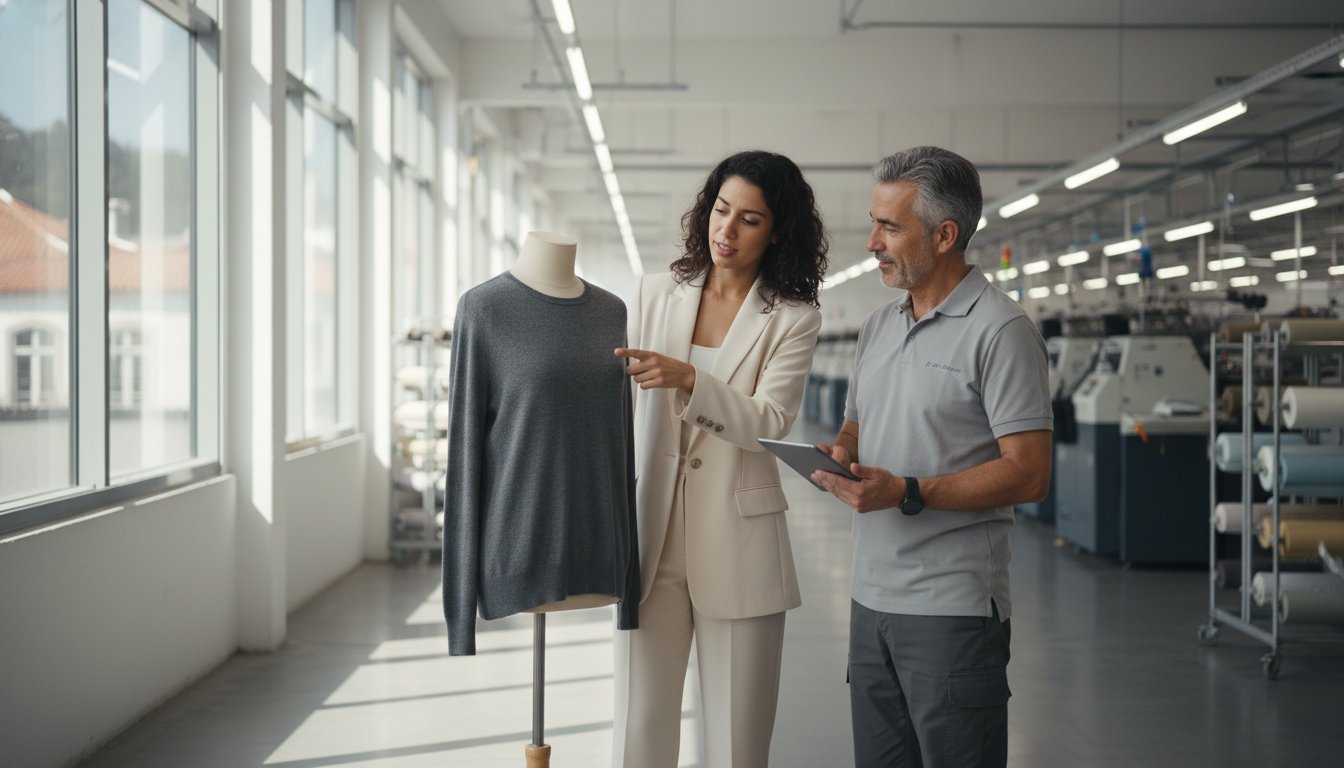
Reliable Clothing Manufacturer for Startups: The 2026 Founder’s Guide
Finding the lowest price per unit is often the fastest way to bankrupt a new brand. In 2026, your biggest risk isn't just a high price tag; it's the cost of inventory you can't sell or legally discard. You aren't just looking for a factory. You need a reliable clothing manufacturer for startups that understands why the old "cheap and fast" model is now a liability. With the EU ban on destroying unsold apparel effective July 19, 2026, every garment you produce must be a high-quality asset, not a regulatory burden.
You probably worry about receiving unsellable inventory or losing your entire launch budget to a factory that stops answering emails. We understand that fear because we've helped hundreds of founders move from a simple logo to a lasting legacy. This guide will show you how to vet partners who offer professional-grade quality and low-risk MOQs while ensuring you're compliant with new standards like the Digital Product Passport. We'll explore the strategic benefits of nearshoring in Portugal and provide a clear roadmap to secure a production partner that scales with your vision.
Key Takeaways
- Understand why prioritizing value over the lowest quote is essential for avoiding unsellable inventory and protecting your startup capital.
- Determine whether white label speed or custom manufacturing control is the right strategic fit for your brand's 2026 launch.
- Apply a professional vetting framework to identify a reliable clothing manufacturer for startups that offers transparent communication and on-time delivery.
- Leverage the "Portugal Advantage" to ensure your production meets the highest ethical standards and the latest EU environmental regulations.
- Learn how to transition from a transactional supplier relationship to a long-term production partnership that scales with your brand's vision.
What Makes a Clothing Manufacturer Reliable for Startups in 2026?
Reliability in the apparel industry has evolved. It's no longer just about who can sew a straight line. For a new founder, a reliable clothing manufacturer for startups is a strategic partner that guarantees consistent quality, absolute transparency, and on-time delivery. In 2026, the stakes are higher than ever. With the EU's Ecodesign for Sustainable Products Regulation (ESPR) taking full effect as of July 19, 2026, a reliable partner must also ensure your supply chain meets strict environmental and ethical standards.
Chasing the cheapest quote is a common trap. While a $3 T-shirt seems attractive on a balance sheet, it often leads to the most expensive failures. Low-cost factories frequently cut corners on fabric quality or labor ethics, resulting in unsellable inventory. True reliability includes production scalability. You need a partner that supports your journey from a small 70-piece white label launch to a 300-piece custom collection as your brand gains traction. This flexibility allows you to manage cash flow while testing the market with professional-grade products.
The 3 Pillars of Startup Reliability
Every successful production partnership rests on three specific areas of expertise:
- Technical Expertise: Your manufacturer must be able to master the process of textile manufacturing, converting your tech packs into premium garments without losing the design's integrity.
- Financial Transparency: There should be zero hidden costs. Reliable partners provide clear, upfront breakdowns for sourcing, labeling, and logistics from the start.
- Communication Symmetry: Frequent updates are non-negotiable. You shouldn't have to wonder where your production stands during the 8 to 12-week custom manufacturing cycle.
Why 90% of Startup Brands Fail (and How to Avoid It)
Most startups don't fail because their designs are bad. They fail because of poor inventory management. Large factories often demand high MOQs that drain capital and leave founders with boxes of unsold stock. Others rush into bulk production without perfecting the sample phase, which typically takes 2 to 4 weeks. You can avoid these pitfalls by linking with a reliable partner who understands the startup journey. Professional manufacturers prioritize your long-term legacy over a one-time transaction. They offer the flexibility and guidance needed to launch with minimal risk and maximum quality.
Choosing the Right Production Model: Custom vs. White Label
Success in the apparel industry requires a strategy tailored to your current resources. A reliable clothing manufacturer for startups should offer a choice between rapid market entry and bespoke design. Researching how to start a clothing business shows that the most successful founders match their production model to their marketing budget. There's no single "correct" path; the best choice depends on whether you prioritize speed or total design uniqueness.
White Label: The Low-Risk Entry Point
White label production is the fastest path to market. It uses premium, pre-designed garments that are already quality-tested. You simply add your custom branding, labels, and tags to existing luxury blanks. This model is ideal for first-time founders because it requires a lower minimum order quantity (MOQ) of just 70 pieces per style and color. With production times as short as 3 to 5 weeks, you can launch your collection without waiting months for custom patterns. This approach preserves your capital for marketing, which is vital since a minimum viable budget for a small-batch brand in 2026 is often between $8,000 and $12,000.
Custom Manufacturing: Building a Unique Brand Legacy
If your brand's value proposition depends on a unique fit or exclusive features, custom manufacturing is the better choice. This process involves full Cut, Make, and Trim (CMT) production. You'll need to provide professional tech packs and source specific materials. Because the factory must create new patterns and set up dedicated production lines, the MOQ increases to 250 pieces per style. While the lead time extends to 8 to 12 weeks, the result is a product that no one else has. You can explore private label Portugal options to understand how bespoke manufacturing creates a distinct brand identity.
Many founders begin with white label to build a customer base and then transition into custom designs once they have consistent sales data. This tiered approach reduces the risk of over-ordering custom inventory that might not sell. If you're ready to see how these models work in practice, you can view our production services to find your ideal fit. Starting small doesn't mean compromising on quality; it's about scaling your vision responsibly.
The Startup Reliability Scorecard: 5 Critical Vetting Factors
Vetting a production partner is a two-way street. While you're looking for a reliable clothing manufacturer for startups, the factory is also evaluating your brand's potential for a long-term partnership. Professional manufacturers prefer founders who arrive prepared with clear goals and a realistic understanding of the garment production process. Use this scorecard to grade potential partners before committing your capital.
Factor 1: Quality Certifications & Material Sourcing
In 2026, ethical transparency is a legal requirement. Every garment entering the EU must comply with the Digital Product Passport (DPP) standards. This makes OEKO-TEX® and GOTS certifications non-negotiable for premium brands. A reliable partner doesn't just sew garments; they provide comprehensive fabric sourcing support to ensure every thread meets these high industry standards. Premium materials are the foundation of brand loyalty because they ensure your product survives the first wash and the first year of wear.
Factor 2: Prototyping and Sampling Capabilities
The sampling phase is where a manufacturer proves their technical expertise. This process typically takes 2 to 4 weeks and is the only way to verify that a factory can translate your tech pack into a professional garment. A reliable clothing manufacturer for startups will offer at least one or two rounds of revisions to perfect the fit and finish. Avoid any factory that refuses to provide physical samples or pressures you to move directly into bulk production. This is a major red flag that often leads to receiving unsellable, low-quality inventory.
Factor 3: Lead Times and Logistics
Time to market is critical for managing cash flow. You must distinguish between development timelines (4 to 8 weeks) and bulk production timelines (8 to 12 weeks). While manufacturing in Asia might offer lower per-unit costs, the "hidden cost" of long-distance shipping and potential tariffs can be devastating. Nearshoring in Portugal significantly reduces your carbon footprint and shipping times. In a 2026 market where consumers demand speed and sustainability, being closer to your factory is a strategic advantage that minimizes inventory risk and logistical delays.
- Check for Certification: Demand proof of OEKO-TEX® or GOTS compliance.
- Verify Lead Times: Ensure the 8 to 12-week production window fits your launch schedule.
- Test Communication: A reliable partner responds to inquiries within 24 to 48 hours.
- Review Sample Quality: Never skip the physical prototype phase.
- Assess Scalability: Ensure they can handle your growth from 70 to 300+ pieces.

The Portugal Advantage: Why Nearshoring Reduces Startup Risk
Portugal has emerged as the global epicenter for premium athleisure and streetwear. Unlike manufacturing hubs that prioritize volume over integrity, Portuguese factories specialize in luxury craftsmanship and technical fabrics. For any founder seeking a reliable clothing manufacturer for startups, the "Made in Portugal" tag is more than a geographic marker. It's a powerful marketing asset that signals quality, durability, and ethical responsibility to a conscious consumer base. You can find more detail in our Ultimate 2026 Guide for Clothing Manufacturers in Portugal.
Ethical Standards and EU Quality Control
EU regulations provide a level of transparency that is often impossible to verify in other global regions. As of July 19, 2026, the EU's ban on destroying unsold apparel forces brands to produce only what they can sell, making small-batch Portuguese production the logical choice. Additionally, the Portugal 2030 Program has allocated €50 million specifically for innovation and digital transition in manufacturing. This funding ensures that factories remain at the cutting edge of sustainable technology. The "Made in Portugal" mark serves as a seal of excellence that justifies premium pricing and secures long-term brand loyalty.
Communication and Time-Zone Benefits
Clear communication is the most effective way to prevent costly production errors. When you partner with a Portuguese factory, you're typically working with English-speaking project managers who operate in a similar time zone to Europe and the US East Coast. This reduces the anxiety that comes from waiting 12 hours for a response from overseas. Ease of travel also plays a major role. Founders can fly into Porto or Lisbon for factory visits, providing a level of oversight that is logistically difficult with distant factories. Clear, real-time dialogue ensures that your vision is translated accurately from tech pack to final product.
Reliable production isn't just about the final stitch; it's about the ease of the journey. The Portuguese government's Recovery and Resilience Plan (PRR), running through 2026, further supports businesses focusing on climate and digital transition. This means your production partner is financially backed to be more efficient and eco-friendly. Choosing a reliable clothing manufacturer for startups in this region means you're investing in a stable, high-standard environment. If you're ready to secure your brand's future, submit your project for a quote today.
Scaling Your Vision with Athleisurebasics: From Samples to Legacy
Our Low MOQ Commitment for Startups
We've structured our services to match your brand's growth stages. For founders who need to test the market quickly, our white label service offers a low MOQ entry point of just 70 pieces per style and color. This allows you to launch a professional collection with minimal inventory risk. As your vision expands, our custom manufacturing services become available at a 250-piece threshold. This flexibility ensures you never have to over-leverage your startup capital. Our sourcing support also helps you identify premium, OEKO-TEX® certified fabrics that align with the 2026 sustainability mandates.
The Athleisurebasics Process
We've refined our production flow to be as efficient and transparent as possible. Our goal is to reduce founder anxiety through clear milestones and consistent updates.
- Step 1: Consultation and Project Submission. You share your vision, and we provide a detailed roadmap and quote based on your specific needs.
- Step 2: Sample Development and Refinement. Our experts create physical prototypes over a 2 to 4-week period, ensuring the fit and finish are perfect before bulk production begins.
- Step 3: Bulk Production. We move into the 8 to 12-week production cycle, maintaining rigorous EU quality standards and ethical manufacturing practices throughout the process.
Your journey from a simple logo to a lasting legacy starts with a single partnership. Don't let the fear of low-quality inventory or high MOQs hold your vision back. Take the first step toward building a brand that stands for quality and integrity. Get a custom manufacturing quote for your startup today and let's build your legacy together.
Secure Your Brand’s Future and Start Building Your Legacy
Navigating the apparel industry in 2026 requires a strategic shift toward transparency and efficiency. You've learned that success isn't about finding the lowest price but about securing a partner that protects your brand from the risks of unsellable inventory and regulatory non-compliance. By prioritizing low-risk MOQs, such as our 70-piece white label entry point, you can preserve capital for marketing while ensuring every garment meets the highest EU ethical standards. The "Made in Portugal" seal remains your most effective tool for premium positioning and consumer trust.
Finding a reliable clothing manufacturer for startups is the final hurdle between your vision and a profitable market launch. Whether you choose the speed of white label or the total uniqueness of custom CMT production, your choice of partner defines your brand's trajectory. Athleisurebasics offers the specialized expertise and OEKO-TEX® certified quality needed to scale from your first sample to a global presence. Launch your brand with a trusted Portuguese partner, Get a Quote. Your vision is ready for the world; it's time to provide it with the craftsmanship it deserves.
Frequently Asked Questions
How do I find a reliable clothing manufacturer for my startup?
Identify your production model first to narrow your search. A reliable clothing manufacturer for startups will have a documented history of small-batch production and transparent lead times. Use industry directories or visit manufacturing hubs in Portugal to verify facilities in person. Focus on partners that offer end-to-end support, including tech pack development and materials sourcing, to bridge any technical gaps in your experience.
What is the typical minimum order quantity (MOQ) for new brands?
Typical MOQs in 2026 depend on whether you choose white label or custom manufacturing. For white label services, the minimum is 70 pieces per style and color, allowing for rapid market testing. Fully custom cut-and-sew projects require a higher threshold of 250 to 300 pieces. These quantities are designed to balance production efficiency with the financial constraints of a new business.
Is it better to manufacture clothing in Portugal or China for a startup?
Portugal is the better choice for premium startups targeting the European or North American markets. While China offers lower unit costs for high-volume orders, Portugal provides faster lead times and guaranteed compliance with 2026 EU regulations. Manufacturing in Portugal also eliminates the risk of high tariffs and communication barriers that often lead to costly production errors in overseas factories.
What documents do I need to provide to a clothing manufacturer?
You must provide a professional tech pack for every garment in your collection. An entry-level tech pack for a basic T-shirt costs between $80 and $150, while complex items like hoodies can cost up to $800. This document acts as a blueprint, containing your measurements, material specifications, and construction details to ensure the factory produces exactly what you envisioned.
How much does it cost to produce a sample with a professional factory?
Sample costs generally cover the specialized labor and pattern making required for a single prototype. The sampling process takes 2 to 4 weeks to complete. While price points vary based on garment complexity, this investment is necessary to verify fit and quality before committing to a bulk production run that could cost between $15,000 and $30,000.
What are the common red flags when choosing a garment factory?
Refusing to provide physical samples or lacking OEKO-TEX® certifications are major warning signs. A reliable clothing manufacturer for startups will always be transparent about their sourcing and labor practices. If a factory doesn't respond to inquiries within 48 hours or pressures you to skip the prototyping phase, it's a sign they may not be a stable long-term partner.
Can I start a clothing brand with no experience in manufacturing?
Yes, you can launch a brand by leveraging the expertise of a production consultant or using white label services. White label allows you to use pre-designed, high-quality garments that only require your custom branding. This model removes the technical burden of garment construction, letting you focus your energy on marketing and scaling your brand's vision.
How do I ensure ethical production for my clothing line?
Partner with factories in regions with strict labor laws, such as the European Union. Ensure your manufacturer uses OEKO-TEX® or GOTS certified materials to meet modern sustainability standards. By December 30, 2026, you'll also need to prove your materials comply with the EU Deforestation Regulation (EUDR), a standard that Portuguese factories are already equipped to handle.


Leave a comment
This site is protected by hCaptcha and the hCaptcha Privacy Policy and Terms of Service apply.