
The Ultimate Pre-Production Checklist for Clothing Brands (2026 Guide)
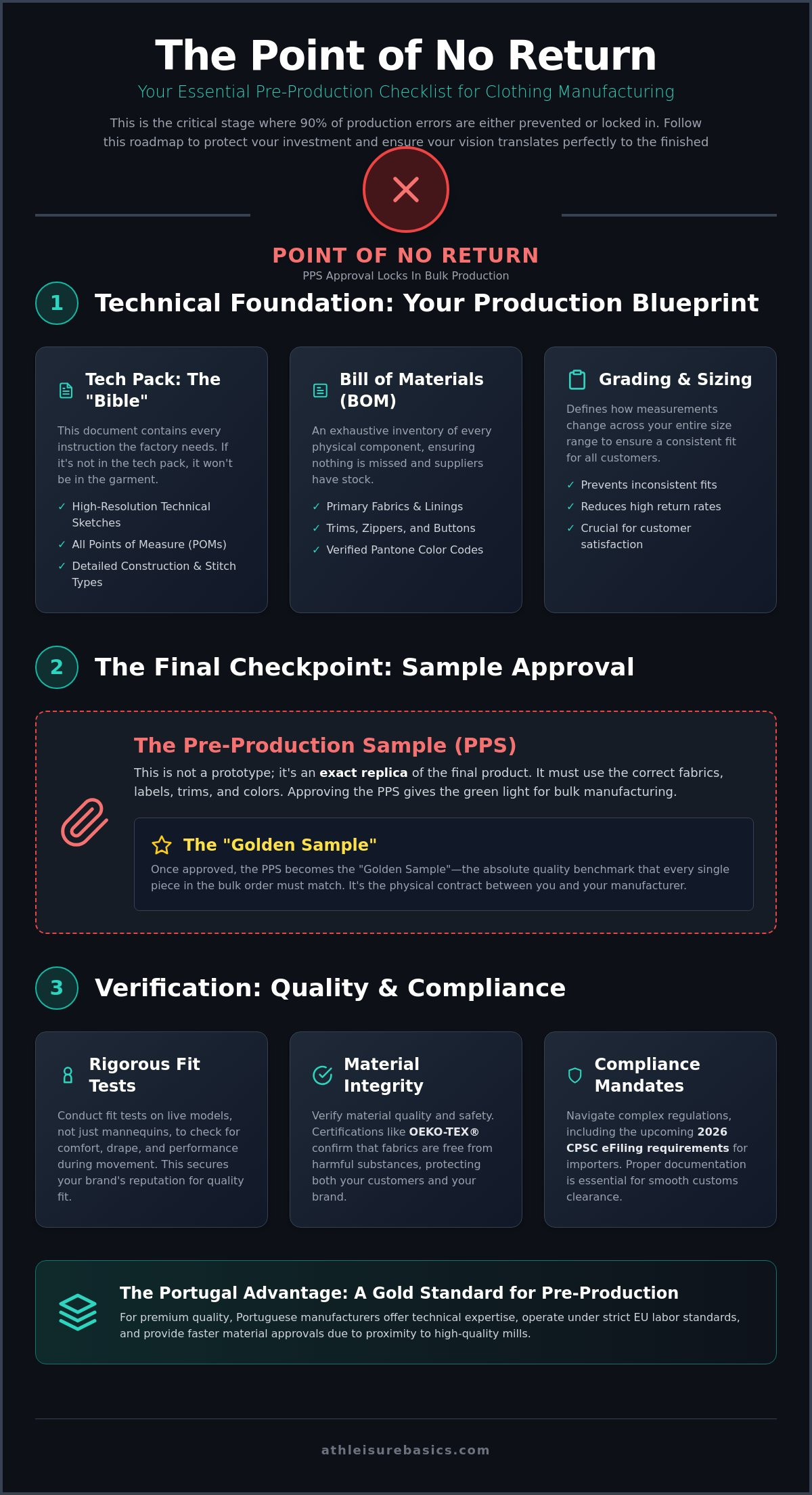
The moment you authorize bulk manufacturing is officially your brand's "Point of No Return." This is the critical stage where 90% of production errors are either prevented or locked in. Most emerging founders feel overwhelmed by the transition from creative design to industrial manufacturing, especially when faced with technical terminology like BOMs and PPS. Utilizing a structured pre-production checklist for clothing is the most effective way to protect your investment and ensure your vision translates perfectly to the finished garment.
It's natural to feel a sense of dread when signing off on a large order, especially with the fear of receiving thousands of items with sizing or quality defects. This guide provides the technical rigour you need to move forward with confidence. We'll walk you through a clear roadmap that covers everything from tech pack finalization to the new 2026 CPSC eFiling mandates. You'll gain a framework to communicate effectively with your manufacturer and secure the high standards your brand deserves.
Key Takeaways
- Master the documentation process by creating a comprehensive Tech Pack and Bill of Materials to serve as the technical "Bible" for your production.
- Use a professional pre-production checklist for clothing to navigate complex 2026 compliance mandates, including the new CPSC eFiling requirements for importers.
- Secure your brand’s reputation by conducting rigorous "fit tests" on live models and verifying material integrity through OEKO-TEX® certifications.
- Identify why the Pre-Production Sample (PPS) represents the "Point of No Return" and how to approve it to prevent costly bulk defects.
- Learn how to leverage low MOQ manufacturing and expert consulting to scale your brand with minimal financial risk.
What is the Pre-Production Phase in Clothing Manufacturing?
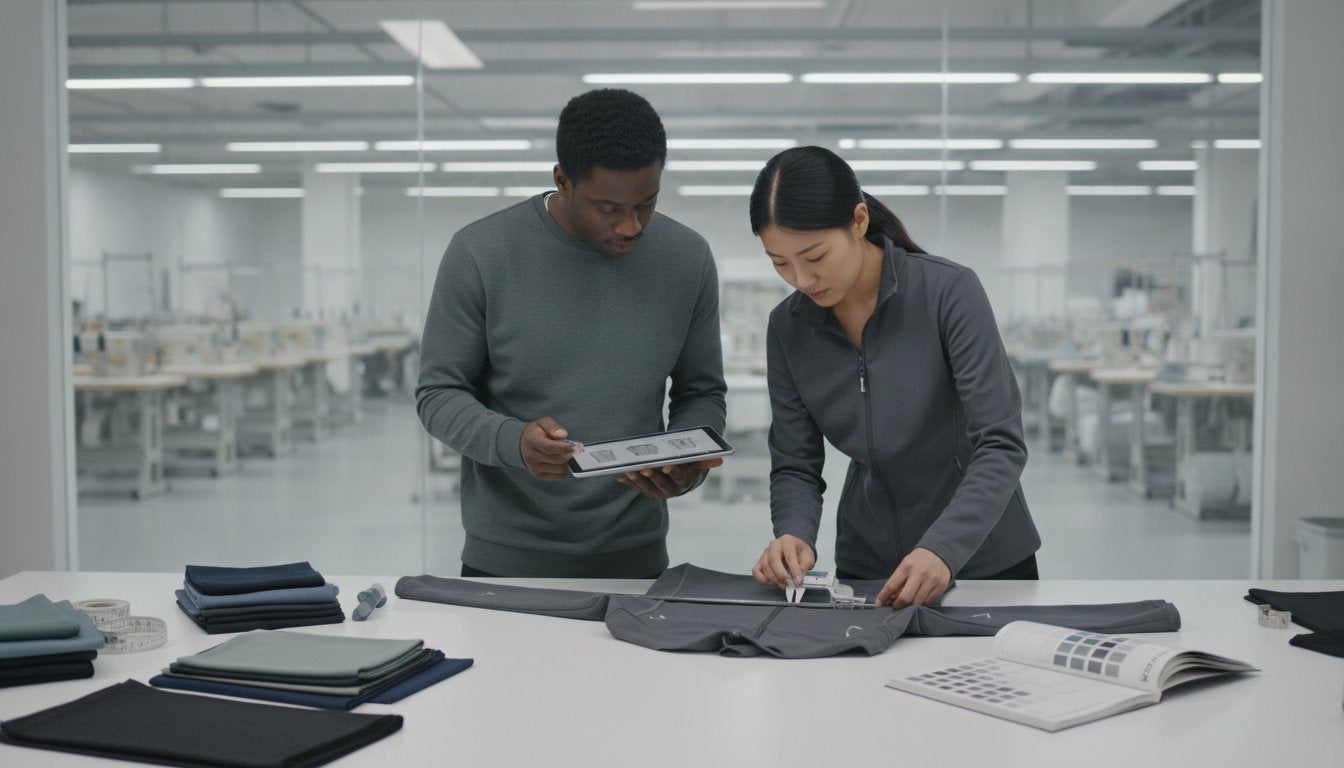
The pre-production phase represents the final bridge between a creative concept and the physical reality of a retail-ready garment. It's the stage that occurs after you've finalized your design and sampling but before the first roll of fabric is cut for bulk manufacturing. Think of it as the dress rehearsal before the main performance. In the broader clothing manufacturing process, this phase is where logistical planning meets technical execution. It's the moment where every detail is scrutinized to ensure your brand's investment is protected.
Implementing a rigorous pre-production checklist for clothing acts as a vital insurance policy for your brand's reputation. While proto-samples focus on design aesthetics and general fit, the Pre-Production Sample (PPS) is a different beast entirely. It must be an exact replica of the final product, including all labels, trims, and correct fabrics. If you discover a measurement error in a proto-sample, it's a minor setback; if you find that same error after bulk cutting, it's a financial disaster. This phase is truly the "Point of No Return" for your budget and timeline. Once the machines start running, changes become impossible without incurring massive costs.
The Goals of the Pre-Production (PP) Meeting
A successful launch depends on total alignment between the design team, sourcing agents, and factory floor managers. The primary goal of the PP meeting is to identify potential production bottlenecks before they occur. This includes verifying that all materials are in stock and that the factory machinery is calibrated for your specific fabric weights. During this meeting, the team establishes the "Golden Sample." This physical garment serves as the absolute quality benchmark that every piece in the bulk order must match. It's the physical contract between you and your manufacturer.
Why Portugal is the Gold Standard for Pre-Production
For brands prioritizing quality and ethical oversight, choosing made in Portugal clothing offers a distinct advantage during pre-production. Portuguese manufacturers operate under strict EU labor standards, ensuring that your brand's integrity is protected from the start. The region's proximity to high-quality textile mills allows for significantly faster material approvals and lab dips. Portuguese factories are also renowned for their technical expertise in complex construction, particularly for premium athleisure. This deep industry knowledge helps startups navigate a pre-production checklist for clothing with fewer errors and more professional support, turning a complex industrial process into a manageable roadmap for growth.
Section 1: Technical Assets and Documentation
Precision in documentation is the difference between a premium product and a pile of unsellable inventory. As you follow your pre-production checklist for clothing, your focus shifts from creative inspiration to technical accuracy. Every detail you document now prevents a costly misunderstanding on the factory floor later. Think of this stage as building the blueprint for your brand's future. Without a complete set of technical assets, you're essentially asking your manufacturer to guess your intentions.
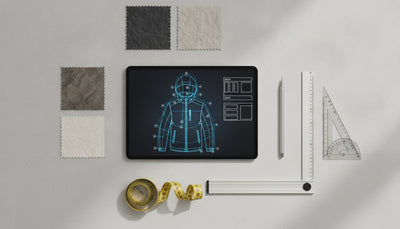
The tech pack serves as the "Bible" of your garment production. It's a living document that contains every instruction your factory needs to execute your design. If a detail isn't in the tech pack, it won't be in the final garment. Alongside this, the Bill of Materials (BOM) tracks every physical component, from primary fabrics to the specific weight of the thread used in the seams. For those following a comprehensive guide to starting a clothing business, mastering these documents is the first step toward professional scalability.
Consistency across your size range depends on accurate grading sheets. These sheets define how measurements change between a size Small and an Extra Large. Without them, you risk inconsistent fits that lead to high return rates and customer dissatisfaction. Finally, you must specify construction details like stitch types and seam allowances. In athleisure, choosing a flatlock stitch over a standard overlock can be the deciding factor in both durability and wearer comfort.
Finalising Your Tech Pack
Before moving to bulk, verify that every Point of Measure (POM) is updated based on your final approved samples. Ensure your tech pack includes high-resolution technical sketches showing the garment from every angle, including internal construction. If you need a refresher on the basics, read our guide on what is a tech pack to ensure your documentation meets industry standards.
The Bill of Materials (BOM) Audit
A BOM audit confirms that every supplier has the necessary stock to fulfill your order. You must verify Pantone color codes for all fabrics and trims to avoid batch variance. This audit should also ensure that all labels and hangtags are designed, sourced, and ready for application. If you find these technical requirements daunting, our clothing production consulting services can help you audit your documentation before you commit to bulk manufacturing.
Section 2: The Pre-Production Sample (PPS) Approval
The Pre-Production Sample (PPS) is the most critical physical asset in your manufacturing lifecycle. It represents the final version of your garment, produced using the actual bulk fabric, trims, and labels specified in your documentation. This is the last opportunity to verify that every technical detail from your tech pack has been executed correctly before the factory begins bulk cutting. If it isn't perfect here, it won't be perfect in your customer's hands. This stage is the ultimate filter for quality control.
Integrating a PPS review into your pre-production checklist for clothing ensures that you aren't just looking at a pretty prototype, but a production-ready product. This stage requires a high level of technical scrutiny. You're no longer checking for design inspiration; you're auditing for industrial consistency. Once you approve this sample, it becomes the "Golden Sample" that dictates the standard for every other piece in your order.
Evaluating Workmanship and Construction
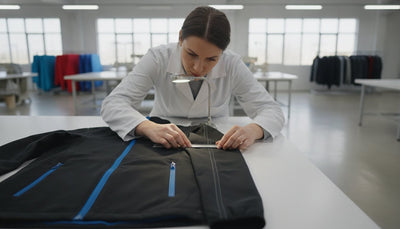
Inspect the PPS for technical construction flaws that might compromise the garment's integrity. Pull at the seams to check for "grin-through," which occurs when the stitching becomes visible under tension on leggings or tight tops. Verify that logo placement and embroidery quality meet your standards exactly. Finally, check the "hand-feel" of the fabric. It must match your expectations after any final industrial washes or treatments that the factory applied to the bulk material.
Common PPS Red Flags to Watch For
Watch for discrepancies between your approved tech pack and the physical sample. Issues with dye-lot consistency, also known as color shading, can occur when the bulk fabric differs slightly from previous samples. Check all hardware, such as zippers or drawcord toggles, to ensure they function smoothly and aren't prone to snagging. Once you're satisfied, you must physically sign the approved sample and have the factory do the same. This signed garment serves as the legal quality benchmark for your entire bulk run.
Section 3: Sourcing, Compliance, and Quality Control
Confirming material integrity is a non-negotiable step in your pre-production checklist for clothing. In 2026, consumers are more discerning than ever; research shows that 73% of Gen Z shoppers are willing to pay a premium for sustainable products. Verifying OEKO-TEX® or GOTS certifications at this stage ensures your materials meet these high expectations and are free from harmful substances. You must request valid certificates from your fabric mills before the first roll is cut to avoid future liability or brand damage.
Wash testing is another critical safeguard against post-purchase dissatisfaction. Your checklist should include rigorous tests for shrinkage and colorfastness. If a high-performance legging shrinks more than the industry-standard 3% to 5% after a single wash, your return rates will soar. Performing these tests during pre-production allows you to adjust your patterns or fabric choices before bulk manufacturing begins. It's much cheaper to modify a pattern now than to deal with thousands of defective garments later.
Establishing a Quality Control (QC) plan is essential for maintaining consistency. This involves setting an Acceptable Quality Level (AQL), which defines the maximum number of defects allowed in a batch before it's rejected. For premium brands, an AQL of 1.5 or 2.5 is typical. Finally, finalize your packaging specs. This includes everything from the thickness of your recycled polybags to the placement of barcodes and carton labeling. Clear packaging instructions ensure your goods are retail-ready the moment they arrive at your warehouse.
Ethical and Quality Standards in Portugal
Partnering with clothing manufacturers in Portugal provides a significant advantage for compliance oversight. Portuguese factories operate under strict EU regulations, which are currently aligning with new 2026 sustainability mandates. The widespread use of OEKO-TEX® certified fabrics in the region ensures that your athleisure line meets global safety standards. This regional commitment to quality reduces the risk of receiving non-compliant goods that could lead to heavy FTC penalties, which can now reach $51,744 per violation for labeling errors.
The Final Logistics Checklist
The final stage of pre-production involves locking in your logistics plan. Confirm shipping methods and lead times with your factory to ensure your launch date remains realistic. You must also verify that all customs documentation, including the new CPSC eFiling requirements that went into effect on July 8, 2026, is prepared correctly. This is the time to finalize your cost of goods sold based on final bulk quotes and shipping estimates. If you need expert help navigating these complex compliance and sourcing requirements, contact Athleisurebasics today to speak with our production consultants.
Partnering with Athleisurebasics for a Seamless Launch
Navigating the transition from design to bulk manufacturing is often the most stressful period for brand founders. Athleisurebasics acts as your dedicated production partner, managing the technical heavy lifting required to move your collection forward. We help you execute every step of your pre-production checklist for clothing, ensuring that technical specifications and material standards are met with industrial precision. This collaborative approach removes the guesswork and allows you to focus on scaling your brand's commercial presence.
Our accessible minimum order requirements are designed to empower emerging businesses. We offer low MOQ options, starting at 70 pieces for white label orders and 250 pieces for fully custom designs. This flexibility significantly reduces your initial capital risk and prevents the accumulation of excess inventory. Whether you choose our luxury blanks for a faster market entry or require a full CMT production run for a unique vision, we provide the operational agility to grow at your own pace.
Expert consulting is a core component of our service model. We don't just manufacture garments; we provide the technical oversight necessary for long-term success. Our team guides you through tech pack development and material sourcing support, ensuring your "Golden Sample" is truly production-ready. This end-to-end support simplifies complex industrial processes and creates a sense of security for entrepreneurs new to the industry.
Our Production Standards in Portugal
Manufacturing in Portugal provides your brand with an immediate seal of quality and ethical integrity. We provide access to premium, OEKO-TEX® certified fabrics that meet the highest global safety standards. Our communication style is transparent and structured, offering detailed updates throughout the sampling and pre-production phases. This commitment to craftsmanship and material integrity has built our proven track record with high-end athleisure and streetwear brands worldwide.
Ready to Start Your Production?
Taking the next step in your brand's journey requires a reliable partner who understands the technical rigour of the pre-production checklist for clothing. We invite you to contact our team for a custom quote or a professional production consultation. You can also utilize our internal checklist templates to help organize your next collection. Book a call today to discuss your 2026 production timeline and discover how we can help you transition from concept to finished product with confidence.
Secure Your Brand’s Future with Technical Rigour
Transitioning from a creative design to bulk manufacturing is a significant milestone for any emerging brand. By following a rigorous pre-production checklist for clothing, you eliminate the technical ambiguity that often leads to costly errors. You now understand that precision in your tech pack and the absolute approval of your Pre-Production Sample are your best defenses against quality defects. These steps ensure your vision is executed with the high standards your customers expect in a competitive market.
Success in the 2026 fashion landscape requires a commitment to both quality and ethical transparency. Partnering with a specialist who understands these complexities allows you to navigate the industrial landscape with total confidence. We're dedicated to helping you bridge the gap between concept and finished product through expert consulting and reliable manufacturing standards.
Start your premium production journey with Athleisurebasics today. We provide the expertise of Made in Portugal craftsmanship, the security of OEKO-TEX® Certified materials, and accessible low MOQs starting at 70 pieces. It's time to turn your creative concepts into a lasting commercial presence. We're here to support your growth every step of the way.
Frequently Asked Questions
What is the difference between a prototype and a pre-production sample?
A prototype focuses on design development and initial fit, while a pre-production sample (PPS) is the final verification of the industrial manufacturing process. The PPS uses the exact fabrics, trims, and labels intended for the final order. It serves as your "Golden Sample" and is the ultimate benchmark for quality control before bulk cutting begins.
How long does the pre-production phase usually take?
The pre-production phase typically spans four to eight weeks, depending on the complexity of your designs and material lead times. This timeline accounts for fabric sourcing, lab dips, and the creation and approval of the PPS. Efficiently managing your pre-production checklist for clothing helps prevent delays and ensures your 2026 launch stays on schedule.
Why is a tech pack essential for the pre-production checklist?
A tech pack acts as the technical blueprint for your entire production run. It contains every critical detail, including Points of Measure (POMs), the Bill of Materials (BOM), and specific construction instructions. Without this document, your manufacturer is forced to make assumptions, which significantly increases the risk of receiving defective inventory that doesn't match your vision.
What happens if I find an error in the pre-production sample?
If you identify an error in the PPS, you must pause the process and document the discrepancy immediately. Do not authorize bulk production until you have addressed the issue and reviewed a corrected sample. Signing off on a flawed PPS locks in those errors for your entire order, making this the most important stage for technical scrutiny.
Do I need to be physically present at the factory for the PP meeting?
Physical presence at the factory is not required if you have a reliable partner with transparent communication systems. Digital technical reviews and physical samples sent via courier allow you to manage the process remotely. Athleisurebasics provides detailed updates during the sampling and PP phases to ensure you remain fully informed regardless of your physical location.
How can I ensure my clothing manufacturer follows the checklist?
You can ensure compliance by incorporating a formal pre-production checklist for clothing into your manufacturing agreement. Establishing clear Acceptable Quality Levels (AQL) and requiring signed "Golden Samples" creates a binding quality benchmark. This framework holds the factory accountable for meeting your specific technical and ethical standards throughout the entire production lifecycle.
What are the most common mistakes brands make during pre-production?
The most common mistakes include rushing through the sampling phase and skipping essential wash tests for shrinkage and colorfastness. Many brands also fail to test garments on live models, which can hide fit issues that a static mannequin won't reveal. Neglecting technical documentation like the Bill of Materials often leads to incorrect trims or hardware being used.
Does Athleisurebasics help with tech pack development and sourcing?
Yes, Athleisurebasics provides comprehensive tech pack development and materials sourcing support as part of our consulting services. We specialize in helping emerging brands navigate the industrial complexities of the clothing industry. Our team ensures your technical assets are production-ready, whether you are utilizing our luxury blanks or pursuing full CMT production in Portugal.

Leave a comment
This site is protected by hCaptcha and the hCaptcha Privacy Policy and Terms of Service apply.