
10 Strategic Benefits of Manufacturing Clothes in Portugal in 2026
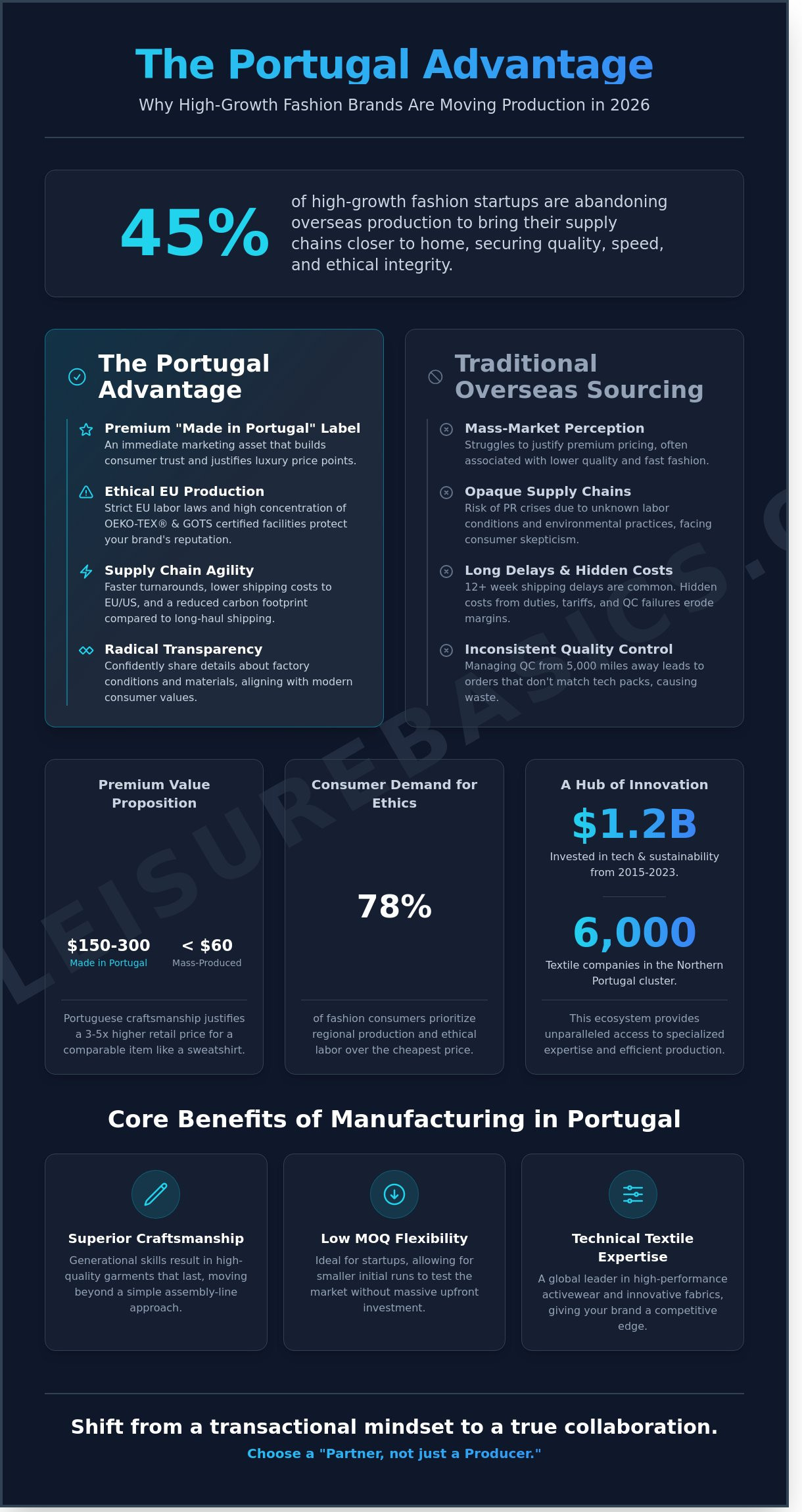
Why are 45% of high-growth fashion startups abandoning overseas production in 2026 to bring their supply chains closer to home? You've likely felt the sting of a 12-week shipping delay or the frustration of receiving a bulk order that simply doesn't match your tech pack. It's exhausting to manage quality control when your factory is 5,000 miles away, especially when modern consumers demand total transparency and OEKO-TEX® certified standards. We understand that your vision deserves a reliable partner who values premium craftsmanship as much as you do.
Discover why the world's most successful emerging brands are moving production to secure the strategic benefits of manufacturing clothes in portugal, from superior quality to unmatched supply chain agility. This shift isn't just about geography; it's about building a premium brand image that scales without the traditional risks of overseas sourcing. We'll break down the 10 key reasons why Portuguese ateliers are the secret weapon for founders who want to turn a simple logo into a lasting legacy through faster turnaround times and ethical EU production.
Key Takeaways
- Learn why the "Made in Portugal" label has evolved into a premium marketing asset that justifies luxury price points and builds instant consumer trust.
- Understand how strict EU labor laws and OEKO-TEX® certifications provide the ethical transparency required to protect your brand’s reputation in 2026.
- Discover the long-term benefits of manufacturing clothes in portugal by looking beyond unit costs to eliminate hidden expenses like duties and quality control failures.
- Explore Portugal’s specialized leadership in technical textiles and high-performance activewear to give your brand a functional and competitive edge.
- Gain a practical roadmap for transitioning your production to the EU by shifting from a transactional mindset to a "Partner, not just Producer" relationship.
Why the "Made in Portugal" Label is the Gold Standard in 2026
Launching a clothing line in 2026 requires a strategy that goes beyond simple aesthetics. One of the most significant benefits of manufacturing clothes in portugal is the immediate prestige the "Made in Portugal" label adds to a brand. Over the last decade, the country has successfully transitioned from a mass-market producer to a global leader in luxury craftsmanship. This shift wasn't accidental; it was the result of a strategic $1.2 billion investment in technology and sustainable practices between 2015 and 2023. Today, Portugal is the first choice for premium startups looking to scale with integrity.
Northern Portugal has emerged as the undisputed epicenter for high-end garment construction. The region surrounding Porto and Guimarães houses 6,000 textile companies that specialize in everything from technical activewear to luxury tailoring. This cluster effect allows for unparalleled efficiency. According to this Portuguese economic overview, the textile sector remains a cornerstone of the national economy, evolving to meet the demands of a high-tech, quality-focused global market. For a new founder, this means your "trusted partner" is located in a hub where innovation is the standard, not the exception.
The Prestige of European Craftsmanship
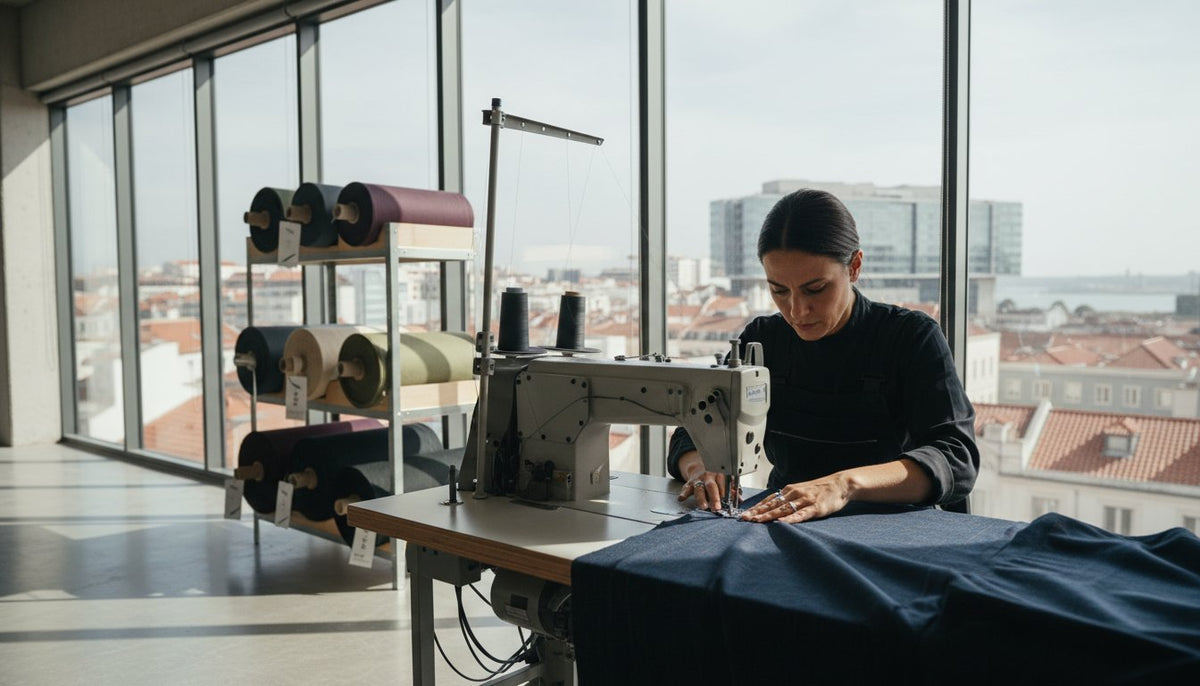
Portuguese garment workers possess a heritage of specialized technical skills passed down through generations. Unlike offshore hubs that rely on a rigid "assembly line" approach, Portuguese factories often treat garment construction as a craft. This distinction is visible in the final product. High-end brands leverage this craftsmanship to justify premium retail price points. A sweatshirt produced in a high-quality Portuguese facility can retail for $150 to $300, whereas a mass-produced alternative often fails to exceed a $60 valuation. This "craft" approach ensures your vision is turned into a high-quality product that lasts for years, not just a single season.
Transparency as a Brand Value
Modern consumers in 2026 are increasingly skeptical of low prices and hidden supply chains. Research shows that 78% of fashion consumers now prioritize regional production and ethical labor over the cheapest possible price. Manufacturing in Portugal allows you to offer "Radical Transparency" to your audience. You can confidently share details about the working conditions, OEKO-TEX® certifications, and the origin of your materials. This openness reduces the perceived risk for new entrepreneurs and helps turn a simple logo into a lasting legacy.
Transparency is the essential bridge between a customer’s ethical values and their final purchase decision, acting as the ultimate proof of a brand’s integrity in a crowded market.
- Quality Assurance: Strict EU regulations ensure every piece meets the highest industry standards.
- Marketing Power: The "Made in Portugal" tag functions as a powerful tool for premium positioning.
- Efficiency: Proximity to major European markets means faster shipping and a lower carbon footprint.
- Low MOQ Flexibility: Portuguese partners often offer low minimum order quantities, making it easy to launch without massive overhead.
Sustainability and Ethical Compliance: The EU Advantage
Choosing a production partner involves more than just comparing price tags. One of the primary benefits of manufacturing clothes in portugal is the peace of mind that comes from strict EU labor and environmental laws. While offshore hubs often face scrutiny for opaque supply chains, Portuguese factories operate under rigorous transparency standards. This regulatory framework ensures that your brand isn't just making clothes; it's building a legacy of responsibility.
The region is a global leader in textile certifications. You'll find a high concentration of OEKO-TEX® and GOTS certified facilities that prioritize non-toxic materials and organic fibers. This shift isn't just a trend. An OECD report on sustainable textiles highlights how Portuguese small and medium enterprises have pivoted toward a green transition, investing in renewable energy and sophisticated water purification systems. For a startup, this ethical foundation acts as an insurance policy against future PR crises and consumer backlash.
Meeting 2026 EU Sustainability Regulations
The fashion industry is facing a massive regulatory shift with the 2026 rollout of the Digital Product Passport (DPP). This initiative requires brands to provide detailed data on a garment’s lifecycle, from raw material sourcing to end-of-life recycling. Portuguese manufacturers are already ahead of the curve, implementing tracking systems for water usage and textile waste reduction. High standards for made in portugal quality ensure that garments are durable enough for the circular economy, directly addressing the 92 million tons of textile waste produced globally each year.
Fair Labor: Beyond the Minimum Wage
Ethical manufacturing is a core USP for brands targeting Gen Z and Millennial buyers, who now represent roughly 40% of global consumers. In Portugal, workers benefit from safe environments, fair wages, and collective bargaining rights. This stands in stark contrast to many offshore hubs where high turnover rates often compromise garment consistency. When workers are treated fairly, they stay longer and master their craft. This stability directly translates into the benefits of manufacturing clothes in portugal, as experienced seamstresses produce fewer defects and higher-quality finishes.
Investing in ethical production doesn't have to be a hurdle for new founders. If you're ready to build a brand that aligns with modern values, you can explore our ethical manufacturing options to see how we simplify the path from design to shelf.
The Economic Reality: Portugal vs. Asia Manufacturing
Founders often fall into the trap of comparing "per unit" quotes without looking at the full financial picture. While a factory in Vietnam or China might offer a lower initial price, that number is deceptive. The true benefits of manufacturing clothes in portugal reveal themselves when you calculate the Total Cost of Ownership (TCO). You aren't just paying for fabric and labor. You're paying for the risk of your capital being locked up in transit for 45 days.
Hidden costs in Asian manufacturing can quickly erode your margins. You'll face import duties that often range from 10% to 15%, fluctuating sea freight costs, and the expensive necessity of third-party quality control agents. If a batch arrives with a 5% defect rate, the cost of returns and lost reputation far outweighs any initial savings. Portugal operates under strict EU quality standards, meaning the "Made in Portugal" tag acts as a built-in insurance policy for your brand's integrity.
Understanding Total Cost of Ownership (TCO)
Speed is a financial asset. A 21-day lead time in Portugal versus a 90-day cycle in Asia changes how you manage your bank account. Long lead times force you to predict trends months in advance. If you guess wrong, you're stuck with "dead stock" that you must eventually discount to clear. This waste is a direct result of high volume requirements. By choosing a nearshoring partner, you cut your inventory from six months of stock to just one. This keeps your cash flow liquid and your warehouse lean. Use this framework to evaluate your options: Unit Price + Shipping + Duties + Quality Assurance + Cost of Capital = TCO.
Agility and Low MOQs for Startups
Portuguese factories are uniquely positioned to support emerging brands. Unlike massive overseas hubs that demand 1,000 units per style, many Portuguese partners allow you to launch with 70 to 250 pieces. This flexibility is essential for testing the market without risking your entire budget on a single design. It's much safer to sell out of 100 premium hoodies and restock quickly than to sit on 1,000 mediocre ones. Understanding the clothing manufacturing moq is vital for any founder looking to scale sustainably. This low-entry barrier lets you focus on your vision and brand legacy rather than just managing massive amounts of unsold fabric. High-quality production in smaller batches ensures your startup stays agile, profitable, and ready to pivot as the fashion industry moves.
Specialized Expertise in Athleisure and Technical Textiles
Portugal has evolved into a global powerhouse for high-performance apparel. While many regions focus on high-volume basic goods, Portuguese factories have spent the last 15 years investing in technical textile innovation. This shift makes the region a primary destination for brands that require more than just a standard fit. One of the most significant benefits of manufacturing clothes in portugal is the access to a supply chain that understands the intersection of chemistry, engineering, and fashion. You aren't just buying labor; you're accessing a specialized ecosystem that produces 4-way stretch fabrics, moisture-wicking treatments, and anti-bacterial finishes that meet the highest EU standards.
Precision Engineering for Activewear
Athleisure is significantly more difficult to manufacture than standard streetwear. A basic hoodie doesn't need to withstand the friction of a marathon or the tension of a deep squat. Performance garments require specialized machinery like flatlock stitching units and ultrasonic welding tools to create chafe-free seams. Portuguese facilities utilize advanced bonding technology that eliminates traditional stitching entirely, reducing weight and improving aerodynamics.
The focus on premium garment manufacturing ensures that your leggings or sports bras maintain their compression and shape after 50 or 100 wash cycles. This durability is a direct result of construction precision. Factories here often employ in-house quality control teams that test fabric recovery and colorfastness before a single piece is cut. It's this attention to detail that prevents the "see-through" effect often found in lower-quality activewear.
Innovation in Sustainable Performance Fabrics
Portugal’s textile industry is supported by CITEVE, a leading technological center that drives innovation in eco-friendly synthetics. You'll find mills here that specialize in bio-based polyesters derived from corn or castor oil, as well as high-grade nylon reclaimed from ghost fishing nets. These aren't experimental concepts; they are scalable solutions available for your next collection.
The integration of sustainable textiles for clothing is simplified because the yarn spinning, fabric knitting, and dyeing often happen within a 30-mile radius in the Norte region. This localized cluster significantly reduces the carbon footprint of your production. Capitalizing on the benefits of manufacturing clothes in portugal means your brand gains access to:
- Recycled Ocean Plastics: High-tenacity yarns that perform identically to virgin polyester.
- Organic Performance Blends: Mixtures of organic cotton and elastane for breathable, low-impact lifestyle wear.
- Closed-Loop Dyeing: Systems that recycle 95% of the water used in the coloring process.
Portuguese expertise ensures that "sustainable" doesn't mean "lower performance." You get the best of both worlds: technical superiority and ethical peace of mind.
Ready to build a high-performance collection that lasts? Start your premium manufacturing journey with Athleisurebasics today.
How to Start Your Production Journey in Portugal
Transitioning your production from offshore hubs to the EU is a strategic move that requires a shift in logistics and mindset. You aren't just changing a factory location; you're upgrading your entire supply chain integrity. To start, audit your current tech packs to ensure they meet European quality expectations. One of the primary benefits of manufacturing clothes in Portugal is the immediate alignment with EU trade regulations, which removes the 12% to 15% import duties often associated with non-EU production. This transparency allows you to reinvest those savings into premium materials or marketing.
Success in this region depends on adopting a "Partner, not just Producer" mindset. Avoid looking for a factory that merely takes orders. Instead, seek a collaborator that offers feedback on your designs to improve durability and cost-efficiency. Athleisurebasics supports startups by managing the entire garment production process, from fabric sourcing to the final stitch. This hands-on guidance helps brands reduce the 20% waste margin typical in unmanaged offshore manufacturing.
The Importance of Communication and Proximity
Portugal’s location offers a logistical advantage that offshore competitors can't match. Working in a similar time zone to the UK and Central Europe means you get answers in minutes, not days. Travel to major textile hubs like Porto is fast and affordable, allowing for direct oversight of your collection. Clear, real-time communication prevents the misunderstandings that often lead to expensive errors during the sampling phase. When you can speak with your production manager during your own business hours, the entire timeline accelerates.
Scaling from Startup to Legacy Brand
Growth should be iterative, not a financial gamble. Our low MOQs, starting at 60 pieces per style, allow you to test your market without overextending your capital. As your volume increases, our clothing production consulting services help you professionalize your brand and optimize your supply chain for larger runs. We focus on helping you scale from a single product to a full collection while maintaining the highest industry standards. This flexibility is one of the key benefits of manufacturing clothes in Portugal for brands that value long-term stability over short-term savings.
Before you commit to a partner, use this final vetting checklist:
- Certifications: Verify OEKO-TEX® or GOTS certifications to ensure ethical and safe fabric standards.
- Sampling Speed: Confirm a sample turnaround time, which typically ranges from 2 to 4 weeks in Portugal.
- Specialization: Ensure the factory has specific machinery for your niche, such as flatlock machines for high-performance activewear.
- Transparency: Ask for a clear breakdown of costs, including trims, labels, and packaging.
Ready to bring your vision to life with a trusted European partner? Submit your project for a quote today and take the first step toward building a high-quality, sustainable clothing brand.
Building Your Brand’s Legacy with Portuguese Excellence
The global fashion landscape in 2026 demands a radical shift toward transparency and production speed. Portugal offers an unmatched combination of ethical EU compliance and technical mastery in performance textiles. By choosing this region, brands secure a supply chain that meets 100% of upcoming sustainability mandates while maintaining premium craftsmanship. You'll find that the benefits of manufacturing clothes in portugal extend far beyond simple logistics; it's about future-proofing your business against evolving consumer expectations. Our facility specializes in premium athleisure and streetwear, utilizing OEKO-TEX® certified materials to ensure the highest industry safety standards. We've removed the traditional barriers for emerging founders by offering low MOQs starting at just 70 pieces per style. This flexibility allows you to scale efficiently without the risk of holding excess inventory. We're here to act as your trusted partner, guiding you through every step of the production journey from initial tech pack to final delivery. Ready to elevate your brand? Get a custom manufacturing quote today. Let's turn your design vision into a profitable reality together.
Frequently Asked Questions
Why is Portugal considered better than China for clothing manufacturing?
Portugal is superior to China because it operates under strict EU labor laws and offers significantly lower minimum order quantities for startups. While Chinese factories often require 500 to 1,000 pieces per style, Portuguese partners like Athleisure Basics provide low MOQs starting at just 60 pieces. This reduces your financial risk and inventory overhead. You also benefit from a 40% faster transit time to major European hubs compared to sea freight from Asia.
What are the typical minimum order quantities (MOQs) in Portugal?
Typical minimum order quantities in Portugal range from 50 to 150 pieces per style, which is much lower than the 500 piece industry average in Asia. Our white label service specifically starts at 60 pieces per style and color. This flexibility is one of the primary benefits of manufacturing clothes in portugal for startup founders. It allows you to test the market with premium quality products without a massive upfront investment.
How long are the lead times for garment production in Portugal?
Lead times for garment production in Portugal generally span 4 to 8 weeks for manufacturing after you approve your final samples. This is significantly faster than the 12 to 16 week timelines common in Asian factories. If you use our ready-to-wear white label options, we can often reduce this timeline even further. Shorter lead times mean you can react quickly to fashion trends and restock your best sellers within a single season.
Is it more expensive to ship clothes from Portugal than from Asia?
Shipping clothes from Portugal is often more cost-effective than Asia for European and North American brands when you account for total landed costs. While a single container from China might seem cheaper, Portugal offers 0% import duties within the EU and lower tariffs for the US under certain trade agreements. Road freight across Europe takes 3 to 5 days, saving you thousands in air freight costs when you need inventory urgently.
What certifications should I look for in a Portuguese clothing factory?
You should look for OEKO-TEX Standard 100, GOTS (Global Organic Textile Standard), and ISO 9001 certifications in a Portuguese factory. These labels guarantee that 100% of the materials are free from harmful substances and meet high quality management standards. At Athleisure Basics, we prioritize these certifications to ensure your brand delivers premium, safe, and sustainable products to your customers. These standards are essential for building a long-term legacy.
Can I visit the factories in Portugal before I start production?
Yes, you can and should visit factories in Portugal to verify their craftsmanship and ethical standards firsthand. Most facilities are located within a 60 minute drive of Porto, making it easy to tour multiple sites in a single trip. We encourage our partners to visit because transparency builds trust. Seeing the 20 or 30 skilled artisans working on your collection helps you understand the true value of premium Portuguese quality.
Does Portugal have specialized factories for athleisure and swimwear?
Portugal has a dense cluster of specialized factories in the northern region that lead the world in technical fabrics for athleisure and swimwear. These facilities use advanced seamless technology and Italian-sourced recycled polyamide to create high-performance gear. One of the main benefits of manufacturing clothes in portugal is accessing this specialized expertise. You get technical precision that matches luxury brands like Lululemon or Sweaty Betty at more accessible price points.
How do Portuguese factories handle ethical labor standards?
Portuguese factories handle ethical labor standards by strictly adhering to EU Labor Law and the Portuguese Labour Code. This ensures 100% of workers receive a fair minimum wage, health insurance, and safe working conditions. Unlike many offshore locations, Portuguese facilities undergo regular government inspections to prevent child labor and forced overtime. This commitment to ethics protects your brand's reputation and ensures a transparent, sustainable supply chain for your customers.



Leave a comment
This site is protected by hCaptcha and the hCaptcha Privacy Policy and Terms of Service apply.