

How to Ensure Clothing Quality Control: A Practical Guide for Apparel Brands
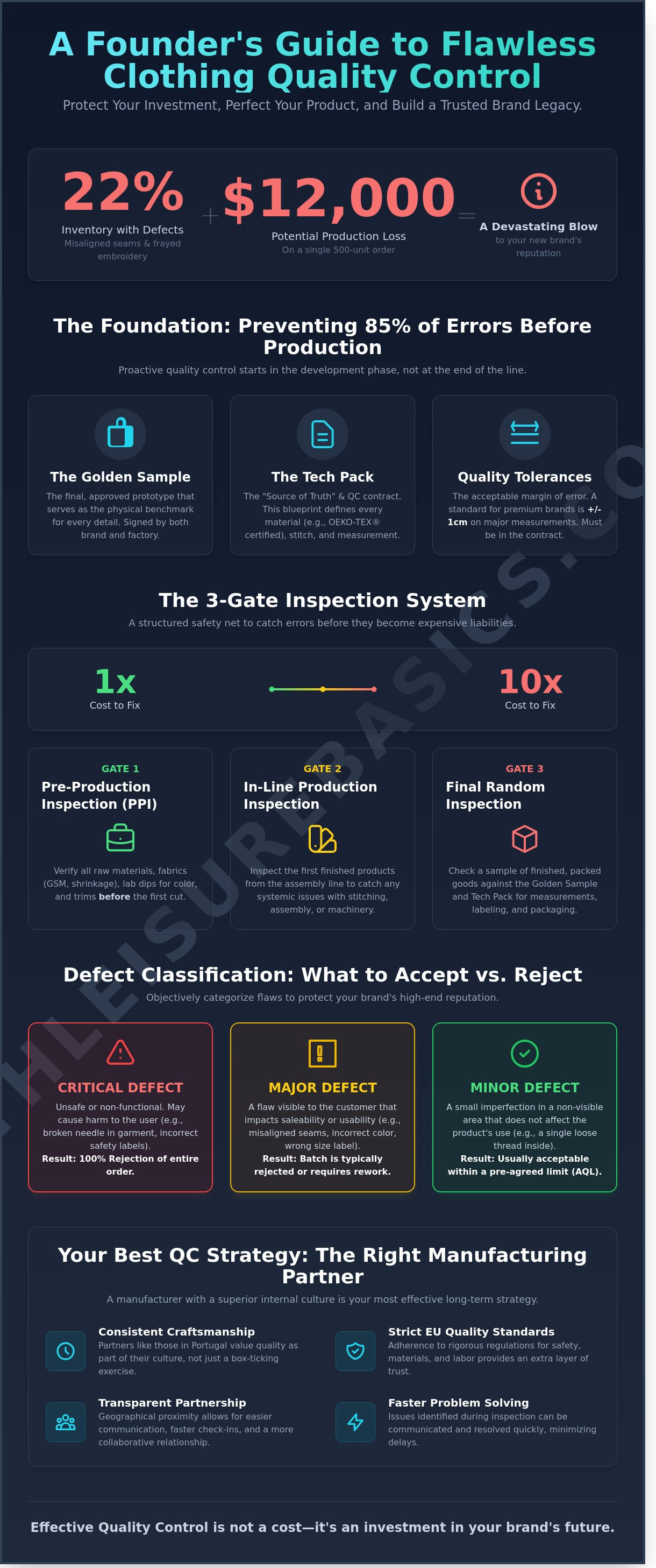
Imagine opening your first shipment of 500 premium hoodies only to find that 22% of the inventory has misaligned seams or frayed embroidery. For a new founder, this $12,000 production error is more than a setback; it's a devastating blow to your brand's reputation. Learning how to ensure clothing quality control is the only way to prevent these costly mistakes and protect your growing legacy. We know how stressful it feels to invest your capital while worrying if you have the technical expertise to spot manufacturing flaws before they reach your customers.
These principles apply across all textiles, but specialized materials demand unique attention. For instance, working with genuine leather involves a distinct quality control process, checking for hide consistency, scarring, and thickness. If you're interested in how these standards apply to high-end garments, you can discover more about Calça de Couro and the craftsmanship involved.
We agree that your manufacturing journey should be built on transparency and trust, not anxiety. This guide will show you how to implement a foolproof system that protects your investment and minimizes errors at every stage of the process. We'll provide a clear roadmap for the four essential production gates and a professional checklist you can send to your factory today. By the end of this article, you'll have the confidence to manage your production with the authority of an industry expert, ensuring every piece meets the highest Portuguese quality standards.
Key Takeaways
- Establish a proactive foundation by using your Tech Pack as the "Source of Truth" for every quality standard before production begins.
- Implement the industry-standard "Three-Gate" inspection system to catch errors early and save significantly on potential production correction costs.
- Master the exact steps of how to ensure clothing quality control through a technical checklist tailored for the specific performance needs of premium athleisure.
- Remove the guesswork from your workflow by learning how to objectively categorize defects and protect your brand's high-end reputation.
- Discover why choosing a manufacturer with a superior internal culture—such as those in Portugal—is your most effective long-term strategy for consistent craftsmanship.
The Foundation: How to Ensure Clothing Quality Control Before Production Starts
Effective quality control isn't a reactive "final check" at the end of a production line. It's a proactive framework that begins months before the first sewing machine starts. If you wait until 500 leggings are finished to check the seams, you've already lost your profit margin. Learning how to ensure clothing quality control requires shifting your focus to the development phase, where 85% of production errors can be prevented through clear documentation and physical benchmarks.
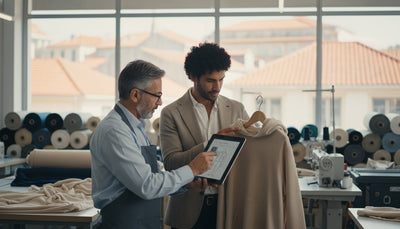
Your "Golden Sample" is the most critical tool in this process. This is the final, approved prototype that represents exactly what the bulk production should look like. It serves as the physical benchmark for every detail, from the hand-feel of the fabric to the placement of the brand labels. When you partner with a manufacturer, both parties should sign and date two identical Golden Samples. One stays with the factory as a reference for the sewing team, and one stays with you for the final inspection.
The Tech Pack as Your QC Contract
Your tech pack is the primary "Source of Truth" for your brand. It serves as a technical blueprint that defines every stitch, fabric weight, and trim detail. Without a detailed tech pack, your manufacturer is left to guess your expectations, which leads to inconsistent results. For a comprehensive look at building these documents, see our guide for clothing brands on tech packs.
To maintain superior quality and meet EU ethical standards, your tech pack must specify OEKO-TEX® certified materials. This certification guarantees the fabric has been tested for harmful substances, ensuring chemical safety for your customers. Specifying these standards in your contract ensures your brand delivers the premium, high-quality products your vision demands.
Setting Realistic Quality Tolerances
Handcrafted textile production is not an exact science. Because fabric is a flexible medium that reacts to heat and humidity, a 0% error rate is physically impossible. You must establish "tolerances," which are the acceptable margins of error for garment measurements. Establishing these early is a vital step in how to ensure clothing quality control without causing unnecessary production delays.
- Standard Tolerances: Most premium brands accept a margin of +/- 1cm for major measurements like chest or length.
- Agreement: Sign off on these margins in your contract before the first cut is made.
- Consistency: Clear tolerances prevent disputes during the final inspection phase and ensure your sizing remains reliable across different production batches.
By defining these boundaries, you provide your manufacturing partner with a clear target. This transparency builds a supportive partnership and ensures your garments meet the highest industry standards every time you scale.
The 3-Gate Inspection System: Managing the Production Flow
Understanding how to ensure clothing quality control requires a structured "Three-Gate" approach. This system acts as a safety net, catching errors before they become expensive liabilities. Industry data suggests that catching a defect at Gate 1 is 10 times cheaper than discovering it at Gate 3 when the product is already packed for shipment. When you manufacture in Portugal, this oversight is significantly easier due to strict EU quality standards and geographical proximity. This allows for faster communication and more frequent check-ins than traditional offshore hubs.
You can choose to have these inspections performed by the factory's internal QC team or hire an independent third-party inspector. While factory teams are efficient, third-party inspectors provide an unbiased perspective that is vital for maintaining premium standards. At Athleisure Basics, we believe transparency is the foundation of a successful brand; we help you navigate these choices to protect your investment.
Stage 1: Pre-Production Inspection (PPI)
Quality starts before a single scissor touch. During the PPI, we verify all raw materials against your tech pack specifications. This involves checking the GSM (grams per square meter) to ensure fabric weight meets your requirements. We review lab dips for color accuracy and test for fabric shrinkage. A 5% shrinkage rate can completely ruin a size chart if it isn't accounted for before the first cut. We also verify that all trims, such as zippers, buttons, and labels, match the approved samples exactly.
Stage 2: During Production Inspection (DPI/DUPRO)
Once 15% to 20% of your order is finished, a DPI takes place. This "inline" check identifies systemic issues like incorrect seam tension, crooked pockets, or misaligned embroidery. If the first 50 units show a consistent flaw, the factory can pivot immediately. This prevents a small technical error from ruining an entire 500-piece run. It's much easier to adjust a sewing machine setting early than it is to unpick thousands of finished seams. Working with a trusted manufacturing partner ensures these pivots happen quickly and efficiently.
Since details like embroidery can make or break a premium garment, some brands choose to work with dedicated specialists for these components. A manufacturer with a long history, like Better Emblem Company Ltd., focuses solely on perfecting these elements, which can be a key part of an overall quality strategy.
Stage 3: Final Random Inspection (FRI) & AQL
The final gate uses the AQL (Acceptable Quality Level) method. This is a statistical sampling standard that determines if a batch meets your quality threshold without needing to check every single garment. For most premium apparel brands, an AQL of 2.5 for major defects is the industry benchmark. Inspectors check the final 100% of the order for packaging accuracy, folding, and labeling. This is the final "go or no-go" decision point for the brand owner. A successful FRI ensures that the products arriving at your warehouse represent the top-notch craftsmanship your customers expect.
Building Your Technical Clothing Quality Control Checklist
A technical checklist is your brand's first line of defense. It transforms subjective opinions into measurable data, ensuring your manufacturer meets the highest industry standards for every garment. You should use the following points as a template for your production runs to maintain superior quality and consistency. If you're a first-time founder, reviewing our garment production process guide will help you understand exactly where these audits fit into your timeline.
Workmanship and Construction Checks
High-performance athleisure demands specialized construction that stands up to intense movement. You must inspect stitching quality for skipped stitches, loose threads, or uneven seams that compromise durability. For leggings and hoodies, test "stress points" like crotches and armholes by applying firm pressure. A premium legging should utilize 4-needle 6-thread flatlock seams to handle 300% stretch without failure. Conduct a symmetry check by measuring sleeves, pockets, and collars; a variance of more than 5mm is typically considered a defect in luxury apparel. This level of detail is essential for anyone learning how to ensure clothing quality control at scale.
Fabric and Material Integrity
Consistent aesthetics define a professional brand. You need to check for "shading," which is color variation within a single garment or across the batch. The fabric must match your approved lab dip under D65 standard lighting. Inspect the surface for pilling, holes, or "slubs" in the knit that weaken the garment's structure. For moisture-wicking fabrics, ensure the knit density is consistent to prevent "grinning" where the fabric becomes sheer when stretched. Test trim functionality by sliding zippers 10 times and checking that button attachments can withstand 90 Newtons of pull force.
Final Finishing and Presentation
The final 1% of production determines the customer's first impression and your brand's perceived value. Every loose thread must be clipped for a clean finish; this is a hallmark of top-notch craftsmanship. Verify that care labels and size tags are placed correctly according to EU Regulation 1007/2011, which mandates specific fiber composition labeling. Finally, check that polybag barcodes are 100% scannable and labels are aligned. Accurate retail labeling prevents costly logistics delays and ensures your products are ready for the shelf the moment they arrive from Portugal. Using a detailed checklist is the most effective way to understand how to ensure clothing quality control and protect your investment.
Classifying Defects: What to Accept vs. What to Reject
Finding a mistake in your first production run can feel like a disaster. For 85% of new founders, this is the moment where panic sets in. You don't need to panic; you need a system. Understanding how to ensure clothing quality control means moving away from emotional reactions and toward objective classification. This structured approach is exactly how to ensure clothing quality control without letting stress cloud your business judgment. Every error falls into a specific category that dictates your next move with the factory.
Critical, Major, and Minor Defects
Industry standards typically use the Acceptable Quality Level (AQL) to group errors. You should categorize every find into one of three buckets to keep your standards consistent:
- Critical Defects: These are non-negotiable rejects. They include safety hazards like a stray needle left in a hem or legal failures such as incorrect fiber content on a care label. If a garment is unsafe or illegal, it cannot be sold.
- Major Defects: These issues make a garment unsellable at full price. Examples include a 2cm hole, a visible oil stain, or a garment that measures more than 1.5cm outside of the specified size tolerance. These require immediate resolution.
- Minor Defects: These are small imperfections that most customers won't notice. A single loose thread or a slightly off-center neck tape usually falls here. Most premium brands accept a 2.5% to 4% margin for minor flaws across a total order.
The Feedback Loop: Improving Your Next Run
When you find errors, your goal isn't just to get your money back. You want to fix the process. Instead of just asking for a discount, perform a Root Cause Analysis with your manufacturer. If 12% of your joggers have tension puckering at the waistband, ask the factory to check the machine settings or needle type for that specific fabric weight. Clear documentation is vital. Take high-resolution photos and use "red-lining" by physically marking the error on the garment with a red arrow before sending it back.
We believe that a partnership for your brand relies on total transparency. If a mistake happens, we report it immediately and work on the solution together. This honest communication turns a one-time production error into a long-term quality improvement. Use the "Repair, Replace, or Refund" framework to negotiate. If a local tailor can fix a minor seam for $5, ask for a repair credit. If the fabric is damaged, demand a replacement or a full refund for those units.
Ready to work with a manufacturer that values precision and transparency? Partner with Athleisurebasics for your next collection.
Why Your Choice of Manufacturer is Your Best QC Strategy
Many brands treat quality control as a final hurdle to clear before shipping. This mindset is a mistake. Real quality starts with the factory’s internal culture; it is not something you can simply "inspect" into a garment at the end of the line. If a factory prioritizes speed over precision, your external inspectors will find defects, but they won't fix the underlying cause. Selecting the right partner is the most effective way to understand how to ensure clothing quality control across your entire supply chain.
Choosing a manufacturer that values craftsmanship reduces your risk profile. When a factory operates with high internal standards, you spend less time managing errors and more time scaling your business. This proactive approach saves costs. A defect caught at the fabric-cutting stage is often 10 times cheaper to fix than a defect found in a finished garment already shipped to a customer. By the time an inspector sees the product, the money is already spent. You want a partner who prevents the error from happening in the first place.
The Portugal Quality Advantage
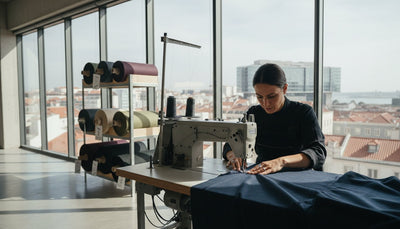
Portugal has established itself as a global leader in textile production by adhering to strict EU labor laws and environmental standards. These regulations ensure a skilled, fairly compensated workforce that takes pride in every stitch. For brands based in Europe or North America, the proximity and cultural alignment are major assets. Being in a similar time zone means you can resolve production issues in minutes rather than days. The "Made in Portugal" mark acts as an immediate signal of trust for your customers. It represents a built-in quality assurance that allows clothing manufacturers in Portugal to command a premium in the global market.
Partnering with Athleisurebasics
We believe that how to ensure clothing quality control shouldn't be a source of stress for founders. We integrate rigorous checks into every step of our custom manufacturing process. Our focus on Low MOQ production, starting at just 60 pieces per style, allows for a level of oversight that massive factories cannot match. Smaller batches mean our team can inspect every single item, ensuring that premium finishing and OEKO-TEX® certified fabrics meet your exact specifications.
- Ethical Standards: 100% compliance with EU manufacturing and labor regulations.
- Premium Materials: Consistent use of OEKO-TEX® certified fabrics to guarantee safety and durability.
- Scalability: Start with 60 pieces to test the market and scale as your brand grows.
Athleisurebasics is your trusted partner in turning a creative vision into a high-quality reality. We handle the technical complexities so you can focus on your brand's growth. Let’s start your project today and move your brand from logo to legacy.
Build Your Legacy with Superior Standards
Mastering how to ensure clothing quality control is the defining factor between a one-time purchase and a lifelong customer. By implementing a 3-gate inspection system and a detailed technical checklist, you eliminate guesswork during the production flow. These steps ensure every stitch aligns with your vision and every fabric choice meets professional requirements. Your brand's success depends on maintaining these rigorous standards from day one.
Choosing a partner who understands these technical complexities is your most effective quality strategy. Athleisure Basics offers premium Portuguese craftsmanship and OEKO-TEX® Standard 100 certified fabrics to guarantee safety and durability. We specialize in low MOQ production starting at just 60 pieces per style; this makes high-end manufacturing accessible for growing brands. We're here to help you turn your creative concepts into a profitable, high-quality reality.
Ready to launch a high-quality collection? Get a manufacturing quote from Athleisurebasics today.
Your journey from logo to legacy starts with the right foundation. We're excited to help you build something extraordinary.
Frequently Asked Questions
What is the difference between Quality Assurance (QA) and Quality Control (QC)?
Quality Assurance (QA) focuses on the manufacturing process to prevent defects before they happen, while Quality Control (QC) involves inspecting the final products to identify existing errors. QA sets the standards and protocols for your factory. QC is the final gatekeeper that checks if those standards were met before shipping. Think of QA as the roadmap and QC as the final destination check.
How much does a third-party clothing inspection typically cost?
A professional third-party inspection generally costs between $200 and $300 per man-day in major manufacturing hubs. This fee covers a dedicated inspector who visits the factory to perform physical checks on your order. For a startup with a low MOQ of 100 units, this investment ensures your premium standards are maintained before the balance payment is made. It's a small price for brand security.
What is an AQL chart and how do I use it for my clothing brand?
An AQL chart is a statistical tool that tells you how many garments to inspect based on your total order size. To use it, find your total quantity on the chart to identify your sample size, then check the "Accept" and "Reject" columns for major and minor defects. This is the industry standard for how to ensure clothing quality control without checking every single item in a large production run.
Should I inspect 100% of my garments or just a sample?
You should perform 100% inspections for small batches under 100 pieces or luxury items where a single defect ruins the brand's reputation. For larger runs of 1,000 pieces or more, a sample based on AQL Level II is more cost-effective. Checking 100% of a 5,000-unit order is rarely feasible for growing brands due to time and labor costs. Focus on high-risk areas instead.
How do I handle quality control if I am manufacturing in another country?
Managing quality from abroad requires hiring an independent inspection agency to act as your eyes on the ground. European manufacturing hubs like Portugal offer a distinct advantage because they follow strict EU quality standards, reducing the risk of technical failures. Establish a clear Tech Pack and use video calls to review pre-production samples before mass production begins. Clear communication is your best tool for success.
What are the most common defects found in athleisure and activewear?
The most frequent defects in activewear include "grin-through" where the fabric becomes transparent when stretched and wavy seams caused by improper tension on four-way stretch fabrics. Approximately 15% of athleisure returns are due to poor stretch recovery or "bagging" at the knees. Ensure your QC checklist includes a "squat test" to verify fabric opacity and seam strength under pressure. Quality fabrics are non-negotiable for performance wear.
Can I perform quality control myself if I have a low MOQ order?
You can absolutely perform quality control yourself for low MOQ orders by requesting a "top of production" sample before the bulk shipment leaves the factory. This is a practical way for startups to learn how to ensure clothing quality control while staying within a tight budget. If you manufacture in accessible regions like Portugal, a one-day site visit can replace the need for an expensive third-party agency. It's about being proactive.
What happens if my factory refuses to fix major production defects?
If a factory refuses to rectify major defects, your primary leverage is the final balance payment, which you shouldn't release until the issues are resolved. Most professional manufacturing agreements include a clause for a 3% defect allowance. If defects exceed this threshold, the factory is typically contractually obligated to provide a credit note or rework the garments at their own expense. Always get these terms in writing before production starts.

Leave a comment
This site is protected by hCaptcha and the hCaptcha Privacy Policy and Terms of Service apply.