
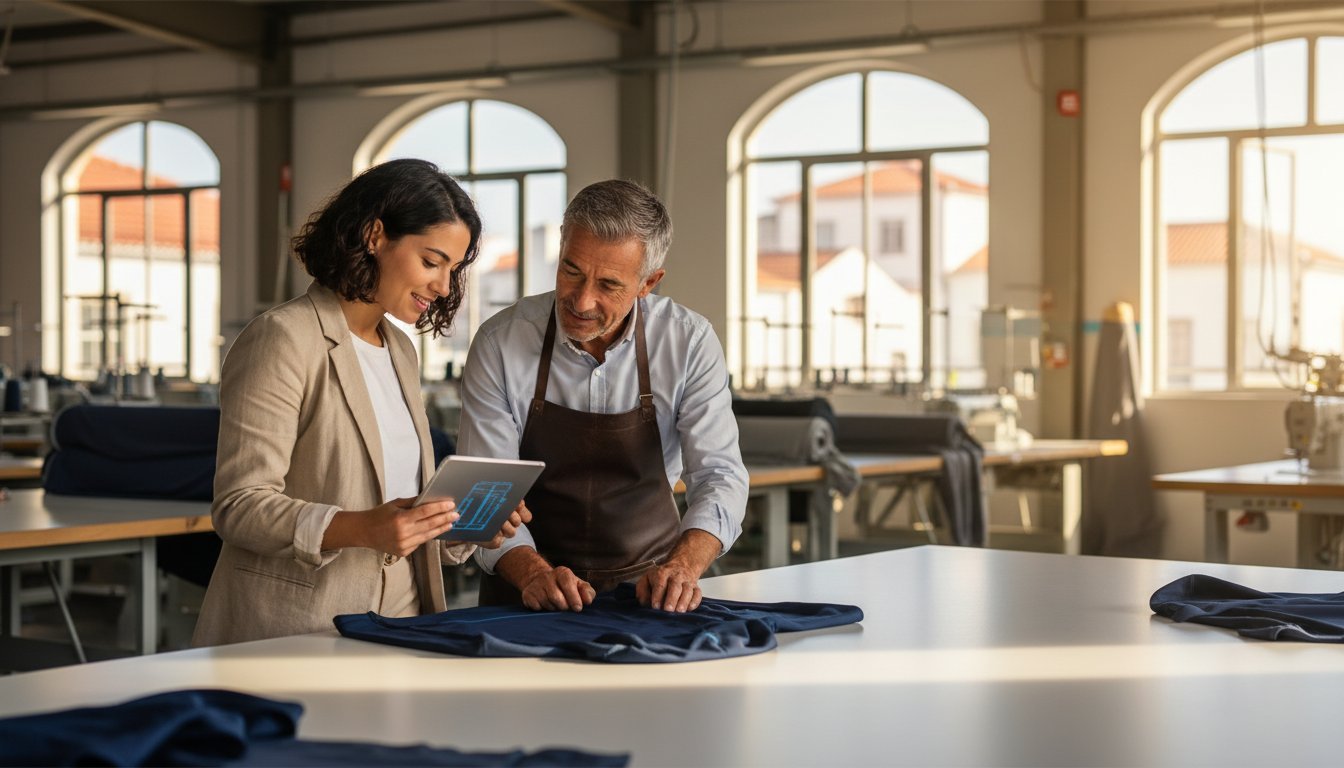
Building a Relationship With Your Manufacturer: The Startup Guide for 2026
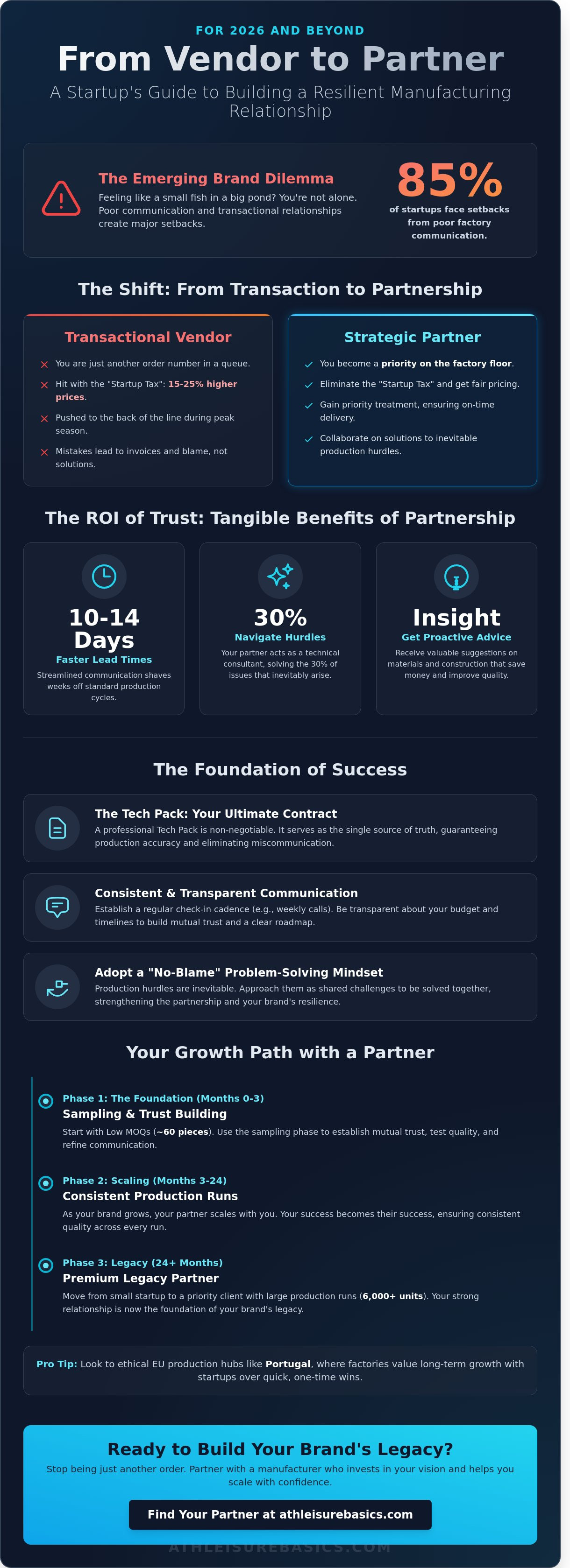
For 2026, your factory choice is no longer just a line item; it's the foundation of your brand's legacy. It's common to feel like a small fish in a big pond when you're starting with low MOQs. You likely fear that one production delay or a batch of poor quality stitching will drain your capital before you even launch. Recent industry data suggests that 85% of emerging brands face significant setbacks due to poor communication in their first year. This is why building a relationship with your manufacturer is the most valuable investment you can make for your business.
We understand that you need more than just a supplier; you need a partner who values your vision. This guide will show you how to move beyond transactional emails to create a strategic partnership that secures priority treatment and superior quality. We'll explore the specific communication frameworks and ethical standards that allow startups to scale with confidence and maintain consistent excellence across every production run.
Key Takeaways
- Learn how to shift from a transactional vendor model to a strategic partnership that reduces the "startup tax" and ensures your brand gets top priority.
- Discover why a professional Tech Pack serves as the ultimate contract to guarantee production accuracy and clear communication with your factory.
- Understand the importance of building a relationship with your manufacturer during the sampling phase to establish mutual trust and high-quality standards.
- Master the "no blame" approach to problem-solving, allowing you to turn inevitable production hurdles into milestones that strengthen your brand’s resilience.
- Explore how leveraging ethical EU production and low MOQs can help you scale your startup efficiently from a simple vision to a premium legacy.
Why Building a Relationship With Your Manufacturer is Your Brand’s Secret Weapon
For most fashion founders, a manufacturer is just a line item on a spreadsheet. In 2026, successful brands treat production as a core competency rather than an outsourced chore. Moving beyond a transactional vendor model creates a strategic advantage that your competitors can't easily replicate. It's the difference between being a random order in a queue and a priority on the factory floor. Building a relationship with your manufacturer ensures you aren't just buying labor; you're securing the foundation of your brand's future.
This shift from a "them versus us" mentality to a unified partnership eliminates the "startup tax." This tax often manifests as 15% to 25% higher pricing or being pushed to the back of the production line. When a factory sees you as a long-term partner, they invest in your success. They become willing to troubleshoot issues that would otherwise lead to costly delays or discarded inventory.
From Transactional to Strategic: The ROI of Trust
Effective Supplier Relationship Management acts as a financial lever for your business. During the Q4 peak season, factories are overwhelmed with orders. If a machine breaks or fabric is late, they prioritize the brands they like and trust. This favoritism isn't about being "nice"; it's a logical business decision to protect reliable partners. A strong bond often results in faster lead times, sometimes shaving 10 to 14 days off a standard production cycle because of streamlined communication.
Trust also transforms the garment production process into a collaborative journey. Instead of strictly following a tech pack that might have flaws, a trusted partner offers proactive advice. They might suggest a specific interlining to prevent collar rolling or recommend a 280 GSM fabric over a 300 GSM version to save on shipping costs without sacrificing quality. These insights only surface when the manufacturer feels comfortable enough to speak up.
Why Startups Need Partners, Not Just Suppliers
Most first-time founders lack 20 years of technical textile experience. A good manufacturer fills this massive knowledge gap. They act as your technical consultants, helping you navigate the 30% of production hurdles that inevitably arise. Whether it's a dye lot inconsistency or a shipping bottleneck, a partner works with you to find a solution rather than simply sending an invoice for the mistake.
Manufacturing in Portugal has become the global benchmark for these reliable partnerships. Factories there value long-term growth over quick, one-time wins. You shouldn't feel intimidated by being a small brand. Every luxury house started with a single sample. Many Portuguese factories actively seek startups they can grow with, moving from 60-piece low MOQs to 6,000-unit runs over a 24-month period. By building a relationship with your manufacturer early on, you position your brand to scale quickly and efficiently when the market demands it.
The Foundation of Success: Communication, Tech Packs, and Transparency
Communication is the lifeblood of apparel production. Without a clear line of dialogue, even the best designs can fail during the sampling stage. When building a relationship with your manufacturer, you must establish clear communication channels before the first pattern is cut. Whether you use email for formal approvals or dedicated project management tools, consistency is vital. Set a regular check-in cadence, such as a brief weekly call, to avoid the "radio silence" anxiety that often plagues new founders. This habit ensures you stay informed about lead times and potential fabric shortages before they become emergencies.
Transparency must work both ways to be effective. You expect your factory to be honest about their capacity; in return, you must be honest about your budget and realistic timelines. Factories prioritize partners who provide a clear roadmap. If your goal is a launch date in six months, share that early. Being upfront about your financial constraints allows the manufacturer to suggest cost-effective materials or construction methods that align with your goals without sacrificing quality.
Mastering the Language of Apparel Production
To build credibility with factory floor managers, you need to speak their language. Learning basic industry terminology like GSM (grams per square meter), strike-offs, and grading shows you've done your homework. This knowledge transforms you from a "customer" into a "professional partner." When you understand the technical constraints of a flatlock stitch versus a twin-needle hem, you earn the respect of the people making your clothes.
Being over-prepared with documentation is the fastest way to gain professional respect. Don't rely on descriptive emails alone. Use visual aids, annotated photos, and physical samples to convey your vision. If you want a specific "hand-feel," send a reference swatch. Providing 100% clarity through visuals eliminates the guesswork that leads to costly production errors. If you're ready to start, you can explore our custom clothing options to see how we streamline this process.
The Role of Detailed Tech Packs in Reducing Friction
A Tech Pack is a comprehensive document containing every technical detail of a garment. Think of it as the ultimate contract between your brand and the factory. While a signed agreement covers the business terms, the tech pack governs the physical product. It acts as a blueprint that prevents manufacturing errors by specifying everything from thread color to button placement.
A detailed tech pack protects your brand from quality disputes. If the final shipment doesn't match the specifications in your document, you have a clear basis for a claim. Industry data suggests that brands using professional tech packs see a 30% to 40% reduction in sampling rounds. This efficiency saves you money and strengthens your reputation as a prepared, reliable client. When building a relationship with your manufacturer, providing a high-quality tech pack is the best way to prove you're serious about your brand's legacy.
- Bill of Materials (BOM): Lists every component, including fabrics, labels, and zippers.
- Measurement Tables: Provides exact dimensions for every size in your range.
- Stitching Details: Specifies SPI (stitches per inch) and seam types.
Navigating the Production Cycle: From First Sample to Bulk Order
The transition from a digital tech pack to a physical garment is the first real stress test for your partnership. This phase is about more than just checking measurements; it is a trial run for how you and your partner solve problems together. Successful building a relationship with your manufacturer requires viewing the sampling process as a shared investment rather than a simple purchase.
The Sampling Phase: Building Mutual Respect
The sampling phase is where your vision meets the factory's technical reality. It's vital to pay for samples fairly and on time. Requesting free samples or haggling over development costs signals that you don't value the factory’s labor or specialized skill. When the first prototype arrives, host a fit session that is collaborative. If a sleeve doesn't drape correctly, don't send an accusatory email. Instead, provide clear, annotated photos and ask the pattern maker for their technical opinion on how to fix the tension. This approach builds trust. Many brands find that private label Portugal services streamline this phase because these facilities operate under strict EU quality standards, which often results in fewer revision rounds and faster "golden sample" approval.
Managing Minimum Order Quantities (MOQs) as You Scale
Minimum Order Quantities (MOQs) are often a point of friction for startups, but they exist to cover the factory's fixed costs. Setting up a production line involves hours of machine calibration and labor that remain the same whether you produce 50 units or 5,000. Additionally, fabric mills typically require 300 to 500 meters of fabric to run a dye vat efficiently. You should view MOQs as a shared business risk. If you can't meet a specific minimum, try these strategies:
- Offer to pay a surcharge for a smaller run to cover the setup time.
- Commit to a multi-collection roadmap to show long-term value.
- Consolidate your fabric choices across different styles to hit total meterage requirements.
Athleisurebasics supports startups by offering low MOQ options for luxury blanks, starting at just 60 pieces per style. This flexibility allows you to launch a premium line without the heavy financial burden of massive inventories. By respecting the factory’s constraints while clearly communicating your growth plans, you're building a relationship with your manufacturer that can scale as your brand gains traction. Once the "golden sample" is signed off and the MOQ is settled, you can move into bulk production with total confidence in your partner's execution.
Handling Challenges: Turning Production Hurdles into Partnership Milestones
In 2026, global supply chains remain complex and unpredictable. A recent industry survey indicated that 72% of fashion brands experienced lead-time volatility in the past year. When a delay occurs, your reaction is the ultimate test of building a relationship with your manufacturer. Instead of pointing fingers, adopt a "No Blame" culture. This mindset shifts the focus from finding a scapegoat to finding a solution. It's about fixing the process, not just the product. When you treat quality control as a shared responsibility rather than a policing action, you foster a culture of transparency where workers feel safe reporting errors before they become expensive disasters.
Proactive Problem Solving for Delays and Quality Issues
Smart founders don't leave their launch dates to chance. You should build a 20% "buffer time" into your production calendar. If you plan a retail launch for October 15th, your delivery deadline should be no later than September 20th. This window absorbs the impact of shipping delays or minor fabric shortages without causing panic. If a batch arrives and doesn't meet your specifications, handle the situation with professional grace. Provide clear, high-resolution photos and a detailed report of the discrepancies immediately. Avoid aggressive language; instead, ask your partner how you can work together to rectify the issue.
- Visit the facility: Founders who visit their factory in person at least once a year report a 35% higher satisfaction rate in communication.
- Detailed Tech Packs: 40% of quality issues stem from vague specifications. Ensure your tech packs are exhaustive.
- Clear Communication: Use a dedicated project management tool rather than relying solely on messy email threads.
The human connection is the strongest tool in building a relationship with your manufacturer. Seeing the production floor and meeting the team in person transforms you from a name on an invoice into a partner they want to see succeed.
Ethical Standards and the EU Advantage
Choosing Made in Portugal clothing is a strategic decision that protects your brand’s reputation. Portugal’s textile industry operates under strict EU labor laws and environmental regulations, ensuring that your products are made ethically. This transparency is a powerful marketing asset for your brand. In 2026, consumers demand more than just a "sustainable" label; they want proof of fair wages and safe working conditions.
For premium athleisure, OEKO-TEX® Standard 100 certification is your baseline requirement. This certification guarantees that every component, from the fabric to the zippers, has been tested for harmful substances. By partnering with a manufacturer that prioritizes these standards, you mitigate the risk of a PR crisis. Ethical production isn't just a moral choice; it's a long-term business strategy that ensures your brand's legacy remains untarnished as you scale.
Launching with Athleisurebasics: Your Trusted Partner in Portugal
Success in the fashion industry requires more than a simple transaction. It demands a collaborative environment where your vision is understood and respected. Athleisurebasics operates as a dedicated partner invested in your startup's long-term growth. We focus on premium quality and ethical EU production standards to ensure your brand stands out in a competitive 2026 market. Our consulting services are designed to bridge the gap for first-time founders, providing the technical expertise needed to turn a concept into a physical product.
Establishing a foundation in Portugal offers distinct advantages. The region is known for its textile heritage and adherence to strict labor laws. By building a relationship with your manufacturer here, you gain access to a supply chain that prioritizes craftsmanship and transparency. We don't just produce garments; we help you build a profitable business model from the ground up. Our team guides you through the nuances of fabric selection and construction to ensure your final product meets the highest industry standards.
Low MOQ Flexibility for Emerging Brands
Inventory risk is one of the biggest hurdles for new entrepreneurs. To solve this, our White Label service starts at just 70 pieces per style. This low entry point allows you to test the market and validate your designs without overextending your budget. You can launch quickly and gather customer feedback before committing to larger volumes. Many of our clients find this 70-piece minimum is the perfect balance between cost-efficiency and risk management.
As your brand gains traction, we make the transition to Custom Manufacturing seamless. This path allows for complete creative control over patterns, fits, and unique features. We support this growth by sourcing premium Portuguese textiles, including OEKO-TEX® certified materials that meet modern sustainability requirements. Our goal is to provide the flexibility you need at every stage of your brand's evolution, ensuring you never feel stuck with excess stock or limited design options.
From Logo to Legacy: Our End-to-End Support
We handle the complex technical details so you can focus on marketing and community building. Our team manages everything from creating comprehensive Tech Packs and physical sampling to full Cut, Make, Trim (CMT) production. This end-to-end support ensures consistency and quality across your entire collection. We want you to view us as an extension of your team, not just a distant factory.
building a relationship with your manufacturer is the most effective way to ensure your brand's longevity. We provide the stability and expertise required to move from your first logo to a lasting fashion legacy. Your success is our primary metric for performance. If you're ready to take the next step in your entrepreneurial journey, we're here to guide you through every stitch of the process.
Scale Your Brand with a Strategic Manufacturing Partnership
Success in 2026 depends on more than just finding a vendor; it requires a collaborative alliance. By prioritizing clear communication and detailed tech packs, you'll eliminate the guesswork that often leads to production delays. Mastering the production cycle from the first sample to bulk delivery ensures your brand maintains the high standards your customers expect. Building a relationship with your manufacturer transforms a simple supplier into a long-term asset for your business growth. It's the difference between a one-off order and a scalable legacy.
Athleisurebasics offers the infrastructure you need to launch with confidence. We provide OEKO-TEX® certified premium fabrics and operate under strict EU ethical standards from our hub in Portugal. Our specialized low MOQ services allow startups to order as few as 60 pieces per style. This helps you manage cash flow and reduce inventory risk while maintaining top-notch craftsmanship. You don't have to navigate the complexities of global supply chains alone when you have a partner committed to your vision.
Start your manufacturing journey with a trusted Portuguese partner and turn your creative vision into a profitable reality. We're ready to help you build a brand that lasts.
Frequently Asked Questions
How do I find a clothing manufacturer that takes startups seriously?
Look for manufacturers with dedicated Low MOQ programs or white label services designed for emerging brands. These facilities are structured to handle smaller batches, often starting at 60 pieces per style or color. Use platforms like the European Fashion Alliance or Clutch to identify partners who prioritize ethical production and long-term brand growth over massive volume. Choosing a partner who values your vision is vital for your first 12 months.
What should I include in my first email to a potential manufacturer?
Your first email must include a detailed Tech Pack, your desired quantity, and a clear timeline for production. Manufacturers receive dozens of inquiries daily; providing specific details like fabric weight (e.g., 300 GSM) and printing methods shows you're a professional partner. This level of detail is the first step in building a relationship with your manufacturer. It ensures the factory takes your project seriously from day one.
How can I negotiate lower MOQs when I am just starting out?
Offer to pay a premium for smaller runs or commit to using deadstock fabrics already available in the factory. According to industry data from 2024, 65% of manufacturers are more likely to accept lower quantities if the brand pays a 15% to 20% surcharge on the unit price. You can also propose a multi-season roadmap to show your potential for future scale. This strategy reduces the factory's financial risk.
Is it better to manufacture in Portugal or Asia for a new brand?
Portugal is the superior choice for European startups due to its proximity, ethical standards, and high-quality craftsmanship. Manufacturing in Portugal ensures compliance with EU labor laws and OEKO-TEX® certifications, which 73% of modern consumers look for when purchasing apparel. While Asian hubs offer lower costs for mass production, Portugal provides the flexibility and speed needed for a successful 2026 launch. It's about balancing cost with long-term brand reputation.
What happens if the manufacturer makes a mistake in the production run?
Refer immediately to your signed Quality Control (QC) agreement and the pre-production sample you both approved. If the final goods deviate from the 2.5 AQL (Acceptable Quality Level) standard, a professional partner will either rework the items or offer a credit for future orders. Transparent communication is essential here to resolve the issue without damaging the long-term partnership. Most reputable factories stand by their work to maintain their industry reputation.
How often should I communicate with my manufacturer during production?
Establish a weekly check-in schedule to monitor milestones like fabric sourcing, sample approval, and final packing. Consistent updates prevent small delays from turning into 30-day setbacks. Professional manufacturers often use project management tools or weekly email summaries to keep you informed throughout the 8 to 12 week production cycle. Don't wait for problems to arise; proactive communication keeps your project on track and builds mutual trust.
What is the most important document for a manufacturing relationship?
The Tech Pack is the most critical document because it serves as the blueprint for every stitch and measurement. Without a comprehensive Tech Pack, building a relationship with your manufacturer becomes difficult due to inevitable misunderstandings. This document should include graded spec sheets, a Bill of Materials (BOM), and detailed construction notes to ensure your vision matches the final product. It's the only way to guarantee consistency across 100 or 1,000 units.


Leave a comment
This site is protected by hCaptcha and the hCaptcha Privacy Policy and Terms of Service apply.