
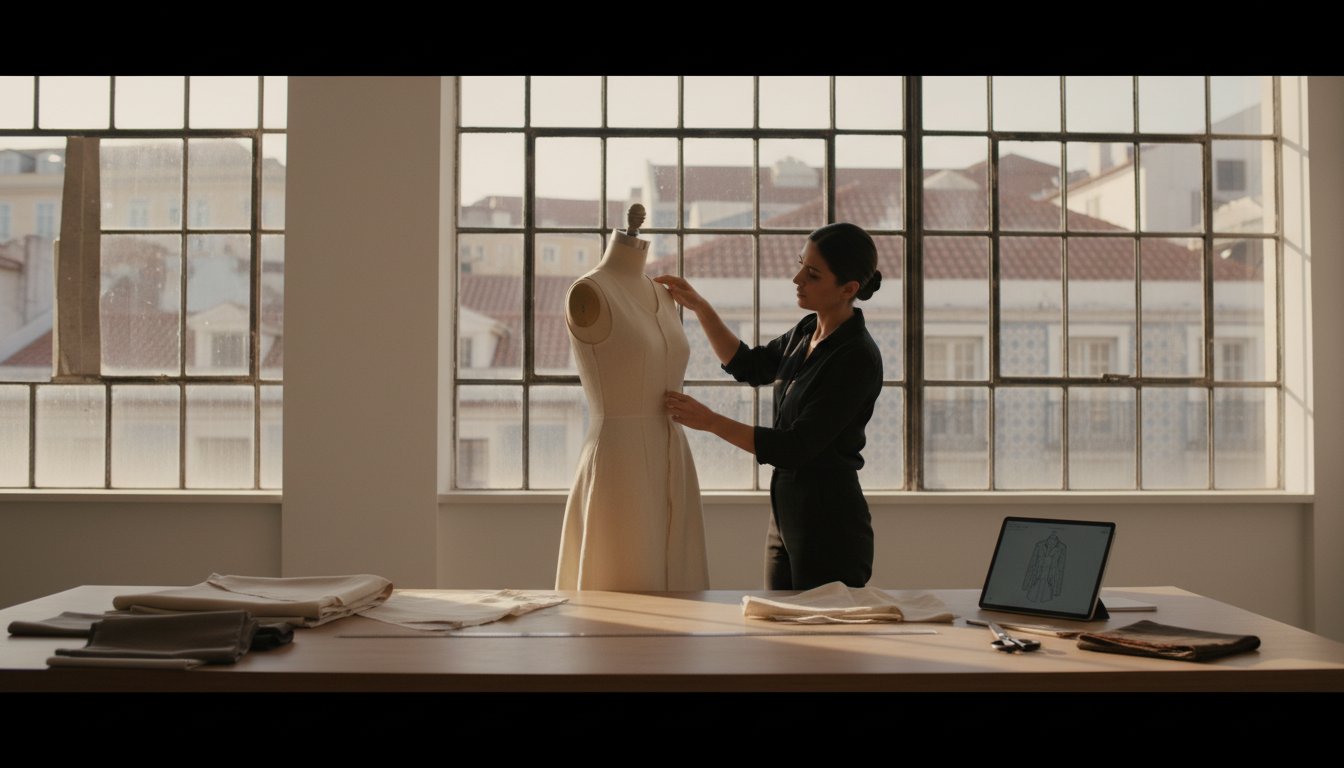
Creating a Custom Clothing Line in 2026: The Comprehensive Manufacturer’s Guide
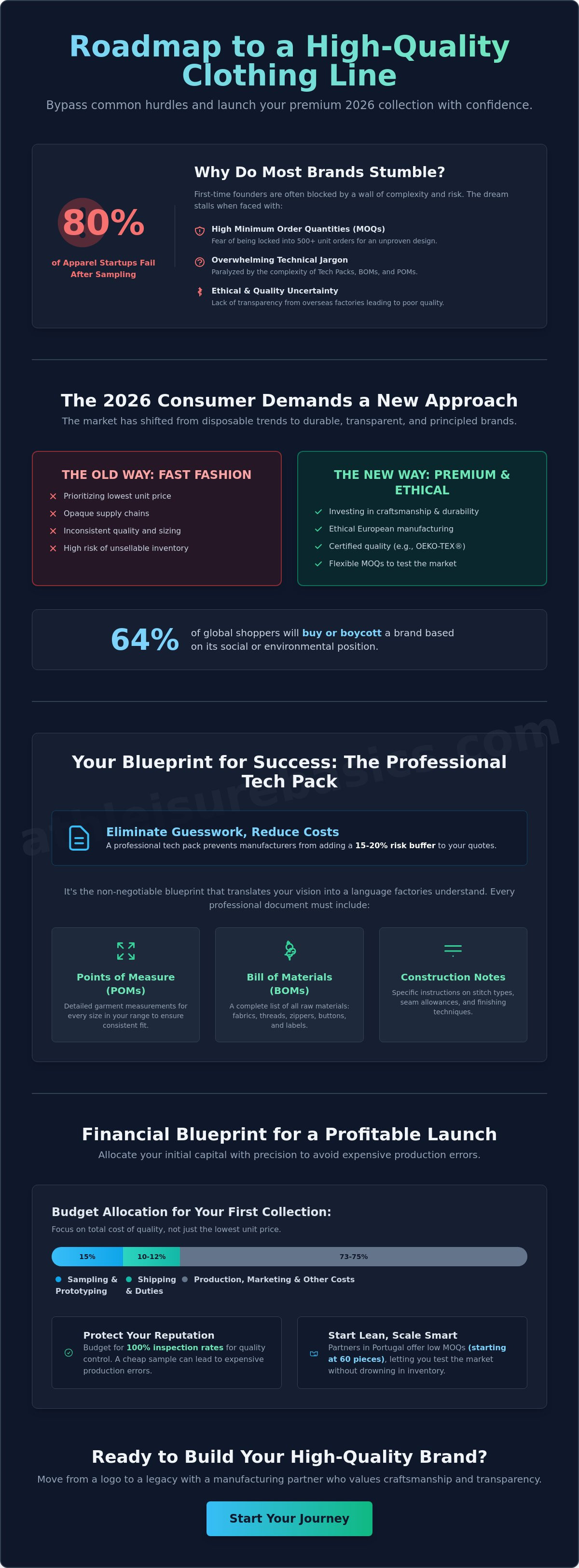
Why do nearly 80% of independent apparel startups fail to move past the sampling stage? You've likely spent months refining your aesthetic, only to feel paralyzed by technical jargon or the fear of being locked into a 500 unit minimum order. It's frustrating when the dream of creating a custom clothing line feels blocked by the complexity of Tech Packs and the ethical uncertainty of overseas factories. We understand that you need more than just a vendor; you need a partner who values craftsmanship and transparency as much as you do.
This guide provides a definitive roadmap to bypass these hurdles by focusing on premium European manufacturing and transparent production standards. You'll master the end to end process of building a high quality brand, from perfecting your technical design to navigating CMT versus Full Package production. We'll show you how to find a reliable partner in Portugal who offers low MOQs and OEKO-TEX certified quality, ensuring your 2026 launch is both profitable and principled from day one.
Key Takeaways
- Shift your focus from fast fashion to premium quality by aligning your brand identity with ethical European manufacturing standards.
- Learn why a professional tech pack is the essential blueprint for creating a custom clothing line and how it ensures accurate factory quotes.
- Evaluate the pros and cons of different production models to find the perfect balance between flexibility, cost, and superior craftsmanship.
- Master the three critical stages of sampling to ensure your final garments meet the highest industry standards for fit and durability.
- Prepare to scale your vision with confidence by implementing proven strategies for quality control and global logistics management.
The Reality of Creating a Custom Clothing Line in 2026
The landscape for creating a custom clothing line has fundamentally shifted. In 2026, the market has moved away from disposable trends toward "slow fashion" and premium quality. Consumers now demand extreme transparency; 64% of global shoppers state they will buy or boycott a brand based on its social or environmental position. Understanding The Reality of the Clothing Industry is vital before you cut your first piece of fabric. Your brand identity must dictate your manufacturing path. If your vision is built on luxury, your production must reflect top-notch craftsmanship and ethical manufacturing.
Defining Your Niche in the Athleisure Market
The athleisure segment remains a powerhouse, but success requires identifying specific market gaps. In 2026, the most resilient category for startups is premium athleisure. High-end customers prioritize durability and performance over fast-fashion prices. Look for underserved niches like OEKO-TEX® certified performance wear or specialized recovery gear. Align your brand values with your production methods by choosing ethical manufacturing. This commitment to quality, such as sourcing products Made in Portugal, becomes your strongest marketing tool.
The Financial Blueprint for Your First Collection
Moving beyond unit price is essential for a profitable launch. You must understand the total cost of quality to avoid unexpected debt. A cheap sample often leads to expensive production errors that can sink a new business. Allocate your budget with precision:
- Sampling and Prototyping: Reserve 15% of your initial capital for perfecting fits.
- Quality Control: Budget for 100% inspection rates to protect your brand reputation.
- Shipping and Duties: Factor in 10% to 12% for international logistics and EU standards compliance.
Balancing low MOQs with profitable margins is the ultimate goal. Starting with a white label service at 60 pieces per style allows you to test the market without drowning in inventory. This flexibility ensures you stay lean while creating a custom clothing line that stands the test of time. Focus on superior quality and efficient turnarounds to turn your vision into a high-quality reality quickly.
The Technical Foundation: From Concept to Tech Pack
A tech pack is the essential blueprint for your garment. It translates your creative vision into a language that a factory can understand. When creating a custom clothing line, you'll quickly realize that a simple sketch isn't enough to secure a production slot. Factories cannot provide accurate quotes without a technical document. Without specific data, manufacturers often add a 15% to 20% buffer to their pricing to cover the risks of the unknown. A professional tech pack removes this guesswork; it ensures that your first sample is as close to perfection as possible.
Just as Creating a Solid Business Plan is vital for your brand's long-term success, the tech pack is vital for your product's integrity. It reduces waste by preventing costly production errors and ensuring every component is accounted for before the sewing machines start. Every professional document must include:
- Points of Measure (POMs): Detailed measurements for every size in your range.
- Bill of Materials (BOMs): A complete list of fabrics, threads, buttons, zippers, and labels.
- Construction Notes: Specific instructions on stitch types, seam allowances, and finishing techniques.
Mastering Tech Pack Development
Learning how to create a tech pack for clothing is a non-negotiable skill for modern founders. One of the most common mistakes is failing to define tolerances in measurement charts. If a waistband is off by 2cm and you haven't defined an acceptable margin, your entire batch could be unsellable. Many brands now use digital tools like Adobe Illustrator or specialized PLM software to maintain accuracy. If you aren't technically inclined, hiring a production consultant is a smart investment. It's often cheaper to pay for an expert's time upfront than to pay for a discarded 500-unit production run later.
Sourcing Premium Fabrics and OEKO-TEX® Materials
In 2026, consumers demand transparency and sustainability. Understanding the technical side of your textile choices is just as important as the design itself. OEKO-TEX® Standard 100 certification is now a baseline requirement for premium brands; it proves your garments are free from harmful chemicals. Portuguese cotton and recycled synthetics have become 2026 staples because they offer superior durability and ethical peace of mind. When creating a custom clothing line, sourcing materials with the right certifications elevates your brand's perceived value and builds trust with your audience. If you need help identifying the right materials for your vision, you can explore our custom options to see how we help brands scale with quality-first sourcing.
Manufacturing Models: Finding the Right Fit for Your Brand
Choosing the right production path is the most critical decision when creating a custom clothing line. This choice dictates your profit margins, lead times, and overall brand perception. While Print-on-Demand (POD) offers a low-barrier entry, it often falls short on quality and fabric consistency. For brands aiming for a premium market position, the choice usually lies between white label and full custom manufacturing.
Domestic production in the US or UK offers fast shipping but often comes with higher labor costs and limited fabric sourcing. International production in regions like Asia can lower costs, but it frequently introduces risks regarding ethical standards and quality control. This is why Portugal has emerged as the gold standard for luxury and athleisure brands. According to 2022 data from the Portuguese Textile and Clothing Association (ATP), the textile industry exported over €6 billion worth of goods, largely due to its focus on high-end craftsmanship and sustainability. Utilizing a private label portugal partner allows you to leverage OEKO-TEX® certified factories and EU ethical labor laws.
To succeed, you must understand how your designs move from concept to reality. Reviewing The Production Cycle Explained provides clarity on the technical stages involved, including pattern making, grading, and final quality inspection. This knowledge helps you manage expectations with your manufacturing partner and ensures your 2026 launch stays on schedule.
White Label vs. Custom CMT Manufacturing
White label manufacturing is the fastest route to market. It uses pre-designed luxury blanks that are ready for your branding. This can reduce your development time by up to 70% compared to starting from scratch. For founders who want unique silhouettes and proprietary fits, Cut, Make, Trim (CMT) is the better path. CMT gives you total control over every measurement and fabric choice. Many successful brands start with white label basics to build cash flow, then transition to full custom designs as they scale.
Navigating Minimum Order Quantities (MOQs)
MOQs exist because factory setup is a resource-heavy process. Dyeing fabric and calibrating industrial sewing machines for a specific style takes hours of manual labor. While many overseas factories demand 500 pieces per color, this is often a deal-breaker for startups. Athleisurebasics supports emerging brands by offering flexible volumes. Our white label services start at 60 pieces per style. This low-risk approach allows you to test your designs with your audience without committing to massive inventory levels that drain your capital.
The Production Cycle: Sampling, Fitting, and Quality Control
The transition from a technical drawing to a physical garment is where your vision meets reality. When creating a custom clothing line, you'll navigate three distinct sampling stages to ensure the final product matches your standards. First, the Proto Sample tests the basic construction and design. Next, the Fit Sample focuses on sizing and drape across different body types. Finally, the Salesman Sample (SMS) serves as your marketing tool, representing the exact quality and finish of the final production run.
Never skip the wear test. It's the most vital step before committing to bulk production. You should wear the garment for at least 48 hours, wash it five times, and test it during its intended activity. If a seam fails or the fabric pills after three washes, you've saved yourself from a 500-unit disaster. In a high-end European factory, a typical production cycle spans 8 to 12 weeks. This timeline accounts for fabric sourcing, dyeing, cutting, sewing, and final quality control checks.
The Critical Role of Sample Creation
Clear feedback is the only way to keep your project on track. Instead of saying "it feels tight," provide specific measurements like "increase the chest width by 2cm" or "lower the armhole by 1.5cm." This precision helps factories make adjustments without multiple unnecessary iterations. Remember that initial samples often use "substitute" fabrics for fit tests. Don't worry if the color isn't exact until the final Pre-Production Sample (PPS) stage. Managing these revisions effectively prevents your launch date from slipping.
- Proto Sample: Validates the design concept and basic silhouette.
- Fit Sample: Refines grading, movement, and comfort.
- SMS Sample: Premium quality piece used for photography and pre-sales.
Ethical Standards and EU Manufacturing Regulations
Choosing clothing manufacturers portugal offers more than just proximity. EU regulations enforce strict OEKO-TEX® certifications and REACH compliance, ensuring your garments are free from harmful chemicals. Unlike many Asian hubs where quality can fluctuate between the sample and bulk, Portuguese factories maintain rigorous quality control standards throughout the entire run. This transparency protects your brand's reputation and ensures fair wages are paid at every stage of the supply chain.
Ethical production is a requirement for the 2026 consumer. By manufacturing in the EU, you reduce your carbon footprint through shorter shipping routes and rely on factories that prioritize renewable energy. This level of oversight is vital when creating a custom clothing line that aims for a long-term legacy rather than fast-fashion turnover. You're investing in a partner that values craftsmanship and worker safety as much as you do.
Ready to build a brand backed by premium European craftsmanship? Explore our custom clothing options and start your production journey.
Scaling Your Vision: From Prototype to Profitable Legacy
Moving from a single sample to a full collection is the most critical phase in creating a custom clothing line. This transition determines your profit margins and your brand's reputation in a competitive market. Successful founders prioritize consistency. They ensure every garment in a 500-unit run matches the exact quality of the approved prototype. Managing a global customer base in 2026 requires lean inventory strategies to avoid overstock. By utilizing small-batch production, you keep your cash flow liquid while responding to real-time market demands.
Partnering with a Portuguese Manufacturer
Clear communication is the foundation of a successful production cycle. Misunderstandings regarding tech packs or fabric weights cause 90% of production delays. At Athleisurebasics, we act as a partner rather than just a producer. We provide transparent updates and technical guidance to ensure your vision translates perfectly to the final product. For brands based in the UK or Europe, the proximity of Portugal offers a massive logistical advantage. Shared time zones mean you receive answers in minutes, not days. This proximity also reduces the carbon footprint of your shipping routes, which is a key selling point for modern consumers.
- Expert Guidance: We help startups navigate technical challenges like fabric shrinkage and stitch density.
- Time Zone Alignment: Most EU brands operate within 0 to 2 hours of our facility.
- Ethical Standards: Our production adheres to strict EU labor laws and OEKO-TEX® certifications.
The Final Checklist Before Launch
Precision is mandatory before you hit the "start" button on bulk production. You must verify every detail to prevent costly errors. Creating a custom clothing line requires a meticulous eye for the finishing touches that define luxury. Use this checklist to ensure your brand is ready for the market:
- Trimmings and Branding: Confirm that all care labels, size tabs, and hangtags are correctly placed and reflect accurate fiber content.
- COGS Verification: Calculate your final Cost of Goods Sold including shipping, duties, and packaging to set your retail prices accurately.
- Sustainable Packaging: Ensure your mailers and polybags align with your brand's environmental promises.
- Scalability Plan: Establish a workflow for seasonal re-orders. Our low MOQ service allows you to test new colors without heavy financial risk.
Leveraging the "Made in Portugal" mark in your marketing strategy builds immediate trust. It serves as a seal of quality and ethical manufacturing. When you tell your customers that their clothing was produced in a high-standard European facility, you differentiate your brand from fast-fashion competitors. This approach turns a simple clothing project into a profitable, lasting legacy.
Move from Concept to Market Success
Building a successful brand in 2026 requires technical precision and ethical integrity. You've seen how a robust tech pack acts as your blueprint for manufacturing accuracy. Success also hinges on selecting a production partner that offers flexibility through low minimum order quantities and high-quality standards. Creating a custom clothing line is a complex process; however, focusing on premium materials and expert consulting simplifies your path to a global market. Our expert production consulting is based in Portugal, where we maintain strict adherence to EU ethical standards.
Athleisurebasics provides the infrastructure you need to scale efficiently. We offer OEKO-TEX® certified premium fabrics and low MOQ options starting at 60 pieces per style to help startups minimize financial risk. You don't have to navigate the manufacturing landscape alone. With a partner dedicated to your vision, your brand can transition from a simple prototype to a lasting, profitable legacy. We're ready to help you turn your creative ideas into a high-quality reality.
Launch your premium clothing line with Athleisurebasics today
Frequently Asked Questions
How much does it cost to start a custom clothing line in 2026?
Initial investment for a lean apparel startup typically ranges between $2,500 and $10,000 according to 2024 industry benchmarks. These funds cover essential stages like tech pack creation, sampling, and your first production run. By focusing on a low MOQ strategy, you can launch with premium materials while minimizing financial risk. This budget allows you to prioritize quality over quantity, ensuring your brand enters the market with a superior product that justifies a higher price point.
What is the minimum order quantity (MOQ) for custom manufacturing?
Standard minimum order quantities in the European manufacturing sector generally start at 100 units per style. At Athleisure Basics, we offer white label options starting at 60 pieces per style and color to support emerging brands. These accessible minimums are vital when creating a custom clothing line because they prevent overstocking and allow for faster inventory turnover. Maintaining a low MOQ gives you the flexibility to test new designs and scale your brand based on actual customer demand.
Do I need to be a designer to create my own clothing line?
You don't need a degree in fashion design to build a successful clothing brand. Industry data shows that 40% of successful apparel entrepreneurs come from non-design backgrounds, instead leveraging the expertise of their manufacturing partners. We act as your technical guide, transforming your basic sketches or reference images into professional garments. Our team handles the complex pattern making and grading, so you can focus on brand vision and market growth while we ensure top-notch craftsmanship.
How long does the garment production process take from start to finish?
The standard production cycle for high quality garments usually spans 12 to 16 weeks. This timeline includes 3 to 4 weeks for technical development and sampling, followed by 8 to 12 weeks for bulk manufacturing and final quality inspections. Choosing a manufacturer in Portugal can reduce total transit times to European and North American markets by 50% compared to Asian logistics. Efficient timelines are essential for staying relevant in the fast moving fashion industry and meeting seasonal launch deadlines.
What is the difference between private label and custom manufacturing?
Private label involves adding your branding to pre-existing designs, while custom manufacturing builds a unique garment from your specific measurements and fabric choices. Private label is the fastest path to market, often ready for sale in under 6 weeks. However, creating a custom clothing line through "Cut and Sew" manufacturing offers total control over the fit and functionality. This bespoke approach is necessary for brands aiming to establish a luxury or high-performance identity with exclusive silhouettes.
Why is manufacturing in Portugal better than manufacturing in China?
Portugal offers superior ethical standards and craftsmanship, operating under strict EU labor laws that guarantee fair wages and safe conditions. Portuguese factories frequently hold OEKO-TEX® certifications, ensuring that 100% of the textiles are free from harmful substances. Furthermore, manufacturing in Portugal results in a 40% reduction in carbon emissions for Western brands due to shorter shipping distances. This proximity allows for better communication, faster sample iterations, and a more transparent supply chain than traditional offshore options.
How do I find a reliable clothing manufacturer for a startup?
Finding a reliable partner involves vetting factories through trade shows like Première Vision or using verified European manufacturing directories. Look for partners that specialize in low MOQs and have a documented history of working with startups. In 2025, 65% of successful fashion founders identified "strong manufacturer relationships" as their primary growth driver. A dependable manufacturer will be transparent about their processes, offer clear lead times, and provide samples that meet the highest industry standards before bulk production begins.
What documents do I need to provide to a factory before starting?
You must provide a detailed tech pack, which serves as the blueprint for your entire production run. This document includes technical illustrations, a Bill of Materials, size charts, and specific stitching instructions. Providing an accurate tech pack can reduce sampling errors by 30% and ensures the final product matches your vision. You'll also need to submit your brand's vector logos and Pantone color codes. Having these documents ready demonstrates professionalism and helps your manufacturing partner deliver consistent, premium results from the very first sample.

Leave a comment
This site is protected by hCaptcha and the hCaptcha Privacy Policy and Terms of Service apply.