
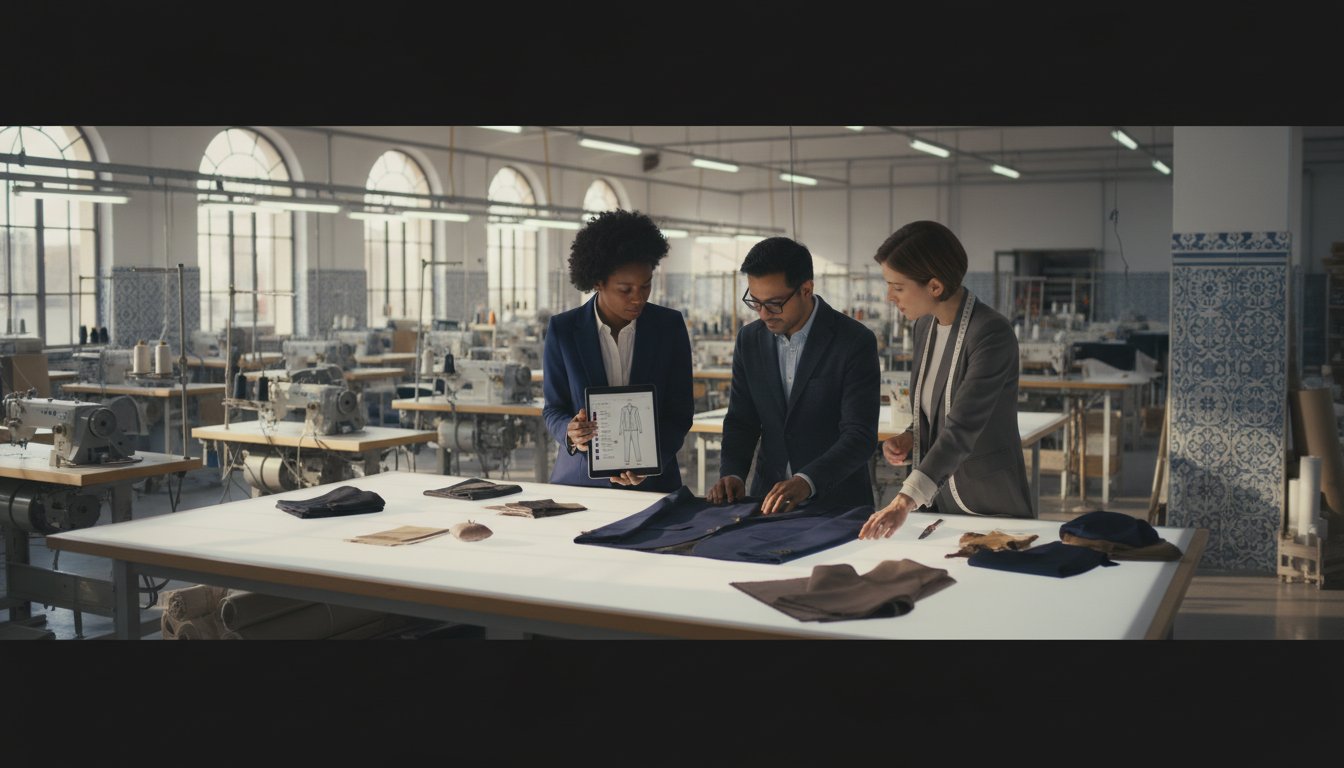
From Idea to Shipped Product: The 2026 Apparel Manufacturing Timeline Guide
Missing a seasonal launch window by just two weeks can be the difference between a sold-out collection and a warehouse full of deadstock. In a market defined by volatile cotton prices and strict new EU Digital Product Passport requirements, mastering your from idea to shipped product timeline is the most critical skill for any emerging brand. It's common to feel overwhelmed by unpredictable sampling delays or the dense terminology of tech packs and CMT production, but these hurdles don't have to stall your growth.
We understand that the transition from a creative concept to a finished product feels risky when you don't have a clear roadmap. This guide is designed to provide that security by teaching you exactly how to navigate the 2026 apparel production lifecycle with confidence. You'll gain a realistic week-by-week schedule that accounts for everything from material sourcing to final logistics. We'll also examine the specific variables, such as regional manufacturing advantages in Portugal and updated labeling regulations, that either accelerate or hinder your path to market. By the end of this article, you'll have the logistical clarity needed to select a manufacturing partner and scale your operations effectively.
Key Takeaways
- Identify the critical role of a professional tech pack in streamlining the initial four weeks of sourcing and product development.
- Master the complexities of the sampling phase to mitigate volatility and keep your from idea to shipped product timeline on track.
- Evaluate whether your brand requires the creative depth of custom manufacturing or the rapid market entry provided by luxury white label solutions.
- Learn how to manage bulk production queues and quality control expectations when partnering with ethical Portuguese manufacturers.
- Determine the most efficient logistics strategy by comparing air and sea freight options for delivery to European and North American markets.
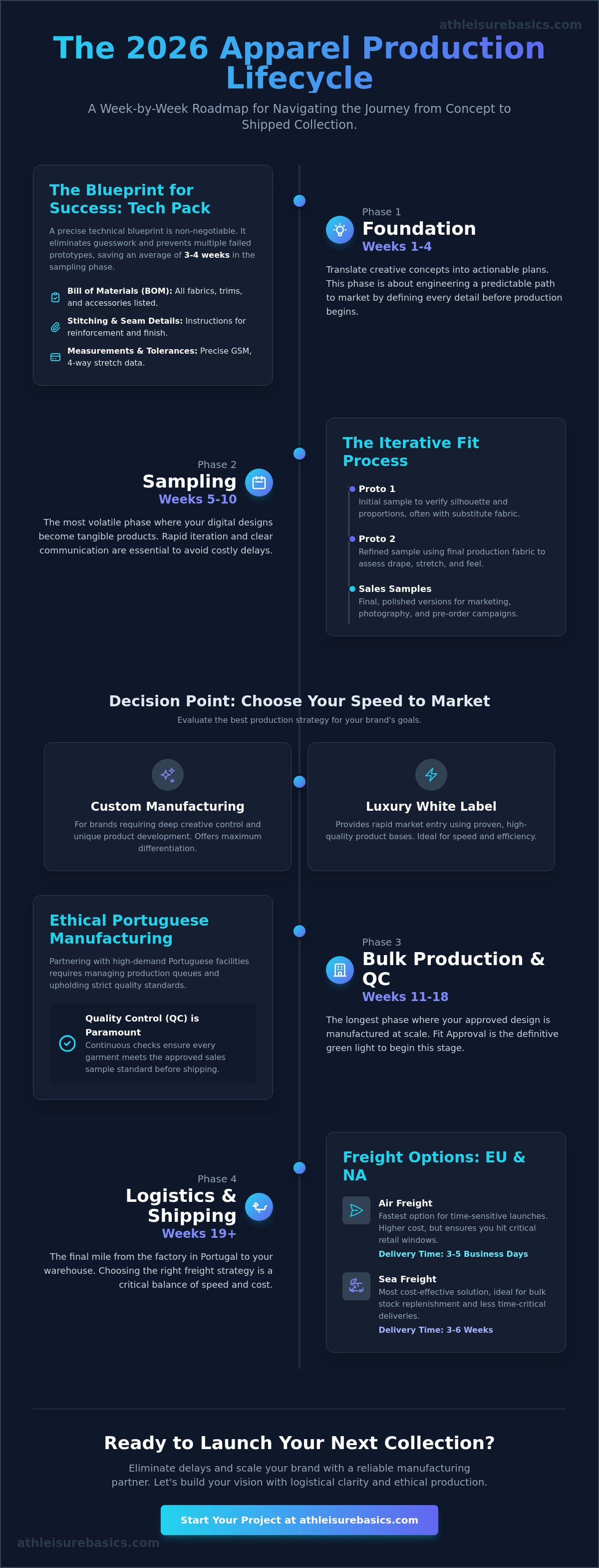
The Foundation: Ideation, Tech Packs, and Sourcing (Weeks 1-4)
Every successful collection begins with a reverse calendar. Instead of asking when you can start, ask when your customers need to buy. This "Launch Backwards" approach defines the first four weeks of your journey. During this phase, you are mapping out the apparel manufacturing value chain to ensure every logistical detail aligns with your seasonal goals. Establishing a firm foundation here prevents the common "timeline bloat" that pushes delivery dates into the next season. It's the most critical window in your from idea to shipped product timeline because errors made now compound later. You're not just designing a garment; you're engineering a predictable path to market.
Translating Your Vision into a Tech Pack
A sketch is a creative starting point, but a factory cannot sew a sketch. You need a technical blueprint. Skipping the technical design phase is the fastest way to lose control of your schedule. Learning how to create a tech pack for clothing typically saves brands three to four weeks during the sampling stage. By providing precise measurements, a comprehensive Bill of Materials (BOM), and exact stitching instructions upfront, you eliminate the guesswork that leads to multiple failed prototypes. In 2026, a high-standard tech pack for athleisure must include specific performance data. You need to document GSM (grams per square meter) requirements, seam reinforcement details, and 4-way stretch tolerances. This level of detail ensures the factory meets luxury standards on the first attempt, preventing costly revisions.
Material Sourcing and Supply Chain Readiness
Sourcing is often where new brands stall. Finding OEKO-TEX® certified fabrics that meet EU environmental standards requires diligent verification. Premium Portuguese cotton and technical synthetics are in high demand. You must verify fabric availability before you finalize your designs. If a specific knit has a 6-week lead time and you haven't accounted for it, your entire from idea to shipped product timeline will shift. Supply chain readiness means having your primary and trim materials identified by week four. Athleisurebasics provides dedicated materials sourcing support to bridge this gap. We help you identify textiles that align with ethical production goals and 2026 EU Digital Product Passport (DPP) requirements. We ensure your materials are staged and ready the moment your tech packs are approved. This proactive approach transforms a potential bottleneck into a competitive advantage for your brand's growth.
The Sampling Phase: Perfecting the Vision (Weeks 5-10)
The sampling phase is where your conceptual designs face their first physical test. This period is historically the most volatile segment of the from idea to shipped product timeline. While ideation is digital and theoretical, sampling involves the tangible coordination of machinery, human skill, and material behavior. Within the Apparel Manufacturing subsector, this phase is categorized by rapid iteration and precise technical adjustments. You'll navigate three primary stages during this five-week window:
- Proto 1: The initial prototype, often created using substitute fabric to verify the basic silhouette and proportions.
- Proto 2: A refined sample using the actual production fabric to assess drape, stretch, and movement.
- Sales Samples: The final, polished versions used for photography, marketing, and pre-order campaigns.
Delays during these weeks frequently stem from trim and accessory sourcing. If a specific recycled zipper or custom-dyed drawstring is unavailable, the sample cannot be completed. Managing this feedback loop requires clear, objective communication to ensure the factory understands every requested adjustment. It's vital to remember that every day spent in sampling is a day taken away from your sales window.
The Iterative Fit Process
Samples shipped from high-end Portuguese facilities typically reach international offices within three to five business days via air courier. Despite this speed, many brands fall into the trap of multiple sample rounds. This often happens because of subjective feedback or late-stage design changes. You can avoid these delays by referencing the detailed tech pack standards established in the first month. Fit Approval represents the definitive green light for bulk production, signaling that every measurement and aesthetic detail meets your brand standards.
Finalizing the Bill of Materials (BOM)
Once you've achieved fit approval, you must lock in your final Bill of Materials. This includes every component, from main fabrics to care labels and sustainable packaging. Confirming the garment production process at this stage ensures that your bulk manufacturing run proceeds without interruptions. If you need expert guidance to navigate these technical decisions, our team at Athleisurebasics provides the consulting support necessary to transition seamlessly from sampling to production. Finalizing these details now prevents the mid-production "holds" that can devastate your shipping schedule.
Custom vs. White Label: Choosing Your Speed to Market
Your choice of manufacturing model is the single most influential factor in your from idea to shipped product timeline. While the previous stages of ideation and sampling are universal, the path you choose now determines whether your inventory arrives in six weeks or sixteen. Brands must weigh the value of total creative control against the necessity of immediate market entry and cash flow. In the 2026 apparel market, speed is often as valuable as design, and understanding these two distinct tracks allows you to engineer a launch that fits your specific business goals.
The Custom Manufacturing Path (MOQ 250+)
Custom manufacturing is the gold standard for brands aiming to disrupt the market with entirely unique silhouettes. This path typically requires a 16-week lead time because it involves developing original patterns and sourcing custom-dyed fabrics from scratch. When you choose to build a collection of made in portugal clothing, you are investing in high-end craftsmanship that justifies this longer window. You gain the ability to specify every technical detail, from bespoke fabric blends to proprietary fit blocks. However, this level of premiumization requires a longer from idea to shipped product timeline to account for the rigorous testing and production queues associated with custom work. It's the ideal choice for established brands or well-funded startups that prioritize a "signature" look over a rapid launch.
The White Label Advantage (MOQ 70+)
If your priority is testing a market quickly or maintaining a lean inventory, white label services offer a significant strategic advantage. By utilizing private label portugal models, you bypass the traditional sampling bottleneck. These luxury blanks are pre-developed and kept in stock, meaning the technical design and fit testing are already complete. You can achieve market entry in under 6 weeks while still maintaining a premium brand identity. Customization options for white label products include:
- Internal Branding: Custom neck labels and heat-transfer logos.
- Specific Colorways: Access to curated, seasonal palettes that reflect current trends.
- Sustainable Packaging: Eco-friendly polybags and hangtags that meet 2026 EU standards.
This model is particularly effective for startups that need to generate revenue and gather customer feedback before committing to the larger MOQs and longer timelines of custom manufacturing. It allows for a pragmatic, solution-oriented growth strategy where you scale your complexity alongside your sales volume.
Bulk Production and Quality Control (Weeks 11-18)
The transition from the sampling phase to bulk manufacturing marks a shift from iteration to execution. During weeks 11 through 18, your from idea to shipped product timeline focuses on the "Cut-Make-Trim" (CMT) process. This industrial standard involves cutting fabric based on your approved patterns, sewing the components into finished garments, and applying final trims like labels and hardware. In a competitive 2026 market, managing this phase effectively requires a manufacturing partner that prioritizes transparency and technical precision. Unlike lower-cost alternatives, high-end CMT production in Portugal ensures that every garment is constructed with the durability required for luxury activewear.
The Production Queue and Scheduling
Manufacturing facilities in Portugal operate on rigid production cycles. Seasonal peaks for Spring/Summer and Fall/Winter collections create high demand for floor space. For instance, the rush to produce summer activewear often begins in early winter. If you don't account for these surges, you risk missing your launch window entirely. To avoid delays, you must provide a signed production agreement and a deposit well in advance. Bulk production typically takes 4-8 weeks once materials are in-house. This timeframe allows for the high-end craftsmanship expected of European-made apparel while maintaining a steady, reliable output rate.
Quality Assurance and OEKO-TEX® Standards
Quality control in 2026 is an integrated process rather than a final hurdle. We implement in-line inspections to monitor stitching and seam strength as garments move through the assembly line. This proactive approach allows us to catch and rectify minor defects before they become systemic issues. The "Made in Portugal" quality seal serves as a guarantee that your products meet strict EU labor and environmental standards. Every stitch is verified against your tech pack to ensure consistency across the entire bulk run.
Adhering to OEKO-TEX® certified material standards and the latest EU Digital Product Passport (DPP) regulations is no longer optional. These mandates require brands to track material composition and recyclability at a granular level. Following these protocols prevents the "bad batches" common in regions with less oversight. If you're looking to streamline your next collection, you can secure your production slot today through our CMT production services. This partnership ensures your bulk manufacturing run stays on schedule and meets the premium standards your customers demand.
Logistics and Shipping: The Final Mile from Portugal
The final stage of your from idea to shipped product timeline involves transitioning finished goods from the manufacturing floor to your distribution center. By week 18, your focus shifts from technical construction to international trade compliance and freight efficiency. Portugal's strategic position on the Atlantic coast offers a significant logistical advantage, serving as a gateway to both European and North American markets. Navigating this phase requires a clear understanding of current freight costs and the evolving regulatory landscape of 2026.
The Portugal Logistics Advantage
Proximity to major European hubs significantly shortens the "shipped" phase of your production cycle. For brands distributing within the European Union, the benefits include duty-free trade and simplified VAT procedures. If you're shipping to the United States, you must account for the current exchange rate of approximately $1.177 USD to €1 EUR when calculating your final landed costs. Athleisurebasics provides comprehensive support for global shipping logistics, ensuring your inventory moves efficiently through the following channels:
- Air Freight: The fastest route to North America, with costs reaching up to $8.00 per kilogram. It's ideal for high-value collections or meeting urgent launch dates.
- Ocean LCL (Less than Container Load): A more economical choice for bulk inventory, with rates starting at $1,401 for Portuguese departures to the USA.
- Road Freight: The standard for EU distribution, offering a balance of speed and cost-effectiveness across the continent.
Navigating Customs and 2026 Regulations
International trade in 2026 requires strict adherence to new transparency mandates. Every garment entering the EU must now include a Digital Product Passport (DPP). This digital record tracks material composition and origin, ensuring compliance with the EU Deforestation Regulation (EUDR). For US-based brands, import duties for Portuguese apparel range from 0% to 32% depending on fiber content. However, you can leverage the Section 321 De Minimis threshold, which allows for the duty-free import of smaller collections or samples valued under $800.
Preparing for Your Product Launch
While your inventory is in transit, use this time to finalize your marketing assets and e-commerce infrastructure. The data gathered during the sampling phase, such as high-resolution photography of your sales samples, should be used to build your product pages. Ensure your store is ready to receive stock the moment it clears customs. If you're ready to engineer a predictable from idea to shipped product timeline for your next collection, get a custom apparel manufacturing quote today to start your 2026 journey. Proper planning in this final mile ensures your brand enters the market with momentum and professional-grade reliability.
Engineering Your Commercial Success
Successful brands are built on principled partnerships. We provide the expert guidance and high-end manufacturing standards necessary to scale your business. With low MOQs starting at 70 pieces and a focus on premium Portuguese craftsmanship, we make industry-leading quality accessible to emerging ventures. Our use of OEKO-TEX® certified sustainable fabrics ensures your brand meets the rigorous environmental expectations of 2026.
Start your production journey with Athleisurebasics today and transition from a small idea to a lasting commercial presence. We're ready to partner with you. Let's build a collection that reflects your standards and inspires your customers.
Frequently Asked Questions
How long does the entire apparel production process take on average?
The average from idea to shipped product timeline typically ranges from 16 to 18 weeks for custom collections. This duration covers everything from initial tech pack development to final logistics. If your brand utilizes pre-developed luxury blanks through a white label model, this window can be compressed to under six weeks. Planning with these benchmarks in mind ensures you remain competitive and hit critical seasonal launch dates.
Can I speed up the sampling phase of my clothing line?
You can accelerate the sampling phase by providing a complete, high-standard tech pack at the start of your journey. This technical blueprint eliminates the guesswork for the factory, often saving three to four weeks of back and forth communication. When a manufacturer has precise measurements and material specifications upfront, they are much more likely to achieve fit approval on the first or second prototype.
What is the difference between lead time and production time?
Lead time refers to the total duration of your from idea to shipped product timeline, while production time specifically describes the factory's active assembly phase. Production time usually spans four to eight weeks for the "Cut-Make-Trim" process. Lead time is broader, encompassing material sourcing, sampling iterations, and international shipping. Understanding this distinction helps you set realistic expectations for your inventory arrival.
Does the manufacturing location in Portugal affect my shipping speed?
Manufacturing in Portugal provides a distinct logistical advantage for brands targeting European and North American markets. Its location on the Atlantic coast offers faster transit times and lower shipping costs than major manufacturing hubs in Asia. For European distribution, road freight is highly efficient; for the USA, air freight can deliver inventory in as little as three to five business days once production is complete.
How many samples do I need before I can start bulk production?
Most brands require three distinct sample rounds before initiating bulk production. You'll start with Proto 1 to verify silhouette, move to Proto 2 for fabric drape, and finalize with a Sales Sample for marketing. Once you grant "Fit Approval" on the final sample, the factory can safely proceed to bulk manufacturing. This iterative process is essential for maintaining the high-end craftsmanship standards expected in the luxury apparel sector.
What happens if there is a delay in fabric sourcing?
A delay in fabric sourcing causes a direct shift in your final delivery date. Because bulk production cannot begin until all materials are in-house, any bottleneck in textile availability stalls the entire project. We recommend verifying fabric stock and lead times during the first four weeks of ideation. Our team provides sourcing support to identify OEKO-TEX® certified materials that are ready for immediate use.
How does MOQ affect the overall production timeline?
Minimum Order Quantities influence how your project is scheduled within a factory's queue. While larger orders of 300 to 500 units might require more time on the assembly line, smaller MOQs starting at 70 pieces allow for greater operational agility. These lower thresholds enable emerging brands to move through the production cycle more quickly, facilitating more frequent product drops and reducing the risk of excess inventory.
Is it faster to do white label or custom manufacturing?
White label manufacturing is significantly faster than the custom manufacturing path. Because white label products utilize pre-developed fit blocks and stocked luxury blanks, you skip the lengthy sampling and custom dyeing phases. This model allows for market entry in under six weeks. In contrast, custom manufacturing offers total creative control but requires a 16-week lead time to develop unique patterns and bespoke textiles from scratch.



Leave a comment
This site is protected by hCaptcha and the hCaptcha Privacy Policy and Terms of Service apply.