

What to Look for in a Clothing Factory Partner: The 2026 Founder’s Guide
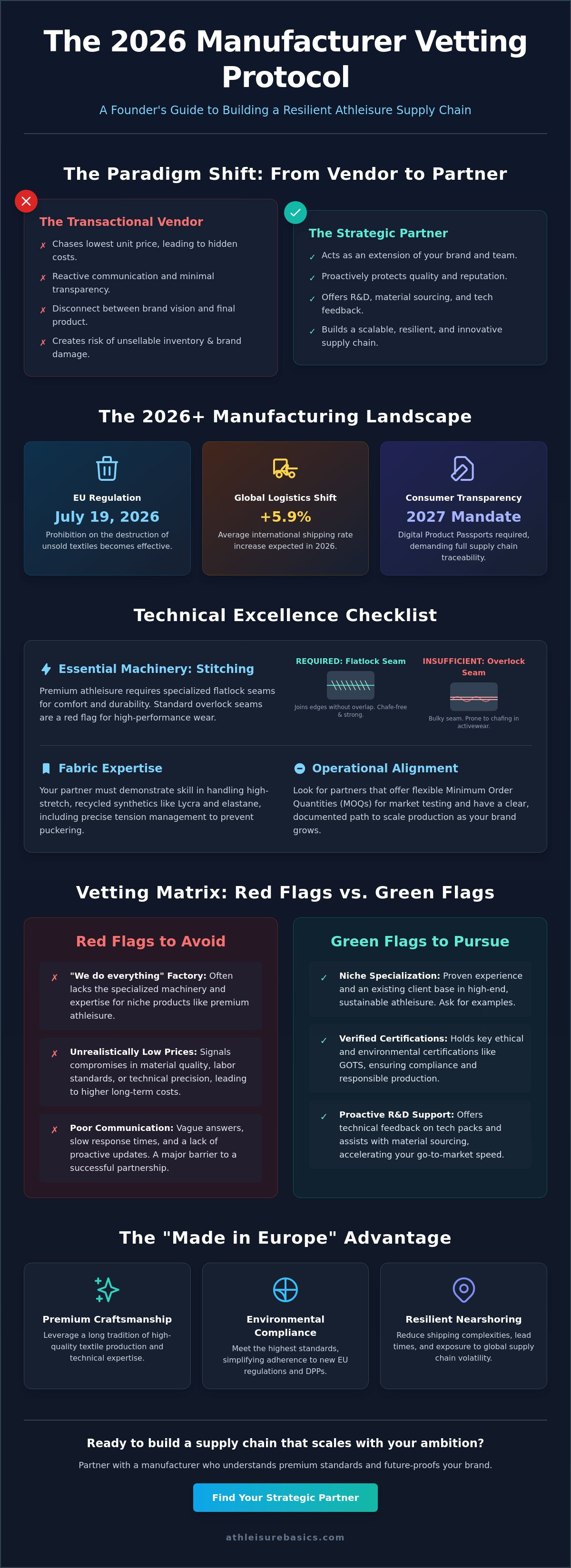
Your clothing manufacturer isn't just a vendor; they're the silent co-founder of your brand. If you're struggling to find a facility that accepts low MOQs or you're terrified that poor craftsmanship will ruin your reputation, you aren't alone. Understanding what to look for in a clothing factory partner is the difference between a scalable business and a warehouse full of unsellable inventory. With new EU regulations prohibiting the destruction of unsold textiles effective July 19, 2026, the stakes for production precision and waste management have never been higher.
Whether you are starting from scratch or looking to expand your existing line, working with a specialist like La Marca Printshop ensures your premium custom merchandise meets the same high standards as your core production.
We agree that the manufacturing process can feel like a black box, especially when communication barriers or 2026's 5.9% average international shipping rate increases complicate your margins. You deserve a reliable production partner who communicates proactively and treats your tech packs as a blueprint for excellence. This guide provides a clear roadmap to identify and vet partners who prioritize premium standards and ethical compliance. We'll preview the critical 2026 benchmarks, from GOTS 8.0 requirements to the rising importance of regional nearshoring, so you can build a resilient supply chain that grows with your ambition.
Key Takeaways
- Shift from a transactional mindset to a collaborative partnership to ensure your production aligns with long-term brand development and quality standards.
- Identify the technical capabilities required for premium athleisure, including specialized machinery for flatlock stitching and expertise in handling high-stretch recycled synthetics.
- Master the 2026 vetting protocol to understand exactly what to look for in a clothing factory partner, from verifying ethical certifications to spotting red flags in communication.
- Navigate operational logistics by aligning on realistic minimum order quantities (MOQs) and lead times that support both market entry and future scaling.
- Leverage the "Made in Europe" advantage to secure a supply chain that meets the highest standards for environmental compliance and premium craftsmanship.
Beyond the Seams: Why Your Factory is a Strategic Partner, Not Just a Vendor
Choosing a manufacturer is the most consequential decision an apparel founder makes. In the complex global clothing industry, your factory isn't just a supplier; they're the physical manifestation of your brand’s promise. When you evaluate what to look for in a clothing factory partner, you must look for a team that acts as an extension of your own. A transactional mindset, where you simply swap cash for cartons, often leads to a disconnect between your vision and the finished product. A true partner understands your long-term growth goals and proactively protects your reputation through rigorous quality control.
Chasing the lowest unit price is a common trap that frequently leads to long-term failure. Lower prices usually signal compromises in labor standards, material integrity, or technical precision. If a factory cuts corners to meet an unrealistic price point, the hidden costs appear later in the form of high return rates and damaged customer trust. Instead, prioritize a partner that contributes to your research and development. A collaborative manufacturer offers materials sourcing support and technical feedback during sample creation, ensuring your designs are both aesthetically premium and commercially viable. This alignment significantly increases your go-to-market speed by reducing the number of necessary sampling rounds.
The Evolution of Apparel Manufacturing in 2026
In 2026, the industry has shifted away from rigid mass production toward agile, low-volume manufacturing. Modern brands require the flexibility to test small batches before scaling, making accessible minimum order quantities a vital metric. Digital communication has also become a baseline requirement. You should expect real-time updates and transparent data sharing throughout the production cycle. Furthermore, traceability is no longer optional. With the upcoming 2027 requirements for Digital Product Passports, your partner must be capable of providing the granular supply chain data that modern consumers and regulators demand.
Identifying Shared Values and Brand Alignment
Successful partnerships rely on matching your brand’s quality tier with the factory’s technical expertise. A factory that claims to "do everything" often lacks the specialized machinery required for high-end niches like sustainable athleisure. You need to ensure their existing client base reflects the standards you aim to achieve. If you're building a premium brand, your partner should already be fluent in high-end craftsmanship and ethical production. Alignment on values, such as environmental certifications and fair labor practices, ensures that your supply chain remains a competitive advantage rather than a liability. When deciding what to look for in a clothing factory partner, technical mastery in your specific niche is non-negotiable.
By treating your manufacturer as a strategic ally, you secure a scalable supply chain that can pivot as your brand evolves. This collaborative approach transforms production from a logistical hurdle into a foundation for innovation and market leadership.
Technical Excellence: Vetting Capabilities for Premium Athleisure and Performance Wear
Performance apparel requires technical specialization that standard factories often lack. When you evaluate what to look for in a clothing factory partner, their machinery inventory is your first point of verification. Premium athleisure demands flatlock stitching, which creates a flat, chafe-free seam by joining fabric edges without overlapping. Standard overlock machines are sufficient for basic tees, but they create bulky seams that fail the comfort test for activewear. If a factory doesn't own specialized flatlock or four-needle six-thread machines, they aren't equipped to produce high-end performance gear.
Handling high-stretch fabrics like Lycra, elastane, and recycled synthetics requires specific expertise in tension management. These materials behave differently under a needle than woven cotton. A skilled partner knows how to calibrate machines to prevent puckering or snapped threads when the garment is stretched. Beyond sewing, your partner must implement rigorous quality control protocols. This includes pre-production fabric inspection to check for elasticity recovery and final garment measurements to ensure every piece matches your specifications. Integrating the OECD Due Diligence Guidance into your vetting process ensures your partner maintains these technical and safety standards throughout the supply chain.
The Importance of Prototyping and Sample Creation
Never skip the sampling phase. A prototype is the only way to verify if a manufacturer can accurately translate your tech pack into a physical product. When you receive a proto-sample, inspect the construction integrity of the stress points. Check the "grin-through" of the seams and the consistency of the stitch density. If the factory struggles with the initial sample, they'll likely face significant issues during full CMT production.
Material Sourcing and Supply Chain Integration
A true partner offers more than just sewing; they provide comprehensive materials sourcing support. Full-service manufacturers maintain deep relationships with premium mills, which is essential for consistent textile selection. This integration ensures that fabric dye lots remain consistent across different production runs, preventing color mismatches in your inventory. Working with a partner who understands the nuances of performance textiles helps you avoid costly sourcing errors.
Safety certifications are another non-negotiable benchmark for 2026. Stricter OEKO-TEX® Standard 100 limits take effect on June 1, 2026, requiring all wet processes in the supply chain to be certified. Ensure your partner can provide valid certificates for both the finished garment and the raw materials. If you need expert guidance on these technical requirements, our custom clothing manufacturing services help bridge the gap between design and technical execution.
Operational Alignment: Minimums, Lead Times, and Scalability
Operational alignment is the bridge between a great design and a profitable business. When determining what to look for in a clothing factory partner, you must look beyond the sewing machine to their logistical agility. In 2026, major carriers like UPS and FedEx implemented a 5.9% average rate increase, and UPS added a per-pound surcharge on international shipments. These rising costs mean that a factory’s efficiency and location directly impact your bottom line. A partner who manages lead times effectively helps you avoid the high costs of rush shipping and stockouts.
Scalability is just as vital as your initial order. You need a partner who can handle small batches today but has the capacity to scale to thousands of units as your brand gains traction. Cheap manufacturing often hides costs in the form of high quality-rejection rates. With the July 2026 ban on destroying unsold textiles, every rejected garment is a liability. It's safer to invest in a partner who prioritizes precision over the lowest possible unit price. High-quality production ensures your garments match tech pack specifications, reducing waste and protecting your brand reputation.
White Label vs. Custom Manufacturing: Choosing Your Entry Point
Deciding between white-label clothing and full custom production depends on your speed-to-market goals. White label allows you to launch with proven silhouettes, reducing the time spent on tech pack development and sampling. As your brand DNA matures, you can transition into custom manufacturing to create proprietary designs. A flexible partner supports both models, allowing you to test the market with luxury blanks before committing to the higher MOQs typically required for custom CMT production. This tiered approach reduces founder risk during the early stages of business development.
Transparency in Pricing and Terms
Clarity in your financial agreement prevents mid-production surprises. Always request a detailed breakdown of CMT (Cut, Make, Trim) costs to understand exactly what you're paying for. Standard payment terms for new founders often involve a 50% deposit with the balance due before shipment. For startups, all-inclusive quotes that cover materials sourcing and sampling are often safer than fragmented pricing. This transparency is also a marker of ethical standards. An academic analysis of factory ethics suggests that transparent financial and labor practices are key indicators of a factory’s long-term reliability and corporate responsibility. If a factory is vague about their costs or terms, it’s a significant red flag.
The 2026 Vetting Protocol: Essential Questions and Red Flags to Watch For
Vetting is the most critical phase of your journey as a brand founder. While technical specifications and pricing are important, the human element of the partnership determines your long-term success. A physical or virtual factory tour is non-negotiable. You need to see the working conditions and the machinery mentioned in previous sections firsthand. Verify that the factory holds current certifications that match today's stringent requirements. For example, the new GOTS 8.0 standard released on March 2, 2026, requires 95% organic fibers for any product labeled "organic." If a factory cannot produce valid, up-to-date certificates, they aren't a viable partner for a premium brand.
Communication speed is another vital indicator of how a factory will perform under pressure. Professional partners provide detailed technical feedback on your designs rather than just saying "yes" to every request. When you evaluate what to look for in a clothing factory partner, ask for references from other brands in your specific niche. A factory that excels at heavy denim might struggle with the delicate tension requirements of performance leggings. Speaking with existing clients helps you verify if the factory meets its stated lead times and maintains consistent quality across multiple production cycles.
Critical Questions for Your First Meeting
Your initial consultation should move beyond surface-level logistics. Use these specific questions to gauge their operational standards:
- "What is your standard AQL (Acceptable Quality Level) for production?" Most premium brands require an AQL of 2.5 or lower to ensure garment consistency.
- "How do you handle fabric waste and production scraps?" With the July 19, 2026, ban on destroying unsold textiles, your partner must have a clear plan for minimizing and managing waste.
- "Can you provide a firm timeline for sample revisions and final production?" A reliable partner will give you a structured schedule from design finalization to the ex-factory date.
Warning Signs of an Unreliable Partner
Price is often the loudest red flag. If a quote is 40% or more below the market average, it usually indicates a compromise in labor standards or material integrity. In the 2026 landscape, ethical production is a legal requirement in many jurisdictions. Vague answers about production locations often suggest unauthorized sub-contracting, which strips you of quality control. Additionally, any refusal to sign a Non-Disclosure Agreement (NDA) or a formal manufacturing contract is an immediate reason to walk away. Protect your intellectual property by ensuring your partner is willing to commit to professional legal standards. If you're ready to work with a team that values transparency and high-end craftsmanship, explore our custom clothing manufacturing services to start your project on the right foot.
Strategic Sourcing: Why a European Partnership is the Future of Sustainable Apparel
Choosing a geographic location is a foundational part of your manufacturing strategy. As global supply chains face increasing scrutiny, a European partnership provides a level of security that offshore vendors often can't match. The "Made in Europe" seal is synonymous with stringent ethical standards and environmental compliance. When you consider what to look for in a clothing factory partner, proximity to your primary market and alignment with EU labor laws should be at the top of your list. This regional focus ensures that your brand isn't just compliant with current regulations, but also prepared for the 2027 mandatory Digital Product Passport requirements.
Logistical efficiency is another significant driver for nearshoring. Shorter shipping routes from Europe to major Western markets drastically reduce your carbon footprint compared to trans-Pacific transit. With international shipping rates seeing a 5.9% average increase in 2026, reducing the distance your goods travel is a pragmatic business decision. By sourcing within the EU, you bypass many of the tariffs and customs delays associated with Asian imports, allowing for a more agile and predictable inventory cycle. This proximity also facilitates easier factory visits, which we identified in the previous section as a vital part of the vetting protocol.
The Portugal Advantage: Quality, Ethics, and Craftsmanship
The North of Portugal has earned its reputation as the global hub for premium jersey and performance wear. Clothing manufacturers in Portugal combine generations of textile heritage with cutting-edge sustainable innovation. This region offers unparalleled access to OEKO-TEX® certified fabrics and specialized recycled synthetics that are essential for high-end activewear. For premium brands, the "Made in Portugal" label serves as a powerful marketing tool, signaling to consumers that the product was crafted under fair labor conditions with a focus on material integrity and technical precision.
Partnering with Athleisurebasics for Your Brand Journey
Athleisurebasics removes the traditional barriers to entry for emerging brands. We offer a comprehensive suite of services, including full CMT production, materials sourcing support, and professional tech pack development. Our model is specifically designed to support founders who need accessible minimum order requirements without compromising on luxury quality. Whether you're launching with white-label clothing to test the market or developing a proprietary line through our custom clothing manufacturing, we provide the technical expertise and operational transparency you need. We invite you to initiate contact today to discuss how we can secure your 2026 production timeline and build a scalable, ethical supply chain together.
Secure Your Brand’s Future with the Right Production Strategy
Building a successful apparel brand in 2026 requires more than just a creative vision; it demands a resilient and transparent supply chain. By prioritizing technical excellence and operational alignment, you ensure your garments meet the high-end standards your customers expect. Understanding what to look for in a clothing factory partner empowers you to navigate complex regulations like the Digital Product Passport and shifting international logistics with confidence. A partner who offers material integrity and proactive communication is your greatest asset in a competitive market.
We're dedicated to helping emerging founders transition from concept to commercial success. Our services include expert production consulting for startups and access to OEKO-TEX® certified materials to ensure your products are safe and sustainable. With low MOQs starting at just 70 pieces, we remove the traditional barriers to entry for premium fashion ventures. Partner with a premium Portuguese manufacturer; explore our services today. Your journey from a small idea to a lasting commercial presence starts with a partner invested in your growth. We look forward to building your brand together.
Frequently Asked Questions
How do I find a clothing manufacturer that accepts low MOQs?
Finding a manufacturer with low MOQs requires targeting facilities that prioritize agility over mass volume. Many boutique factories in regions like Portugal cater specifically to startups by offering lower thresholds, sometimes starting as low as 70 pieces. Utilizing industry-specific directories and consulting services can help you identify these flexible partners who value long-term brand growth over immediate scale.
What is the difference between CMT and Full Package manufacturing?
CMT (Cut, Make, Trim) means you provide the raw materials and the factory provides the labor to assemble the garments. Full Package manufacturing is a more comprehensive service where the factory handles everything from sourcing the fabric to final packaging based on your specifications. FPP is often preferred by new founders who lack established relationships with fabric mills and need a streamlined supply chain.
How can I verify if a clothing factory is ethical?
Verification of ethical standards involves checking for current certifications like GOTS 8.0 or OEKO-TEX Standard 100. You should ask for proof of fair wages, safe working conditions, and recent third-party audit reports. A reputable partner will be transparent about their labor practices and provide documentation of their compliance with environmental regulations, such as the 2026 ban on destroying unsold textiles.
Should I choose a domestic or an overseas clothing manufacturer?
Choosing between domestic and overseas manufacturing involves balancing unit costs against speed and transparency. Regional sourcing in Europe often provides better oversight and shorter lead times, which is essential for maintaining a lean inventory. While distant overseas options might offer lower initial unit prices, they often come with higher shipping surcharges and increased carbon footprints that can affect your brand’s sustainability goals.
What documents do I need to provide to a factory before starting production?
You must provide a professional tech pack and a detailed Bill of Materials (BOM) before production begins. These documents serve as the precise blueprint for your garment, covering everything from stitch types to trim placement and grading charts. Providing clear, technical instructions reduces the risk of costly errors during the sampling and bulk production phases, ensuring the final product matches your vision.
How do I protect my designs when working with a new factory?
Design protection starts with a signed Non-Disclosure Agreement (NDA) and a formal manufacturing contract. These legal documents ensure that your proprietary patterns and technical details remain confidential and protected from unauthorized use. Working with established factories in jurisdictions with strong intellectual property laws, such as the EU, provides an additional layer of security for your brand’s unique DNA.
What are the typical lead times for a first production run?
Lead times for a first production run generally span 8 to 12 weeks once the final sample is signed off. This period accounts for fabric procurement, the CMT process, and final quality audits. It's important to build a buffer into your launch schedule to account for potential logistical delays or the 2026 international shipping transit times, which can vary based on your chosen region.
How do I handle quality control if I cannot visit the factory in person?
Remote quality control is best managed through third-party inspection services and the review of Top of Production (TOP) samples. These samples represent the actual quality of the bulk run before it leaves the factory floor, allowing you to catch errors early. Establishing clear Acceptable Quality Levels (AQL) is a key part of what to look for in a clothing factory partner when you cannot be on-site.

Leave a comment
This site is protected by hCaptcha and the hCaptcha Privacy Policy and Terms of Service apply.