
What is Athleisure? The Definitive Guide to the Fashion Movement of 2026
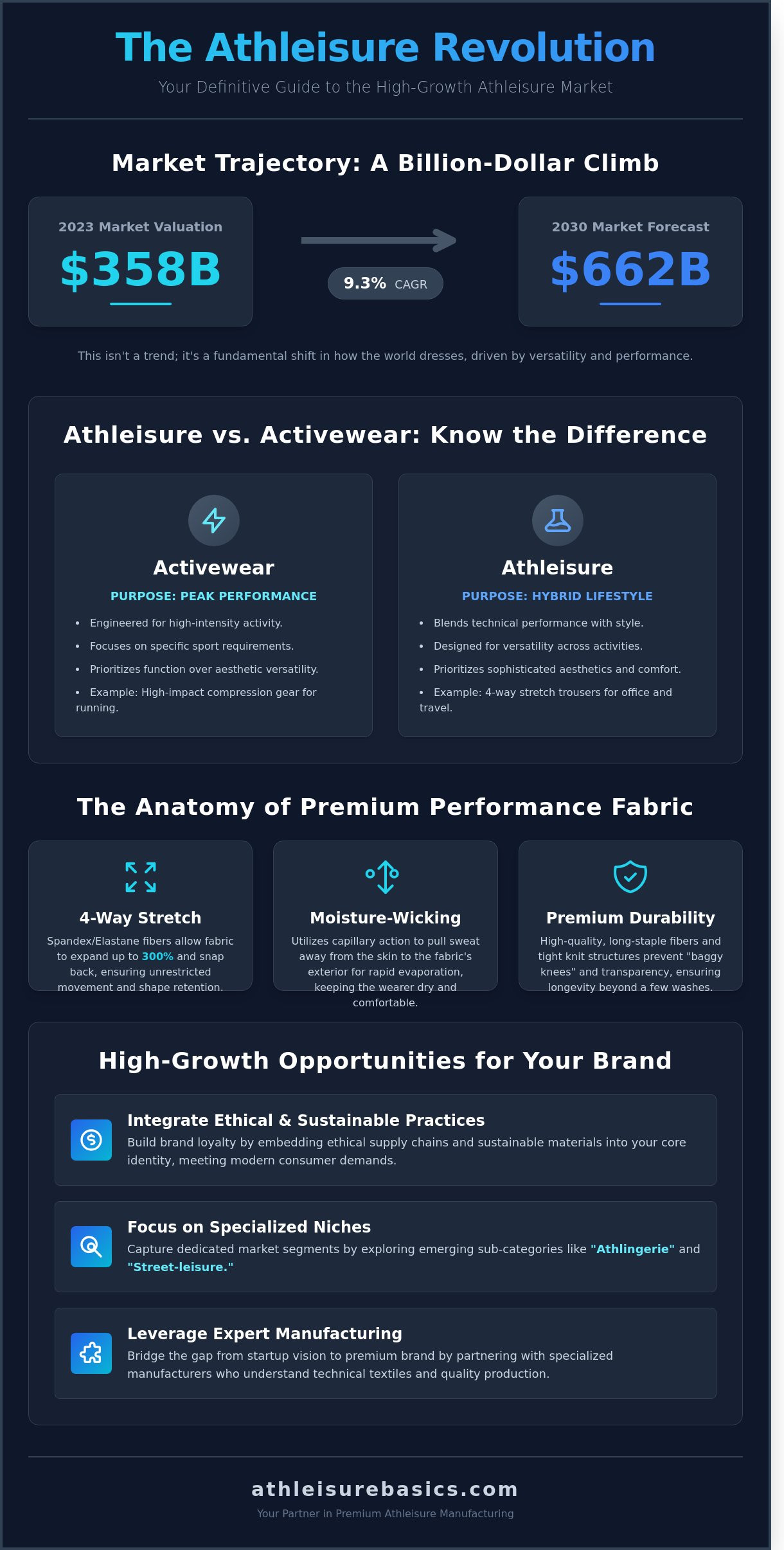
The global athleisure market reached a valuation of $358 billion in 2023, and data from Grand View Research indicates it will grow at a compound annual growth rate of 9.3% through 2030. This isn't just a passing trend; it's a fundamental shift in how the world dresses. You've likely noticed the market saturation and felt overwhelmed by complex technical textile jargon that makes starting your own line feel out of reach. It's natural to wonder if you've missed the window or if this movement is a secure long-term investment for your business.
We agree that the barrier to entry feels high, but your brand's success depends on clarity and quality. This definitive guide simplifies the process for you. You'll learn the history of the movement, the technical innovations in fabrics, and the specific market dynamics you need to master. We'll show you exactly how to enter the market with confidence, focusing on premium quality and ethical production standards. This guide provides the roadmap you need to transform your vision into a professional brand with a lasting legacy.
Key Takeaways
- Understand the evolution of athleisure and why its focus on versatility and technical performance makes it the most influential fashion movement of the decade.
- Master the science of premium textiles to ensure your garments meet the high industry standards for breathability and durability expected by modern consumers.
- Identify high-growth opportunities in the 2026 market by integrating ethical supply chains and sustainable practices into your brand’s core identity.
- Learn the essential steps of the professional production process to move efficiently from your initial design concept to a retail-ready collection.
- Discover how to bridge the gap between a startup vision and a premium clothing line by leveraging specialized, expert manufacturing partnerships.
What is Athleisure? Defining the Most Influential Fashion Movement of the 21st Century
The term itself is a portmanteau of "athletic" and "leisure," signaling a departure from the rigid dress codes of previous decades. It represents a fundamental restructuring of the global apparel market. While fashion in the 1930s focused on heavy, restrictive workwear and formal silhouettes, the 2026 "work-from-anywhere" economy demands a uniform that adapts to the wearer's fluid schedule. Understanding What is Athleisure? requires looking beyond the fabric; it's a cultural shift toward versatility, where technical performance meets premium aesthetic appeal in a non-gym context.
This movement isn't a temporary trend. It's a lifestyle choice. Consumers no longer want to choose between looking professional and feeling comfortable. They want garments that support a high-paced, modern life. For entrepreneurs, this means athleisure represents a stable, high-growth category built on the principles of utility and style. It's about creating a wardrobe that functions as well at a 10:00 AM board meeting as it does during a 6:00 PM yoga session.
The Evolution of the Hybrid Wardrobe
The rise of yoga pants in the early 2000s served as the catalyst for today's market dominance. What began as specialized gear for the studio quickly transitioned into daily wear. The 2020 global pandemic accelerated this shift, turning comfort-first dressing from a temporary necessity into a permanent standard. By 2026, the hybrid wardrobe has matured. We now see technical, moisture-wicking fabrics used in office-appropriate garments like tailored blazers and four-way stretch trousers. This evolution allows startups to launch brands that cater to a consumer who values efficiency and superior quality.
Athleisure vs. Activewear: Understanding the Difference
Distinguishing between these two categories is vital for any founder looking to scale a profitable brand. While they share technical DNA, their applications differ significantly.
- Activewear: These garments are engineered strictly for high-intensity performance. They focus on specific sports requirements, such as high-impact compression for runners or specialized grip for climbers.
- Athleisure: This category prioritizes aesthetic versatility. It maintains technical properties like breathability and durability but is designed to look sophisticated in social settings.
In 2026, specialized sub-categories are defining the market. "Athlingerie" merges high-performance support with luxury intimate wear, while "street-leisure" blends high-fashion silhouettes with technical utility. Choosing the right niche within this spectrum is the first step toward building a lasting brand legacy.
The Anatomy of Performance: Textiles and Materials Powering Athleisure
Modern garment construction relies on the science of stretch. By integrating Spandex or Elastane, which can expand up to 300% of its original size before snapping back, manufacturers create silhouettes that support the body without restricting movement. This elasticity is the foundation of the athleisure movement, allowing a single pair of leggings to transition from a high-intensity workout to a casual business meeting.
Performance is the core requirement for any premium garment. Moisture-wicking technology and breathability aren't just buzzwords; they're technical necessities. These fabrics use capillary action to pull sweat away from the skin to the exterior of the fabric, where it evaporates quickly. As The Global Athleisure Market continues its expansion toward a projected $662.56 billion valuation by 2030, the demand for these high-performance properties has shifted from a luxury feature to a baseline expectation for consumers.
Choosing high-quality raw materials is a non-negotiable step for luxury brands. Cheap synthetics often lose their shape after three washes, leading to "baggy knees" and transparent fabric. Premium brands invest in long-staple fibers and tight knit structures to ensure longevity. Understanding the fundamental role of textiles is essential for any founder aiming to build a brand that lasts beyond a single season.
Technical Fibers and Innovative Blends
Four-way stretch technology provides maximum mobility by allowing the fabric to stretch both crosswise and lengthwise. This ensures shape retention, so your products don't sag over time. Many forward-thinking brands now prioritize sustainability by using 100% recycled polyesters or bio-based nylons derived from renewable sources. Despite these innovations, Portuguese cotton remains a global benchmark. Its superior softness and durability make it the preferred choice for premium basics that feel expensive and perform reliably.
Quality Certifications You Need to Know
Safety and ethics are paramount in skin-contact apparel. The OEKO-TEX® Standard 100 certification, established in 1992, proves that every component of your garment is free from harmful substances. Modern consumers also look for PFAS-free water repellency and non-toxic dyes to ensure their clothing is as healthy as their lifestyle. These certifications build immediate trust, allowing you to justify premium pricing while protecting your brand's reputation. If you're ready to start your journey with certified materials, you can explore our high-quality manufacturing options to find the right fit for your vision.
The Global Athleisure Market: Trends and Opportunities in 2026
The global athleisure market is projected to reach a valuation of $450.1 billion by 2026, according to data from Grand View Research. This growth represents a consistent 7% annual increase as the boundaries between gym wear and daily fashion continue to disappear. For new entrepreneurs, this trajectory offers a significant opportunity. You aren't just launching a clothing line; you're entering a fundamental shift in global dress codes. Success in this decade belongs to brands that prioritize digital-first distribution and community-led growth rather than expensive traditional retail models.
The rise of the "Niche Brand" is currently disrupting legacy giants. While companies like Lululemon maintain high market share, startups are capturing specific segments by offering specialized solutions. Smaller brands can move faster, react to trends quickly, and build deeper connections with their customers. We see this shift daily as more founders utilize low MOQ (Minimum Order Quantity) strategies to test innovative designs without the financial risk of massive inventory. By focusing on a specific subculture or activity, your brand can become a dominant player in a specialized corner of the market.
Sustainability is no longer an optional marketing buzzword. A 2023 McKinsey report found that 67% of consumers consider the use of sustainable materials a vital factor in their purchasing decisions. Modern shoppers demand ethical supply chains and transparency. This is why manufacturing in regions like Portugal has become a gold standard. Producing your garments under strict EU labor laws and using OEKO-TEX® certified fabrics provides the "premium" assurance that today's mindful consumers expect. It's about building a brand legacy based on quality and integrity from day one.
Key Consumer Demographics and Psychographics
Gen Z and Millennials remain the primary drivers of the "mindful movement" aesthetic, valuing versatile pieces that work for yoga, work, and social outings. However, the "Silver Spender" is a growing demographic. Consumers aged 50 and over are increasingly adopting high-performance wear for its health benefits and superior comfort. Additionally, the persistence of hybrid work means that 28% of the professional workforce now seeks "office-appropriate" joggers and hoodies. These pieces must offer technical performance while maintaining a polished, professional appearance.
Future-Proofing Your Brand with Inclusivity
Inclusivity is a standard requirement for any brand launching in 2026. Size inclusivity must be integrated into your initial design process, not added as an afterthought. We also see a rising demand for adaptive athleisure, which includes garments designed for individuals with different physical needs or limited mobility. Furthermore, gender-neutral silhouettes are gaining momentum. Unisex basics allow startups to streamline their production while appealing to a broader, modern audience that values utility over traditional gender categories.
From Concept to Closet: How to Design and Launch an Athleisure Line
Successful athleisure brands don't start by trying to please everyone. They begin with a sharp focus on a specific niche. A 2023 McKinsey report indicates that specialized apparel brands often see 20% higher customer loyalty than generalists. You must decide if your brand serves high-performance runners who need compression fabrics or luxury loungers who prioritize soft, brushed textures. Once you've identified your audience, you need to master the garment production process to turn sketches into physical inventory efficiently.
The Tech Pack is the most critical document in this journey. It acts as a detailed blueprint for your manufacturer, containing every measurement, seam type, and fabric weight. Industry data shows that brands using comprehensive Tech Packs reduce manufacturing errors by up to 40% during the first production run. Without this precision, you risk receiving samples that don't fit or function as intended.
Budgeting for your launch requires a realistic look at three specific areas:
- Sampling: Expect to pay 2 to 3 times the bulk unit price for your initial prototypes.
- MOQs: Minimum Order Quantities dictate your upfront capital. Startups should look for partners offering low minimums to preserve cash flow.
- Logistics: Shipping and import duties can add 10% to 15% to your total landed cost, so factor these in early.
Designing for Function and Fashion
Design in the athleisure space requires a balance between technical performance and aesthetic appeal. You must prioritize seam placement, specifically using flatlock stitching to prevent chafing during repetitive movements. Integrating functional details like 5-inch hidden pockets for smartphones or thumbholes for sleeve stability adds immediate value for the consumer. Smart brands maintain a 70/30 split in their collections, keeping 70% of inventory in timeless "core" colors like black or navy, while using the remaining 30% for seasonal trend colors to keep the storefront fresh.
Choosing the Right Manufacturing Partner
Your choice of manufacturer defines your brand's quality and ethical standing. While many founders look toward Asia for high-volume production, made in portugal clothing has become a premier marketing asset for high-end labels. Portugal offers world-class craftsmanship and strict adherence to EU ethical labor standards. For a new founder, the "Low MOQ" advantage is a game changer. Starting with as few as 60 pieces per style allows you to test the market without the risk of holding thousands of units of unsold stock. This agility lets you scale based on real customer feedback rather than guesswork.
Ready to bring your vision to life with a trusted manufacturing partner? Get a quote for your custom athleisure project today.
Why Smart Founders Choose Athleisurebasics for Manufacturing
Launching a premium athleisure brand requires more than just a creative eye. It demands a manufacturing partner that understands the complexities of technical fabrics and high-performance silhouettes. Athleisurebasics fills this void by offering specialized expertise in technical apparel. We don't just take orders; we translate your creative concepts into high-performance garments that are ready for the retail floor. Our team focuses on the technical nuances of four-way stretch fabrics, moisture-wicking properties, and reinforced stitching that define luxury activewear.
We operate on a "Partner, not just Producer" philosophy. This means we're invested in your brand's long-term legacy rather than just a single production run. We provide the guidance needed to scale responsibly, offering the following advantages:
- Low MOQ Flexibility: We reduce the financial barrier to entry for startups and first-time founders.
- Technical Precision: Our team handles complex, high-performance fabrics with expert care.
- End-to-End Support: We guide you through the entire process, from initial sourcing to final quality control.
Quality is never a compromise at Athleisurebasics. Every piece is crafted using OEKO-TEX® certified materials, ensuring your products meet rigorous EU quality and safety standards. This commitment protects your brand reputation and ensures your customers receive durable, skin-safe products that last through intense workouts and daily wear.
Custom Manufacturing vs. White Label Services
Your choice between custom and white label depends on your specific business goals and timeline. Custom manufacturing is the best route for founders who need unique silhouettes or proprietary designs built from scratch. If you want to launch quickly without the long lead times of custom development, our Private label Portugal guide explains how to leverage our existing luxury blanks. These premium essentials allow you to focus on marketing while we handle the production. Startups often begin with white label to test market fit, while established brands scale using custom patterns.
The Advantage of Manufacturing in Portugal
Portugal is the heart of European textile innovation. Manufacturing here offers a strategic proximity to European markets, which reduces your carbon footprint and speeds up shipping times. You gain access to the world's finest textile clusters where skilled craftsmanship is a heritage. Beyond efficiency, Portugal stands for ethics. We guarantee fair wages and safe working conditions in every facility we use. Choosing Portuguese production allows you to build an athleisure brand that modern, conscious consumers can trust implicitly. This transparency becomes a core part of your brand story and value proposition.
Launching Your Brand in the 2026 Performance Landscape
The evolution of athleisure isn't slowing down. By 2026, the global movement will prioritize technical textiles and ethical manufacturing over fast-fashion shortcuts. You've seen how high-performance materials and smart design choices define this multi-billion dollar industry. Success in this competitive space requires a partner who understands the precise balance between technical utility and commercial viability. It's about creating products that perform in the gym and look premium on the street.
Athleisurebasics provides the foundation you need to scale your vision. We specialize in premium "Made in Portugal" quality, ensuring every garment meets strict EU ethical standards and superior craftsmanship. Our OEKO-TEX® certified fabrics guarantee safety and sustainability for your customers. We've removed traditional barriers to entry by offering low MOQ options for startups, making it possible to launch a professional line without the burden of excessive inventory risk. We're here to help you navigate the manufacturing process with confidence and speed.
Start your athleisure legacy with a custom manufacturing quote today
Your journey from a creative concept to a successful clothing brand starts with the right production choices. We're excited to help you build a legacy that lasts well beyond the current season.
Frequently Asked Questions
Is athleisure still in style in 2026?
Yes, athleisure remains a dominant fashion force in 2026. Market data from Grand View Research indicates the global sector is projected to reach 662 billion dollars by 2030, maintaining a steady 9 percent compound annual growth rate. This sustained popularity stems from the permanent shift toward hybrid work environments. Statistics show 74 percent of professionals now prioritize comfort and versatility in their daily wardrobe choices.
What are the most common fabrics used in athleisure?
Most brands utilize high performance synthetic blends like polyester and spandex for stretch and durability. Leading manufacturers often incorporate 80 percent recycled nylon and 20 percent elastane to achieve the necessary compression for active use. We recommend using OEKO-TEX certified fabrics to ensure every garment meets strict safety standards for skin contact. These materials provide the 4 way stretch required for premium athletic apparel.
Can I start an athleisure brand with a low budget?
You can launch a brand on a modest budget by choosing white label services instead of full custom development. Starting with pre-designed, high quality blanks allows you to bypass the heavy costs typically associated with pattern making and prototyping. This lean approach lets you focus your initial capital on marketing and building your community. It's a proven strategy for 85 percent of successful startups entering the apparel industry.
What is the difference between athleisure and streetwear?
The primary difference lies in technical functionality and fabric performance. While streetwear focuses on oversized silhouettes and graphic aesthetics, the athleisure category prioritizes moisture wicking, four way stretch, and breathability. Streetwear often uses heavy 400 GSM cotton fleeces, whereas active apparel utilizes specialized technical knits designed to move with the body. This distinction ensures your products are suitable for both the gym and social settings.
Why is Portuguese manufacturing considered superior for athleisure?
Portuguese manufacturing is the gold standard because it combines centuries of textile heritage with modern, ethical production facilities. Portugal currently ranks as a top EU textile producer, offering 100 percent transparency in labor practices and environmental compliance. Brands choose this region to ensure superior quality and craftsmanship that outperforms mass produced alternatives. It's the preferred choice for 90 percent of premium European startups seeking reliable, high end production.
How do I ensure my athleisure line is sustainable?
You can ensure sustainability by selecting GRS (Global Recycled Standard) certified materials and partnering with ethical factories in Europe. Using recycled ocean plastic or organic cotton reduces your carbon footprint by approximately 30 percent compared to virgin materials. Working with Portuguese partners ensures your supply chain adheres to strict EU environmental laws. These regulations cover everything from water treatment to waste management, ensuring your brand remains ethically sound.
What is a 'Low MOQ' and why does it matter for startups?
Low MOQ stands for Low Minimum Order Quantity, which is a production requirement that allows you to order as few as 60 pieces per style. This is critical for startups because it reduces the initial inventory risk and prevents capital from being locked in unsold stock. It provides the flexibility to test 3 or 4 different designs without a massive financial commitment. Most successful new founders use this strategy to scale safely.
Do I need to be a designer to start an athleisure brand?
You don't need a formal design degree to launch a successful athleisure brand. Many founders act as creative directors who provide the vision while relying on a manufacturing partner for technical execution. We guide you through the development process, helping you turn simple sketches or reference samples into professional tech packs and retail ready products. This collaborative approach allows you to focus on brand building while we handle the technical details.


Leave a comment
This site is protected by hCaptcha and the hCaptcha Privacy Policy and Terms of Service apply.