
When to Switch to Custom Apparel Production: A Strategic Guide for Growing Brands
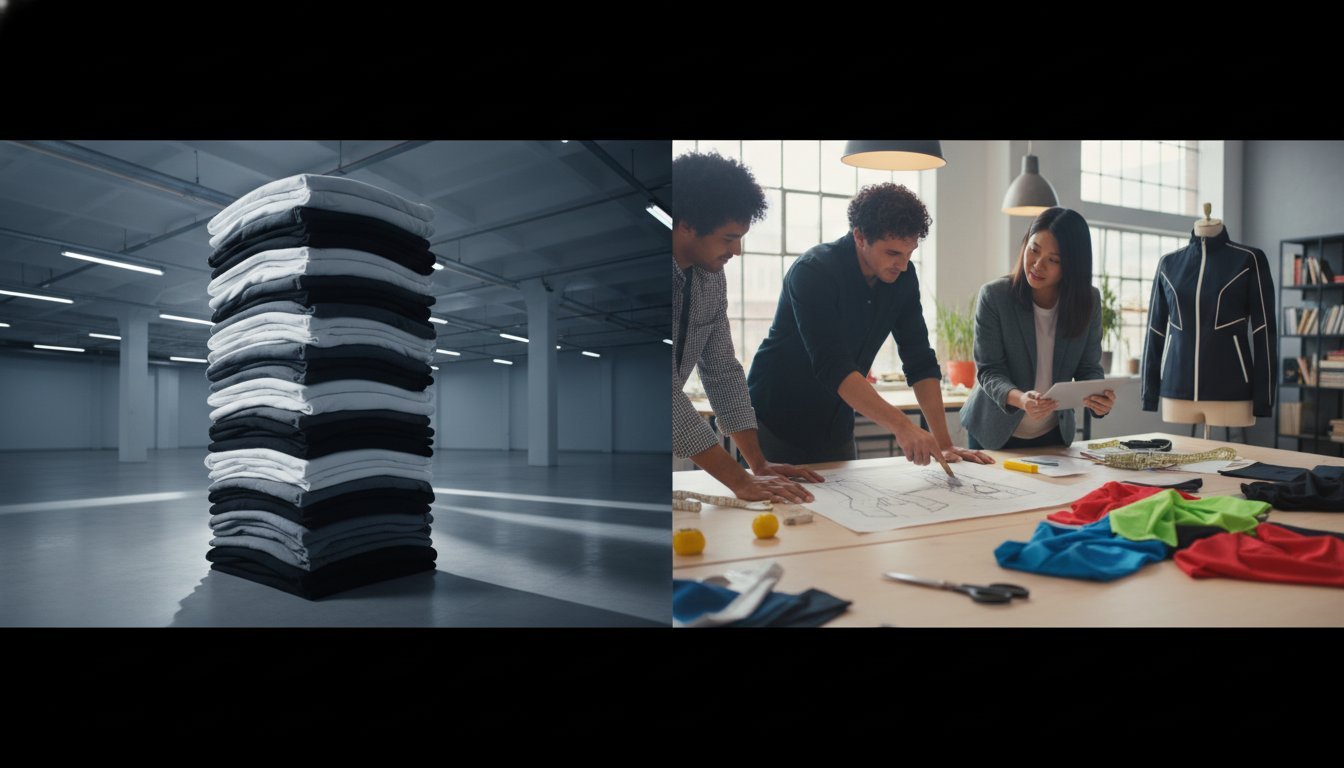
Your brand's growth isn't measured by how many units you sell, but by how much of your vision you're forced to compromise to fit into someone else's template. For many emerging labels, the initial reliance on luxury blanks provides a vital starting point, yet there comes a moment where generic fits and limited fabric choices begin to stifle your identity. Understanding exactly when to switch to custom apparel production is the most critical strategic decision you'll make in 2026. It's the point where you move from simple curation to true innovation, ensuring your products no longer look like every other competitor on the shelf.
It's natural to feel concerned about the perceived risks of scaling, especially with the complexities of new global regulations. You want to maintain high standards while managing per-unit costs effectively. This guide provides the exact markers that signal your brand is ready to move from white-label blanks to full custom manufacturing. We'll examine how to navigate the 2026 landscape, including the California Textile EPR Program deadlines and the latest PFAS regulations, to ensure your transition is both compliant and profitable. Discover how to take full control of your supply chain and finally deliver the unique, high-performance pieces your audience expects.
Key Takeaways
- Recognize that luxury blanks are ideal for testing market demand with low MOQs of 70 pieces before committing to full custom manufacturing.
- Identify the exact creative and logistical markers that signal when to switch to custom apparel production, such as the need for unique cut and sew silhouettes.
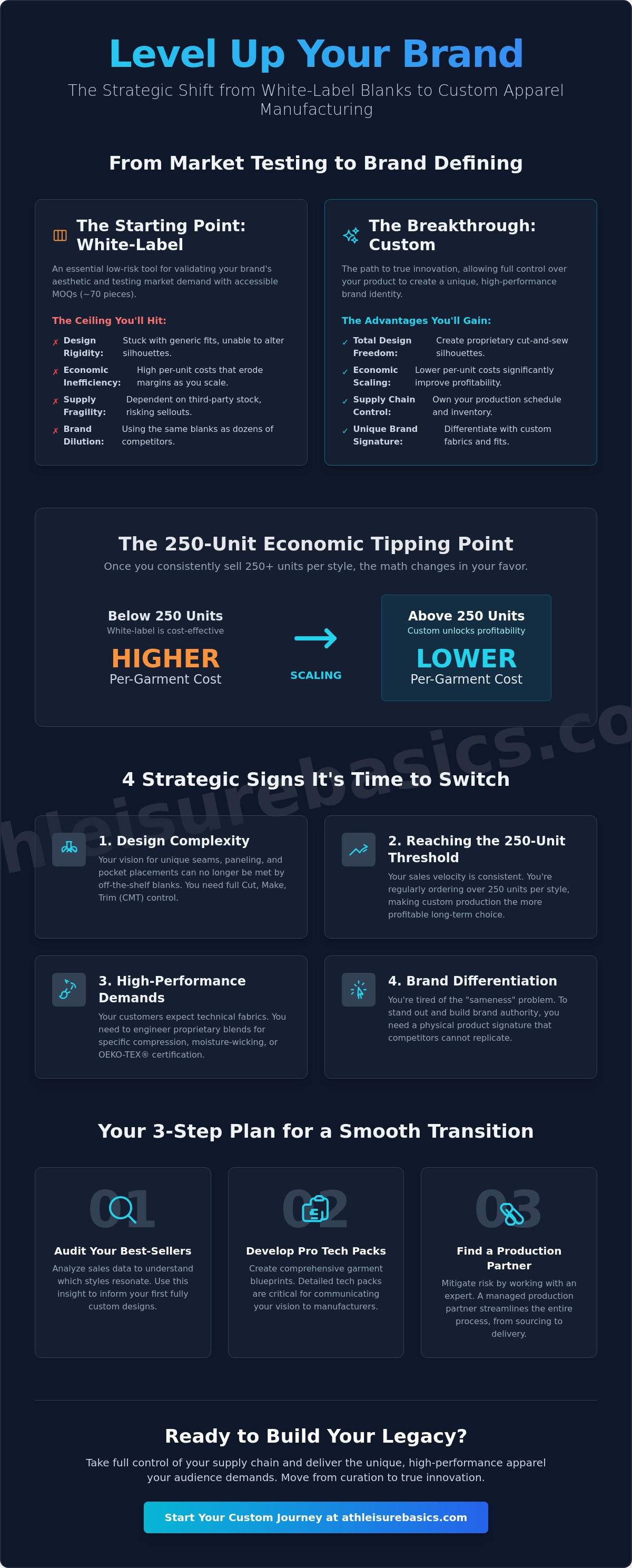
- Analyze the economics of scaling to understand how custom production can lower your per-garment price once you exceed the 250-unit threshold.
- Streamline your move to custom manufacturing by auditing successful styles and developing comprehensive tech packs for every new design.
- Discover how a managed production partnership mitigates risk as you transition from low-volume white-label orders to professional custom manufacturing.
Understanding the Ceiling: The Limits of White-Label and Blank Apparel
Launching a brand often begins with a pragmatic choice. White-label apparel serves as a low-risk market entry tool, allowing you to validate your aesthetic without the overhead of full production cycles. Luxury blanks are excellent for testing demand; they offer accessible minimum order quantities (MOQs) as low as 70 pieces. This initial phase helps you build a community and refine your marketing strategy without the pressure of managing complex supply chains or high upfront development costs.
However, as your sales velocity increases, you will inevitably hit a ceiling. Determining when to switch to custom apparel production depends on your long-term goals for both brand identity and profitability. While blanks are convenient, they carry higher per-unit costs that eventually erode your margins as you scale. Relying on pre-made stock means you're paying for the wholesaler's overhead and storage, costs that you can reclaim through a direct manufacturing partnership. Brands often face several specific limitations when they rely too heavily on off-the-shelf solutions:
- Design Rigidity: You cannot adjust the length, sleeve width, or shoulder drop of a pre-made garment.
- Economic Inefficiency: Wholesale prices remain relatively high even as your order volume grows.
- Supply Chain Fragility: You're dependent on a third party's inventory levels, which can lead to stockouts on your best-sellers.
The "Same-ness" Problem in Modern Athleisure
Using the same blanks as your competitors dilutes your brand authority. In the 2026 market, consumers prioritize authenticity and distinctive design. If your hoodie features the same fit and finish as a dozen other labels, you lose your competitive edge. Moving to cut-and-sew manufacturing allows you to create proprietary silhouettes that define your brand's physical signature. Custom production gives you the freedom to specify unique pocket placements, ergonomic seams, and specialized paneling that simply don't exist in a catalog. This level of detail is what separates a premium label from a temporary trend.
Performance Limitations of Pre-Made Textiles
Technical athleisure demands more than a standard cotton-poly blend. When you use blanks, you're constrained by what a wholesaler chooses to stock. Custom manufacturing enables you to engineer fabrics from the ground up, selecting specific yarn counts and weave structures. You can develop proprietary blends for specific compression levels or superior moisture-wicking properties. This shift from "good enough" to OEKO-TEX® certified premium quality ensures your products meet the high-performance standards your customers expect. It transforms your brand into a true product innovator, allowing you to control every touchpoint of the user experience.
4 Strategic Signs It is Time to Switch to Custom Apparel Production
Deciding exactly when to switch to custom apparel production is a pivotal moment for any growing label. While blanks serve as a helpful starting point, they eventually become a bottleneck for brands with higher aspirations. You'll know it's time to move beyond the catalog when your growth is restricted by the physical limitations of pre-made stock. There are four specific strategic markers that indicate your brand has outgrown white-label solutions and is ready for a professional manufacturing partnership.
Marker 1: Design Complexity and Silhouette Control
Your creative vision may have reached a point where simple screen printing or embroidery on a pre-made hoodie is no longer enough. If your designs involve complex paneling, specific pocket placements, or unique seam lines, you've moved into the territory of the Apparel Manufacturing subsector where standard blanks cannot compete. Full CMT (Cut, Make, Trim) production allows you to control every aspect of the garment's construction from the initial pattern to the final stitch. Full CMT production serves as the ultimate gateway to design freedom by giving you total authority over your garment's blueprint.
Marker 2: Reaching the 250-Unit Economic Threshold
Consistency in your sell-through rates is the most reliable indicator of financial readiness. Once your sales volume consistently exceeds 250 pieces per style, the per-unit economics of custom manufacturing become significantly more attractive. While 70-unit runs are perfect for testing, the jump to 250 pieces is the most critical scaling step because it unlocks better fabric pricing and more efficient factory scheduling. For brands looking to maintain premium standards during this transition, utilizing private label Portugal services can bridge the gap before you commit to entirely bespoke collections.
Beyond volume and design, your need for exclusive textiles often dictates the move to custom. If your brand identity relies on a specific sustainable fiber or a high-performance technical blend that isn't available in wholesale catalogs, custom sourcing is your only path forward. Similarly, if you want to market a "signature fit" that becomes synonymous with your brand name, you must own the patterns. Owning your silhouettes prevents competitors from simply buying the same blank and mimicking your brand's physical presence. If you're unsure if your current volume justifies this jump, our production consulting services can help you audit your best-sellers for custom readiness.
Comparing the Economics: White-Label vs. Full Custom Manufacturing
Understanding the financial transition is just as important as the design evolution. While white-label blanks require minimal upfront capital, they often represent a higher long-term cost due to inflated per-unit pricing. Deciding when to switch to custom apparel production requires a shift in how you view your budget. You're moving from a transactional purchasing model to a strategic manufacturing investment. This transition involves balancing higher initial development costs against the significantly improved margins that come with larger, more efficient production runs. It's a move that transforms your inventory from a generic expense into a proprietary brand asset.
The Hidden Costs of Custom Production
Transitioning to custom manufacturing introduces several development fees that don't exist when you're simply buying off-the-shelf stock. You'll need to account for professional pattern making, size grading, and tech pack development. These are essential one-time investments that ensure your signature fit remains consistent across every future production cycle. The sampling phase is particularly vital; it's your primary defense against costly production errors. By working with clothing manufacturers in Portugal, you can often find better value through vertical integration. These facilities frequently handle everything from fabric sourcing to final stitching in-house, which reduces the logistical friction and hidden costs associated with multi-vendor supply chains.
Inventory Turnover and MOQ Strategy
Successful scaling requires a deep look at your inventory turnover and the resulting impact on your cash flow. Producing 70 units of a white-label hoodie might feel safe, but the high Cost of Goods (COGS) limits your ability to reinvest in marketing or new designs. Moving to a 250-unit custom run lowers your per-garment price, providing the breathing room needed to grow your profit margins. While 250 pieces might sound daunting to a new founder, it's actually considered a low and highly accessible MOQ for modern startups.
You'll need to manage your cash flow carefully to accommodate the 8-12 week custom production cycle. This timeline is significantly longer than the immediate turnaround of blanks, but the resulting product is a unique asset that competitors can't replicate. Managing when to switch to custom apparel production effectively means planning your launches at least four months in advance. This foresight ensures you don't lose momentum during the production window while waiting for your custom textiles and silhouettes to arrive. Balancing these longer lead times with higher volume is the hallmark of a maturing brand ready for the next level of commercial success.
How to Prepare Your Brand for the Custom Production Jump
Transitioning from luxury blanks to bespoke manufacturing is a significant milestone that requires meticulous planning. You've already identified when to switch to custom apparel production by analyzing your sales volume and design limitations. Now, you must focus on the logistical groundwork that ensures your first custom run is a commercial success. This preparation phase is where you transform your creative ideas into a repeatable industrial process. It's about moving from a curation mindset to a production mindset, where every detail is documented and every material is vetted for quality.
Start by auditing your performance data. Look for the styles that consistently sell out or receive the most feedback regarding fit and fabric. These are your prime candidates for custom production. By focusing on your "hero" products first, you create a stable foundation for your custom collection without overextending your resources. This targeted approach allows you to master the production cycle with one or two styles before attempting to convert your entire catalog. It also gives you the opportunity to refine your signature fit based on actual customer data rather than guesswork.
The Tech Pack: Your Blueprint for Success
A professional tech pack is the only way to ensure your vision translates accurately to the factory floor. For athleisure, this document must include precise measurements, material specifications, stitching details, and trim placements. Learning how to create a tech pack for clothing is a vital skill for any founder transitioning into custom manufacturing. Professional consulting at this stage can save you thousands by preventing sampling errors that often plague unguided startups. A complete tech pack acts as a legal contract for quality, ensuring that the finished product matches your approved sample exactly.
Vetting Your Manufacturing Partner
Choosing the right collaborator is as important as the design itself. In 2026, Portugal remains the premier hub for premium athleisure due to its high ethical standards and advanced textile technology. When interviewing potential partners, ask specific questions about their ability to source OEKO-TEX® certified materials and their internal quality control processes. Focus on relational framing; you're looking for a long-term ally, not just a service provider. Clear communication and transparency regarding lead times and material origins will define the success of your partnership. If you're ready to start this journey, our custom clothing manufacturing services provide the end to end support needed to scale with confidence.
Modern consumers demand transparency. Sourcing materials and trims that align with OEKO-TEX® standards isn't just an ethical choice; it's a market requirement. Your tech pack should specify these requirements clearly to ensure your manufacturing partner understands the quality level you intend to maintain. By setting these standards early, you protect your brand's reputation and ensure your products meet the high performance expectations of your audience.
Scaling with Athleisurebasics: From White-Label to Custom Mastery
Athleisurebasics is designed to grow alongside your brand. We understand that the decision of when to switch to custom apparel production is based on both creative ambition and financial readiness. That's why we offer a structured path that supports you from your very first launch through to full-scale custom manufacturing. Our model removes the traditional barriers to entry, allowing you to scale your operations without the risk of unmanageable inventory or compromised quality. We act as your dedicated production partner, ensuring your transition from generic blanks to bespoke silhouettes is handled with professional precision.
We provide a unique entry point for startups through our luxury white-label service, which features accessible minimum order requirements of just 70 pieces. This stage allows you to validate your market and build a loyal customer base using premium, pre-made staples. As your brand matures and your sales volume increases, we facilitate a seamless transition to our 250-unit custom manufacturing service. This mid-market volume is the ideal "switch" phase, providing the improved margins and design control of full production without the 1,000-unit commitments required by traditional factories.
Our Full CMT Production Capabilities
Our manufacturing facility in Portugal specializes in high-end cut and sew services, giving you total authority over your garment's blueprint. We provide comprehensive materials sourcing support and Full CMT production to bring your most complex athleisure designs to life. Our production consulting services are an integral part of this process; we help you refine your tech packs and optimize your patterns for industrial efficiency. We specialize in engineering premium athleisure textiles that meet the rigorous demands of high-performance wear while maintaining a luxury hand-feel. Every piece we produce adheres to strict ethical standards and utilizes OEKO-TEX® certified fabrics, ensuring your brand remains compliant with 2026 global sustainability regulations.
Start Your Custom Journey Today
Initiating your first custom production run is a straightforward and transparent process. We guide you through each milestone to mitigate risk and ensure a high-quality finished product. Our onboarding process follows a logical structure designed for clarity:
- Consultation: We review your current best-sellers and design goals to determine the best path forward.
- Tech Pack Review: Our experts analyze your technical specifications to ensure they are production-ready.
- Sampling: We develop a physical prototype of your custom design for your final approval.
- Bulk Production: Once the sample is perfected, we initiate the 250-unit production run in our Portuguese facility.
Reclaiming your brand identity and improving your profit margins starts with a single inquiry. Our team is ready to help you navigate the complexities of materials sourcing and technical development. Inquire about custom manufacturing with Athleisurebasics today to receive a detailed quote for your first custom production run and take the next step in your brand's evolution.
Empowering Your Brand's Physical Identity
Deciding exactly when to switch to custom apparel production is the definitive step in moving from a startup label to an established industry presence. It's a strategic shift that allows you to reclaim your profit margins while finally delivering the signature fits your audience demands. By identifying your hero products and reaching the 250-unit economic threshold, you transition from managing generic inventory to building a proprietary brand asset that competitors cannot replicate.
Our partnership model simplifies this complex industrial jump. We provide the premium Portuguese craftsmanship and OEKO-TEX® certified fabrics required to compete at the highest level of the athleisure market. With our low 250-piece MOQ for custom runs, you don't have to choose between creative freedom and financial security. You can scale with confidence, knowing your supply chain is as sophisticated as your design vision.
Ready to scale? Explore our Custom Clothing Manufacturing services
Your vision deserves a physical form that matches its ambition. We're here to ensure your journey from concept to finished product is efficient, ethical, and built for long-term commercial success.
Frequently Asked Questions
What is the minimum order quantity (MOQ) for custom apparel production?
Our minimum order quantity for full custom apparel production is 250 pieces per style. This threshold is strategically set to allow for the efficient use of industrial machinery while ensuring premium quality across the entire run. While many global manufacturers require thousands of units, our 250-unit MOQ is specifically designed to support emerging brands during their critical scaling phase. It provides the perfect balance between design exclusivity and manageable inventory levels.
How much does it cost to switch from white-label to custom production?
Switching involves an initial investment in development fees, including professional pattern making, size grading, and tech pack creation. These one-time costs establish the physical blueprint of your brand. While the upfront investment is higher than buying blanks, the long-term unit price often decreases as your volume grows. This shift allows you to capture higher profit margins by removing the wholesaler's markup and owning your production cycle.
Do I need a tech pack before contacting a custom clothing manufacturer?
A professional tech pack is essential before initiating the custom manufacturing process. It serves as the primary blueprint that communicates every technical detail, from exact measurements to specific seam types, to the factory floor. Without this document, the risk of production errors increases significantly. We offer tech pack development services to help you bridge this gap and ensure your vision is executed with industrial precision.
How long does the custom apparel production process take in 2026?
The standard timeline for custom apparel production in 2026 typically ranges from 8 to 12 weeks for bulk manufacturing. This cycle follows an initial sampling phase, which can take an additional 3 to 4 weeks depending on design complexity. Planning your production at least four months in advance is critical to maintaining a consistent launch schedule. This foresight helps you decide exactly when to switch to custom apparel production without disrupting your sales momentum.
What is the difference between CMT and FPP manufacturing?
CMT stands for Cut, Make, and Trim, where the manufacturer provides the labor to cut, sew, and finish the garment using fabrics you specify. FPP, or Full Package Production, is an end-to-end service where the factory handles everything from material sourcing to final packaging. Understanding these models helps you determine when to switch to custom apparel production based on your brand's internal sourcing capabilities and desired level of involvement.
Can I use my own fabrics for custom production in Portugal?
You can specify or provide your own materials when working with our Portuguese manufacturing partners. This flexibility is a core feature of the CMT model, allowing you to maintain control over your fabric's unique performance characteristics. Many brands also choose to leverage our existing relationships with premium Portuguese mills to access high-performance, OEKO-TEX® certified textiles that are already vetted for quality and ethical standards.
Is custom production more sustainable than using blanks?
Custom production is often more sustainable because it allows for total transparency throughout the supply chain. You can select specific eco-friendly fibers, ensure ethical labor standards, and minimize textile waste through precise pattern grading. Manufacturing in Portugal ensures compliance with strict EU environmental regulations. This provides a level of principled production that generic global blanks often cannot guarantee, helping you meet the growing consumer demand for ethical apparel.
What happens if I cannot meet the 250-piece MOQ?
If your brand is not yet ready for a 250-unit run, our luxury white-label service offers a low-risk alternative with MOQs of just 70 pieces. This allows you to test market demand and build brand authority using high-quality staples before committing to bespoke silhouettes. It is a pragmatic stepping stone that ensures you don't overextend your capital. You can focus on building your community while preparing for the eventual transition to full custom manufacturing.



Leave a comment
This site is protected by hCaptcha and the hCaptcha Privacy Policy and Terms of Service apply.