

Building a Premium Clothing Brand in 2026: The Definitive Guide
What if the success of your clothing line depends less on your latest sketch and more on the technical integrity of your manufacturing partner? Building a premium clothing brand in 2026 requires more than just an eye for style. It demands a strategic commitment to quality and ethical transparency that today's discerning consumers expect. You likely already feel that the "premium" label is no longer just about the fabric. It's about the story, the ethics, and the craftsmanship behind every stitch.
It's natural to feel overwhelmed by the fear of high MOQs or the confusion of developing your first tech pack. You want a product that feels like luxury, not something that looks "cheap" once it arrives from the factory. We understand these hurdles because we've helped many founders turn their vision into a legacy. This guide provides the roadmap you need to launch a high-end apparel line with confidence. We'll show you how to master luxury quality standards, find a reliable partner for ethical manufacturing in Portugal, and stay compliant with the July 19, 2026 EU ban on destroying unsold goods. You're about to learn how to move from a simple logo to a profitable, high-quality reality.
Key Takeaways
- Understand why building a premium clothing brand in 2026 requires balancing high-performance materials with radical ethical transparency.
- Discover the four pillars of superior apparel construction, focusing on OEKO-TEX® certified materials and the precision of professional tech packs.
- Learn how to mitigate financial risk by choosing the right MOQ strategy or utilizing luxury white label blanks to test your market.
- Master the step-by-step roadmap from initial concept and sample creation to final collection delivery.
- Explore why manufacturing in Portugal provides a strategic advantage through heritage craftsmanship and proximity to EU markets.
Defining the Premium Clothing Brand in 2026
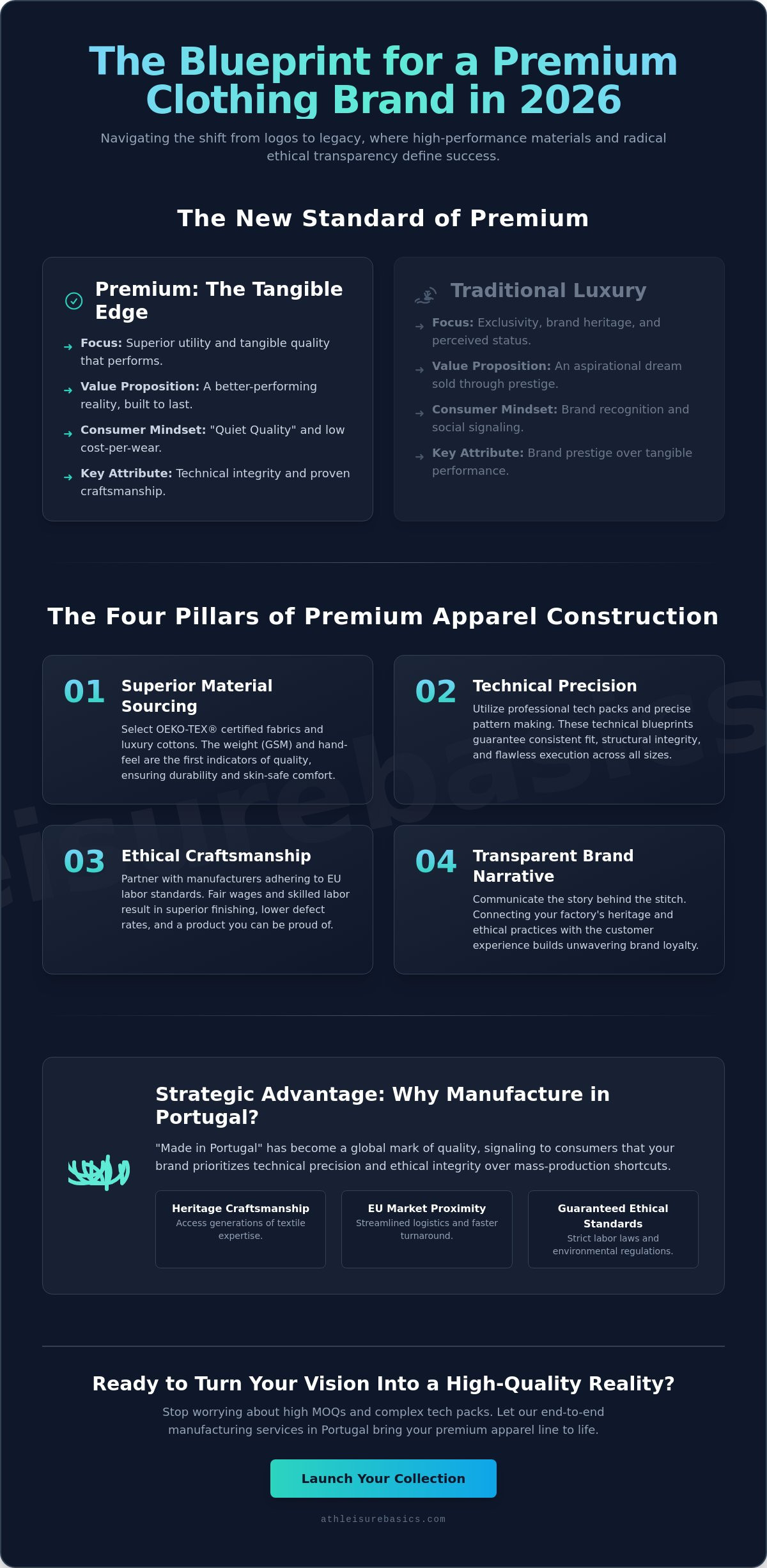
Building a premium clothing brand in 2026 requires a focus on the intersection of high-performance materials and radical ethical transparency. The market has moved past the era where a high price tag alone defined status. Today, premium positioning is earned through the technical integrity of the garment and the documented footprint of its production. Consumers aren't just looking for a look; they're investing in a product's long-term utility and its impact on the world.
There's a distinct difference between premium and luxury. While luxury often prioritizes exclusivity, heritage, and status, premium brands focus on superior utility and tangible quality. To understand what is a premium brand in the 2026 landscape, you have to look at technical specifications rather than just brand prestige. Luxury might sell an aspirational dream, but premium sells a better-performing reality. This shift has led to the rise of "Quiet Quality," where modern consumers prioritize the hand-feel of the fabric and the longevity of the construction over loud, recognizable logos. A premium brand is a commitment to superior craftsmanship and ethical standards.
The Trade-Off: Why Consumers Pay More
The modern premium buyer operates with a "Cost-per-Wear" mindset. They're willing to pay a higher upfront cost for a garment that maintains its shape, color, and texture after dozens of laundry cycles. This makes the physical quality of the garment your most important marketing tool. Manufacturing within the European Union serves as a primary value driver for these customers. It provides an inherent guarantee of fair labor practices and strict environmental regulations. Utilizing certifications like OEKO-TEX® helps you build immediate brand trust. These labels prove your textiles are free from harmful chemicals, which has become a non-negotiable standard for high-end apparel in 2026.
2026 Market Trends for High-End Startups
Technical Athleisure has emerged as the leading category for entrepreneurs building a premium clothing brand. This niche successfully blends high-fashion aesthetics with the performance features of athletic gear, such as moisture-wicking and four-way stretch. Sustainability is no longer just a "feature" to mention in your "About Us" section; it's a core requirement for market entry. If your brand doesn't have a clear, ethical supply chain, it won't survive the scrutiny of today's discerning shoppers. This is exactly why "Made in Portugal" has become such a powerful global mark of quality. It tells your customers that your brand values heritage, technical precision, and ethical integrity over the shortcuts of mass production.
The Four Pillars of Premium Apparel Construction
Quality is a partnership, not a transaction. When you're building a premium clothing brand, your success depends on the technical integrity of your manufacturing choices. High-end apparel isn't defined by a marketing budget; it's defined by construction standards that justify a higher price point. To achieve this, your production must stand on four critical pillars:
- Pillar 1: Superior Material Sourcing: This involves selecting OEKO-TEX® certified fabrics and luxury cottons that offer durability and skin-safe properties.
- Pillar 2: Technical Precision: Accurate tech packs and pattern making are non-negotiable. These blueprints ensure that every size in your range fits perfectly and maintains its structural integrity.
- Pillar 3: Ethical Craftsmanship: Premium products require skilled labor. Utilizing EU labor standards and ensuring fair wages results in lower defect rates and superior finishing.
- Pillar 4: Brand Narrative: Your customers want to know the story behind the stitch. Connecting your factory's heritage to the customer experience builds lasting brand loyalty.
If you're ready to move from concept to collection, our custom manufacturing services provide the end-to-end support needed to secure these pillars for your startup.
Sourcing Luxury Fabrics and Textiles
The perception of quality starts the moment a customer touches your product. The weight (GSM) and hand-feel of a fabric are the primary indicators of a premium garment. To communicate effectively with your factory, you must understand specific textile terminology. In high-end athleisure, technical blends that offer four-way stretch and moisture management are essential. These aren't just fabrics; they're performance tools that define the "premium" experience.
The Importance of Ethical Production
Ethical production is a powerful risk management strategy. Choosing "Made in Europe" protects your brand from the reputational risks associated with sweatshop labor. There's a direct link between worker well-being and the final quality of the garment. Happy, well-compensated artisans take pride in their work, which translates to better stitching and fewer errors. The Economics of the Fashion Industry show that consumers increasingly demand this level of transparency. Showing your customers exactly where and how their clothes are made isn't just an ethical choice; it's a competitive advantage that builds immediate trust and justifies your premium positioning.
The Economics of Launching: MOQs and Risk Mitigation
Financial risk is often the biggest barrier for new founders. Traditional manufacturing models frequently demand high Minimum Order Quantities (MOQs), forcing startups to tie up thousands of euros in inventory before they've sold a single shirt. When you're building a premium clothing brand, you need a smarter, more flexible entry point. Choosing private label portugal allows for faster market entry by utilizing pre-developed, high-quality silhouettes that meet luxury standards without the long custom development lead times.
The "White Label" shortcut is an excellent way to test the market with luxury blanks. It allows you to build brand presence and gather customer feedback with minimal risk. Once you've validated your designs and fit, you can scale from 70 pieces to larger runs of 250+ pieces. This phased approach ensures you aren't stuck with dead stock, which is especially critical given the 2026 EU regulations regarding unsold apparel. By starting small, you preserve your capital for marketing and growth.
Budgeting for Your First Production Run
Your budget is split into fixed and variable costs. Fixed costs include tech packs and sample creation. These are your blueprints; they're essential for ensuring your final product justifies a premium price point. Variable costs cover the actual production and shipping. While manufacturing in Asia might offer lower unit costs, the long-term price of defects and logistical delays can be devastating. Investing in European production provides better material sourcing support and quality control, ensuring your brand's reputation isn't damaged by "cheap" looking final products. It's better to produce fewer, high-quality items than to risk a large, low-quality shipment.
Risk Mitigation Strategies
The "Test and Scale" model is the most effective way to protect your investment. Use low MOQs to validate your concepts before committing to custom molds or proprietary fabrics. This strategy gives you the flexibility to pivot based on real-time sales data. Leveraging production consulting services can also help you avoid common startup pitfalls, such as miscalculating lead times or choosing the wrong fabric blends. A trusted partner helps you navigate these complexities, turning your vision into a profitable reality. This pragmatic approach shifts the focus from a high-stakes gamble to a structured, scalable business journey.
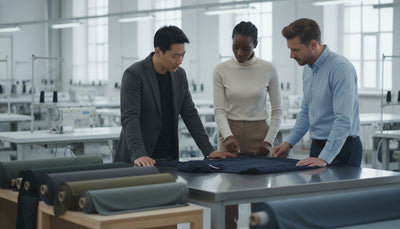
The Manufacturing Roadmap: From Concept to Collection
Building a premium clothing brand requires moving beyond creative sketches and into the world of technical execution. This transition is where many startups struggle, yet it's the most critical phase for ensuring your final collection justifies its price point. A structured roadmap helps you maintain control over your quality and timelines. It prevents the "cheap" look that often results from poor planning or vague communication with your factory.
Your journey follows four distinct steps:
- Step 1: Concept and Tech Pack development: Creating the technical blueprint of your garment.
- Step 2: Sourcing and Sample creation: Turning that blueprint into a physical prototype.
- Step 3: Fitting and Iteration: Refining the fit to meet luxury standards.
- Step 4: Full CMT Production: The final manufacturing phase involving cutting, making, and trimming.
Mastering the Tech Pack
The process begins with Tech Pack development. Think of the tech pack as the comprehensive blueprint for your garment. It isn't just a drawing; it's a technical file containing exact measurements, material compositions, hardware requirements, and specific stitching instructions. A professional tech pack is the only reliable way to ensure consistency between your first sample and your five-hundredth production piece. It removes the guesswork that leads to manufacturing defects. If you want to understand every technical milestone in detail, check out our guide on the garment production process.
The Sampling and Fitting Phase
Once your blueprint is ready, you move into sourcing and sample creation. This phase turns your data into a physical prototype. You'll likely need multiple rounds of sampling. A Salesman Sample (SMS) allows you to check the aesthetic and material choices, while the Pre-Production Sample (PPS) serves as the final gold standard for the factory to follow. Don't skip the fitting phase. Using professional fit models is essential for refining a premium silhouette. Mannequins don't move, but your customers do. Fit models provide the feedback needed to ensure your garments offer both style and superior comfort during movement.
The final step is Full CMT Production. This is the stage where the factory cuts your fabric, sews the pieces together, and adds the final trimmings like zippers, buttons, and labels. High-end production in Portugal excels here because of the strict quality assurance protocols integrated into the CMT workflow. If you're ready to start this journey, you can submit your project to our team for expert manufacturing support.
Why Portugal is the Strategic Choice for Premium Brands
Your choice of manufacturing location is a silent ambassador for your brand's values. When building a premium clothing brand, the "Made in Portugal" label does more than identify a country of origin. It signals a heritage of textile excellence that justifies a higher retail price. While some founders look to Southeast Asia for lower unit costs, they often overlook the "invisible costs" of long-distance production. Time zone differences, expensive travel for quality checks, and slower shipping cycles can quickly erode any initial savings. Manufacturing within the EU offers a level of proximity and communication that keeps your production agile and transparent.
To find the right factory for your specific needs, explore our list of the top clothing manufacturers portugal to find your match.
The Ethical and Quality Advantage
Strict EU labor laws and environmental regulations are built-in assets for your brand. In a market where consumers demand transparency, made in portugal clothing creates an immediate premium perception. You don't have to defend your supply chain; the location does the work for you. Portugal also specializes in the "Full CMT" service model. This end-to-end approach ensures that every step, from the first cut to the final trim, happens under one roof with consistent quality assurance. This is a significant advantage over fragmented production models where garments move between multiple unregulated workshops.
Partnering with Athleisurebasics
We're here to help you turn a logo into a legacy. Our team understands the unique challenges faced by startups and first-time founders who are building a premium clothing brand for the first time. We offer low MOQs, starting at just 70 pieces for our white label service, to help you launch without excessive financial risk. Every garment we produce utilizes OEKO-TEX® certified materials and reflects the artisan craftsmanship Portugal is known for. We don't just act as a producer; we act as your trusted partner throughout the entire journey.
Whether you need materials sourcing support or full CMT production, we provide the expertise to scale your vision efficiently and ethically. We make it easy to launch by removing the technical barriers that often stop founders before they start. Ready to take the next step? Submit your project today for a custom apparel manufacturing quote and start your journey toward a professional, high-quality collection.
Turn Your Fashion Vision into a Lasting Legacy
Success in 2026 depends on the technical integrity and ethical transparency of your supply chain. You've learned that building a premium clothing brand requires a focus on the four pillars of construction and a precise manufacturing roadmap. By prioritizing technical precision and high-quality materials, you ensure your collection meets the highest industry standards. Choosing a strategic partner in Portugal provides the craftsmanship and ethical standing necessary to compete in the modern luxury market.
Our team is dedicated to helping startups and first-time founders navigate these complexities with confidence. We offer Low MOQs to protect your capital and use OEKO-TEX® Certified Materials to ensure your products are safe and sustainable. Every piece is ethically made in Portugal, giving your brand a built-in mark of quality that international buyers trust. You don't have to face the manufacturing process alone.
Ready to build your legacy? Get a custom manufacturing quote from Athleisurebasics today. We're ready to help you move from a simple logo to a profitable, high-quality reality. Your brand's journey starts here.
Frequently Asked Questions
How much does it cost to start a premium clothing brand in 2026?
A realistic budget for your first collection in 2026 typically ranges between €8,000 and €15,000. This estimate includes development costs like tech packs and samples, alongside your initial production run in Portugal. While higher than mass-market options, this investment ensures your brand enters the market with superior quality. It covers the necessary steps to validate your designs before scaling to larger quantities.
What is the difference between a premium and luxury clothing brand?
Premium brands prioritize high-performance utility and tangible quality, while luxury brands focus on exclusivity and heritage status. When building a premium clothing brand, you're selling a better-performing product that justifies its price through technical excellence. Luxury often carries a higher markup based purely on brand prestige. Premium consumers expect durability and ethical transparency as the primary value drivers for their purchase.
Why should I manufacture my clothing brand in Portugal instead of China?
Manufacturing in Portugal offers superior ethical standards and faster communication than manufacturing in China. While CMT costs are higher, you save on duties within the EU and benefit from significantly lower shipping times. Portuguese factories also specialize in the high-end craftsmanship required for premium positioning. This proximity allows you to manage inventory risk more effectively through smaller, more frequent production runs.
What is a tech pack and do I really need one?
A tech pack is a technical blueprint that contains every measurement, material, and stitching detail for your garment. You absolutely need one to ensure consistency across different production batches. Without it, factories are left to guess your requirements, which leads to costly defects and "cheap" looking final products. It serves as your technical contract with the manufacturer to ensure your vision is executed perfectly.
What are the minimum order quantities (MOQ) for premium manufacturing?
Minimum order quantities for building a premium clothing brand in Portugal commonly start between 50 and 200 units per style. These low MOQs are ideal for startups looking to validate their market without excessive inventory risk. Larger, more established factories might require 500 units or more. Starting with lower quantities allows you to maintain high quality standards while protecting your initial capital for marketing and growth.
How do I find a niche in the saturated athleisure market?
Finding a niche requires focusing on a specific technical problem or a unique brand narrative that resonates with a targeted audience. Instead of general athleisure, you might focus on high-performance materials for a specific sport or radical transparency in your supply chain. Modern consumers in 2026 are moving toward "Quiet Quality." They value functional excellence and ethical integrity over generic styles and loud logos.
Can I start a clothing brand with no design experience?
You can start a brand without design experience by partnering with a manufacturer that offers end-to-end consulting and technical support. We help founders turn their vision into physical products by providing tech pack development and sample creation services. You provide the creative direction and market insight, while we handle the technical precision and craftsmanship. This partnership allows you to focus on building a premium clothing brand while we manage the production.
What does OEKO-TEX® certified mean for my clothing brand?
OEKO-TEX® certification means your textiles have been rigorously tested for harmful substances and meet high safety standards. For your brand, this serves as a powerful mark of trust and quality for health-conscious consumers. It proves your commitment to ethical manufacturing and human-safe products. In the 2026 market, these certifications are often a core requirement for any brand aiming for a premium market position.


Leave a comment
This site is protected by hCaptcha and the hCaptcha Privacy Policy and Terms of Service apply.