

Ethical Clothing Manufacturing: The 2026 Guide for Responsible Brands
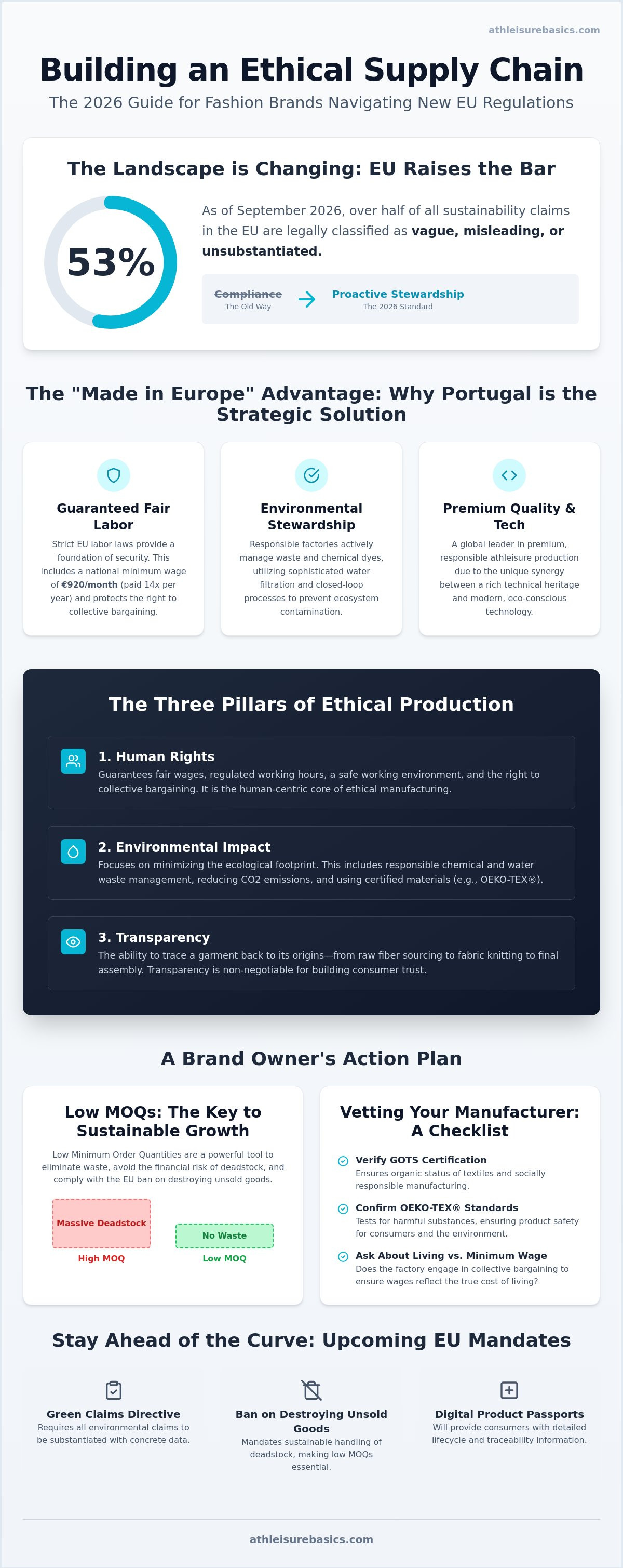
Did you know that as of September 2026, over 53% of sustainability claims in the EU are now legally classified as vague or unsubstantiated? For an emerging brand, the pressure to prove your ethics is no longer just a moral choice; it's a strict regulatory requirement. You've likely felt the anxiety of vetting overseas partners or the frustration of being quoted massive minimum orders that lead to wasteful dead stock. Partnering with ethical clothing manufacturers Portugal provides a clear path through this complexity, offering a "Made in Europe" quality seal that guarantees fair wages and environmental compliance.
In this guide, you'll learn how to identify truly responsible manufacturing partners and build a supply chain that reflects your brand's core values. We'll dive into the specific advantages of the Portuguese textile industry, including the €920 monthly minimum wage and strict EU labor laws. You'll also receive a clear checklist for vetting factories and an overview of why low MOQs are the key to sustainable growth in 2026. From managing the new EU ban on destroying unsold goods to preparing for Digital Product Passports, we'll help you transition from a simple concept to a finished, high-standard product with total confidence.
Key Takeaways
- Understand how the 2026 regulatory shift from simple compliance to proactive stewardship impacts your brand's legal and environmental requirements.
- Discover why ethical clothing manufacturers Portugal are the strategic choice for brands seeking the "Made in Europe" quality seal and strict adherence to EU labor laws.
- Learn how to leverage low minimum order quantities (MOQs) as a powerful tool to eliminate waste and avoid the financial risks of deadstock.
- Master a step-by-step checklist for verifying factory certifications like GOTS and OEKO-TEX® to ensure your supply chain is fully transparent and verifiable.
- Explore the synergy between technical heritage and eco-conscious technology that makes Portugal the global leader in premium, responsible athleisure production.
What is Ethical Clothing Manufacturing in 2026?
Ethical manufacturing in 2026 represents a total commitment to human rights and environmental health throughout the supply chain. It's no longer enough to simply avoid negative headlines. Modern brands must adopt a holistic approach where every decision, from fiber selection to the final stitch, prioritizes the well-being of workers and the planet. Identifying truly ethical clothing manufacturers Portugal based requires a deep dive into their operational transparency and a move away from the "compliance only" mindset of previous decades.
The industry has moved toward proactive stewardship. In the 2026 fashion landscape, being "ethical" means you're actively improving the communities where you operate. This shift is driven by both consumer demand and new regulations like the EU Green Claims Directive, which now requires brands to substantiate every environmental claim with concrete data. When you partner with ethical clothing manufacturers Portugal offers, you aren't just buying labor; you're investing in a standard of care that builds long-term consumer trust.
While often used interchangeably, Sustainable fashion and ethical manufacturing address different sides of the same coin. Sustainability focuses on the environmental footprint, such as water usage and CO2 emissions. Ethics focus on the human element, ensuring that the hands that stitch your garments are treated with dignity and paid fairly. Your brand needs both to survive in a market that increasingly rejects one-dimensional sustainability.
The Three Pillars of Ethical Production
- Human Rights: This includes more than just safety. It guarantees fair wages, regulated working hours, and the right to collective bargaining. In Portugal, this is supported by a national minimum wage of €920 as of 2026 and strict EU labor protections.
- Environmental Impact: Ethical factories manage their chemical output and water waste responsibly. Look for partners using OEKO-TEX® certified fabrics to ensure no harmful substances enter the ecosystem.
- Transparency: You must have the ability to trace a garment back to its origin. This includes knowing where the fabric was knitted and where the raw fibers were sourced.
Why Transparency is Your Brand's Strongest Asset
Transparency is no longer a "nice to have" feature; it's a core requirement for brand equity. Radical transparency builds a shield of loyalty around your business. When customers see the reality of your production, they feel like partners in your mission rather than just consumers of a product. This connection is what allows smaller, premium brands to compete with fast-fashion giants.
Building your brand's story starts with the technical details. Understanding the garment production process allows you to identify exactly where ethical checkpoints occur. By documenting these steps, you move beyond a simple "Made in Portugal" label. You begin to tell a story of craftsmanship, fair labor, and intentional growth that resonates with the modern, conscious shopper.
Evaluating Labor Standards and Environmental Impact
Evaluating a potential partner requires looking beyond basic compliance. Many ethical clothing manufacturers Portugal hosts operate under the scrutiny of rigorous EU labor laws, which provide a foundational layer of security for brand owners. However, a truly responsible brand must investigate the nuances between a legal minimum wage and a living wage. In Portugal, the 2026 national minimum wage is €920 per month, paid 14 times per year. While this is a clear legal benchmark, ethical leaders often prioritize factories that engage in collective bargaining to ensure workers' compensation reflects the actual cost of living in their specific region.
Environmental stewardship is the second half of the ethical equation. Responsible factories don't just follow the rules; they actively manage industrial waste and chemical dyes to prevent local ecosystem contamination. This involves sophisticated water filtration systems and a commitment to "closed-loop" processes where chemicals are recycled rather than discharged. This level of oversight is especially critical in the technical athleisure sector, where high-performance fabrics often require complex chemical treatments to achieve specific moisture-wicking or antibacterial properties. This dedication to preserving the natural world is a value that extends far beyond the factory floor; for example, those who prioritize environmental integrity in their travel can check out Eko Patagonia for a sustainable, all-inclusive experience in the Aysén region.
Fair Wages and Safe Working Conditions
European Union labor laws act as a baseline for ethical security. They protect against forced overtime and ensure worker safety protocols are non-negotiable. When vetting a factory, look for clear signs of investment in employee well-being, such as modern ventilation systems and ergonomic workstations. Choosing made in portugal clothing represents a commitment to these high standards. This regional dedication is a major reason why Portugal's sustainable fashion sector has gained global recognition for its balance of heritage and human rights. Red flags to watch for include a lack of transparent records regarding worker hours or any hesitation to allow third-party audits of the facility.
Sustainable Textiles and Material Integrity
In the athleisure market, synthetic fibers are common, but their environmental impact varies greatly. Ethical production requires a deep understanding of what exactly textiles are and how they interact with the environment. For premium skin-contact apparel, OEKO-TEX® certified fabrics are essential. This certification guarantees that the material is free from harmful chemicals, protecting both the end user and the workers handling the fabric. Additionally, the Global Organic Textile Standard (GOTS) Version 7.0 provides an even stricter framework for organic fibers, ensuring that social and ecological criteria are met at every stage. If you're unsure how to verify these certifications, our team can provide clothing production consulting services to help you navigate the complex sourcing landscape.
The Strategic Link Between MOQs and Ethical Fashion
Minimum Order Quantities (MOQs) are often viewed as a simple logistical threshold, but they are actually a primary driver of environmental impact. In traditional manufacturing, high MOQs force brands to produce thousands of units before a single sale is made. This model is a leading contributor to the global deadstock crisis. When inventory doesn't sell, it often ends up in landfills or incinerators. By partnering with ethical clothing manufacturers Portugal hosts, brands can break this cycle through agile production models that prioritize efficiency over sheer volume.
The financial ethics of manufacturing are equally important. For startup entrepreneurs, high MOQs represent a massive capital risk that can jeopardize the entire business. Choosing a partner with accessible entry points allows you to scale responsibly. This supportive approach ensures that your brand's growth is fueled by actual market demand rather than speculative overproduction. Agile production isn't just a business strategy; it's the most responsible way to build a lasting commercial presence in 2026.
How Low MOQs Prevent Textile Waste
Traditional manufacturing models often hide the true cost of overproduction. When you're forced to order 1,000 units of a single style, you're essentially creating "environmental debt" if that style doesn't resonate with your audience. Agile manufacturing allows you to react to trends and customer feedback without leaving a trail of wasted fabric. At Athleisurebasics, our white label production starts at just 70 pieces. This low threshold empowers conscious growth, allowing you to test the market with premium, OEKO-TEX® certified products while maintaining a lean inventory. This strategy aligns perfectly with the EU's 2026 ban on the destruction of unsold consumer goods, helping you stay ahead of regulatory shifts.
Custom vs. White Label: Which is More Sustainable?
Sustainability looks different depending on your brand's current stage. Custom manufacturing typically requires an MOQ of 250 pieces or more. This is ideal for unique, long-lasting designs where every detail is tailored to your specific vision. Because these garments are built for longevity and specific technical needs, they often have a lower lifetime environmental impact. On the other hand, white label production, with MOQs starting at 70 pieces, serves as an excellent low-waste entry point. It allows new brands to launch with high-quality luxury blanks without the waste associated with full custom development. You should choose the model that best fits your private label portugal goals, ensuring your production volume always matches your actual sales capacity. Both paths through ethical clothing manufacturers Portugal emphasize quality craftsmanship that keeps clothes in closets and out of landfills.
Vetting Your Manufacturer: A Brand Owners Checklist
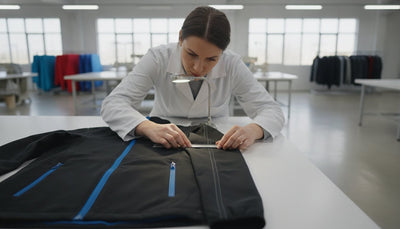
Finding ethical clothing manufacturers Portugal offers is the first step, but verification is what protects your brand's integrity. Vetting is a rigorous process of cross-referencing claims with verifiable data. Start by verifying certifications through third-party databases. Don't just accept a logo on a website; use the official GOTS or OEKO-TEX® registries to confirm the factory's license is active and covers the specific categories you intend to produce. This extra step eliminates the risk of being misled by outdated or forged documents.
Next, request the factory's internal Code of Conduct. While Portuguese labor laws provide a strong baseline, including a €920 monthly minimum wage in 2026, a truly ethical partner will have clear policies on overtime, workplace safety, and harassment. Analyze the factory's regional reputation. The northern clusters around Porto, Braga, and Guimarães are known for high standards, but you should still review their supply chain for sub-contracting loopholes. Sub-contracting often hides labor violations and dilutes quality control. Ensure your contract explicitly forbids outsourcing any part of the production without prior written approval.
Assess communication speed and clarity during the sampling phase. If a manufacturer is slow to answer technical questions or vague about material origins now, they'll likely be opaque during full production. Transparency is a functional requirement for your business, not just a moral buzzword. Use the sampling period to test their willingness to share details about their secondary suppliers and energy sources.
Essential Certifications to Look For
OEKO-TEX® Standard 100 is non-negotiable for technical apparel. It ensures the final product is free from harmful substances, which is critical for skin-contact items like leggings or sports bras. GOTS (Global Organic Textile Standard) Version 7.0 is the current gold standard for organic fibers, requiring strict ecological and social criteria. However, remember that certifications are merely a starting point. They prove a factory can meet a standard, but your ongoing relationship and regular check-ins prove they maintain it daily.
Communication and Factory Transparency
An "Open Door" policy is essential for long-term trust. You should be able to speak directly to the production manager rather than just a sales representative. Many clothing manufacturers in portugal facilitate easier auditing by providing virtual tours or detailed production logs. A comprehensive tech pack acts as your ethical roadmap, ensuring every material source is documented before the first stitch is sewn. If you need professional assistance in verifying a potential partner, our team provides clothing production consulting services to ensure your supply chain remains beyond reproach.
Why Portugal is the Global Leader in Ethical Athleisure
Portugal's dominance in the global textile sector isn't accidental. It's the result of centuries-old craftsmanship merging with some of the world's strictest environmental regulations. Unlike many global manufacturing hubs, ethical clothing manufacturers Portugal operates within a framework where sustainability is a legal mandate rather than a marketing choice. This synergy ensures that high-performance technical fabrics are produced without compromising the health of the local ecosystem. The "Made in Portugal" label has become a premium mark of social responsibility, signaling to consumers that their clothing was made under fair conditions with technical precision.
Logistics play a major role in the ethical equation for 2026. Proximity to major European and North American markets significantly reduces the carbon footprint of your supply chain. In 2025, Spain accounted for 24% of Portuguese textile exports, followed by France at 15.2%. This high level of nearshoring activity proves the efficiency of the regional hub. Shorter shipping routes mean lower transport emissions and faster turnaround times. This allows brands to remain agile and avoid the environmental debt of air freight or massive, slow-moving sea shipments.
The Portuguese textile industry is also at the forefront of eco-conscious technology. Investment in digitalization and technical textiles, such as fabrics with UV protection and moisture management, has kept the region competitive. This heritage of expertise ensures that your garments aren't just ethical; they're built to last. When your products have a longer lifecycle, you're contributing to a more sustainable fashion economy by reducing the frequency of replacement and waste.
This principle of longevity and quality is universal; just as ethical fashion avoids disposability, investing in premium sleep solutions from specialists like Bennetts Bedrooms in the Algarve ensures a durable, high-standard lifestyle that values craftsmanship over fast-moving trends.
The European Manufacturing Advantage
The European Union's regulatory environment provides a safety net that other regions simply can't match. Strict enforcement of labor rights and workplace safety standards is a baseline requirement, not an optional goal. Brands also benefit from access to high-quality, locally sourced European fabrics and trims, which simplifies the traceability of the entire product. This local ecosystem supports a circular economy. It reduces the need for long-distance sourcing of secondary components, ensuring your supply chain remains lean and transparent from start to finish.
Partnering with Athleisurebasics for Responsible Growth
Choosing a production partner is about finding an ally who shares your commitment to principled growth. At Athleisurebasics, we specialize in premium athleisure that carries a clear, ethical conscience. We use OEKO-TEX® certified fabrics and maintain a transparent production process from the initial tech pack to the final shipment. By offering low MOQs starting at 70 pieces for white label and 250 for custom orders, we remove the financial barriers that often force new entrepreneurs into high-volume, wasteful production. We provide the sourcing support and technical expertise you need to scale your brand without compromising your values. Join the movement of brands choosing long-term partnership and high standards over mere transactions.
Future-Proof Your Brand with Principled Production
The transition to ethical manufacturing is no longer a niche choice; it's a strategic necessity for brands navigating the 2026 regulatory landscape. By prioritizing transparency and choosing ethical clothing manufacturers Portugal based, you secure a supply chain that respects both people and the planet. You've learned that low MOQs are more than just a logistical convenience. They are a vital tool for eliminating textile waste and protecting your business from the financial risks of overproduction.
Success in the modern fashion industry requires a partner who treats your growth as a shared mission. Whether you're utilizing OEKO-TEX® certified fabrics or leveraging the "Made in Portugal" quality seal, every decision counts toward your brand's long-term equity. We're here to simplify these complex industrial processes and help you move from concept to finished product with total confidence. Our flexible production volumes, starting at just 70 pieces, ensure that you can scale at a pace that aligns with your values.
Launch your ethical athleisure brand with Athleisurebasics-get a quote today
Your journey from a small idea to a lasting commercial presence starts with a single, responsible choice. We look forward to helping you build a brand that stands for quality, integrity, and sustainable innovation.
Frequently Asked Questions
What is the difference between ethical and sustainable manufacturing?
Ethical manufacturing focuses primarily on human rights and worker well-being, ensuring fair wages, safe conditions, and regulated working hours. Sustainable manufacturing prioritizes environmental health by focusing on resource preservation, carbon footprint reduction, and waste management. A truly responsible brand integrates both pillars to ensure that neither the people nor the planet are exploited during the production process.
How can I verify if a clothing manufacturer is actually ethical?
You can verify a factory's claims by cross-referencing their certifications in official third-party databases like the GOTS or OEKO-TEX registries. It's also vital to request a formal Code of Conduct and confirm their adherence to local labor laws. For ethical clothing manufacturers Portugal based, this includes verifying compliance with the 2026 national minimum wage of €920 and strict EU workplace safety standards.
Why is manufacturing in Portugal considered more ethical than in Asia?
Portugal operates under comprehensive European Union labor and environmental regulations that are typically more stringent than those in many Asian manufacturing hubs. These laws guarantee worker protections, collective bargaining rights, and high environmental standards. Additionally, the geographic proximity to European and North American markets significantly reduces the carbon emissions associated with long-distance shipping and logistics.
Do ethical clothing manufacturers have higher minimum order quantities?
Ethical production doesn't always require massive volumes. Many ethical clothing manufacturers Portugal hosts offer flexible production models to prevent the creation of deadstock. For example, white label options can start at just 70 pieces, while custom manufacturing might begin at 250 pieces. This agile approach is actually more ethical because it prevents overproduction and reduces the risk of garments ending up in landfills.
What are the most important ethical certifications for an athleisure brand?
The two most critical certifications are OEKO-TEX® Standard 100 and the Global Organic Textile Standard (GOTS). OEKO-TEX ensures that technical fabrics are free from harmful chemicals, which is essential for skin-contact apparel like leggings. GOTS verifies both the organic integrity of the fibers and the social standards of the facility, ensuring that workers are treated fairly at every stage of production.
Is it possible for a small startup to afford ethical manufacturing?
Small startups can afford ethical production by choosing partners that offer low entry barriers and end-to-end service models. By utilizing white label options or luxury blanks, you can launch with premium, ethically made products without the massive capital risk of high-volume orders. This supportive approach allows you to scale your operations responsibly as your market demand grows.
How does ethical manufacturing impact the final price of a garment?
Ethical production often results in a higher unit cost because it accounts for fair wages, safe working conditions, and premium certified materials. While the initial investment is higher, it often leads to stronger brand equity and customer loyalty. Modern consumers are increasingly willing to pay a premium for verified social responsibility and high-standard craftsmanship that lasts longer than fast-fashion alternatives.
What is greenwashing in clothing manufacturing and how do I avoid it?
Greenwashing involves making vague or unsubstantiated environmental claims to mislead consumers. You avoid this by using specific data points and ensuring every claim is backed by a verifiable third-party certification. Maintaining a transparent supply chain from the initial tech pack to the finished product allows you to provide the concrete evidence that today's conscious shoppers and new EU regulations require.


Leave a comment
This site is protected by hCaptcha and the hCaptcha Privacy Policy and Terms of Service apply.