
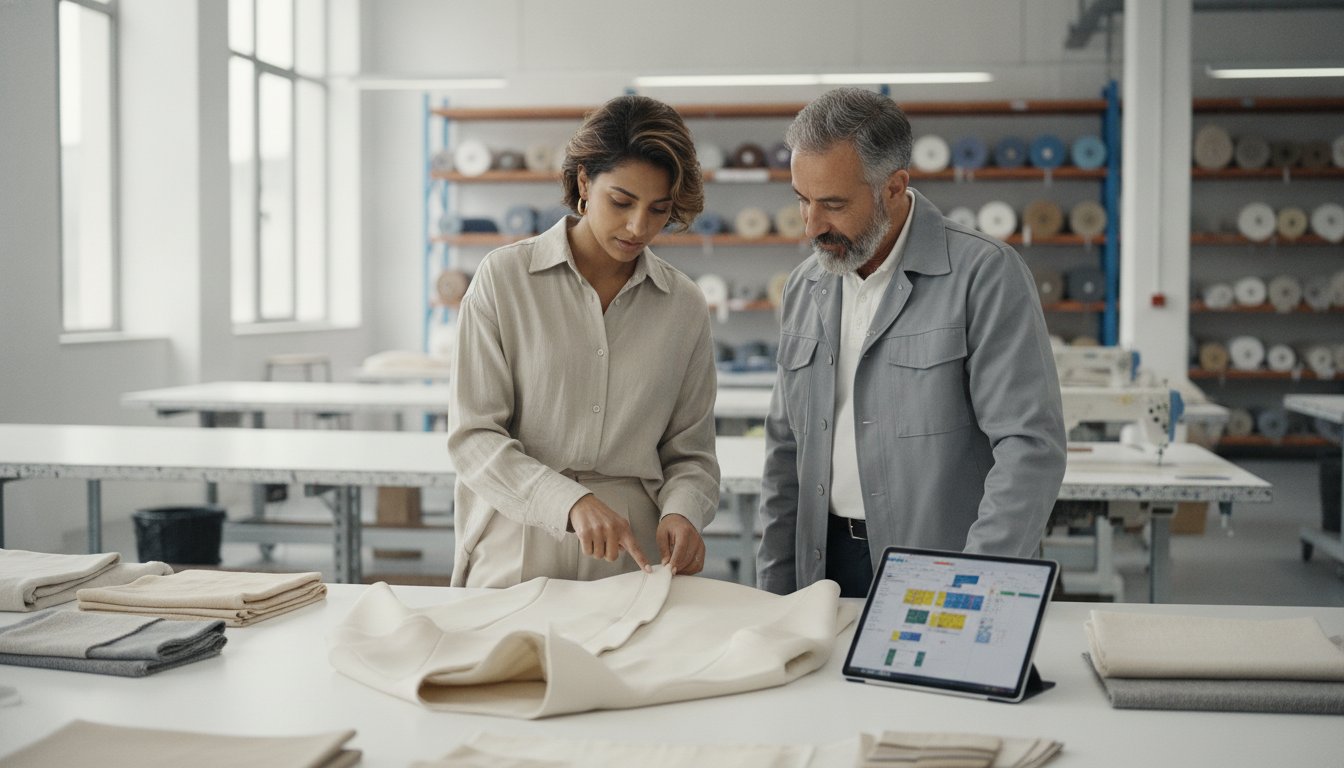
First Time Working with a Clothing Factory? The 2026 Essential Guide
Did you know that while traditional manufacturing hubs often demand 5,000 units per style, specialized partners in regions like Portugal now offer entry points as low as 50 units? For most entrepreneurs, the first time working with a clothing factory feels like a high stakes gamble where one communication error or a massive minimum order quantity could drain your entire startup budget. You likely worry that your vision will get lost in translation or that the final quality won't match your premium brand aspirations. It's a valid concern in an industry that has historically favored established giants over emerging designers.
This guide changes that dynamic by handing you a professional roadmap to master the production lifecycle. You'll learn how to prepare for factory outreach, navigate 2026 EU sustainability requirements like the Digital Product Passport, and secure a partner that values your growth. We'll walk through a clear step by step timeline and explain how to choose between white label and custom manufacturing models to ensure your first collection is a commercial success.
Key Takeaways
- Complete a factory-ready checklist to transition your creative concept into a scalable apparel business with a defined niche and realistic budget.
- Successfully navigate your first time working with a clothing factory by selecting the right production model, whether you require unique custom silhouettes or low-MOQ luxury blanks.
- Utilize professional tech packs as technical blueprints to ensure your design vision is executed with precision and high-end craftsmanship.
- Adopt 2026 industry standards by sourcing OEKO-TEX® certified materials and complying with emerging EU sustainability and transparency regulations.
- Position your brand for long-term growth by partnering with Portuguese manufacturers that offer ethical production standards and a globally recognized seal of quality.
The Prerequisites: What You Need Before Your First Factory Outreach
Transitioning from a fashion concept to a commercial reality requires a significant shift in mindset. Your first time working with a clothing factory is a business transaction, not just a creative collaboration. Factories function as industrial partners, and they prioritize brands that demonstrate operational readiness and professional clarity. Before you send your first inquiry, you must define whether you're building a personal hobby or a scalable apparel brand. The latter requires a structured approach to production volume, budgeting, and technical specifications.
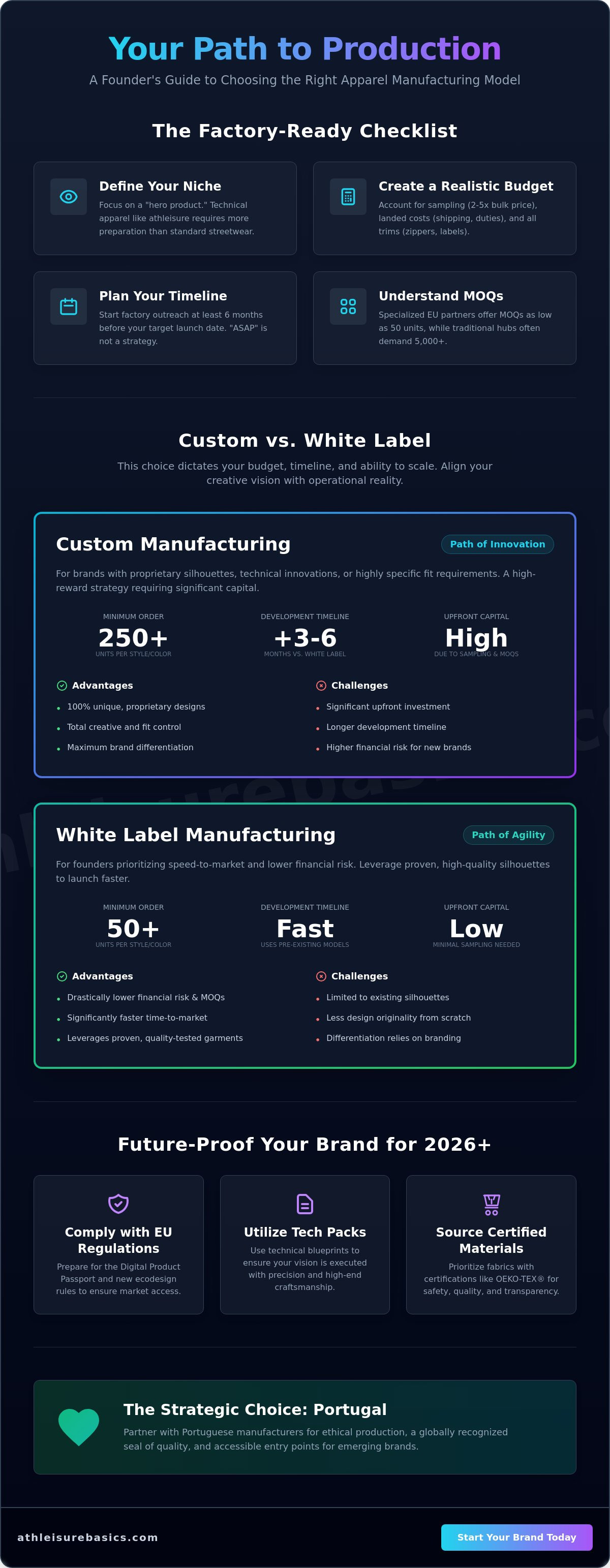
Your initial order size dictates which factory options are available to you. While massive manufacturing hubs in Asia often require thousands of units per style, specialized European partners, particularly in Portugal, offer more accessible entry points. Understanding these thresholds early prevents the frustration of being rejected by factories that aren't set up for startup scales. You'll also need to set realistic timelines for 2026. Global logistics costs are roughly 7% higher than 2024 levels due to carbon taxes on freight, and "ASAP" is never an effective production strategy. Planning your outreach at least six months before your intended launch date is a pragmatic necessity.
Defining Your Niche and Target Market
Success starts with focus. Athleisure, for instance, requires much more technical preparation than standard streetwear because of the performance requirements of the fabric. You'll need a deep understanding of the textile manufacturing process to ensure your materials meet moisture-wicking and stretch-recovery standards. Avoid overextending your first budget by identifying a "hero product." Perfecting one high-quality garment is more effective for market entry than launching a broad collection with mediocre craftsmanship. Research your competitors' quality by physically inspecting their garments to set your own production benchmarks.
Budgeting for Your First Production Run
Your financial planning must look beyond the simple "price per piece" quote. A professional budget includes several critical layers:
- Sampling and Prototyping: Factories typically charge between 2x and 5x the bulk production price for a single sample. This phase is non-negotiable for quality control.
- Landed Costs: Factor in shipping, import duties, and the 10% Section 122 reciprocal tariffs currently impacting apparel imports.
- Trims and Branding: High-quality YKK zippers, custom buttons, and compliant care labels add small but essential costs to every unit.
Minimum Order Quantities (MOQs) are the primary driver of your total investment. While a lower MOQ of 50 to 100 units increases your per-unit cost, it significantly reduces your overall financial risk and prevents you from sitting on unsold inventory that doesn't meet 2026 EU ecodesign regulations.
Selecting Your Production Path: Custom Manufacturing vs. White Label
Choosing between custom manufacturing and white label is the most critical decision during your first time working with a clothing factory. This choice dictates your budget, your timeline, and your ability to scale. While many guides suggest that custom creation is the only path to authenticity, the reality of the 2026 market favors agility. Understanding how to start a clothing business requires balancing your creative vision with operational reality. You must decide whether to invest in unique blueprints or leverage proven silhouettes to reach your audience faster.
The Custom Manufacturing Route
Custom manufacturing is ideal for brands introducing technical innovations or highly specific fit requirements. If your brand relies on a proprietary silhouette that doesn't exist in the market, this is your path. However, it demands a higher commitment. You'll typically face Minimum Order Quantities (MOQs) starting at 250 pieces per style and color. The development phase includes extensive pattern making and multiple sampling rounds; this often adds three to six months to your production calendar compared to pre-existing models. It's a high-reward strategy that requires significant upfront capital and a patient approach to growth.
The White Label Advantage for Startups
For many founders, white label clothing represents the most efficient entry point. This model allows you to leverage proven, high-quality patterns already developed by the factory. By using luxury blanks, you eliminate the risk of poor fit and significantly reduce sampling costs. In Portugal, MOQs for white label production often start as low as 70 pieces. This accessibility allows you to test market demand without the heavy financial burden of a 250-piece minimum. You can make these garments unique through custom screen printing, heavy embroidery, or bespoke woven labels that reflect your brand identity.
Speed to market is a decisive competitive advantage in 2026. White label production can move from order to delivery in 4 to 8 weeks, whereas custom development can stretch to 20 weeks or more. Startups often use white label to generate immediate cash flow and validate their brand identity. Once you've established a loyal customer base and have the data to support larger volumes, you can transition into full custom designs. This phased approach mitigates risk while maintaining high standards. If you're unsure which path fits your current scale, exploring our clothing production consulting services can help clarify your roadmap.
Bridging the Technical Gap: Tech Packs and Material Sourcing
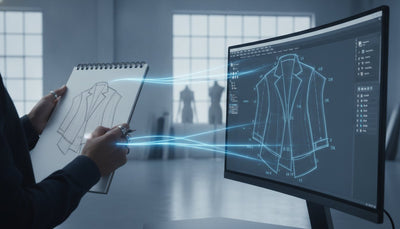
Turning a creative sketch into a shelf-ready product requires a technical language that leaves no room for interpretation. For most founders, the first time working with a clothing factory reveals the steep difference between a design concept and a production-ready file. To bridge this gap, you must provide the factory with a tech pack. This document acts as the master blueprint for your garment, ensuring that the final product matches your original vision across every size and colorway.
Creating a Factory-Ready Tech Pack
A tech pack is the legally binding technical contract between brand and factory. It consolidates every detail of your garment into one comprehensive file. Without an accurate tech pack, you risk receiving samples with incorrect fits, wrong stitch types, or missing components. A professional tech pack includes a Bill of Materials (BOM), graded spec sheets for sizing, and specific stitch details. While some competitors suggest you must hire an outside designer, many specialized manufacturers now offer tech pack development as part of their consulting services. This collaborative approach prevents 90% of production errors and ensures your project is factory-ready from the start.
Premium Sourcing and Certifications
In 2026, material selection is about more than just hand-feel; it's about compliance and brand integrity. Consumers increasingly demand transparency, making OEKO-TEX® certified fabrics the industry standard for premium labels. These textiles are tested for harmful substances, ensuring safety for the wearer and lower environmental impact. If you are following a comprehensive guide to starting a business in the clothing space, you'll know that sourcing is where your brand's value proposition is truly built.
Navigating the complexities of recycled nylons or organic cottons can be overwhelming for new founders. Leveraging materials sourcing support from your manufacturing partner allows you to access high-performance European textiles that meet strict EU environmental standards. This support elevates your brand from a basic startup to a premium contender. Once your materials are secured and your tech pack is finalized, you move into the sampling phase. This is where your 2D technical drawings finally become 3D physical garments, allowing you to test the drape, fit, and durability of your design before committing to a full production run.
Managing Your First Production Run: Communication and Quality
Execution is where your strategy meets the reality of industrial manufacturing. For many entrepreneurs, the first time working with a clothing factory is an exercise in active oversight. Once your Purchase Order (PO) is signed, you move from a planning phase into a live production cycle. This stage requires a balance of technical knowledge and professional diplomacy. Managing a production run isn't about policing your partner; it's about maintaining clear feedback loops to ensure the final garment matches your approved sample.
The Step-by-Step Production Timeline
The manufacturing process begins with the Pre-production (PP) sample. This is the absolute final version of your garment, and your approval acts as the green light for the machines to start. Once approved, the factory moves into bulk production, which typically lasts between 4 and 8 weeks in European hubs like Portugal. During this time, the factory engages in full CMT production, which involves cutting the fabric, making the garment, and adding the final trims. Transparency at this stage is vital. A reliable partner will provide updates on fabric cutting and sewing progress, allowing you to monitor the timeline in real time.
Effective Communication Strategies
Language barriers and technical misunderstandings are common risks during a first production run. To mitigate these, use visual references whenever possible. When reviewing samples, "red-line" your comments by drawing directly on photos of the garment to show exactly where a seam needs adjustment or a pocket should be moved. Establish a regular check-in cadence with your production manager, perhaps once a week, to stay informed without micro-managing. If production delays occur, handle them with professional poise. Focus on solutions, such as split shipments, rather than assigning blame. This collaborative approach ensures you remain a priority client on the factory floor.
Quality control (QC) is the final safeguard before your inventory leaves the factory. Most professional manufacturers use Acceptable Quality Limit (AQL) standards to determine the number of garments to inspect within a batch. Understanding these industry-standard thresholds allows you to set realistic expectations for your brand's quality. By adopting a partnership mindset, you position your brand as a knowledgeable collaborator rather than a one-time customer. This relationship often leads to better lead times and higher craftsmanship standards for your future collections. If you need expert guidance to navigate these technical milestones, get started with our clothing production consulting services to ensure your first run is seamless.
Why Portugal is the Strategic Choice for First-Time Founders
The decision of where to manufacture is just as important as the design itself. For your first time working with a clothing factory, the "Made in Portugal" seal provides an immediate competitive advantage. This regional origin acts as a shorthand for high-end craftsmanship and ethical integrity, allowing your brand to command a higher retail price point. Unlike manufacturing hubs that prioritize volume over detail, Portuguese factories are built on a heritage of textile excellence that resonates with conscious 2026 consumers. It's a strategic move that positions your brand within the luxury tier from day one—a level of quality that helps brands like Visual Awakening Art ensure their spiritual-themed apparel resonates as a premium product.
Choosing a European partner also eliminates many of the hidden costs associated with global production. While per-unit prices in distant hubs might seem lower, they often come with 12 to 20 week lead times and rising carbon taxes on freight. In contrast, Portuguese production offers agility with lead times of 4 to 8 weeks. This speed to market allows you to respond to consumer demand and restock bestsellers without the financial risk of long-term inventory gaps. Navigating your first time working with a clothing factory becomes significantly less stressful when your partner is geographically and culturally aligned with your standards.
The Quality Advantage of Portuguese Factories
Portuguese manufacturers are globally recognized for their generational expertise in complex garment construction. These factories are often located in close proximity to world-class fabric mills, which streamlines the sourcing and sampling phases. This integrated ecosystem is why clothing manufacturers in Portugal are the preferred choice for luxury athleisure brands. You gain access to a supply chain that already understands the technical requirements of high-performance textiles and premium finishing techniques.
Partnering with Athleisurebasics
At Athleisurebasics, we position ourselves as a dedicated ally for emerging designers. We specialize in removing the industrial barriers that typically stall new ventures, such as prohibitive order volumes. Our model supports startups through accessible low MOQs and comprehensive clothing production consulting. We handle the technical complexities of the manufacturing lifecycle so you can focus on scaling your brand identity.
Our commitment to quality is principled and transparent. We exclusively use OEKO-TEX® certified materials and guarantee that every garment is produced under strict EU labor standards. This ensures your brand is built on a foundation of ethical production and material integrity. Ready to master the transition from fashion concept to physical product? Contact us today to submit your first inquiry and receive a custom quote tailored to your vision. Let's build your lasting commercial presence together.
Scale Your Vision with Professional Production
Portugal’s textile hub offers the perfect ecosystem for emerging founders who refuse to compromise on quality or ethics. With accessible entry points and regional expertise, you can launch a collection that commands respect from day one. This strategic choice allows you to bypass the high minimums and logistical risks of distant manufacturing hubs.
Launch your brand with a premium Portuguese partner; contact Athleisurebasics today. We provide MOQs as low as 70 pieces for white label collections and exclusive access to premium, sustainably sourced fabrics from the heart of Portugal’s manufacturing region. Your journey from concept to physical product starts with a single, professional step. We look forward to building your success together.
Frequently Asked Questions
How much does it cost to work with a clothing factory for the first time?
Costs for your first time working with a clothing factory depend on your choice between white label or custom manufacturing. You must budget for sampling fees, which are typically multiple times the bulk price, alongside tech pack development and material sourcing. Don't forget landed costs such as shipping and import duties. A professional budget accounts for these technical milestones to ensure your startup remains financially viable during its market entry.
What is the absolute minimum order quantity (MOQ) for a new brand?
MOQs are determined by the complexity of the garment and the factory's operational model. While large scale Asian hubs often require 500 to 5,000 units per style, specialized partners in Portugal offer much lower entry points. White label production can start at 70 pieces, while full custom manufacturing typically requires a minimum of 250 units. These lower thresholds are essential for startups to manage inventory risk and maintain cash flow agility.
Do I need to have my own designs to work with a factory?
You don't need to be a technical designer to start your journey. For your first time working with a clothing factory, you can utilize white label services that provide luxury blanks with proven fits. This allows you to focus on brand identity and custom branding while the factory handles the pattern engineering. If you require unique silhouettes, consulting services can help you develop the necessary tech packs from your creative concepts.
How long does the entire clothing production process take from start to finish?
The production lifecycle generally ranges from 4 to 20 weeks. If you choose white label production in Portugal, your order can be completed in as little as 4 to 8 weeks. Custom manufacturing takes longer because it requires an additional 3 to 6 months for pattern development and multiple sampling rounds. Setting a realistic timeline is vital to ensure your collection launch aligns with seasonal market demands and logistics schedules.
What is the difference between a CMT factory and a Full Package (FPP) factory?
A CMT factory focuses solely on the assembly phase of production, meaning they cut, make, and trim using materials you provide. In contrast, a Full Package (FPP) partner manages the entire lifecycle, including material sourcing, tech pack development, and sampling. FPP is often the pragmatic choice for first time founders who require end to end support and professional guidance to navigate the complexities of textile sourcing and quality control.
How can I ensure the factory won’t steal my designs?
Securing your intellectual property is best achieved by partnering with manufacturers in jurisdictions with robust legal frameworks, such as the European Union. Professional factories prioritize long term collaborative relationships over short term design theft. You should always use a non-disclosure agreement (NDA) and maintain a detailed tech pack that serves as your technical contract. Working with reputable partners in established textile hubs provides an inherent layer of security for your brand.
What happens if the final production quality doesn’t match the sample?
Quality issues are managed by comparing the bulk production against your signed Pre-production (PP) sample. Professional factories use Acceptable Quality Limit (AQL) standards to inspect batches before shipping. If the final garments fail to meet the technical specifications in your tech pack, a reliable partner will work on solutions or replacements. This is why having a legally binding technical document and a supportive, partner-like relationship with your manufacturer is critical for success.
Can I visit the clothing factory in Portugal before I place an order?
Factory visits are a standard part of the vetting process for professional clothing brands. Visiting your partner in Portugal allows you to verify their facilities, meet your production manager, and confirm that ethical labor standards are being met. Transparency is a core value in the Portuguese textile industry, and most manufacturers welcome founders who want to see the craftsmanship firsthand. An in-person visit often strengthens the partnership and builds long term trust.


Leave a comment
This site is protected by hCaptcha and the hCaptcha Privacy Policy and Terms of Service apply.