

Sourcing Sustainable Fabrics for Apparel: The 2026 Brand Founder’s Guide
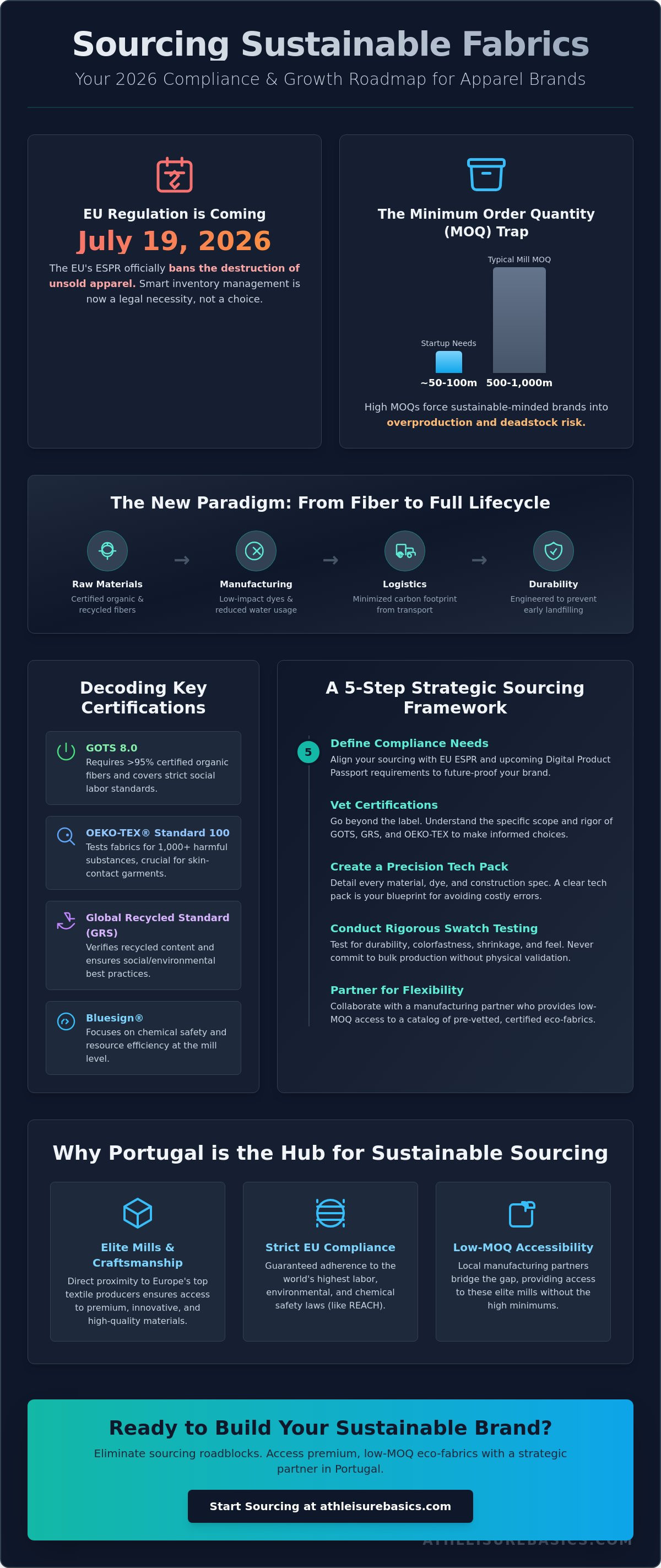
What if the biggest barrier to launching your ethical clothing line isn't the cost of the material, but the 500-meter minimum order requirement that forces you into overproduction? On July 19, 2026, the EU’s Ecodesign for Sustainable Products Regulation (ESPR) officially bans the destruction of unsold apparel, making smart inventory management a legal necessity rather than just a moral choice. You’ve likely spent hours trying to decode the difference between GOTS 8.0 and the latest OEKO-TEX Standard 100 updates while worrying about hidden gaps in your supply chain. It's frustrating when your commitment to sustainability feels blocked by industrial-scale demands that don't fit your growth stage.
The global activewear market is projected to reach $458.15 billion in 2026, with 41% of consumers actively favoring sustainable materials. This shift makes sourcing sustainable fabrics for apparel a core competitive advantage for emerging brands, with labels like Benedetti Life leading the way by combining luxury aesthetics with animal-free, ethical sourcing. Success in the athleisure niche requires a balance between technical performance and environmental integrity. You don't have to sacrifice four-way stretch or moisture-wicking properties to meet your ethical goals. Choosing the right fiber involves matching specific workout needs with the most efficient eco-friendly alternatives available in the 2026 market.
This guide simplifies sourcing sustainable fabrics for apparel by providing a clear roadmap to ethical procurement. You'll learn how to secure premium, eco-friendly textiles without the burden of high minimum order quantities. We'll break down the certifications that actually matter for 2026 compliance and show you how a strategic manufacturing partnership in Portugal can bridge the gap between small-batch flexibility and luxury standards. From understanding the Digital Product Passport to finding a partner that offers low-MOQ sustainable options, you're about to master the complexities of modern textile sourcing.
Key Takeaways
- Understand how the 2026 EU Ecodesign regulations mandate circularity and how to align your brand with new legal requirements for product durability.
- Identify the critical differences between GOTS 8.0 and OEKO-TEX updates to ensure your textile choices meet the highest verified ethical standards.
- Master a 5-step strategic framework for sourcing sustainable fabrics for apparel that prioritizes tech pack precision and rigorous swatch testing.
- Discover the logistical advantages of Portugal as a sourcing hub, where proximity to elite mills and strict EU labor laws guarantee premium quality.
- Learn how to navigate high minimum order quantities by partnering with flexible manufacturers that provide accessible, pre-vetted eco-friendly materials.
What is Sustainable Fabric Sourcing in 2026?
Sustainable sourcing in 2026 isn't just about selecting a recycled fiber. It's a strategic balance between environmental footprint, social ethics, and the physical longevity of the garment. The old "cheap at any cost" procurement model has become a liability. With the EU Ecodesign for Sustainable Products Regulation (ESPR) banning the destruction of unsold apparel as of July 19, 2026, brands must source materials with a circular economy mindset. This means every decision in sourcing sustainable fabrics for apparel now directly impacts your brand's legal ability to claim "eco-friendly" status. Transparency is the new industry baseline. If you can't trace the material back to the mill, you can't defend your claims in a market where the sustainable fabrics sector is projected to reach $41.28 billion this year.
The Shift from Fiber to Lifecycle
In 2026, a "sustainable" label requires more than just organic cotton. You have to consider the entire cradle-to-gate impact. This includes the heavy chemical load of traditional dyeing processes and the carbon emissions from long-distance transport. High-quality textiles must be engineered for durability to prevent early landfilling. For a broader Sustainable fashion overview, it's clear that longevity is the ultimate form of sustainability. Finishing techniques that reduce microplastic shedding or low-impact dyes are now as important as the raw fiber itself.
Why Startups Struggle with Ethical Procurement
Emerging brands often face the "MOQ Barrier." Many textile mills require orders of 1,000 meters or more for custom recycled or organic blends. This creates a paradox where a brand trying to be sustainable is forced to over-order, risking deadstock. Verifying international certifications also presents a challenge. Without a local presence at the source, founders often fear hidden unethical practices in the supply chain.
Professional materials sourcing support removes these barriers. By working with a manufacturing partner that offers pre-vetted catalogs, you gain access to premium, certified fabrics without the burden of industrial-scale minimums. This collaborative approach simplifies the transition from a concept to a finished, compliant product. It allows you to focus on growth while we handle the logistical complexities of sourcing sustainable fabrics for apparel. Our presence in the Portuguese textile hub ensures every roll of fabric meets strict EU labor and environmental standards before it ever reaches the cutting table.
Understanding Key Sustainability Certifications
Certifications serve as the verified evidence behind your brand's ethical claims. In an era where "greenwashing" carries significant legal risks, understanding the specific rigor of each label is essential for sourcing sustainable fabrics for apparel. These standards act as a quality seal, ensuring that your materials meet strict environmental and social criteria before they reach your customers. Relying on vague promises is no longer a viable business strategy.
- GOTS (Global Organic Textile Standard): Version 8.0, released in March 2026, requires at least 95% certified organic fibers for the "organic" label. It covers the entire supply chain, including strict social labor standards and chemical management.
- OEKO-TEX® Standard 100: This certification tests for over 1,000 harmful substances. New regulations effective June 1, 2026, introduce stricter limits for wet processes, making it vital for any garment with direct skin contact.
- GRS (Global Recycled Standard): This verifies the recycled content in your fabrics. It also tracks the social and environmental practices at the recycling facility to ensure the "recycled" claim is authentic.
- Bluesign®: This standard focuses on chemical safety and resource efficiency at the mill level. It ensures that water and energy usage are minimized and that harmful chemicals are eliminated from the production process.
When evaluating these labels, you can consult the EPA sustainable purchasing guidelines to see how federal standards categorize effective ecolabels. These frameworks help you prioritize certifications based on your specific product category and market goals.
GOTS vs. OEKO-TEX: Which Does Your Brand Need?
The choice between GOTS and OEKO-TEX depends on your brand's primary promise. GOTS focuses on the organic origin of the fiber and the ethics of the workers involved. OEKO-TEX focuses on the safety of the finished product. For premium made in Portugal clothing, OEKO-TEX is often the baseline requirement. It guarantees that the dyes and finishes used won't cause skin irritation. This is a non-negotiable factor for high-performance activewear. You should always ask your manufacturer for a valid certificate number and verify it on the respective organization's website to ensure it hasn't expired.
The Importance of Traceability
A label alone isn't enough to satisfy the 2026 Digital Product Passport (DPP) requirements. You must secure Transaction Certificates (TCs) for every shipment of fabric. These documents prove that the specific batch of material you purchased actually carries the certification claimed by the mill. Sourcing from European mills simplifies this process. Shorter supply chains mean fewer hands the fabric passes through, which reduces the risk of certificate fraud. If you need assistance navigating these technical requirements, our clothing production consulting services can help you build a fully compliant supply chain from the ground up.
Top Sustainable Fabrics for Athleisure and Activewear
The global activewear market is projected to reach $458.15 billion in 2026, with 41% of consumers actively favoring sustainable materials. This shift makes sourcing sustainable fabrics for apparel a core competitive advantage for emerging brands. Success in the athleisure niche requires a balance between technical performance and environmental integrity. You don't have to sacrifice four-way stretch or moisture-wicking properties to meet your ethical goals. Choosing the right fiber involves matching specific workout needs with the most efficient eco-friendly alternatives available in the 2026 market.
- Recycled Polyester (rPET): This material transforms post-consumer plastic waste into high-performance yarns. It's the industry standard for leggings because it maintains shape and provides the necessary compression for intense workouts.
- Organic Cotton: Ideal for lounge-heavy collections, organic cotton offers natural breathability. For the 2026 crop year, the organic cotton price premium is $0.54 per pound; a strategic investment for brands targeting the wellness and recovery market.
- Tencel™ Lyocell: This botanic fiber is derived from sustainably managed wood pulp. It manages moisture more efficiently than cotton and feels exceptionally soft against the skin. Recent innovations in wood-based fabrics suggest these materials will continue to dominate the premium athleisure sector due to their closed-loop production process.
- Recycled Nylon (Econyl): Sourced from abandoned fishing nets and industrial plastic waste, this premium nylon provides superior durability. It's the preferred choice for high-compression gear and swimwear that must withstand chlorine and salt water.
Synthetics vs. Natural Fibers in Performance Gear
Performance gear often involves a trade-off between technical utility and biodegradability. Synthetic fibers like rPET excel at sweat-wicking; however, they don't break down naturally in the environment. Natural fibers like organic cotton are biodegradable but can become heavy and uncomfortable when saturated with sweat. Blended fabrics, such as organic cotton mixed with recycled polyester, offer a pragmatic middle ground. They provide the soft hand-feel of natural fibers with the quick-dry benefits of synthetics. To mitigate the microplastic issue, you should provide clear care instructions, such as using specialized laundry bags that catch synthetic fibers during wash cycles.
Next-Gen Materials to Watch in 2026
The industry is rapidly adopting bio-based synthetics derived from corn or sugarcane waste to replace petroleum-dependent plastics. We're also seeing the rise of chemically recycled cotton, which allows old textiles to be broken down at the molecular level and rebuilt into new, virgin-quality fibers. This creates a truly circular loop for the apparel industry. At Athleisurebasics, we prioritize OEKO-TEX certified fabrics for all custom clothing manufacturing projects. This ensures that even the most innovative next-gen materials are tested for over 1,000 harmful substances and are completely safe for your customers' skin.
A 5-Step Sourcing Strategy for New Clothing Brands
Moving from fabric selection to industrial procurement requires a structured approach to ensure your supply chain remains both ethical and efficient. Unlike retail fabric shopping, sourcing sustainable fabrics for apparel at scale involves technical specifications and logistical hurdles that can delay your launch if not managed correctly. You must integrate your material selection into the broader garment production process to maintain consistency from the first sample to the final shipment.
- Define requirements in your Tech Pack: Specify the weight (GSM), fiber composition, and desired finish. Clear documentation prevents mills from sending irrelevant options.
- Request swatches and "headers": Never rely on digital images. You need to physically test the hand-feel, stretch recovery, and drape of the textile before committing to a roll.
- Verify MOQs and lead times: Align these with your launch timeline. In 2026, with the ESPR regulations focused on circularity, you must avoid over-ordering that leads to deadstock.
- Conduct a "wash and wear" test: Sustainability is synonymous with longevity. Test for pilling, shrinkage, and colorfastness to ensure the garment lasts for years, not months.
- Confirm certification validity: Ask your production partner for the latest Transaction Certificates (TCs) to verify that the fabric batch matches the GOTS or GRS claims.
Navigating Minimum Order Quantities (MOQs)
Startups often struggle with the high volume requirements of custom eco-fabrics. To bypass this, you can utilize "stock fabrics" already held by the manufacturer. This allows you to launch collections with accessible volumes, sometimes as low as 70 pieces per style. Using white-label clothing services is another effective way to test sustainable materials in the market without the financial risk of custom mill runs. Leveraging a manufacturer's existing textile relationships often gives you better pricing and lower entry barriers than negotiating with mills directly.
Prototyping with Sustainable Materials
It's a common mistake to sample using a substitute fabric. You must prototype in the actual sustainable material you intend to use for production. Sustainable fibers like Tencel™ or recycled polyester react differently to heat-press branding, embroidery, and steam. For example, some bio-based synthetics have lower melting points than virgin nylon. Additionally, recycled yarns can occasionally show slight color variations between batches. Sampling early helps you identify these nuances and ensures color consistency across your entire collection.
If you're ready to move from concept to creation, our materials sourcing support can help you find the perfect certified textiles for your brand's specific needs.
Why Portugal is the Hub for Sustainable Textile Sourcing
Portugal has solidified its position as the third-largest textile and clothing exporter in Europe. The industry generates over €8 billion in annual revenue and employs more than 130,000 skilled professionals. Most of this activity is concentrated in the northern cluster around Braga, Porto, and Guimarães. This geographic density is a major asset when sourcing sustainable fabrics for apparel. You can find world-class mills and production facilities within a 50-kilometer radius, which drastically reduces lead times and logistical friction. For a brand founder, this means your materials don't have to travel halfway around the world before they reach the sewing machine.
Operating under strict EU environmental and labor laws ensures a baseline of ethical production that other global hubs often struggle to match. As of January 2026, the national minimum wage in Portugal is set at €920 per month. This transparent labor framework protects your brand from the reputational risks of hidden unethical practices. Choosing the "Made in Portugal" label means your collection is produced in a region where chemical safety and worker rights are legal mandates rather than optional extras. The high concentration of eco-certified facilities in this region makes it easier to verify the claims you make to your customers.
The Vertical Integration Advantage
Vertical integration is the key to minimizing your carbon footprint. By keeping the supply chain local, you eliminate the massive emissions associated with shipping raw materials across continents. Portuguese factories are leading the way in industrial sustainability; many facilities now utilize advanced water recycling systems and renewable energy sources like solar arrays. This heritage of craftsmanship, passed down through generations, now integrates with modern eco-innovation. It results in high-performance textiles that meet the rigorous standards of the 2026 market while respecting the environment.
Partnering for Scalable Sustainability
Transitioning from a small startup to a global brand requires a partner that understands the nuances of growth. Our production consulting services help you navigate the financial aspects of material selection. We ensure you choose the right fabric for your specific budget and performance needs without compromising on your values. Whether you're starting with an initial run of 70 pieces or moving into full CMT production, we provide the materials sourcing support necessary to maintain your ethical standards at every stage of development. If you're ready to build a transparent and resilient supply chain, Get a custom manufacturing quote today to begin your journey.
Build Your Future-Proof Apparel Brand Today
Success in the 2026 fashion market requires a shift from reactive sourcing to proactive supply chain management. You've seen how the combination of rigorous certifications, strategic material selection, and a structured procurement process protects your brand from regulatory risks. By focusing on sourcing sustainable fabrics for apparel through established regional hubs, you ensure that your garments meet the highest ethical standards without sacrificing technical performance. The path from a small concept to a lasting commercial presence is now clearer than ever.
Athleisurebasics is ready to serve as your dedicated ally in this journey. We provide OEKO-TEX® certified fabrics and premium Portuguese craftsmanship to help you scale with confidence. Our flexible production model supports low MOQs starting at 70 pieces, removing the traditional barriers to entry for emerging ventures. Launch your sustainable brand with Athleisurebasics today and take the first step toward a successful, principled business. Your vision for a better industry starts with the right partnership. We're here to help you turn that vision into a high-quality reality.
Frequently Asked Questions
What is the most sustainable fabric for activewear in 2026?
Econyl and Tencel™ Lyocell blends are currently the most sustainable choices for performance activewear. Econyl provides the high-compression durability needed for leggings by repurposing ocean waste, while Lyocell offers superior moisture management through a closed-loop botanic process. Choosing these materials helps your brand align with the 2026 EU circularity mandates. Always ensure your supplier provides the specific Transaction Certificates to prove the material's origin and environmental impact.
Is organic cotton always better than recycled polyester?
Neither fabric is universally better as they serve different functional purposes. Recycled polyester is the superior choice for high-performance activewear because it provides the stretch and recovery that natural fibers lack. Organic cotton is better suited for lounge-heavy collections where breathability and skin comfort are the priorities. In 2026, the most effective strategy is often a blend that combines the technical utility of synthetics with the soft hand-feel of natural fibers.
How can I verify if a fabric is actually sustainable?
You can verify sustainability by requesting Transaction Certificates (TCs) that link a specific fabric batch to a valid certification. When sourcing sustainable fabrics for apparel, don't rely on a logo alone; you must check the certificate number on the official GOTS or OEKO-TEX databases. This process will become even more transparent as the Digital Product Passport framework expands in late 2026, providing a full audit trail for every garment.
What are the typical MOQs for sustainable fabric sourcing?
Typical minimum order quantities (MOQs) vary significantly depending on your procurement method. Custom mill runs for specialized eco-fabrics often require 1,000 meters or more. However, you can bypass these barriers by utilizing a manufacturer’s pre-vetted stock catalog. This allows for sourcing sustainable fabrics for apparel in much smaller volumes, with production runs starting as low as 70 pieces per style. This flexibility is essential for startups testing new collections.
Does 'Made in Portugal' automatically mean the fabric is sustainable?
The 'Made in Portugal' label ensures compliance with strict EU labor and environmental regulations, but it doesn't automatically guarantee the fabric is sustainable. While Portugal is a hub for eco-innovation, you must still verify individual mill certifications like GOTS or OEKO-TEX. The advantage is that Portuguese factories operate under high ethical standards, making it much easier to secure the documentation required for 2026 transparency laws.
Can I use sustainable fabrics for white-label clothing?
You can absolutely use sustainable fabrics for white-label clothing projects. Many manufacturers now offer white-label catalogs that feature pre-vetted, eco-friendly materials like recycled polyester or organic cotton. This approach allows you to launch high-quality, ethical products with lower financial risk. It's an efficient way to test sustainable materials in your market before committing to the larger volumes required for fully custom fabric developments.
How do I include fabric specifications in my tech pack?
Include your fabric specifications in the materials section of your tech pack with high precision. You must list the fiber composition percentages, the fabric weight in GSM, and the specific Pantone color reference. Additionally, clearly state the required certifications, such as GOTS 8.0 or OEKO-TEX Standard 100. Providing these details ensures that your production partner sources the exact textile needed to meet your brand’s performance and sustainability goals.
Are sustainable fabrics more expensive to source?
Sustainable fabrics generally carry a higher price point due to rigorous certification processes and specialized production methods. For example, the organic cotton price premium for the 2026 crop year is $0.54 per pound. While the initial cost is higher, these materials reduce the risk of legal penalties under the new ESPR regulations. They also allow you to position your brand in the premium market where 41% of consumers prioritize eco-friendly gear.



Leave a comment
This site is protected by hCaptcha and the hCaptcha Privacy Policy and Terms of Service apply.