
What is a Sample Approval Process? A Guide for Clothing Brands
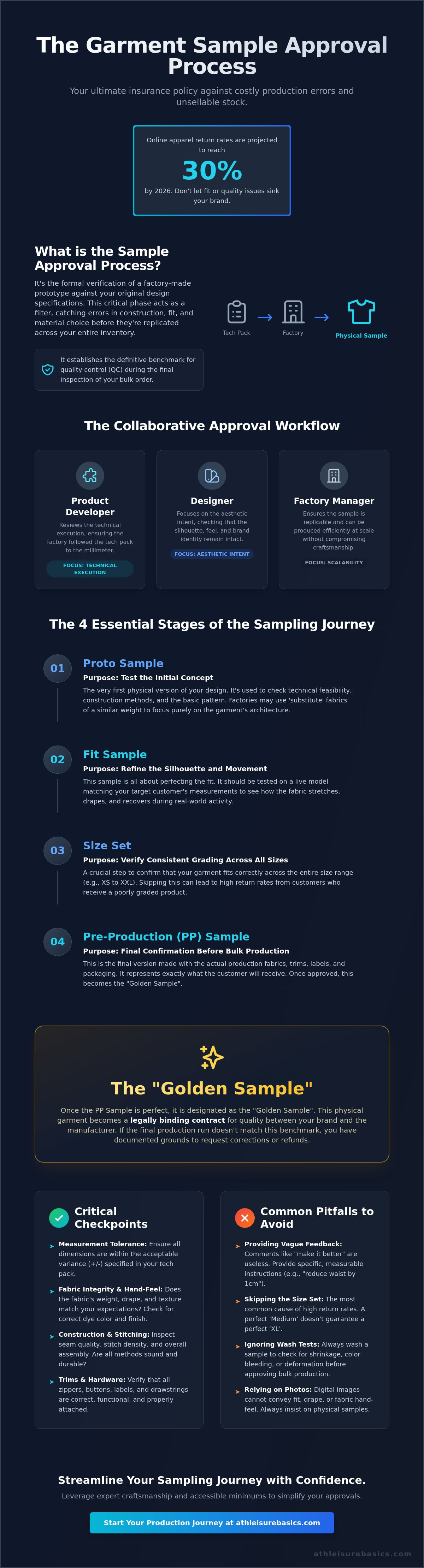
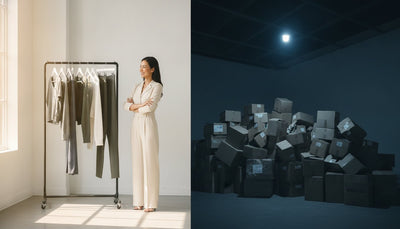
Imagine the sinking feeling of opening a shipment of 500 garments only to discover the fit is completely wrong or the fabric quality doesn't match your vision. With online return rates for apparel reaching up to 30% in 2026, your brand cannot afford to skip the safeguards that prevent these costly production errors. This is why understanding exactly what is a sample approval process is the most critical step in your manufacturing journey. It isn't just a series of bureaucratic checks; it's your ultimate insurance policy against financial loss and unsellable stock.
We know that navigating factory communications can feel overwhelming, especially when you're trying to decode technical terms like Proto or PP samples. You want to move from concept to finished product with total confidence and precision. This guide will help you master the critical steps of garment sampling to ensure your production run meets premium standards without expensive mistakes. We'll walk through the industry-standard timeline and provide a clear checklist for approving every stage. By the end, you'll have the technical knowledge to lead your manufacturing partnership with clarity, authority, and peace of mind.
Key Takeaways
- Understand the role of the "Golden Sample" as a legally binding quality contract between your brand and the manufacturer.
- Learn exactly what is a sample approval process to ensure every garment in your production run meets your original design specifications.
- Master the critical checkpoints of measurement tolerance and fabric integrity to catch errors before they become costly mass-production failures.
- Identify common pitfalls like providing vague feedback or skipping size sets, which can lead to significant brand launch delays.
- Discover how leveraging Portuguese craftsmanship and accessible minimum order quantities can simplify your sampling journey and reduce financial risk.
What is a Sample Approval Process in Garment Manufacturing?
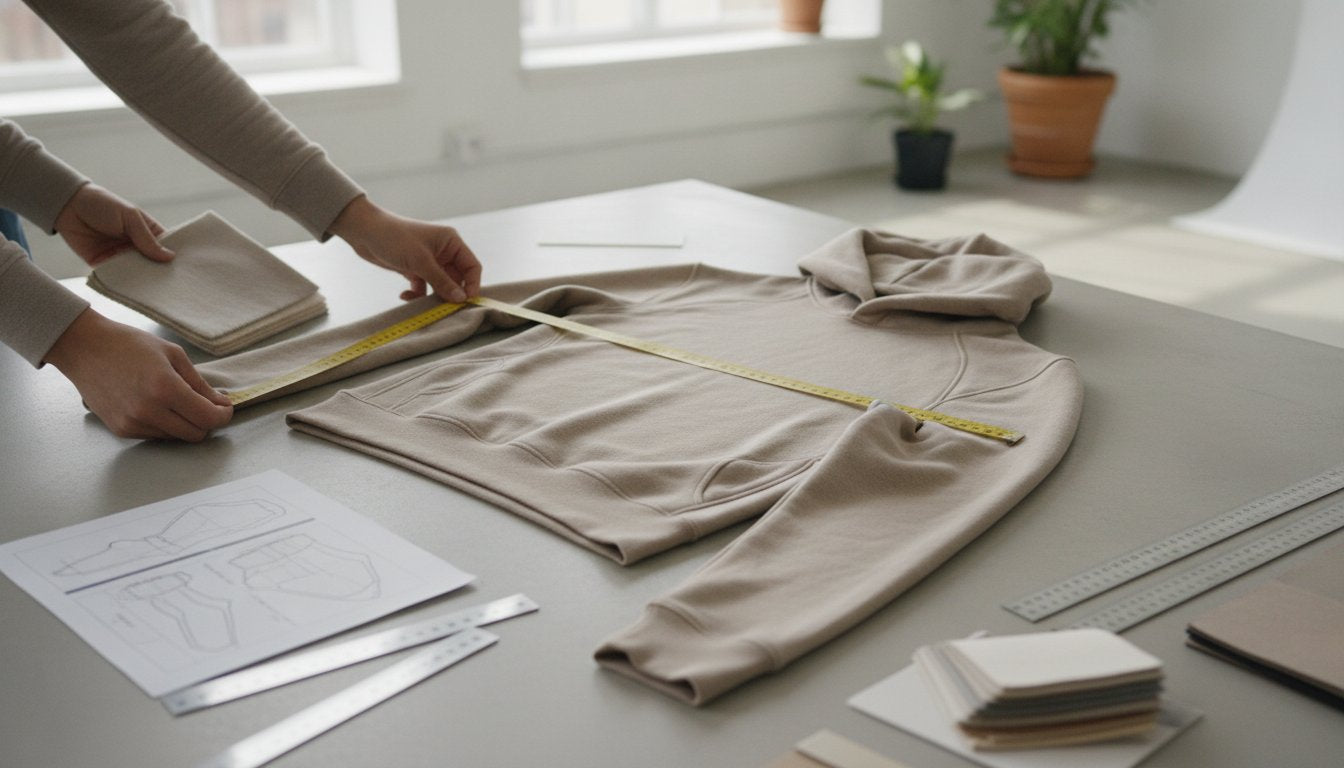
The transition from a digital design to a physical garment is the most vulnerable stage of your brand’s journey. At its core, what is a sample approval process? It's the formal verification of a factory-made prototype against your original design specifications. This phase acts as a filter, catching errors in construction or material choice before they're replicated across your entire inventory. Without this rigorous check, you risk the integrity of your collection and the financial health of your business.
Within the broader garment production process, sampling serves as the final gateway. It involves two distinct layers of oversight. Internal brand approvals focus on aesthetic intent and market readiness. Factory-side production approvals focus on the technical feasibility of the design. When both parties agree that a sample is perfect, it's designated as the "Golden Sample." This physical garment becomes a legally binding contract for quality. If the final production run doesn't match this benchmark, you have the documented grounds to request corrections or refunds.
The Objective: Quality, Consistency, and Risk Mitigation
The primary goal is to identify technical flaws before they scale. A single misplaced seam on one prototype is a minor fix; that same error on 500 units is a catastrophe. During this stage, you must evaluate how the textile performs in a real-world application. You'll check if the "hand" and drape match your expectations and if the fabric responds correctly to dyes and finishes. This process establishes the definitive benchmark for quality control (QC) during the final inspection of your bulk order. It ensures that every piece leaving the factory floor maintains the premium standards your customers expect.
Who is Involved in the Approval Workflow?
Successful sampling requires a collaborative effort between three key roles. The Product Developer reviews the technical execution, ensuring the factory followed the tech pack to the millimeter. They often handle the pre-production sample to verify that the assembly methods are sound. The Designer focuses on the aesthetic intent, checking that the silhouette and brand identity remain intact. Finally, the Factory Manager ensures the sample is replicable. Their job is to confirm that the garment can be produced efficiently at scale without compromising craftsmanship. This partnership creates a system of checks and balances that simplifies complex industrial steps for emerging brands.
The 4 Essential Stages of the Apparel Sampling Journey
Apparel manufacturing is unique because it requires physical verification of fit, drape, and durability before any major investment. When brands ask what is a sample approval process, they're often surprised to learn it isn't a single event. It is a structured journey consisting of four distinct milestones. Skipping any of these steps creates a blind spot that often leads to unsellable inventory. Each stage serves as a filter to remove errors before they reach the consumer.
- Proto Sample: Testing the initial design concept for technical feasibility and construction.
- Fit Sample: Refining the silhouette and movement on a live model or dress form.
- Size Set: Verifying that grading is consistent and accurate across your entire size range (XS–XXL).
- Pre-Production (PP) Sample: The final version using actual production fabrics and trims to confirm the "Golden Sample."
From Proto to Fit: Perfecting the Silhouette
Perfecting the silhouette starts with the Proto and Fit stages. In the beginning, factories may use "substitute" fabrics of a similar weight to test the pattern. This allows you to focus on the architecture of the garment without being distracted by color or print. When you collaborate with clothing manufacturers in Portugal, you're tapping into a heritage of precision pattern making. Use a live fit model who matches your brand’s target measurements rather than relying solely on a mannequin. This reveals how the fabric stretches and recovers during real-world activity. If you're building an athleisure line, this is where you ensure the waistband doesn't roll and the seams don't chafe. Provide feedback that is measurement-based and objective to keep the timeline moving efficiently.
While your production may be handled internationally, local experts can assist with the initial fit analysis. For instance, brands based in the UAE can utilize a tailoring home service dubai to professionally pin and measure their samples before sending detailed feedback to the factory.
The Pre-Production (PP) Sample: The Final Green Light
The PP sample serves as the ultimate green light. It must be an exact replica of what the customer will receive in their package. This means using the confirmed bulk fabric, correct thread colors, and final trims. Beyond aesthetics, you must verify that all components comply with U.S. safety standards, particularly regarding flammability and small parts. This sample must also include final label placement and hangtags. If the sample fails to meet the tech pack requirements, you must reject it and request a "Re-sample." This protocol involves the factory producing a new version that addresses every specific correction. While it might feel like a delay, it's significantly faster than dealing with a batch of 500 defective items. Never authorize mass production based on a factory's promise to correct issues during the bulk run.
Our experts at Athleisurebasics provide the end-to-end support needed to navigate these technical milestones with total confidence and precision.
Critical Checkpoints: What to Inspect During Approval
Inspection is the technical bridge between a prototype and a successful commercial launch. When you're managing what is a sample approval process, your focus must shift from creative vision to rigorous auditing. You aren't just checking if the garment looks good; you're verifying that it functions as a durable, sellable product. This stage requires a systematic approach to ensure every detail aligns with your brand’s premium standards.
- Measurement Tolerance: Compare the physical garment against every point of measure (POM) in your tech pack. Standard industry tolerance is usually within 0.5cm to 1cm, but luxury standards often demand even tighter precision.
- Fabric Integrity: Test for color fastness by performing a simple home wash test. Check for pilling after friction and ensure the stretch recovery is immediate. High-quality textiles should not lose their shape after a single wear.
- Construction Quality: Inspect the stitch density, measured in stitches per inch (SPI). Pull firmly on the seams to check for thread breakage or "grinning," where the threads become visible under tension.
- Functionality: Stress-test every moving part. Open and close zippers repeatedly, check the security of buttons, and ensure that heat-transfer logos don't crack or peel when the fabric is stretched.
The Aesthetic Review: Branding and Trim
Aesthetic consistency is vital for brand recognition. Review your samples under standard D65 lighting to ensure colors match your Pantone references exactly. Inconsistent lighting can lead to "metamerism," where colors look correct in the office but wrong in a retail environment. For brands focusing on luxury blanks, the quality of the hardware is a key differentiator. Verify that aglets, drawstrings, and eyelets have a consistent finish and weight. Ensure all embroidery or screen printing is crisp, centered, and free of loose threads or blurred edges.
The Technical Review: Fit and Performance
Technical review goes beyond the spec sheet to analyze how the garment behaves on a body. Check the "balance" of the piece; it should hang straight without pulling to the front or back. One common flaw to watch for is "torqueing," where side seams begin to twist toward the front after a wash cycle. This usually indicates a grainline error during the cutting process. Finally, perform an opacity test on high-stretch fabrics. Premium athleisure must maintain its coverage during deep movement, ensuring your customers feel confident and secure in every piece you produce.
Common Sampling Pitfalls That Delay Brand Launches
Delays in the manufacturing cycle often stem from communication gaps rather than technical inability. While you now understand what is a sample approval process, the execution of that process determines your speed to market. Avoidable errors during the feedback loop can add weeks or even months to your timeline, draining your budget and causing you to miss critical seasonal windows.
- Vague Feedback: Subjective comments like "it just doesn't feel right" are the enemy of production speed. A pattern maker cannot adjust a silhouette based on a feeling. Use specific measurements and technical terms to describe required changes.
- Skipping the Size Set: Many emerging brands approve a medium sample and assume the rest of the range will be perfect. Grading is complex. A fit that works for a size small may cause "gapping" or restricted movement in a size 2XL.
- Incomplete Tech Packs: Missing details regarding trim placement or seam construction lead to multiple rounds of expensive re-sampling. Your tech pack must be a comprehensive blueprint that leaves no room for factory guesswork.
- Ignoring Lead Times: Factor in the physical transit time. Shipping samples between your office and Portugal can take 3 to 5 business days. Account for this in your master calendar to avoid production bottlenecks.
How to Provide Professional Feedback to Your Factory
Efficiency starts with clarity. When reviewing a sample, take high-resolution, well-lit photos of the garment on a fit model. Use digital annotation tools to draw arrows or circles exactly where the issue lies. Document every required adjustment in a structured "Comments Sheet" that tracks changes version by version. This ensures that no detail is lost between the design room and the factory floor. Maintain a supportive, partner-like tone. A collaborative relationship with your manufacturer leads to better problem-solving and a higher standard of craftsmanship in the final product.
Managing Timelines in 2026: The Sampling Calendar
Your production schedule must account for seasonal variables. In Portugal, many factories observe traditional holidays or reduced hours during August, which can impact your turnaround. Sourcing windows for specialized OEKO-TEX® certified materials can also fluctuate based on global demand. To accelerate this phase, consider using private label Portugal services. These models often provide pre-developed silhouettes and verified materials that reduce the need for multiple proto rounds. Set realistic deadlines for your own internal reviews. If you take ten days to provide feedback, you push the entire production window back by at least two weeks.
Ready to move from concept to production without the stress? Contact our experts at Athleisurebasics to streamline your sampling phase and ensure your brand launches on schedule.
Streamlining Approvals with Athleisurebasics in Portugal
Mastering what is a sample approval process becomes significantly simpler when you partner with a manufacturer that prioritizes transparency and precision. At Athleisurebasics, we've designed our workflow to remove the traditional barriers that prevent emerging brands from scaling. Our low minimum order quantity (MOQ) approach, which starts at just 70 pieces for white label collections, allows you to move through the sampling journey with drastically reduced financial risk. You don't have to commit to thousands of units to receive the same level of technical scrutiny and craftsmanship as a global luxury house.
The foundation of our success lies in Portuguese craftsmanship. Our expert pattern makers possess a deep understanding of garment architecture, which means they often get the fit right the first time. This reduces the number of re-sampling rounds, saving you time and money. By combining this heritage with a strict adherence to OEKO-TEX® certified materials and ethical EU labor standards, we ensure your brand meets the highest global requirements for safety and sustainability. Once your sample is perfected and approved, the transition to full CMT (Cut, Make, Trim) production is seamless, as every technical detail is already locked into your version-controlled tech pack.
Expert Consulting for Emerging Brands
Startups often face a steep learning curve during their first production run. Our clothing production consulting services bridge this gap by offering dedicated support through every technical milestone. If you're looking for a faster market entry, you can leverage our luxury blanks catalog. This allows you to skip the initial "Proto" stage entirely by using our pre-developed, high-performance silhouettes that have already been fit-tested and perfected. This strategic shortcut ensures your brand maintains premium manufacturing standards from day one without the typical delays of ground-up development.
Ready to See Your Designs Come to Life?
A structured approval process is your brand’s greatest asset. It provides the peace of mind that every dollar invested in your production run is protected by a verified "Golden Sample." While the temptation to rush to market is strong, prioritizing quality over speed is what builds long-term customer loyalty and reduces the burden of returns. We're here to guide you through these industrial complexities, turning your creative vision into a commercial reality with precision and care.
Don't leave your product quality to chance. Partner with Athleisurebasics for your next collection and experience a manufacturing partnership built on expertise and reliability.
Take Control of Your Production Quality
A successful garment launch is built on the technical precision of your sampling phase. You've learned that what is a sample approval process involves more than just looking at a prototype; it requires a disciplined audit of fit, fabric integrity, and construction standards. By navigating the four essential stages from Proto to Pre-Production, you eliminate the guesswork that leads to costly manufacturing errors and unsellable inventory. This structured approach transforms your creative vision into a scalable, high-quality product line that resonates with your customers, and you can further enhance this experience by incorporating personalized gifts or custom event supplies from Nice Little Things during your brand’s debut.
We're dedicated to helping emerging brands scale with confidence through our premium manufacturing in Portugal. Our commitment to OEKO-TEX® Certified Fabrics and low MOQs for startups removes the traditional barriers to entry, allowing you to focus on growth without excessive financial risk. You have the tools and the technical knowledge to lead your manufacturing partnership with authority. It's time to transition from concept to a finished product that meets the highest industry standards.
Launch your premium apparel line with Athleisurebasics and build a collection that stands the test of time. Your journey from a small idea to a lasting commercial presence starts with a single, perfectly approved sample.
Frequently Asked Questions
How many rounds of sampling are normal for a new design?
Most new designs require two to four rounds of sampling before reaching bulk production. This typically includes an initial proto sample to test the design concept, followed by one or two fit samples to refine the silhouette. The final step is always the pre-production sample. Complex designs with technical features or specialized fabrics may require additional iterations to ensure the manufacturing process remains replicable and efficient.
What is the difference between a fit sample and a pre-production sample?
A fit sample focuses exclusively on the silhouette, proportions, and movement of the garment on a body. It is often constructed using available substitute fabrics of a similar weight to the final choice. In contrast, a pre-production (PP) sample is the final version made with the exact bulk fabric, trims, and labels. The PP sample serves as the "Golden Sample," acting as the definitive quality benchmark for the entire production run.
Who pays for the samples in the clothing manufacturing process?
The brand is responsible for the cost of all samples produced during the development phase. Factories typically charge a sample fee, which is often two to three times the estimated bulk production price. This fee covers the specialized labor required for pattern making and individual garment construction. Some manufacturers may credit a portion of these costs back to the brand once a bulk order reaches a specific volume threshold.
Can I skip the sampling process if I have a perfect tech pack?
You should never skip the sampling process, regardless of how detailed your tech pack is. A tech pack is a digital blueprint, but it cannot account for how a specific fabric drape behaves or how a seam feels against the skin. Skipping this step increases the risk of receiving an entire production run with uncorrected flaws. Understanding what is a sample approval process means recognizing it as your primary insurance against financial loss.
How long does the sample approval process typically take?
The entire timeline typically spans four to eight weeks, depending on the complexity of the design and the speed of your feedback. Each physical sample takes time to manufacture and ship from the factory. You must also factor in the time required for your internal team to review the garment and document changes. Efficient communication and clear, technical feedback are essential for keeping this phase within your projected brand launch calendar.
What should I do if the sample doesn’t match my tech pack?
If a sample deviates from your specifications, you must document the errors with annotated photos and measurements. Formally reject the sample and request a "re-sample" that addresses every specific correction. Do not authorize bulk production based on a factory's promise to fix the issues later. Clear documentation ensures the factory is held accountable to the original tech pack standards before you commit to the final production run.
Is a digital sample (3D rendering) enough for final production approval?
Digital 3D renderings are excellent for visualizing designs and reducing the number of initial proto rounds, but they are not enough for final approval. A digital file cannot simulate the true "hand" of a textile or the physical tension of a seam. You must inspect a physical pre-production sample to verify the actual fabric quality, color accuracy, and construction durability before the factory begins the cut-and-sew process for your order.
What is a "sealed sample" and why is it important?
A sealed sample is the final, approved pre-production garment that is signed and dated by both the brand and the manufacturer. This "sealed" piece remains at the factory as the definitive reference for quality control during mass production. It is important because it provides a physical benchmark to resolve any disputes regarding fit or craftsmanship. This step is a core component of what is a sample approval process for premium apparel brands.


Leave a comment
This site is protected by hCaptcha and the hCaptcha Privacy Policy and Terms of Service apply.